
Septic Tank Effluent Filter Cleaning: The 2026 Homeowner’s Maintenance Guide
That small plastic cylinder inside your tank is the only mechanical barrier protecting your multi-thousand-dollar drain field from total failure. It’s a high-stakes component that requires precision, yet many homeowners aren’t even sure where to find it. We understand that septic tank effluent filter cleaning isn’t exactly a favorite weekend chore. It’s messy, it’s confusing, and there’s always that nagging fear of accidentally damaging a sensitive system.
You’re right to be cautious, but staying on top of this maintenance is the best way to prevent the nightmare of sewage backing up into your home. In this 2026 guide, we’ll walk you through a clear, safe process to handle the grime without the stress. You’ll learn exactly how to locate the filter, the right way to wash it, and how often to perform this task to keep your system running smoothly. We’ll also highlight the specific signs that tell you it’s time to step back and call a professional for help.
Key Takeaways
- Understand how your effluent filter acts as the final guard against solids entering your drain field, preventing expensive long-term damage.
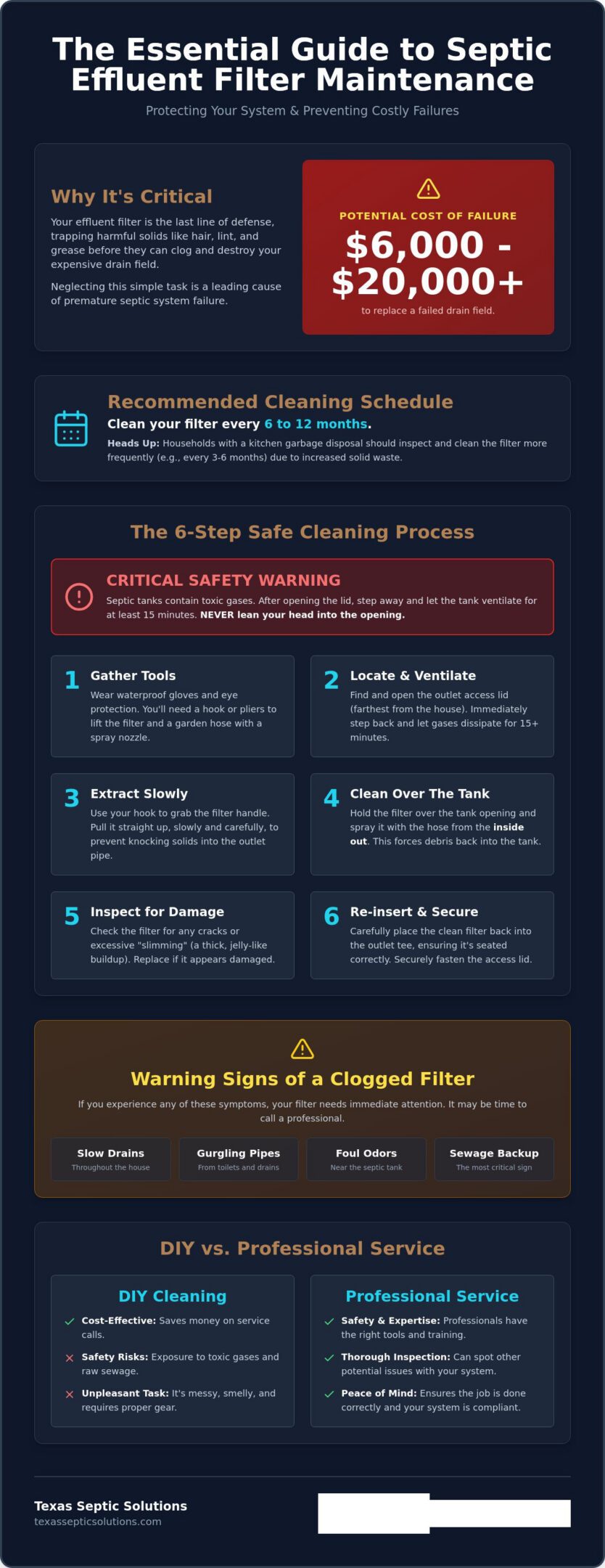
- Learn why regular septic tank effluent filter cleaning every 6 to 12 months is essential, especially if your household uses a kitchen garbage disposal.
- Discover the critical safety protocols for accessing your tank, including why you must let the system ventilate before beginning maintenance.
- Identify the specific warning signs of a failing filter and when a DIY effort isn’t enough to prevent a full system backup.
- See how professional maintenance plans can take the “gross factor” out of the equation while ensuring your system stays compliant with local standards.
Understanding Your Septic Tank Effluent Filter’s Critical Role
Your septic system is essentially a private wastewater treatment plant buried in your backyard. While the septic tank itself uses gravity to separate solids from liquids, it isn’t perfect. Tiny particles often remain suspended in the water, threatening to escape into your drain field. This is where the effluent filter steps in. Think of it as the last line of defense for your system’s most expensive component. Without this guardian, those suspended solids would flow directly into the soil, eventually clogging the pores of your leach field and causing a total system failure.
The filter is designed to trap materials that don’t easily break down. This includes common household debris like hair, synthetic lint from laundry, and small plastic particles. Over time, these items accumulate on the filter’s surface. If you neglect septic tank effluent filter cleaning, the buildup restricts water flow. This restriction creates a bottleneck that can lead to slow drains or, in the worst cases, raw sewage backing up into your home. In Texas, we commonly see high-quality brands like Polylok or Zabel installed in residential systems. These brands are built to last, but they aren’t self-cleaning.
The financial stakes are high. Replacing a conventional drain field in Texas can cost anywhere from $6,000 to $12,000, while aerobic system replacements can soar above $20,000. Comparing those figures to the minimal effort of a routine cleaning makes the choice clear. Staying proactive isn’t just about plumbing; it’s about protecting your property value.
Where is the Septic Filter Located?
You’ll find the filter housed inside the outlet tee of your tank. This is located at the very end of the system, just before the water exits toward the drain field. If you have a two-compartment tank, the filter is in the second chamber. You can identify the outlet side by looking for the pipe that leads away from your house. To make maintenance easier, many homeowners install septic risers. These plastic or concrete tubes extend from the tank lid to the surface of the ground, allowing you to access the filter without digging up your lawn every few months.
The Science of Effluent Filtration
Effective filtration relies on a delicate balance. Most residential filters use a 1/16th inch filtration standard. This size is small enough to catch dangerous solids but large enough to allow treated water to pass through freely. As the water flows, beneficial anaerobic bacteria colonize the filter surface, providing a final stage of biological treatment. Depending on your system’s age, you might have a mesh filter, which uses a screen-like sleeve, or a disc filter, which uses stacked plates to trap debris. Both styles are effective, but they require different handling during the cleaning process to ensure no sludge bypasses the filter while it’s removed.
A Step-by-Step Guide to Cleaning Your Septic Effluent Filter Safely
Performing your own septic tank effluent filter cleaning is a manageable task, but it requires a disciplined approach to safety and hygiene. Before you begin, gather the necessary tools: heavy-duty waterproof gloves, eye protection, a long-handled hook or pliers, and a garden hose with a standard spray nozzle. Wear old clothing that you can wash separately or discard. This process involves handling raw sewage, so preparation is your best defense against accidental exposure.
Septic Gas Safety and PPE
The most significant risk during this process isn’t the mess; it’s the gas. Septic tanks accumulate Hydrogen Sulfide (H2S) and Methane, which are toxic and highly flammable. After you unscrew and remove the access riser lid, step away immediately. Let the tank “breathe” for at least 15 minutes to allow these gases to dissipate. Follow the “Never Lean In” rule: keep your face well away from the opening at all times. A single breath of concentrated H2S can cause immediate disorientation. Always ensure someone else is nearby while you work, staying upwind of the tank opening.
- Step 1: Venting. Open the riser and wait for gas levels to drop.
- Step 2: Extraction. Use your long-handled hook to snag the filter handle. Lift it slowly and vertically. If you pull too quickly, you risk knocking “scum” or solids into the open outlet pipe, which sends them straight to your drain field.
- Step 3: The Back-Flush. Hold the filter directly over the open tank manhole. Use your hose to spray the filter from the inside out, knocking debris back into the tank where it belongs.
- Step 4: Inspection. Look for “slimming,” which is a thick, jelly-like biological buildup, or any physical cracks in the plastic housing.
The Proper Rinsing Technique
It’s tempting to take the filter to a patch of grass to clean it, but you must resist this urge. All rinsing must happen over the open septic tank. Washing these solids onto your lawn introduces harmful pathogens and concentrated waste into your yard’s surface soil. Use a gentle, steady stream of water. High-pressure power washers can easily tear the fine 1/16th-inch mesh found on many residential filters. If you notice a stubborn “bio-mat” that won’t budge with a garden hose, the filter may be reaching the end of its lifespan. If the process feels overwhelming or the tank levels look dangerously high, a quick septic system maintenance visit can resolve the issue without the DIY stress.
Once the filter is clean and the mesh is visible again, slide it back into the outlet tee. Ensure it clicks or seats firmly into place. A loose filter is just as bad as no filter at all, as it allows unfiltered effluent to bypass the screen entirely.
Maintenance Schedules and Warning Signs of a Clogged Filter
For most Texas households, the standard frequency for septic tank effluent filter cleaning is every 6 to 12 months. This isn’t a rigid rule, though. If you have a large family or frequently host guests, you’ll need to check the filter more often. The goal is to catch the buildup before it restricts flow, not after your drains stop working. Regular checks prevent the “out of sight, out of mind” mentality that leads to expensive emergency calls.
One of the biggest variables in your maintenance schedule is the kitchen garbage disposal. Using a disposal effectively doubles the amount of organic solids entering your tank. These finely ground particles don’t always settle at the bottom; many remain suspended and head straight for the filter. If you neglect septic tank effluent filter cleaning while running a disposal daily, you’re significantly increasing the risk of a premature clog. Plan on inspecting the filter every 4 months if your disposal is a kitchen staple.
Your system will often try to tell you when the filter is struggling. Pay attention to your plumbing’s performance. Slow-draining toilets or strange gurgling sounds in the pipes are classic early warning signs. This gurgling happens when air gets trapped by the rising water level in the inlet pipe because the effluent can’t exit the tank fast enough. If you hear these sounds, don’t wait for a full backup to investigate.
You should also keep an eye on the ground above your tank. While lush green grass over a drain field is a known red flag, seeing unusually vibrant growth or standing water specifically over the tank area points to a filter issue. This occurs when effluent leaks out of the riser lid because the clogged filter has turned the tank into a pressurized container. If the soil around your tank lids is constantly damp, your filter is likely past due for a cleaning.
Texas-Specific Maintenance Factors
Local environmental conditions play a massive role in how your filter performs. In areas like Houston and Cypress, high water tables can put extra pressure on your system. During periods of heavy Texas rainfall, “hydraulic overloading” occurs when excess groundwater enters the tank. This surge of water stirs up solids that would normally stay settled, pushing them into the filter mesh. Additionally, our local clay soils drain slowly. This makes it even more vital that the water leaving your tank is clear, as even small amounts of escaped solids can quickly seal off the tight pores in clay soil.
Creating a Maintenance Log
Keeping a detailed record of your system’s history is a smart move that adds real value when it’s time to sell your home. Record the date of each cleaning, the filter’s condition, and any sludge levels you observe during the process. Integrating this habit into a broader septic system maintenance plan ensures you never miss a critical check-up and helps you spot patterns before they become problems.
Professional Cleaning vs. DIY: Choosing the Right Path for Your Home
Deciding between handling septic tank effluent filter cleaning yourself or hiring a professional often comes down to one thing: the “Gross Factor.” While the process is straightforward, you’re working directly with concentrated household waste and potentially hazardous gases. If the idea of scrubbing raw sewage off a plastic cylinder doesn’t appeal to you, you’re not alone. Many Texas homeowners prefer to leave this task to someone with the right gear and experience to handle the mess safely.
Beyond the mess, there’s a significant “Tools Gap.” A homeowner usually has a garden hose and a pair of pliers. A professional technician arrives with high-pressure jetting equipment and specialized waterproof cameras. These tools allow us to clear stubborn grease or bio-mat buildup that a standard hose simply can’t touch. We can also inspect the pipe leading to your drain field to ensure no solids have already escaped, providing a level of certainty that a DIY visual check can’t match.
You must also consider warranty and liability. If you accidentally crack the outlet tee or drop the filter into the sludge layer during a DIY attempt, the resulting repair costs will far exceed a standard service call. Additionally, some home insurance policies and local regulations require proof of professional maintenance to cover drain field failures. A DIY mistake could lead to a denied claim if the system wasn’t maintained according to recognized industry standards. For many, the price of a service call is a small investment compared to the price of a ruined weekend and potential system damage.
When DIY is Not Enough
There are specific scenarios where you should put down the hose and call for help immediately. If you open your tank and find the filter is missing or has fallen into the tank, professional extraction is required to prevent it from blocking the outlet. If your septic tank alarm is going off even after you’ve cleaned the filter, there’s likely a deeper hydraulic issue or a pump failure. Finally, if you spot cracks in the tank baffles or the outlet tee during your cleaning, the structural integrity of your system is at risk and needs immediate attention.
Integrated Professional Inspections
When you choose a professional service, you’re getting more than just a clean filter. We combine septic tank effluent filter cleaning with a full system diagnostic. We measure your sludge and scum layers to determine exactly when your next pumping is needed, preventing you from spending money on unnecessary service. This comprehensive approach ensures your system stays in full compliance with Texas environmental standards, giving you peace of mind while protecting your backyard and your family’s health.
If you want to ensure your system is handled with expert care, reach out to Texas Septic Solutions for professional septic system maintenance that protects your long-term investment.
Comprehensive Care with Texas Septic Solutions
At Texas Septic Solutions, we don’t treat your system as just a set of pipes and tanks. We see it as a vital part of your home’s functionality and environmental footprint. That’s why we include septic tank effluent filter cleaning as a standard component of every maintenance visit and septic system repair. We know that a clean filter is the simplest way to prevent the most expensive repairs, so we never skip this step during our inspections.
Sometimes, even the best DIY efforts aren’t enough to stop a sudden backup. If a clogged filter causes an immediate crisis in the middle of the night, our team is ready to respond. We provide 24/7 emergency septic service across East Texas to ensure your home remains safe and functional. Our technicians arrive with the specialized tools needed for thorough septic tank effluent filter cleaning, clearing the blockage and diagnosing why it happened in the first place, whether it’s a simple buildup or a deeper hydraulic issue.
Our Service Areas in East Texas
We take pride in our rapid response times across Cleveland, Houston, and Cypress. Whether you’re in Huffman or Shepherd, our local crews understand the urgency of septic issues. Our commitment goes beyond just fixing a drain; we’re dedicated to keeping Texas groundwater clean and safe for the entire community. You can easily book a maintenance visit through our streamlined online portal to ensure your system gets the attention it deserves before a small clog becomes a major headache.
Why Trust a Local Texas Expert?
East Texas presents unique challenges for septic owners. From the heavy clay soils that resist drainage to the high water tables that stress aerobic systems, you need a partner who knows the local landscape. We’re familiar with the specific TCEQ regulations and local permitting requirements that affect your property. When you work with us, you’re getting a “neighborly expert” who stands by their work and understands the value of long-term reliability. Don’t wait for your alarm to sound or your drains to slow down. Schedule your professional septic maintenance today and let us handle the maintenance for you.
Take Control of Your Septic System’s Health
Maintaining your septic system doesn’t have to be a source of constant anxiety. By understanding the critical role of your effluent filter and staying ahead of its cleaning schedule, you protect your home’s most expensive utility from catastrophic failure. Local factors like East Texas clay soils and seasonal heavy rainfall make this small task even more important for your system’s long-term survival. Whether you choose to handle it yourself or rely on a professional, consistency is the key to avoiding messy backups.
You don’t have to face the mess and safety risks alone. Our team at Texas Septic Solutions brings expert local knowledge of East Texas soils and 24/7 emergency service availability to every property we serve. We offer comprehensive maintenance plans that provide total peace of mind, ensuring that septic tank effluent filter cleaning is never forgotten. Taking a proactive approach today is the best way to ensure your system remains reliable for years to come.
Book Your Professional Septic Maintenance with Texas Septic Solutions today. We’re ready to help you keep your home running smoothly.
Frequently Asked Questions
What happens if I never clean my septic tank effluent filter?
If you skip this task, the filter will eventually plug up completely. This forces wastewater to back up into your home or overflow from the tank lids. Even worse, a clogged filter can sometimes fail under pressure. This allows raw solids to bypass the screen and flow directly into your drain field soil, leading to a total system failure that costs thousands to fix.
Can I use a pressure washer to clean my septic filter?
You should never use a pressure washer for septic tank effluent filter cleaning. The high-pressure stream is too powerful for the delicate 1/16th-inch plastic mesh. It can easily tear the screen or crack the plastic housing. A standard garden hose with a gentle spray nozzle provides plenty of force to clear debris without risking permanent damage to the component.
How do I know if my septic tank even has a filter?
Most systems installed in the last thirty years include an effluent filter by default. You can verify this by opening the access riser on the outlet side of the tank, which is the side furthest from your home. Look inside the vertical T-shaped pipe. If you see a plastic handle or a cylinder tucked inside that pipe, your system is equipped with a filter.
Is it normal for the septic filter to smell extremely bad during cleaning?
Yes, a strong odor is completely normal because the filter stays submerged in raw effluent. However, if you notice an overwhelming “rotten egg” smell that doesn’t dissipate after the tank has been open for fifteen minutes, you might have a high concentration of hydrogen sulfide gas. Always stay upwind and avoid leaning your face directly over the tank opening.
What should I do if the filter is stuck and won’t come out of the tee?
If the filter is wedged tight, don’t try to pry it out with a crowbar or excessive force. You risk snapping the outlet tee or the filter housing. This sticking usually happens when grease or heavy sludge creates a vacuum seal. It’s safer to call a professional who can use specialized tools to wiggle it free without destroying the internal plumbing of your tank.
How much does a professional septic filter cleaning service cost in Texas?
In Texas, filter cleaning is rarely performed as a standalone service. Most homeowners find it’s most cost-effective when bundled with a full septic tank pumping or as part of a recurring maintenance plan. Since prices vary based on your location and the complexity of your system, it’s best to check with a local provider to see how they integrate this into their standard service packages.
Can a clogged filter cause my septic alarm to go off?
A clogged filter is one of the most common reasons for a high-water alarm. When the filter is blocked, water can’t exit the tank to reach the drain field. This causes the liquid level in the tank to rise until it trips the float switch. If your alarm is sounding but you haven’t had heavy rain, the filter is the first place you should look.
Do aerobic septic systems have effluent filters like traditional systems?
Most aerobic systems use filters to protect their spray heads or drip lines from clogging. While the design differs from a traditional gravity system, the purpose is the same. In an aerobic setup, the filter is often located in the final pump chamber. Keeping this filter clean is vital because a clog can put excessive back-pressure on your submersible pump, leading to a premature motor failure.