
Septic Waste Management for Large Events in Houston
A large event needs a waste plan, not just more bathrooms. The practical answer to how to manage septic waste for a large event in Houston is to match portable toilets and supervised waste stations to the event, then arrange appropriate pumping and hauling for the septic waste. This helps keep guest facilities usable and waste handling organized throughout the event.
It’s easy to focus on attendance and overlook how concentrated bathroom use can strain a residential septic system. This guide explains how event size, site conditions, and expected wastewater use shape the plan, and how pumping and hauling fit into it. You’ll also learn how portable toilets and supervised stations can help, and when septic maintenance or pumping may be needed.
Key Takeaways
- Plan for guest bathroom use separately from routine household demand, since a large gathering can strain a residential septic system.
- Portable toilets can help reduce pressure on the property’s system; match the event’s facilities to expected attendance and site needs.
- Supervised, clearly organized waste stations help keep waste contained and make disposal easier for guests.
- Houston waste handling can involve registration and manifest requirements, so understand which rules apply before arranging pump-out and hauling.
- Professional septic pumping and maintenance can help address system needs as part of a broader event waste plan.
Common types of event waste
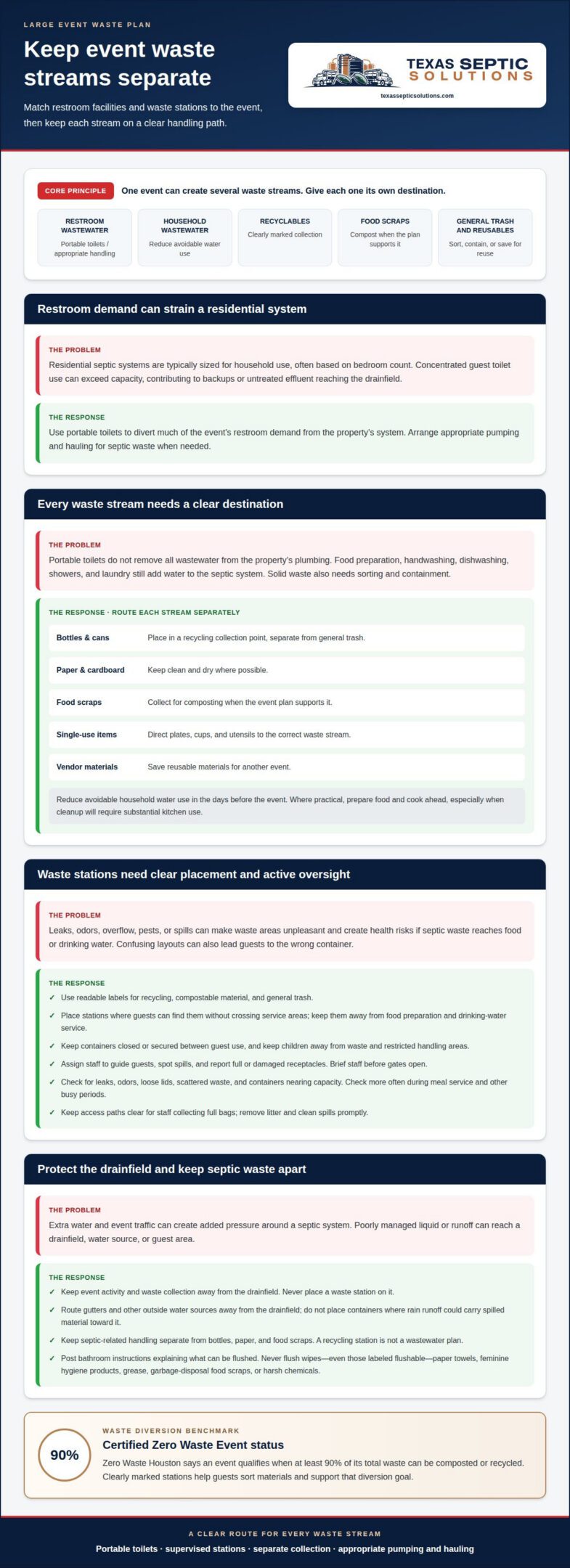
Houston events produce several waste streams, and each needs a clear destination. Restroom wastewater is a key concern at sites with residential septic systems. A sudden increase in toilet use can exceed system capacity, contributing to backups or untreated effluent reaching the drainfield. Residential systems are typically sized for household use, often based on bedroom count, not a crowd of visiting guests.
Portable toilets can divert much of the event’s restroom demand from the property’s septic system, but other wastewater may still flow through the home’s plumbing. Food preparation, handwashing, dishwashing, showers, and laundry all add water to the system. Reduce avoidable household water use in the days before the event. Where practical, prepare food and cook ahead, especially if the menu will require substantial kitchen cleanup.
Solid waste also needs sorting and containment. Set out clearly labeled stations so guests can distinguish these common materials:
- Bottles and cans for recycling, separated from general trash.
- Paper and cardboard, kept clean and dry where possible.
- Food scraps, collected for composting when the event plan supports it.
- Single-use plates, cups, and utensils, directed to the correct waste stream.
- Reusable vendor materials, saved for use at another event.
Keep these waste streams separate from septic wastewater. A recycling station does not replace a wastewater plan, and food scraps should never go into toilets. Clear signs help guests choose the right container. Reusable or compostable options can also reduce general trash. Place collection points near food service areas and exits so guests can sort items as they finish using them.
At a Houston property with a septic system, protect the drainfield from extra water and traffic. Route gutters and other outside water sources away from it, and keep event activity and waste collection away from places where effluent could surface. Post bathroom instructions that explain what can be flushed, and share septic safety tips. Never flush wipes, even those labeled flushable, paper towels, toilet paper, feminine hygiene products, grease, garbage-disposal food scraps, or harsh chemicals.
Plan separate paths for restroom wastewater, household wastewater, recyclables, compostable scraps, and general trash. Assign each a collection point or handling plan before guests arrive. This helps organizers identify what needs pumping and hauling, what can be recycled, and what must stay out of the septic system.
Supervised waste stations
Septic waste can create health risks if it spills or reaches food or drinking water. Keep it contained and inaccessible to pests and children, and monitor collection points for leaks, odors, or overflow.
Place stations where guests can find them without crossing service areas. For example, set a clearly labeled recycling point near food service, with general waste containers beside it. Keep septic-related handling separate from bottles, paper, and food scraps. This layout makes disposal routes visible and reduces confusion during busy periods.
Assign an attendant or event staff member to monitor each active collection area. They can guide guests to the right container, spot spills, and report full or damaged receptacles. Brief staff before gates open so they know what belongs in each container and who to alert if a problem needs attention.
- Use readable labels for recycling, compostable material, and general trash.
- Keep waste containers closed or otherwise secured between guest use.
- Position stations away from food preparation and drinking-water service.
- Keep children from reaching waste or entering restricted handling areas.
- Remove litter and clean spills promptly using the event’s waste plan.
Station placement matters as much as signage. Don’t put containers where rain runoff could carry spilled material toward a drainfield, water source, or guest area. Keep access paths clear for staff collecting full bags. Never place a waste station on a septic drainfield, where traffic or poorly managed liquid could create additional problems.
Odors and overflowing containers can quickly make a station unpleasant. Staff should look for leaks, loose lids, scattered waste, and containers nearing capacity. Set an inspection rhythm based on event activity, with more frequent checks during meal service and other busy periods. Attendance and waste volume determine how often staff should check.
Waste must also stay inaccessible to insects, rodents, and other possible disease carriers. Secure containers and prompt cleanup help prevent pests from reaching waste that could contaminate food or drinking water. Keep disposal areas tidy, since odor and an unsightly appearance can become a nuisance for guests and nearby properties. If septic system pumping is needed as part of the event plan, professional septic pumping can address the system’s waste-handling needs.
For events pursuing waste reduction, Zero Waste Houston says an event qualifies for Certified Zero Waste Event status when at least 90% of its total waste can be composted or recycled. Clearly marked stations help guests sort materials and support that diversion goal.
Provide clearly labeled stations for bottles, cans, and paper recycling. Keep them separate from septic-related waste handling so guests can identify the intended disposal route at a glance. Staff can direct guests to the recycling point and monitor nearby containers for leaks, odors, or overflow.
Clear separation keeps the station layout orderly: recyclables go to their marked collection point, while septic-related material stays apart. Guests get a straightforward disposal option, and the event’s waste-handling plan remains clear.
Houston Event Portable Toilet Permits & Regulations
Temporary toilets and septic tanks involve different waste-handling pathways in Houston. Don’t assume a rule for one automatically applies to the other. First identify whether wastewater will enter a domestic septic tank or be collected from portable units. Houston’s registration requirement applies to domestic septic tank waste generators, while disposal must comply with rules governing sewage disposal and water pollution.
In Houston, domestic septic tank waste generators must register their tanks before a city-permitted waste hauler can evacuate them. First-time registration is free; a fee applies to replacing a lost registration certificate. This matters if a property’s tank needs pumping before or after an event. Include tank registration in the planning timeline rather than leaving it until event day.
Special waste has separate paperwork and retention rules. Houston special waste generators must return the generator copy of a waste manifest within 15 days of pump-out. They must also keep both the generator copy and returned generator copy onsite for five years. These requirements apply to special waste generators, so don’t treat every portable toilet or septic waste stream as special waste by default. Identify the waste category before planning its paperwork.
Houston also requires every interceptor in incorporated Houston to be fully evacuated at least every 90 days, unless a waiver application is submitted and approved. This is an interceptor requirement, not a general rule that every temporary toilet must be pumped on that schedule. Event planners should avoid applying it to unrelated equipment or waste streams.
Use this planning sequence to keep the distinctions clear:
- Identify the property’s location and whether it is in incorporated Houston.
- Separate domestic septic tank waste, portable toilet waste, and any special waste stream.
- For domestic tank pump-out, account for registration before a city-permitted hauler evacuates it.
- For special waste, plan manifest return within 15 days and onsite retention for five years.
- Keep disposal arrangements consistent with sewage and water-pollution requirements.
Houston special waste violations can result in citation fines from $250 to $2,000 per violation. That range is tied to special waste violations, not a universal fine for every event sanitation issue. Accurate waste classification and records help organizers avoid mixing requirements that apply to different situations.
Plan portable toilet placement, servicing, and waste removal around the event site and its waste stream. Distinguish temporary toilet servicing from septic tank evacuation and special waste handling. This keeps the plan focused on applicable requirements and avoids assuming one permit covers every event toilet.
How professionals estimate septic waste volume for a large event
A useful estimate starts with the property, not a generic event formula. A professional separates wastewater entering the septic system from waste collected in portable toilets. Portable units can divert restroom use, while sinks and kitchen plumbing may still feed the property’s tank. Extra bathroom use during a gathering can strain a residential system.
Next, review the system’s intended household load. Residential septic systems are designed for a specific number of people, typically estimated by bedroom count. That context shows why a temporary crowd may create demand beyond routine household use. Also consider whether residents will use the home’s bathrooms during the event.
Event details shape expected demand. Consider attendance, how long guests stay, arrival patterns, and which facilities they’ll use. A short gathering with portable toilets may put a different load on the property than an extended event where guests also use indoor sinks and kitchen plumbing. Meal service adds cleanup water, while handwashing adds wastewater at restroom and food areas.
For a practical assessment, the professional gathers details such as:
- Expected attendance and event duration.
- Whether portable toilets will serve guests, and where they’ll be placed.
- Which indoor bathrooms, sinks, or kitchen facilities remain available.
- Whether food preparation and cleanup will happen onsite.
- The septic system’s household design context and current condition.
- Any recent pumping, maintenance, or reported performance issues.
These details help separate event-generated wastewater from normal household use. For example, guests might use portable toilets while caterers wash equipment in the home. Restroom demand then shifts away from the tank, but kitchen wastewater still enters it. A plan that counts only the portable units would miss that remaining load.
The system’s condition also affects planning. Consider known signs of poor performance, recent service history, and whether the tank may need attention before the event. The goal is to understand the system’s capacity, not assume that a past event proves it can handle a larger or longer gathering.
Once the details are clear, use the estimate to plan which facilities guests will use, whether septic pumping is needed, and how waste will be handled. Attendance alone does not determine septic volume. Event duration, household use, food service, system design, and portable toilet use all affect the expected load. Share these details early so the plan reflects the actual site rather than a broad rule of thumb.
Where can event septic waste be legally disposed of in Houston
Event septic waste must go to a destination that can lawfully receive it. The correct route depends on its source and classification. Waste from a residential septic tank, portable toilet waste, and other event refuse are separate streams. Identify each from collection through hauling instead of treating every load as ordinary trash.
For a property’s septic tank, arrange evacuation through a city-permitted waste hauler after meeting the tank’s registration requirements. The hauler removes the waste for appropriate disposal. Keep septic contents contained during collection and transport. Spills or improper discharge can expose guests, workers, and nearby areas to wastewater.
Portable toilet waste also needs a planned collection and disposal route. Coordinate servicing with the event’s sanitation plan, including unit placement and service access. Keep collection routes clear of guest queues and food service, and away from places where waste could reach stormwater. Never discharge wastewater onto the ground or into storm drains, streams, or lakes.
Waste disposal in Houston must comply with laws and regulations governing sewage disposal and water pollution. Handling must not contaminate an approved drinking water supply or pollute bathing beaches, shellfish breeding grounds, or streams and lakes used for public or domestic water supply or recreation. Proper containment and location matter just as much as hauling waste away.
Before event day, organize the disposal plan around these practical steps:
- Identify each waste stream, including septic tank contents and portable toilet waste.
- Keep collection points accessible to the hauling vehicle without crossing guest or food areas.
- Use closed, secure containment during staging and removal.
- Keep wastewater away from storm drains, drinking water, and recreational waters.
- Retain the records that apply to the waste category and hauling arrangement.
Special waste may have additional Houston manifest requirements. Those records are separate from the general requirement to follow sewage disposal and water-pollution rules. Classify waste correctly to determine which paperwork and handling route apply. Don’t assume the same destination or recordkeeping process fits every waste type.
For event organizers, the key decision is not simply where a truck can unload. The destination must be appropriate for the waste being transported, and the route must prevent releases along the way. If a property’s septic tank needs professional pumping as part of that plan, arrange septic pumping support.
That choice should also reflect basic protections for the surrounding area. Event planners should follow Houston’s waste regulations when disposing of event waste. Waste disposal should prevent insects, rodents, and other possible disease carriers from accessing waste in ways that could contaminate food or drinking water.
Keep waste inaccessible to children so it does not create a public health hazard. Prevent odors and unsightly conditions that could become a nuisance. Include these protections in event disposal planning alongside the choice of a lawful destination.
Texas Septic Solutions
Texas Septic Solutions helps property owners address septic system needs connected to event planning. If a large gathering may strain the onsite system, septic system maintenance can support its ongoing care, while septic system pumping addresses accumulated tank waste. When an inspection or event exposes a system problem, septic system repair may be the next step.
The right service depends on the property’s system and its condition. Share the event context and any known septic concerns so the appropriate work can be discussed. This support focuses on the septic system itself, complementing the event’s separate plans for portable toilets and waste stations.
Contact Texas Septic Solutions to discuss your septic system needs.
Build a Septic Plan for Your Next Event
Make the plan useful beyond a single event. Keep a brief record of facility use, site conditions, and any septic concerns that arise. These observations can inform future arrangements and help identify when the property needs attention beyond event-day waste handling.
Planning how to manage septic waste for a large event in Houston starts with the property’s needs, not a one-size-fits-all checklist. If your plans raise questions about the onsite system, Texas Septic Solutions offers new septic system installation, septic system repair, and septic system maintenance. The right next step depends on whether the system needs ongoing care, repair, or a new installation.
Bring your event details and known system concerns into the conversation, so the next step can focus on your property. Contact Texas Septic Solutions to discuss your septic system needs and move forward with a plan that fits your site.
Frequently Asked Questions
Should an event without sewer access use portable toilets or a holding tank?
Portable toilets provide restroom facilities at a site without sewer access. A holding tank can collect wastewater from temporary fixtures such as sinks, but it needs a suitable setup and planned servicing. To manage septic waste for a large event in Houston, choose facilities that fit the site layout and wastewater sources. Keep restroom waste separate from wastewater entering an onsite septic system.
Where can I arrange septic waste pumping and disposal for a Houston-area event?
Texas Septic Solutions provides septic system pumping for onsite tanks. When planning how to manage septic waste for a large event in Houston, remember that domestic septic tank waste generators must register their tanks before a city-permitted waste hauler can evacuate them. Disposal must follow sewage and water-pollution rules. Texas Septic Solutions serves the Greater Houston Metro area, including Cleveland, Cypress, Huffman, and Shepherd. Portable toilet waste follows a separate handling path.