
Septic Pumping Costs and Routine Care for Cypress Sports Complexes
For sports complexes in Cypress, septic tank pumping should reflect actual facility use, not just the calendar. Planning septic tank pumping for sports complexes in Cypress means considering restroom demand, tank capacity, and signs that service may be needed. A schedule based on these factors helps managers plan around busy events.
It’s understandable to want a clear routine and a predictable budget. This article explains what routine service involves, what can signal a need for pumping, and which factors shape costs in Texas. You’ll also learn how local site conditions and system condition can guide maintenance planning, helping you choose a practical next step for your facility.
Key Takeaways
- Plan pumping around actual facility use and system capacity, not a one-size-fits-all calendar.
- Routine service can help identify maintenance needs before they disrupt restroom operations.
- Costs depend on the job’s scope and site conditions; a sports complex’s needs differ from a standard residential system.
- Estimate system capacity by considering restroom demand, locker-room use, concessions, and event schedules together.
- When pumping, repairs, maintenance, or a new system are needed, choose a service path that fits the facility’s specific situation.
Need Septic Pumping in Texas?
Sports complexes in Cypress need septic planning that reflects facility use and site conditions. Texas has roughly 2.6 million on-site septic systems, and Cypress-area clay soils and high water tables can influence system performance.
Texas on-site septic systems are subject to TCEQ Chapter 285 rules. Commercial sites also need to account for their system design and the work being performed, rather than assuming residential practices apply unchanged.
There is no single post-pumping permit or inspection rule for every Cypress property. Additional requirements depend on the system and whether the work goes beyond routine pumping, such as repairs or changes to system components.
Delaying service at a high-use sports facility can contribute to backups, foul odors, or interrupted restroom access. If a tank malfunctions, effluent can affect water quality, according to Middlesex County.
Service Requests and Quotes
For a Cypress or Greater Houston property, an online service request or quote inquiry should identify the site address, facility type, and the problem or service needed. Include useful details such as whether the property has locker rooms, concessions, or several restroom areas. Those details help distinguish a residential request from a commercial facility with heavier, event-driven use.
Describe access considerations, too, such as where the tank is located on the property. A clear request helps define the job and its scope before scheduling or quoting.
Commercial Provider Selection
Compare service options on practical points: emergency coverage, clear disposal practices, and experience with commercial systems. For a sports complex, relevant experience includes planning around busy facilities, larger wastewater flows, and site access needs. Clarify whether the service covers pumping alone or also identifies visible concerns that may need repair.
Commercial needs differ from household service. A home may have steadier daily use, while a sports complex can see concentrated demand during games or events.
Coverage should be considered by the exact property location, not just a broad “Greater Houston” label. A sports complex in Cypress, a field elsewhere in the region, and a residence may have different access conditions and system needs. Confirming the site address in a request helps define the service area and the work involved.
Residential and commercial septic systems both need care, but their use patterns differ. At a sports venue, restroom traffic can rise sharply during tournaments, while locker rooms and concessions add demand. Facility managers can track event schedules and recurring symptoms, then share that context when arranging service. This gives the service team a clearer picture of the system’s operating conditions.
Routine septic tank pumping
Routine pumping removes accumulated solids so the tank can continue receiving wastewater. For a sports complex, plan the work around facility use, tank access, and the system’s observed condition.
Pumping and Inspection Steps
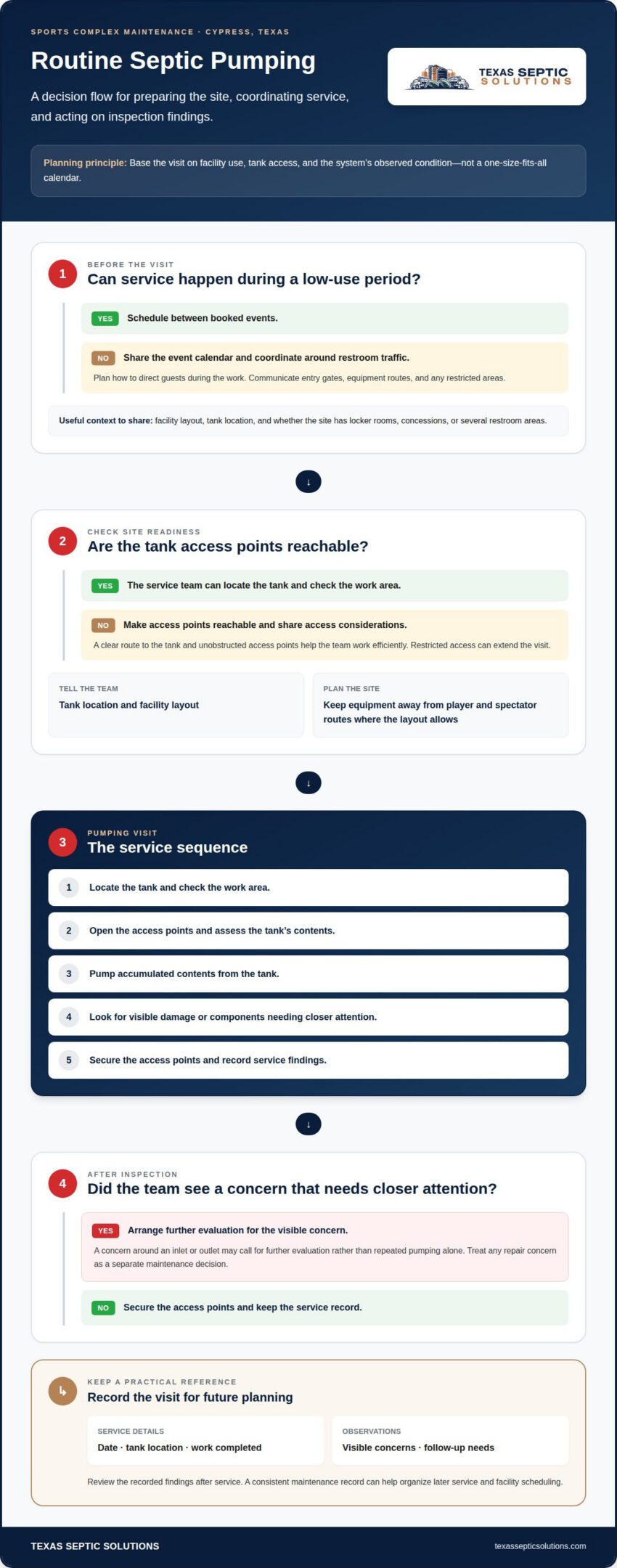
A commercial pumping visit follows a clear sequence. The service team locates the tank access points and checks the work area. Next, the tank is opened and its contents are removed with pumping equipment. The team can then inspect accessible components and note visible concerns that may need attention.
- Locate the tank and make its access points reachable.
- Open the access points and assess the tank’s contents.
- Pump accumulated contents from the tank.
- Look for visible damage or components needing closer attention.
- Secure the access points and record service findings.
Inspection findings add context to a pumping visit. For example, a visible concern around an inlet or outlet may call for further evaluation rather than repeated pumping alone. A service record can note the date, tank location, work completed, and observations. Keeping that record gives facility managers a practical reference for planning later service or reporting a recurring issue.
Service Time and Facility Downtime
There is no single pumping duration for every Cypress sports complex. The time depends on tank access, the amount of material to remove, hose distance, and whether inspection reveals additional work. A clear route to the tank and unobstructed access points help the service team work efficiently. Restricted access or extra evaluation can extend the visit.
To limit disruption, schedule service during a low-use period, such as between booked events. Share the facility layout, tank location, and event calendar when arranging the visit. This helps coordinate access around locker rooms, concessions, and restroom traffic. Keep service equipment away from player and spectator routes where the site layout allows.
Before the appointment, facility staff can identify which areas depend on the system and plan how to direct guests during work. For example, a complex can coordinate pumping between games rather than during peak restroom demand. Clear communication about entry gates, equipment routes, and restricted areas also reduces avoidable delays.
After service, review the recorded findings and note any follow-up needs. If the inspection identifies a repair concern, address it as a separate maintenance decision. A consistent septic system maintenance plan can help organize service records and facility scheduling.
Texas septic pumping costs
Budgeting for septic tank pumping for sports complexes in Cypress starts with the job’s scope. The work depends on the tank, access, and service required, not just the property’s label. Request a quote for the specific job. A residential tank and a commercial facility can require different planning.
Tank capacity is one factor that shapes the work. A larger tank can hold more material, which may affect pumping time and disposal volume. A facility with separate systems may need each tank assessed as its own part of the job. Sharing tank locations and known system details helps define the estimate.
Site access also shapes the work. A tank beside an open service lane presents different conditions from one behind locked gates or landscaping. Long equipment routes, blocked access points, or event traffic can change how a crew reaches the tank. Include these details in the request so the quote reflects the property layout.
The amount and condition of tank contents matter, too. A scheduled pumping visit differs from a call involving a backup or another operating problem. If inspection reveals a repair need, that work changes the scope beyond pumping. Separate the requested service from any observed concern so the estimate describes each task clearly.
For septic tank pumping at a Cypress sports complex, use patterns help explain the job. Restrooms may see heavier use during tournaments, while locker rooms and concessions add demand. A quote request can describe those areas and the facility’s event schedule. That context connects service planning with the system’s actual load.
Review the written estimate for its scope before approving work. Look for the tank or tanks covered, pumping tasks, access assumptions, and any inspection or follow-up work described. If the site has several buildings, confirm which system each task addresses. A clear scope makes it easier to compare the estimate with the requested work.
For useful budget planning, keep service records together. Note the date, tank location, work completed, and findings from each visit. A record showing recurring concerns at one tank can help distinguish routine pumping from a repair issue. Facility managers can also pair those records with tournament calendars and maintenance plans.
Share the site address, tank locations, access conditions, and service concern when requesting a quote. Add whether the request concerns routine pumping or an active problem. These details help define the work without relying on a residential estimate for a commercial property. The resulting quote can reflect the specific Cypress facility and its septic tank pumping needs.
Which septic pumping companies serve sports complexes in Cypress, Texas?
For a Cypress sports complex, service coverage starts with the property address. A provider’s general Greater Houston description doesn’t establish that every nearby site receives service. Give the exact address, including the facility entrance used by service vehicles. This helps clarify whether the complex falls within the provider’s working area and supports realistic scheduling.
Commercial experience matters because a sports venue differs from a residence. A complex may have locker rooms, concessions, several restroom areas, or separate buildings. Describe those features when requesting service. The details help identify the tank location, access needs, and whether the request concerns planned pumping or an active system problem.
Before scheduling, define the work in practical terms. A routine request may focus on removing tank contents; an active backup may require attention beyond pumping. Share symptoms, affected facilities, and event timing. For example, reporting that restrooms are unusable during a tournament gives useful context for the facility’s operational needs.
Use these details to make a focused service request:
- The Cypress property address and best service entrance.
- Known tank locations and access conditions.
- Facility features, such as locker rooms or concessions.
- Whether the request is routine or relates to a current problem.
- Relevant event dates and areas affected.
Emergency service is another practical comparison point. A complex with recurring events needs a clear way to describe urgent symptoms and affected facilities. Ask how the request is handled, what details are needed, and which work the service covers. Avoid treating a routine pumping appointment and an active sewage backup as identical situations.
Disposal practices are also worth discussing. Ask for a clear explanation of how pumped material is handled and what the service documentation records. A dated record that identifies the tank and work performed can help facility managers track maintenance across multiple buildings. It also gives staff a useful reference if concerns return.
For Cypress and nearby communities, the property’s precise location remains central. Share directions, gate access, and the route to the tank, especially if the site has controlled entry. Those specifics help avoid confusion between a venue’s public entrance and its service access point.
Choose the service approach that matches the facility’s actual need. A straightforward pumping request differs from a system issue requiring repair or broader evaluation. Clear descriptions of the site, symptoms, and event schedule help connect the requested work with the complex’s day-to-day operations.
Every cost estimate should be tied to the tank and requested work, rather than treated as a universal rate. For context, a standard 1,000-gallon septic tank in Texas is cited at a pumping cost of 275 to 475 in 2026. Use that figure as a reference point when discussing the proposed service, and ask the provider to clarify whether the quote addresses the complex’s actual tank and access conditions. When evaluating local providers for septic tank pumping for sports complexes Cypress, partnering with an experienced team like Texas Septic Solutions ensures accurate pricing and professional handling. The property details already gathered can help keep the discussion specific: identify the facility, explain the service need, and confirm what work and documentation the quoted amount covers before scheduling.
What septic tank capacity is recommended for a sports complex with locker rooms and concessions?
No single tank capacity fits every sports complex. A Cypress facility’s design must reflect expected wastewater flow, peak attendance, and the buildings connected to the system. A site with locker rooms and concessions has different demands from a field with limited restroom facilities.
Start with a clear picture of facility use. Count the restrooms, showers, sinks, and concession areas that discharge into the system. Then describe how often games, tournaments, and practices take place. A complex with quiet weekdays and crowded event days has a different peak-use pattern from one operating at steady demand.
Peak attendance matters because several fixtures may be used at once. For example, a tournament can bring spectators, athletes, and staff onto the property during the same period. Locker-room showers add wastewater after play, while concession sinks add use during breaks. Capacity planning should consider those overlapping demands, not only average daily activity.
The system layout matters, too. Identify which buildings connect to each tank and whether separate areas use separate systems. A concession building may not share the same connection as the locker rooms. A site plan, tank locations, and fixture list help show where wastewater enters and where demand concentrates.
Useful details to gather include:
- Restroom and shower locations across the complex.
- Concession sinks and other connected fixtures.
- Typical attendance during practices and major events.
- Event duration and the timing of restroom peaks.
- Which buildings connect to each septic tank.
Existing system performance gives another clue. Recurring backups, slow drainage, or odors during busy events can point to a capacity or system concern. Those symptoms don’t establish the cause by themselves. Pair them with event schedules and building connections to create a useful picture for evaluating the setup.
For a new facility or major change in use, base planning on the intended operation. Adding showers or expanding concessions can change wastewater demand. A capacity recommendation should account for the updated layout and peak use, rather than simply copying a tank size from another property.
In Cypress, clay soils and high water tables are common local conditions. They make the site context important alongside fixture counts and attendance. Share the site plan, use patterns, and known system history when evaluating capacity. To connect those details with future system needs, plan your septic system capacity around the facility’s actual layout and demand.
Texas Septic Solutions: Septic System Pumping
Texas Septic Solutions provides septic system pumping for sports facilities and other properties. Turn to the team for routine service, or when facility staff notice signs that the system needs attention. Sharing the tank location, facility layout, and known symptoms helps clarify the work involved.
For ongoing system needs, septic system maintenance can support a practical service plan. If an inspection points to a problem beyond pumping, septic system repair may be the next step. New septic system installation may suit a property requiring a new septic setup.
Contact Texas Septic Solutions to discuss septic system pumping for your Cypress facility.
Build a Practical Plan for Your Facility
Make septic planning part of the facility’s operating calendar. Pair service records with upcoming events, changes to restroom use, and planned additions to locker rooms or concessions. That gives managers a useful basis for discussing the system’s needs as operations change. For septic tank pumping at sports complexes in Cypress, connect the site’s current condition with its future use.
Texas Septic Solutions provides septic system maintenance, septic system repair, and new septic system installation. These services address different needs, from ongoing care to a repair concern or a new system project. Share the facility details and the work you’re considering to start a focused conversation.
Contact Texas Septic Solutions to discuss the next step for your sports complex. A clear plan helps your team prepare for facility needs with confidence.
Frequently Asked Questions
How much does commercial septic tank pumping cost in Cypress, Texas?
Commercial pumping work depends on the job’s scope, and a quote follows a request. For a Cypress sports complex, include the tank location, access conditions, and whether the request is routine pumping or an active system problem. Also describe connected facilities, such as locker rooms or concessions. Those details help define the work for the estimate. A residential tank benchmark won’t establish the cost for a commercial facility.
How often should septic tanks at sports complexes be pumped?
Set the pumping schedule using the tank’s service history, system condition, and facility use. Sports complexes can have sharp demand increases during tournaments, so managers should record event activity and any recurring system symptoms. Texas Septic Solutions’ residential guidance gives an average of every 2-3 years, or every 3-5 years depending on household size. Those residential intervals don’t establish a schedule for a commercial sports facility.
How can sports complex managers find the septic tank and access ports before pumping?
Identify the tank location and make its access points reachable before the visit. Share the tank location and facility layout with the service team when arranging service.