
Septic System Maintenance Costs for Cleveland Homes With Guest Houses
A guest house can change your septic pumping schedule even if it’s used only part of the year. Septic system maintenance for homes with guest houses in Cleveland, TX should account for everyone using both buildings: local septic tanks should be pumped every one to three years, depending on tank size and the number of users. More frequent stays can add wastewater and solids, putting extra demand on the system.
It makes sense to wonder whether pumping is due, especially when guests come and go or the property sits vacant between visits. The right timing depends on how often the guest house is occupied, how many people use it, and the capacity and condition of the septic system.
This article explains how guest house use affects pumping, which warning signs can point to a stressed system, and what influences cleaning and repair costs. Pricing depends on the case and is provided after a quote request; tank size, access, and the work needed shape the quote. You’ll also learn how routine maintenance and timely repairs can help you plan for reliable wastewater service across both homes.
Key Takeaways
- Compare the tank-size and household examples in the pumping schedule to understand how additional guest use can change the maintenance plan.
- Build routine inspections into your upkeep, and learn when effluent screens need attention.
- Recognize signs such as sewage odors, slow drains, standing water, and unusually green grass near the drainfield.
- Understand which factors shape cleaning and repair quotes, including tank access and the type of work needed.
- See how pumping, maintenance, and repairs can address different septic concerns, and when a system problem may call for more than cleaning.
How heavier household use affects pumping frequency
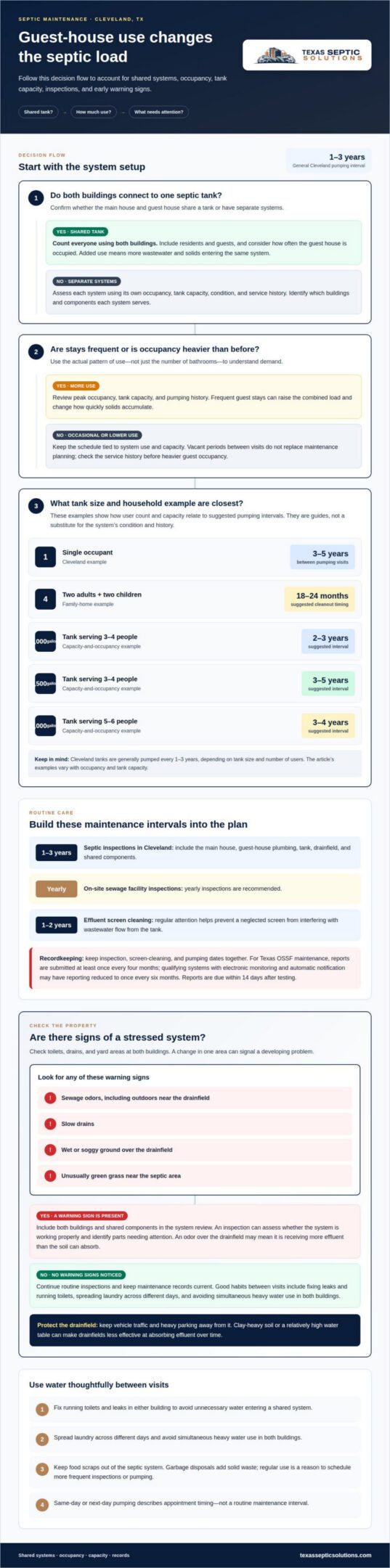
When both buildings share a septic tank, guest-house use adds wastewater and solids to the same system. For septic system maintenance for homes with guest houses in Cleveland, TX, count everyone who uses the system and consider how often visitors stay. Tank capacity, occupancy, and service history help guide the pumping schedule.
Occupancy-Based Pumping Intervals
A single occupant in Cleveland may go 3-5 years between pumping visits. A family home with two adults and two children may need a cleanout every 18-24 months. These examples illustrate how user numbers affect the interval, but tank capacity also matters. A 1,000-gallon tank serving 3-4 people has a suggested interval of 2 to 3 years.
For 3-4 people, a 1,500-gallon tank has a suggested interval of 3 to 5 years. For 5-6 people, the listed tank size is 2,000 gallons, with a 3 to 4 year interval. Cleveland tanks are generally pumped every one to three years, depending on tank size and the number of users. Frequent guest stays can raise the combined load and change how quickly solids accumulate.
Guest House System Capacity
To understand whether a septic system can support a guest house, first identify whether both buildings connect to one tank or have separate systems. Then consider peak occupancy, tank capacity, and how often the guest house is used. These factors give a clearer picture of demand than bathroom count alone. A maintenance plan should account for all residents and guests who use a shared system.
Manage plumbing and water use by fixing running toilets and leaks, spreading laundry across different days, and avoiding simultaneous heavy water use in both buildings. These steps can reduce sudden surges of wastewater. Garbage disposals increase solid waste; schedule more frequent inspections/pumping if used regularly. Keep food scraps out of the septic system rather than using a disposal as the routine way to discard them.
Same-day or next-day pumping refers to appointment timing, not a routine maintenance interval. A pumping schedule should reflect system use and capacity, rather than rely on urgent service. Before a period of heavier guest occupancy, review the service history and current use pattern. This helps you assess whether the existing schedule still fits the household.
Septic system inspection and maintenance
Regular inspections help identify developing problems before they disrupt wastewater treatment at either building. For a property with a guest house, include both buildings and any shared septic components in the maintenance picture.
Yearly System Inspections
Yearly inspections are recommended for on-site sewage facilities, while Cleveland homeowners should have septic systems inspected every 1-3 years. An inspection can assess whether the system is working properly and identify parts that need attention. Include the main house, guest-house plumbing, tank, and drainfield in the review, especially when both buildings use one system.
Effluent screens also need regular attention. They should be cleaned every 1-2 years, because a neglected screen can interfere with wastewater flow from the tank. An inspection can establish whether the screen needs cleaning and help track its last service. Keep inspection and cleaning dates together with pumping records so maintenance follows the system’s condition, not just guest-house occupancy.
Good habits between visits matter, too. Septic systems rely on bacteria to break down waste, so avoid sending non-septic waste into the plumbing. Spread heavy water use across the week where practical, and address leaks that keep wastewater flowing. For example, a running toilet in either building adds unnecessary water to a shared system.
Inspection Reporting
For Texas OSSF maintenance, providers must submit a report to the permitting authority and property owner at least once every four months. The reporting interval may be reduced to once every six months for qualifying systems with electronic monitoring and automatic notification. Reports must be submitted within 14 days after the test is performed.
Required system tests follow 30 TAC §285.91(4). Texas OSSF maintenance requirements are governed by Texas Health and Safety Code Section 366.0515 and 30 TAC §285.7. A maintenance contract must identify routine maintenance frequency and required testing and reporting. Keep reports with the property’s system records so future maintenance can account for past findings.
Those records are useful during a property sale. Texas generally requires septic inspections as part of real estate transactions, so inspection documentation can help show the system’s observed condition and maintenance history. For a property with a guest house, records can also clarify whether one system serves both buildings.
For an inspection that covers a shared setup, septic maintenance inspections can help identify system needs and keep upkeep organized.
Warning signs of a full or stressed septic system
Watch how toilets, drains, and the yard behave at both buildings. A change in one area can help owners notice a developing problem before wastewater affects more of the property.
Drain-Field Overload Signs
Wet or soggy ground over the drainfield, sewage odors outdoors, and unusually green grass near the septic area can point to trouble. An odor over the field may mean it’s receiving more effluent than the soil can absorb. In Liberty County, clay-heavy soil or a relatively high water table can make drainfields less effective at absorbing effluent over time.
Protect the drainfield by keeping vehicle traffic and heavy parking away from it. Avoid adding extra water to the system during periods when the ground is already wet, and pay attention to whether wet spots persist near the field. If a guest house shares the system, note whether symptoms appear after both buildings have been heavily used. That timing can help distinguish a local plumbing issue from stress affecting the shared drainfield.
Septic Failure Warning Signs
Slow-draining toilets and sinks, recurring sewage smells, standing water near the drain field, and unusually green grass can warn of a system problem. Notice whether several fixtures slow down at once or the issue is limited to one bathroom. Multiple affected fixtures may indicate a broader system concern, while persistent odors or wet ground outdoors warrant prompt attention.
A sewage odor inside the home can point to a full tank or damaged baffle. An odor above the drain field may suggest that the field is receiving more effluent than it can absorb. These clues can have different causes, so note where the smell occurs and whether it changes after guest stays or heavier water use.
Contaminated well water can occur in severe cases of septic failure. If the property relies on a well and wastewater problems arise, take the combination seriously. Pumping alone may not address the cause. A septic inspection can assess whether the concern involves the tank, a baffle, plumbing, or the drain field.
Keep a brief record of symptoms: the affected fixture, the location of any odor or wet ground, and whether both buildings were occupied. For example, repeated slow drains in the main house and standing water over the field after a busy guest weekend give a clearer picture than a single isolated clog. Share these observations during an inspection, and limit water use if backups or wastewater appear indoors.
Septic tank cleaning costs in Cleveland
Cleaning and related work can involve different tasks, so a quote depends on the tank and the access available. For a Cleveland property with a guest house, clarify whether both buildings connect to the same septic tank and whether the work involves pumping, a filter, or repairs.
Price depends on the case and is given after a quote request. Tank size, accessibility, and the work required shape the quote. A buried tank with difficult access may require different preparation than a tank with an accessible lid. If inspection identifies damage or a failing component, cleaning alone may not address the repair.
In Liberty County, permits are required for new well construction and major repairs. Septic tank cleaning in Cleveland typically requires a permit, and inspections are usually required before and after the work. For OSSF work, homeowners should begin with the local permitting authority to learn the applicable permit steps and inspection requirements.
Access affects how efficiently a septic tank can be opened and serviced. Risers extend access from the tank to ground level, while lids cover the openings. If the tank is difficult to locate or reach, note that when arranging service. Keep the area around the septic system accessible so technicians can reach it without unnecessary disruption to the yard.
A septic tank filter can help protect the drain field by catching solids before they leave the tank. Filter work is separate from pumping, so include it in the service request if an inspection identifies a need. The tank’s condition and system layout determine how filter work fits with other maintenance.
Replacement is a larger project than cleaning. On-site sewage facilities generally need full replacement every 15-40 years, depending on tank type and water use. Proper care and consistent maintenance can extend a concrete tank’s life to up to 40 years. Plastic or fiberglass tanks can last up to 20 to 30 years with proper care and maintenance.
Age alone does not show a tank’s condition. Inspection can assess the tank itself, including its integrity and components. Keep installation, maintenance, and repair records together. For a guest-house property, also record which structures connect to the system so future service reflects the full setup.
Septic system cleaning and repairs
Pumping removes accumulated solids from a septic tank; repairs address components that are not working properly. For a Cleveland property with a guest house, first determine whether both buildings send wastewater to the same system. That connection affects the service scope: one shared tank may need attention after combined use, while separate systems require separate assessments.
Texas septic systems are typically pumped every 3-5 years, depending on water use, household size, and system type. That interval is a general planning guide, not a reason to ignore a change in performance. A tank serving a frequently occupied guest house may collect wastewater and solids faster than one serving only occasional visitors.
Pumping and cleaning are not the same as repairing a damaged component. Pumping removes tank contents, but it won’t clear every blockage or correct a broken pipe. Blocked pipes and tree roots reaching pipelines can affect a system’s lifespan in Cleveland. If a problem returns after the tank is pumped, the next step is to inspect the plumbing and system components rather than assume another pump-out will solve it.
What goes down the drain matters, too. Food waste, including coffee grounds, adds solids to the system. Only human waste should be flushed; never flush wipes (even “flushable” ones), paper towels, toilet paper, feminine hygiene products, grease, garbage-disposal food scraps, or harsh chemicals. Share these rules with guests so both kitchens keep unnecessary solids out of the septic system.
For intermittent use, pumping before a long vacancy or before a property returns to regular use is a reasonable maintenance approach. Schedule work during milder, drier months when practical; those conditions can support a smoother service visit. Tank access, system condition, and whether the concern involves pumping or a repair help define the work. A technician can assess the issue and explain the appropriate scope.
Soil fracturing may be considered for certain septic problems, but it is a different intervention from routine cleaning. It involves inserting a hollow tube into the ground and injecting a 300-pound blast of air. The method is intended to address soil conditions, not remove tank solids or repair blocked pipes. Assessment should identify the actual cause before selecting any repair.
When sewage backs up, several fixtures slow, or a problem persists after pumping, arrange an assessment instead of relying on repeated cleanouts. Get help with a septic system concern and describe which building, fixtures, and recent use patterns are involved.
Texas Septic Solutions: Septic System Maintenance
Texas Septic Solutions helps Cleveland homeowners maintain septic systems serving a main home and guest house. Turn to the team for routine maintenance or pumping when occupancy changes, service is due, or a system needs attention.
If an inspection or symptoms point to a damaged component, septic system repair can address the problem beyond routine pumping. If the existing system cannot support the property’s wastewater needs, complete septic system installation may be the relevant next step. The right service depends on whether the need is maintenance, pumping, repair, or a new system.
Share which buildings connect to the system, how often the guest house is occupied, and what symptoms you’ve noticed. Contact Texas Septic Solutions to discuss your septic system needs.
Plan Ahead for Both Homes
Make septic care part of property management, not an afterthought between guest visits. A shared plan can record who uses the guest house, which buildings connect to the system, and any changes in occupancy. This gives future maintenance decisions useful context and helps everyone follow the same plumbing practices.
For septic system maintenance for homes with guest houses in Cleveland, TX, choose the next step based on the system’s needs. Texas Septic Solutions provides regular maintenance and pumping for ongoing care, septic repairs when a component needs attention, and complete septic system installation when a property needs a new system. Start by identifying which buildings connect to the system and what symptoms or maintenance needs have arisen.
Keep the plan accessible to household members and guests, and update it when the property’s use changes. A clear record makes it easier to act deliberately rather than wait for a disruption. Contact Texas Septic Solutions to discuss a practical next step for your property.
Frequently Asked Questions
Should I pump my septic tank?
Yes, schedule pumping based on the tank’s service history, household use, and condition. Residential systems should be pumped every three to five years; the FAQ also states “approximately every 2-3 years” as the average. For a shared guest-house system, account for both buildings’ use. Only human waste should be flushed; never flush wipes (even “flushable” ones), paper towels, toilet paper, feminine hygiene products, grease, garbage-disposal food scraps, or harsh chemicals. Garbage disposals increase solid waste; schedule more frequent inspections/pumping if used regularly.
What does the licensed maintenance provider do?
A maintenance provider performs scheduled system maintenance and professional monitoring. Texas Septic Solutions holds Maintenance provider license MP000 1859. For a Texas OSSF, maintenance providers must test systems as required by 30 TAC §285.91(4), and submit reports to the permitting authority and property owner at least once every four months. The provider’s work helps create a record of system condition and maintenance needs for the property owner.
What should the contract specify?
Texas onsite sewage facility maintenance agreements should identify the frequency of routine maintenance and any required testing and reporting. For a property with a guest house, make sure the maintenance plan reflects which buildings use the system and what routine work is covered. Keep agreements and inspection records together. Changes in occupancy or system configuration may affect future maintenance planning.
Who can I contact for more information?
Contact Texas Septic Solutions at (281) 432-1000 for questions about septic system maintenance, pumping, or repairs. The company serves Cleveland, Houston, Cypress, Huffman, and Shepherd. When you call, have the property location, the buildings connected to the system, and any recent symptoms ready to describe. Those details help focus the conversation on the issue affecting your home or guest house.
How do guest houses affect septic system capacity and wastewater flow?
A guest house can increase wastewater entering a shared system, especially when both homes are occupied at once. Identify whether the buildings connect to one tank or separate systems, then consider peak use across kitchens, bathrooms, and laundry. Heavy rain can saturate soil around the drain field; avoid parking heavy vehicles over the drain field during wet conditions. Managing water use can help limit added stress on the system.
What are signs a septic system is overloaded or failing?
Slow drains in several fixtures, sewage odors, wet ground, or standing water near the drain field can signal a system problem. A septic alarm calls for prompt action. If septic alarm goes off: immediately minimize water use, check circuit breaker, and contact Texas Septic Solutions right away. Note which building and fixtures are affected, and whether symptoms began after heavy use. That information can help guide the assessment.