
Septic System Maintenance Checklist for Small Businesses in Huffman, TX (2026)
What if a single overlooked inspection could force your Huffman business to lock its doors for a week? We understand that as a local business owner, you already have enough on your plate without worrying about complex Harris County regulations or the looming threat of a sewage backup during your busiest hours. The stress of potential closures and high emergency repair costs is a burden you shouldn’t have to carry alone. That is why we have developed this professional-grade guide to septic system maintenance for small business Huffman TX owners. This checklist is designed specifically to help you prevent costly failures and remain fully compliant with Texas environmental standards. We will walk you through the essential quarterly inspection requirements for aerobic systems, the legal necessity of maintenance contracts, and a clear schedule for tank pumping. By following these steps, you can ensure your business stays operational and avoids the common pitfalls that lead to expensive downtime.
Key Takeaways
- Learn why high-flow commercial systems require different care than residential setups and which Huffman business types face the highest risk of failure.
- Master a specialized schedule for septic system maintenance for small business Huffman TX that helps you catch minor issues before they become emergency repairs.
- Understand the strict Harris County regulations that require quarterly inspections for aerobic systems to keep your business legally compliant.
- Discover how professional diagnostic tools identify hidden sludge buildup that standard visual inspections often miss.
- Find out how a dedicated maintenance plan ensures zero downtime for your business while keeping long-term utility costs predictable.
Why Small Business Septic Systems in Huffman Require Specialized Care
Many business owners in Huffman assume their septic system operates just like the one at home. That assumption can be a costly mistake. While a standard septic tank for a residence handles predictable, low-flow waste, commercial systems face high-stress conditions every day. Retail shops, local cafes, and hair salons in Huffman put unique demands on their infrastructure that residential systems never encounter. When your system fails, it isn’t just an inconvenience; it’s a threat to your livelihood.
High-Volume Stress and System Capacity
A typical four-person family uses water in predictable bursts, mostly in the mornings and evenings. In contrast, a small business might serve dozens or even hundreds of people throughout the day. This constant influx of wastewater prevents the system from resting, which is necessary for proper solids separation. Additionally, commercial-grade cleaning chemicals often used in salons or food service can kill the beneficial bacteria needed to break down waste. Watch for slow drains or gurgling pipes. These are often the first signs that your system is reaching its limit. Prioritizing septic system maintenance for small business Huffman TX ensures these high-stress factors don’t lead to a total system collapse.
Huffman’s Local Environment and Your Septic Health
Our local geography plays a massive role in how your system performs. Huffman sits on clay-heavy soil that doesn’t drain as quickly as sandy alternatives. During heavy East Texas rains, this soil becomes saturated, leaving nowhere for your effluent to go. High humidity also slows down the evaporation process in your drain field. Without localized expertise, it’s easy to overlook how these environmental factors impact your system’s longevity. We understand these specific East Texas conditions and how they stress both aerobic and conventional setups during the wet season.
The financial impact of a backup goes far beyond the repair bill. If your business has to close for even two days due to a septic failure, the lost revenue often dwarfs the cost of a routine inspection. Statistics show that roughly 20% of new Texas developments rely on On-Site Sewage Facilities (OSSFs). For these properties, professional septic system maintenance for small business Huffman TX is the most reliable way to protect your bottom line. Regular care is always more affordable than an emergency response when your doors are locked and customers are turning away.
The Essential Small Business Septic Maintenance Checklist
Preventative maintenance is the proactive management of septic components to avoid structural failure. For a Huffman business, this isn’t just a suggestion; it’s an operational necessity. A single mistake by an employee or a missed inspection can lead to significant repair costs and lost revenue. By following a structured schedule, you can catch minor issues before they escalate into emergencies.
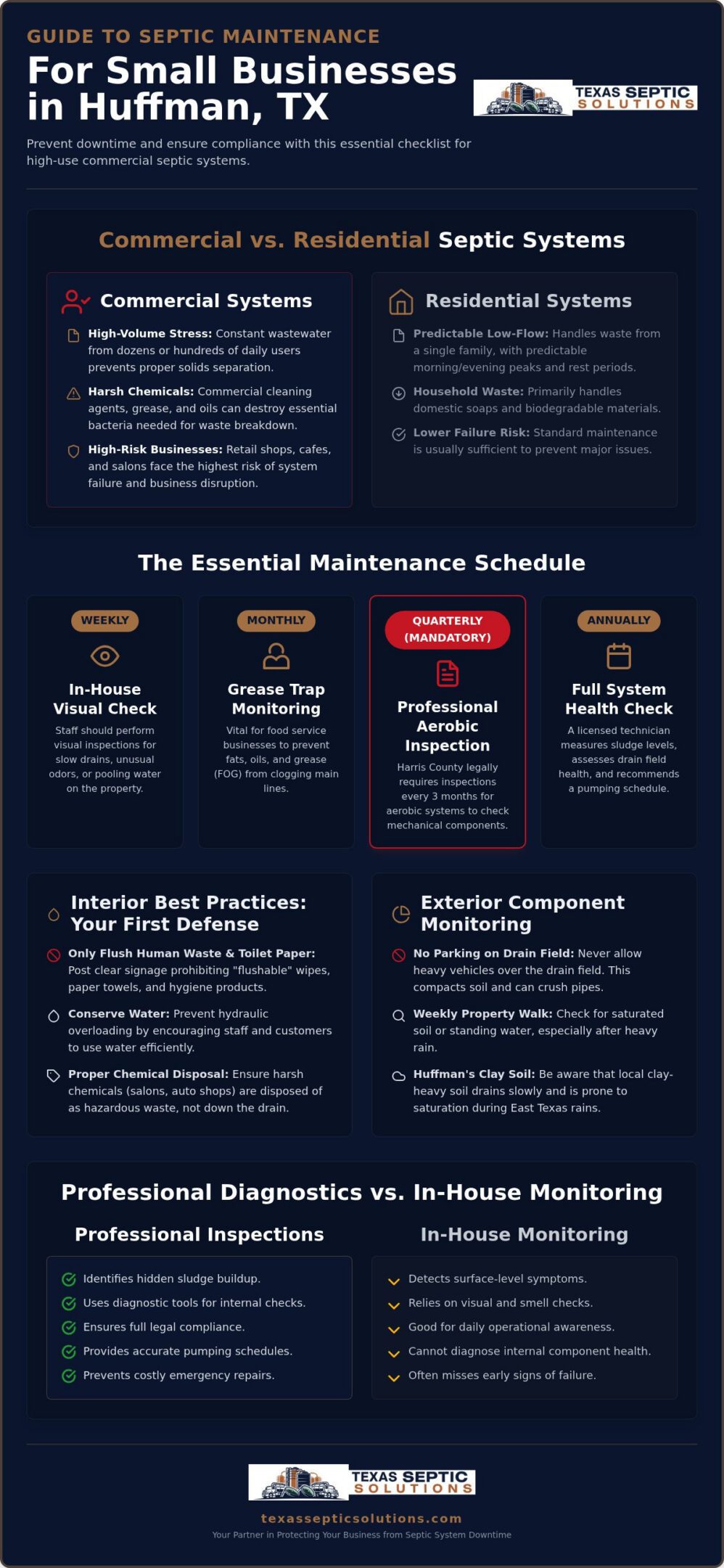
Effective septic system maintenance for small business Huffman TX requires a combination of in-house awareness and professional oversight. Your staff should perform visual inspections weekly, looking for slow drains or unusual odors. If your business involves food service, monthly grease trap monitoring is vital to prevent fats and oils from clogging your main lines. For those with aerobic systems, Harris County requires professional inspections every three months to ensure the mechanical components and aerators are functioning correctly. On an annual basis, a licensed technician should measure sludge levels and assess the overall health of your drain field.
Interior Best Practices for Staff
Your team is your first line of defense. Post clear signage in all restrooms explicitly stating what can and cannot be flushed. Items like “flushable” wipes, paper towels, and feminine hygiene products are leading causes of commercial backups. Encourage water conservation to prevent hydraulic overloading, which happens when too much water enters the system at once. If you run a salon or automotive shop, ensure that harsh chemicals and oils are disposed of through proper hazardous waste channels rather than poured down the drain. Learning how to care for your septic system inside the building significantly extends the life of your exterior components.
Exterior Component Monitoring
Protecting the area outside is just as important as managing what goes down the drain. Never allow heavy equipment or customer vehicles to park over the drain field, as this compacts the soil and can crush pipes. Walk the property weekly to check for ponding water or patches of “spongy,” vibrant green grass near the tank, which often indicates a leak. Inspect your risers and lids for cracks or improper seals to prevent rainwater from overwhelming the system. If you notice any of these red flags, reaching out for professional septic system maintenance can help you address the issue before it forces a business closure.
Professional Inspections vs. In-House Monitoring: A Comparison
While checking for surface puddles or slow drains is a vital first step, these visual cues often appear only after a failure has already begun. For the complex aerobic systems frequently used by local companies, the most critical components remain hidden from view. Relying solely on staff observations is risky because it ignores the internal mechanics that keep your system running. Investing in professional septic system maintenance for small business Huffman TX ensures that every part of your infrastructure, from electrical sensors to sludge levels, is evaluated by an expert who knows exactly what to look for.
Professionals bring specialized tools that the average business owner simply does not have on hand. We use “sludge judges” to get an accurate vertical profile of the waste layers inside your tank, allowing us to determine exactly when pumping is necessary. Electronic locators help us find buried components without damaging your landscaping or parking lot. Beyond the technical benefits, professional documentation is your best defense during a local health department or Harris County inspection. Having a clear, signed record of service proves you are meeting environmental standards and protects your business from fines or forced closures. Understanding the benefits of a well-maintained septic system can help you see why this oversight is a cornerstone of a successful Septic System Maintenance Plan.
What a Professional Inspection Includes
A comprehensive professional visit goes deep into the mechanical and structural health of your system. We test pump alarms and electrical connections to ensure they will alert you the moment a component fails. We also check the integrity of the inlet and outlet baffles, which are essential for keeping solids out of your drain field. By measuring the specific scum and sludge layers, we can provide a data-driven recommendation for pumping rather than relying on guesswork. This level of detail is what prevents a minor sensor glitch from turning into a major backup during your busiest business hours.
The ROI of Professional Maintenance
The return on investment for professional care is significant when you consider the alternative. Replacing a failed commercial drain field can cost upwards of $15,000, which is a massive hit to any small business’s capital. In contrast, a routine maintenance plan is a predictable operational expense that can extend the lifespan of your system by 10 to 15 years. This proactive approach offers peace of mind, especially during peak operating hours when you cannot afford a plumbing disaster. Consistent care keeps your system sturdy and responsive, allowing you to focus on your customers instead of your utilities.
Navigating Huffman, TX Regulatory Requirements and Pumping Schedules
Staying compliant in Huffman means understanding that the Texas Commission on Environmental Quality (TCEQ) sets the baseline, but Harris County often raises the bar. For small business owners, this means your septic system maintenance for small business Huffman TX must align with the Harris County Local Order. One of the most critical rules is the quarterly inspection requirement for aerobic systems. While the state might allow more time between checks, Harris County mandates a professional inspection every three months. This ensures that high-stress commercial systems don’t discharge untreated waste into the local environment.
Harris County Compliance Basics
Your business permit is the foundation of your legal operation. You can verify your permit status through the Harris County Office of the County Engineer. If you receive a notice of violation, don’t panic, but do act quickly. Most violations stem from expired maintenance contracts or missed inspection reports. As a certified maintenance provider, we handle the technical reporting for you, submitting the required documentation directly to the county to keep your business in good standing. This support removes the administrative burden from your shoulders so you can focus on your day-to-day operations.
Customizing Your Pumping Schedule
A standard residential tank might go three to five years between pumpings. However, a high-traffic Huffman retail space or a busy cafe often requires a more aggressive schedule. If your system handles high volumes of water or organic waste daily, you might need pumping as often as once every year. Factors like the number of employees, customer volume, and the use of heavy-duty cleaning agents all accelerate sludge accumulation. If you find yourself dealing with frequent clogs or slow drainage despite regular pumping, you may need a more significant Septic System Repair in Texas to restore your capacity.
Keeping a detailed log of every service visit, pump-out, and minor repair is not just good business practice; it’s a regulatory shield. When a county inspector visits, having a folder ready with your maintenance contract and service history proves your commitment to local environmental standards. If you’re unsure whether your current schedule meets these strict requirements, it’s time to consult with a provider who offers professional septic services tailored to Huffman’s unique regulatory climate.
Protecting Your Business with Texas Septic Solutions Maintenance Plans
Choosing a partner for septic system maintenance for small business Huffman TX is about more than just checking boxes. It’s about finding a team that understands the local landscape. We’ve spent years working with the specific clay-heavy soil and high humidity that define the Huffman area. Our “Neighborly Expert” approach means we don’t just show up for a job; we act as a guardian for your property’s functionality. We take the time to explain what we find and offer straightforward solutions that keep your business running smoothly. By positioning ourselves as your long-term maintenance partner, we alleviate the stress that comes with managing commercial utilities.
Why Huffman Businesses Trust Texas Septic Solutions
Reliability is our cornerstone. We know that a waste failure during peak hours can be a disaster for a retail shop or local cafe. That’s why we prioritize our maintenance plan members with 24/7 emergency response. You can count on us to be there when things go wrong, but our primary goal is to ensure they never do. Beyond emergency care, we provide the transparent documentation you need for Harris County compliance. We handle the technical reporting and filing so your records are always ready for an unexpected inspection. Our deep roots in East Texas mean we’ve seen every possible scenario. We remain unfazed by the high-pressure demands of unexpected failures, providing a sturdy and responsive service you can trust.
Next Steps: Schedule Your System Audit
Every business has a different rhythm, so every maintenance plan should be unique. When you schedule an initial audit, our technicians perform a comprehensive baseline assessment of your entire system. We look at your current tank capacity, the health of your drain field, and the performance of your aerobic components. We also evaluate how your specific business operations, like chemical usage in a salon or high water flow in a restaurant, impact your system’s longevity. From there, we tailor a schedule that matches your specific usage patterns. This initial audit is the first step toward predictable utility costs and zero downtime. Don’t wait for a backup to realize your system needs attention. Reach out to Texas Septic Solutions to secure your business’s utility health by starting a professional maintenance plan today.
Take Control of Your Business’s Utility Health
Managing a commercial property in East Texas comes with its own set of challenges, especially when it involves high-stress wastewater systems. You’ve learned that consistent septic system maintenance for small business Huffman TX is the only way to balance high customer volume with strict Harris County regulations. By prioritizing quarterly inspections and a customized pumping schedule, you protect your business from the sudden, expensive closures that follow a major backup.
As certified aerobic maintenance providers with deep Huffman local expertise, we are here to handle the technical details so you can focus on your growth. Our team provides 24/7 emergency service availability to ensure you’re never left stranded by a utility failure. Don’t let a preventable issue disrupt your operations. Secure Your Business with a Professional Maintenance Plan and enjoy the peace of mind that comes with a reliable partner. We are ready to help your business thrive for years to come.
Frequently Asked Questions
How often does a small business in Huffman need septic pumping?
Small businesses in Huffman typically need pumping every one to three years, depending on their specific waste volume. While residential systems might last five years, the high-flow nature of a retail shop or cafe accelerates solids accumulation. Factors like employee count and customer traffic directly influence this timeline. Regular inspections help determine the exact moment your tank reaches capacity, preventing overflow into the drain field and avoiding costly structural damage.
Are aerobic systems required for businesses in Harris County?
Aerobic systems are frequently required for new commercial developments in Harris County because of the local clay-heavy soil. This soil type doesn’t absorb wastewater as efficiently as sandy soil, making traditional conventional systems less effective. The Harris County Office of the County Engineer enforces local orders that often mandate aerobic treatment to ensure environmental safety. These systems require professional septic system maintenance for small business Huffman TX to keep mechanical aerators functioning correctly.
What are the fines for non-compliance with septic maintenance in Texas?
Non-compliance with Texas septic regulations can lead to significant daily fines and the potential revocation of your operating permit. The TCEQ allows Harris County officials to enforce these standards strictly. Violations often occur when a business fails to maintain a valid maintenance contract or misses the required quarterly inspections. Beyond financial penalties, the county can force a business to close until the system meets current health codes.
Can I use residential septic additives in my commercial system?
You should avoid using standard residential additives in a commercial septic system without professional guidance. Commercial setups handle a different chemical load, including industrial cleaners and higher organic waste levels, which can be disrupted by generic store-bought enzymes. Some additives may even cause solids to suspend in the wastewater, allowing them to clog your drain field. It’s safer to rely on professional septic system maintenance for small business Huffman TX to manage your tank’s bacterial health.
What should I do if my septic alarm goes off during business hours?
If your septic alarm sounds during business hours, you should silence the buzzer and contact an emergency service provider immediately. The alarm usually indicates a high water level or a pump failure, meaning your system has limited remaining capacity before a backup occurs. Reduce water usage across your facility right away to buy more time. Our team offers 24/7 emergency septic service to address these critical mechanical failures before they impact your customers or staff.
How much does a commercial septic maintenance plan cost in Huffman?
The cost of a maintenance plan in Huffman varies based on your specific system type and the frequency of inspections required by Harris County. While we don’t provide fixed pricing without an audit, factors like the number of tanks, the complexity of your aerobic components, and your daily wastewater volume will influence the total. Investing in a structured plan is a predictable operational expense that prevents the unpredictable and much higher costs of emergency system replacements.
Does my business need a grease trap if we have a septic system?
Any business that prepares food or handles significant amounts of fats, oils, and grease (FOG) must have a grease trap. These traps act as a filter, catching heavy grease before it enters your septic tank where it could cause massive clogs. Without a grease trap, these substances can solidify in your pipes or coat the soil in your drain field, leading to total system failure. Regular pumping of both the trap and the tank is essential for food service establishments.
What happens if a septic backup occurs on my business property?
A septic backup is a serious health hazard that usually requires you to close your business property until the area is sanitized. You should immediately call for professional help to identify the cause, whether it’s a clog, a pump failure, or a saturated drain field. Our 24/7 service team specializes in rapid response for Huffman businesses to minimize your downtime. We focus on clearing the backup and restoring your system to full functionality as quickly as possible.