
Cypress Multi-Family Septic Maintenance: 2026 Guide
Imagine a Saturday night in Cypress where three separate units report sewage backups simultaneously, leaving you with a mounting repair bill and frustrated tenants. For property managers, this scenario is a constant threat because septic system maintenance for multi-family homes Cypress requires a much more aggressive strategy than a standard residential setup. You aren’t just managing hardware; you’re managing the habits of dozens of people who might not realize that a single “flushable” wipe can cripple an entire system. We understand that the pressure to keep your property functional while navigating strict Harris County environmental regulations is immense.
This 2026 guide provides the roadmap you need to master high-volume septic management and protect your investment from costly failures. You’ll learn how to stay ahead of sludge accumulation and avoid non-compliance fines that can reach $100 per day. We will walk through the technical requirements for aerobic systems, the necessity of professional engineering for multi-family designs, and a clear protocol for tenant education. By following these steps, you can ensure zero emergency backups and significantly extend the lifespan of your drain field.
Key Takeaways
- Learn why the unique clay soil in Cypress requires specialized hydraulic load calculations to prevent drainage failure in high-occupancy buildings.
- Master a proactive pumping and inspection schedule tailored specifically for septic system maintenance for multi-family homes Cypress to prevent sudden backups.
- Identify essential hardware upgrades, such as effluent filters and risers, that simplify inspections and protect your drain field from heavy daily usage.
- Discover how to manage the human element with septic-safe lease addendums that stop tenants from flushing “system killers” like grease and wipes.
- Evaluate the ROI of professional maintenance plans that act as insurance against $30,000 replacement costs and daily regulatory fines.
Understanding the Unique Demands of Multi-Family Septic Systems in Cypress
A septic tank serving a single household operates under predictable stress, but multi-family systems face exponential pressure. In Cypress, this challenge is compounded by our local geology. The “Cypress Clay” is notorious for its poor drainage, which creates a bottleneck for properties with high wastewater output. When you manage a multi-unit property, you aren’t just dealing with more water. You’re dealing with a concentrated hydraulic load that can quickly overwhelm even a well-designed system if the soil cannot keep up.
The Impact of Heavy Cypress Soils
Cypress is known for heavy clay soil that limits the percolation rate, or the speed at which treated effluent is absorbed into the ground. In a multi-family setting, the constant flow from multiple kitchens and bathrooms means the soil rarely has time to dry out. This leads to soil saturation much faster than in areas with sandier soil. You might notice “leach field fatigue” through standing water in the common areas or slow-draining fixtures in lower units. These are clear signs that the soil can no longer process the volume of waste being produced by your tenants.
Regulatory Standards for Multi-Unit Properties
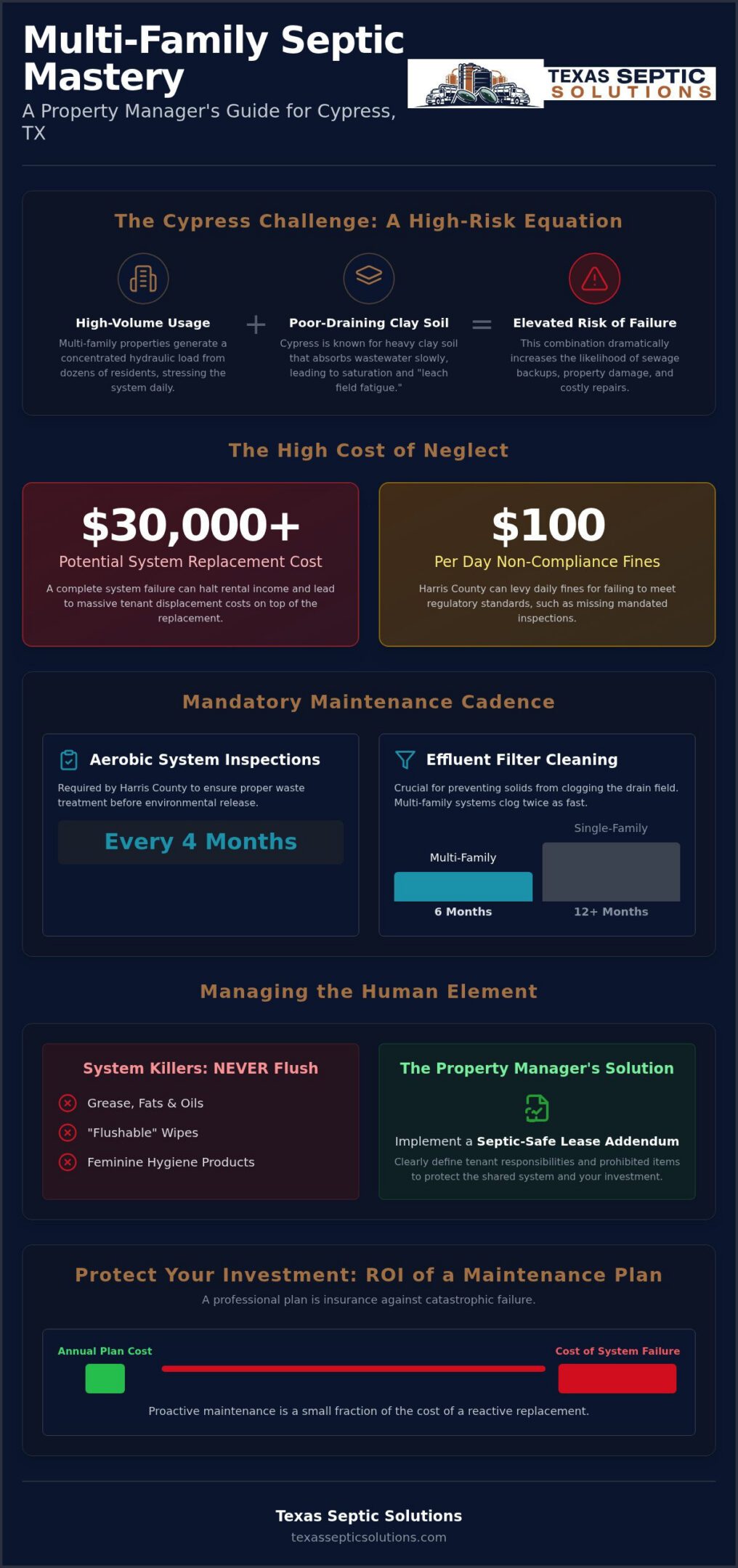
Effective septic system maintenance for multi-family homes Cypress requires strict adherence to state and local laws. Because these systems are complex, Texas law mandates they be designed by a Professional Engineer or Registered Sanitarian. If your property uses an aerobic system, Harris County acts as the authorized agent for the TCEQ. This means you are required to have professional inspections every four months to ensure the system is treating waste effectively before it reaches the environment.
Staying compliant isn’t optional. Property managers must keep detailed documentation of every service call, repair, and pumping event. Utilizing a professional septic system maintenance plan is the most reliable way to ensure these inspections happen on schedule. Without this oversight, you risk non-compliance fines that can reach $100 per day from Harris County authorities.
The financial stakes for shared systems are significantly higher than for residential ones. While a single-family repair might be a minor setback, a total system failure for a multi-family property can halt your rental income and lead to massive tenant displacement costs. Proactive management is the only way to protect your investment from the heavy demands of the Cypress environment.
Essential Hardware Maintenance: Filters, Risers, and Alarms
Maintaining the hardware of a multi-unit septic system requires a shift from a reactive mindset to a proactive one. In a single-family home, a minor component failure might take days to notice. In a multi-family environment, that same failure can lead to a property-wide emergency in hours. Effective septic system maintenance for multi-family homes Cypress depends on keeping the mechanical “gatekeepers” of your system in peak condition to handle the relentless daily flow.
High-Frequency Filter Cleaning
The effluent filter serves as the primary barrier preventing solid waste from entering and clogging your drain field. While residential filters often go a year between cleanings, multi-family systems require a six-month schedule. The sheer volume of organic matter and potential non-flushables means these filters accumulate debris twice as fast. If a filter becomes 100% blocked, wastewater will back up into the lowest units on the property.
Cleaning the filter is a straightforward but essential task. First, locate the outlet baffle of the tank. Carefully pull the filter out of its housing. Use a garden hose to rinse the accumulated solids back into the septic tank rather than onto the lawn. This ensures that only clear liquid reaches the soil, which is vital for long-term septic system care and preventing drain field failure.
Managing Septic Alarms and Risers
In shared systems, the alarm is your most important early warning tool. If you hear a septic tank alarm is going off, it typically indicates a high-water condition or a pump failure. In multi-family setups, you must respond immediately. A high-water alarm gives you a small window of “reserve capacity” before a backup occurs. Because multiple families are contributing to that capacity, that window is much shorter than you might expect.
Installing risers is another critical step for managing these properties. Risers bring the tank lids to the surface, eliminating the need for heavy equipment or manual digging during every inspection. This significantly reduces labor costs for routine maintenance. For multi-family properties, it’s vital to use heavy-duty, locking riser lids. This prevents unauthorized access or tampering by residents and ensures the safety of everyone on the grounds.
Mechanical components like pumps and aerators also face higher wear in these high-demand environments. Aerators in aerobic systems must run nearly constantly to provide enough oxygen for bacteria to break down the increased waste. Regularly checking these components during your four-month inspections is the best way to catch a failing motor before it stops completely. If you aren’t sure when your hardware was last checked, scheduling a professional maintenance review can save you from a late-night emergency call.
Establishing a High-Volume Pumping and Inspection Schedule
Many property owners follow the standard advice for single-family homes, but septic system maintenance for multi-family homes Cypress requires a much faster cadence. A typical residential system serves four people, while a four-unit complex can easily support sixteen or more residents. This isn’t just a 4x increase in volume; it’s a massive shift in how the tank handles “peak load” periods. Every morning when tenants shower and prepare for work, the surge of water can stir up settled solids. Regular septic system maintenance for multi-family homes Cypress ensures that these surges don’t push solids into the drain field, leading directly into the costly septic system repair phase.
Pumping Frequency: Single vs. Multi-Family
While a single-family home might wait three to five years, multi-family tanks often need pumping every 12 to 18 months depending on occupancy levels. We don’t guess at these timelines. Instead, we follow EPA septic system maintenance guidelines by measuring the sludge and scum layers during every inspection. When the bottom sludge layer and top scum layer take up more than 25% to 33% of the tank’s total capacity, it’s time to pump. Proactive pumping is your best insurance against a total system failure.
The Professional Inspection Process
In Harris County, aerobic systems serving multiple dwellings must be inspected every four months by a TCEQ-licensed provider. During these audits, a professional looks at more than just the tank levels. We examine the distribution boxes to ensure effluent is flowing evenly to all parts of the drain field. If one unit’s line is handling more than its share, that section of soil will fail prematurely. These reports aren’t just for compliance; they’re valuable tools for your capital expenditure planning. They help you see exactly how your hardware is aging so you can budget for upgrades before they become emergencies.
Cypress weather also plays a role in your schedule. Heavy rainfall can saturate the clay soil, making it harder for the system to process waste. We recommend scheduling major pumping or service during drier months to avoid soil compaction from heavy service trucks. Coordinating with tenants is also key. We aim for mid-day service when most residents are away, minimizing the disruption to their daily routines. This organized approach keeps your property running smoothly and your tenants satisfied.
Managing the Human Element: Tenant Education and Usage Rules
You can have the best hardware in Texas, but it won’t matter if your tenants treat their drains like trash cans. Multi-family systems fail most often because of user error. Successful septic system maintenance for multi-family homes Cypress requires getting your residents on the same team. In a shared system, the mistake of one tenant can cause a backup that affects several other families. This is why clear communication and strict usage rules are your most effective tools for preventing system stress.
Developing Your Septic Rules
Start by creating a “Septic-Safe” lease addendum. This document sets clear expectations and protects you legally if a system failure is caused by tenant negligence. Your rules should explicitly ban the “Big Three” killers: grease, wipes, and harsh chemicals. Even “flushable” wipes are a major threat because they don’t break down fast enough for high-volume systems. They often snag on pipe joints and create massive blockages. These items must never be flushed:
- Baby wipes and cleaning wipes (even those labeled flushable)
- Feminine hygiene products and cotton swabs
- Paper towels and facial tissues
- Dental floss and hair
You should also reconsider the use of garbage disposals. In multi-family environments, disposals add an immense amount of organic solids and fats to the tank. This leads to faster sludge accumulation and more frequent pumping needs. A sample sentence for your lease might read: “Tenant agrees to dispose of all food waste, grease, and non-flushable items in the trash to protect the shared septic infrastructure.”
Proactive Monitoring for Tenant Abuse
During your mandatory inspections, a professional can often identify which unit is causing the most stress. If one inlet line shows a high concentration of grease or wipes, you can target that specific unit for additional education. Distributing education kits is a low-cost way to stay proactive. Provide new residents with a kitchen magnet listing prohibited items or place a small reminder sticker inside the cabinet door under the sink.
Encourage your tenants to report leaks immediately. A single running toilet can add hundreds of gallons of water to the system every day. This extra hydraulic load saturates the soil and prevents the bacteria from doing its job. If you need help drafting tenant guidelines or want to schedule a site audit, contact us for professional septic system maintenance. We can help you identify problem areas before they turn into property-wide disasters.
Professional Maintenance Plans: Protecting Your Cypress Investment
Managing multi-family properties in Cypress is a balancing act of keeping tenants happy and keeping operational costs low. When it comes to wastewater, a “wait and see” approach is a recipe for financial disaster. A comprehensive plan for septic system maintenance for multi-family homes Cypress is more than just a recurring service; it’s a form of insurance for your property. When you consider that the septic system replacement cost can reach $30,000, the ROI of proactive care becomes clear. Investing in regular upkeep prevents the massive capital expenditure of a full system failure.
Property managers also need a partner who understands the urgency of high-occupancy buildings. Our 24/7 priority response is designed specifically for those moments when a minor pump failure threatens to displace several families at once. We don’t just show up for the emergencies, though. We tailor our maintenance cycles to your specific unit count and historical usage. This ensures that a 10-unit complex gets the frequent attention it requires, while a smaller duplex isn’t over-serviced, saving you money while maintaining system health.
Why Property Managers Choose Texas Septic Solutions
Landlords choose us because we provide a single point of contact for all their Cypress properties. Managing multiple vendors for different locations is a headache you don’t need. We offer automated scheduling and maintain detailed digital records of every inspection and pump-out. This is vital for satisfying Harris County regulators and proving compliance during property audits. Our team brings deep expertise in both aerobic and conventional setups, ensuring that septic system maintenance for multi-family homes Cypress is handled by professionals who have seen every possible high-volume scenario.
Getting Started with a Cypress Maintenance Audit
The first step in moving from reactive repairs to proactive management is a baseline maintenance audit. We’ll perform a thorough evaluation of your current system health, check the integrity of your tanks, and measure sludge levels to see if you’re on the right pumping schedule. This audit removes the guesswork and sets the stage for a customized plan that fits your budget and your property’s needs. Removing the “wastewater worry” allows you to focus on more important aspects of property management. Contact Texas Septic Solutions for a multi-family system evaluation and let our local experts secure the future of your infrastructure.
Secure Your Property’s Future with Proactive Septic Care
Mastering the complexities of a shared system requires balancing technical upkeep with active tenant management. The “Cypress Clay” doesn’t forgive neglect; waiting for an alarm to sound often means you’re already facing a costly emergency. By prioritizing high-frequency filter cleaning and establishing clear usage rules for your residents, you build a resilient infrastructure that stands up to the heavy demands of multi-unit living. It’s about being proactive rather than waiting for a disaster to strike.
Consistent septic system maintenance for multi-family homes Cypress is your strongest defense against regulatory fines and unexpected capital expenditures. Our team specializes in high-volume maintenance programs and maintains deep expertise in Harris County regulatory compliance. We provide 24/7 emergency response for Cypress landlords, ensuring you never have to face a utility crisis alone. Take the first step toward total peace of mind today.
Schedule a Multi-Family Septic Audit with Texas Septic Solutions and keep your property running smoothly for years to come.
Frequently Asked Questions
How often should a septic tank for a duplex be pumped?
Duplex septic tanks typically require pumping every 12 to 18 months to handle the increased load of two separate households. While a single-family home can often wait three years, the concentrated usage in a duplex fills the tank with solids much faster. Regular inspections help determine the exact timing by measuring sludge layers. This proactive approach prevents solids from overflowing into the drain field, which is essential for septic system maintenance for multi-family homes Cypress.
Can I use a garbage disposal in a multi-family home with a septic system?
Using a garbage disposal is not recommended for multi-family properties on a septic system. Disposals introduce finely ground organic matter and fats that don’t break down easily, leading to rapid sludge accumulation. In a shared system, the cumulative impact of multiple disposals can overwhelm the tank’s bacterial balance and clog effluent filters. Encourage tenants to use trash cans for food waste to avoid frequent pumping and potential backups.
Who is responsible for septic repairs in a Texas multi-family rental?
In Texas, the property owner is legally responsible for ensuring the septic system remains in good working order and complies with TCEQ standards. While lease agreements may include clauses regarding tenant negligence, the landlord must facilitate repairs to maintain a habitable environment. This includes addressing component failures and ensuring mandatory maintenance contracts are active. Promptly addressing issues minimizes tenant displacement and avoids potential legal complications or regulatory fines from Harris County authorities.
What are the signs that a multi-family septic system is failing?
Common signs of failure include slow-draining sinks, gurgling pipes, or sewage odors near the tank or drain field. You might also notice patches of unusually lush, bright green grass or standing water over the absorption area, even during dry Cypress weather. If tenants report backups in lower-level units, the system likely has a blockage or a saturated drain field. Immediate intervention is required to prevent a total system collapse and environmental contamination.
How do I stop tenants from flushing “flushable” wipes?
Stopping the use of “flushable” wipes requires a combination of clear lease language and tenant education. Include a specific septic-safe addendum that bans all wipes, feminine products, and paper towels from the plumbing. Providing tenants with educational magnets for the fridge or stickers for the bathroom mirror can serve as daily reminders. If a backup occurs due to wipes, documenting the cause during a professional repair can help hold the responsible party accountable.
Does Harris County require special permits for multi-family septic maintenance?
Harris County requires all aerobic septic systems to be under a continuous maintenance contract with a licensed provider. These systems must be inspected every four months to ensure they meet environmental safety standards. While conventional systems have different oversight, multi-family developments often require professional engineering designs during the permitting phase. Staying compliant involves keeping detailed service records that are accessible for county audits to avoid daily non-compliance fines of up to $100.
Are aerobic systems better for multi-family homes in Cypress?
Aerobic systems are often the superior choice for multi-family properties in Cypress because they handle the local clay soil more effectively than conventional systems. The advanced treatment process produces cleaner effluent, which is easier for heavy, non-porous soil to absorb. Because multi-family units produce high volumes of wastewater, the oxygen-rich environment of an aerobic tank breaks down waste faster. This technology is vital for effective septic system maintenance for multi-family homes Cypress.
What should I do if a tenant reports a septic smell in the yard?
If a tenant reports a sewage smell, investigate the yard for signs of surfacing effluent or standing water immediately. A strong odor often indicates a full tank, a saturated drain field, or a broken pipe that needs urgent repair. Sometimes, the smell is caused by a blocked house vent or a dry P-trap, but in a multi-family setting, it’s best to call a professional for a site audit. Addressing the source quickly prevents the problem from escalating.