
What to Do When Your Septic Alarm Goes Off in Houston: A Troubleshooting Guide
What if that piercing screech coming from your backyard isn’t just a nuisance, but a critical warning that your home is minutes away from a major sewage backup? If you’re standing in the rain or staring at a glowing red light on your control panel, you’re likely feeling a mix of panic and frustration over potential repair costs. It’s a common stress for local homeowners, especially when our famous Houston “gumbo” clay stops draining after a heavy downpour. You need to know exactly what to do when septic alarm goes off in Houston to protect your property and your wallet.
We understand that a failing septic system feels like an immediate crisis, but most alarms can be managed with a calm, step by step approach. In this guide, you’ll learn how to silence the noise safely without ignoring the underlying problem. We’ll help you identify whether the culprit is a simple tripped breaker, a high water level from recent storms, or a pump that has finally reached its limit. By the end of this article, you’ll have a clear plan to prevent an indoor mess and determine if it’s time to call in a professional for 24/7 emergency support.
Key Takeaways
- Silence the audible buzzer at the control panel and start an immediate “water diet” to give your system time to recover.
- Learn what to do when septic alarm goes off in Houston by distinguishing between storm-related high water levels and mechanical failures.
- Discover how East Texas “gumbo” clay affects drainage and why heavy rains are the most common trigger for local septic alarms.
- Perform a quick visual inspection of your breakers and spray heads to rule out simple electrical issues before requesting a repair.
- Recognize the critical warning signs that require 24/7 emergency septic service to prevent a messy and expensive indoor backup.
Immediate Steps to Take When Your Houston Septic Alarm Sounds
When that high-pitched buzzer starts ringing in your backyard, your first instinct is likely to panic. Don’t worry. Understanding what to do when septic alarm goes off in Houston is the best way to prevent a minor issue from becoming a major headache. The alarm is a safety feature designed to give you a head start before a backup occurs. It doesn’t always mean your system is broken; often, it’s just overwhelmed by our local weather patterns.
How to Safely Silence the Audible Alarm
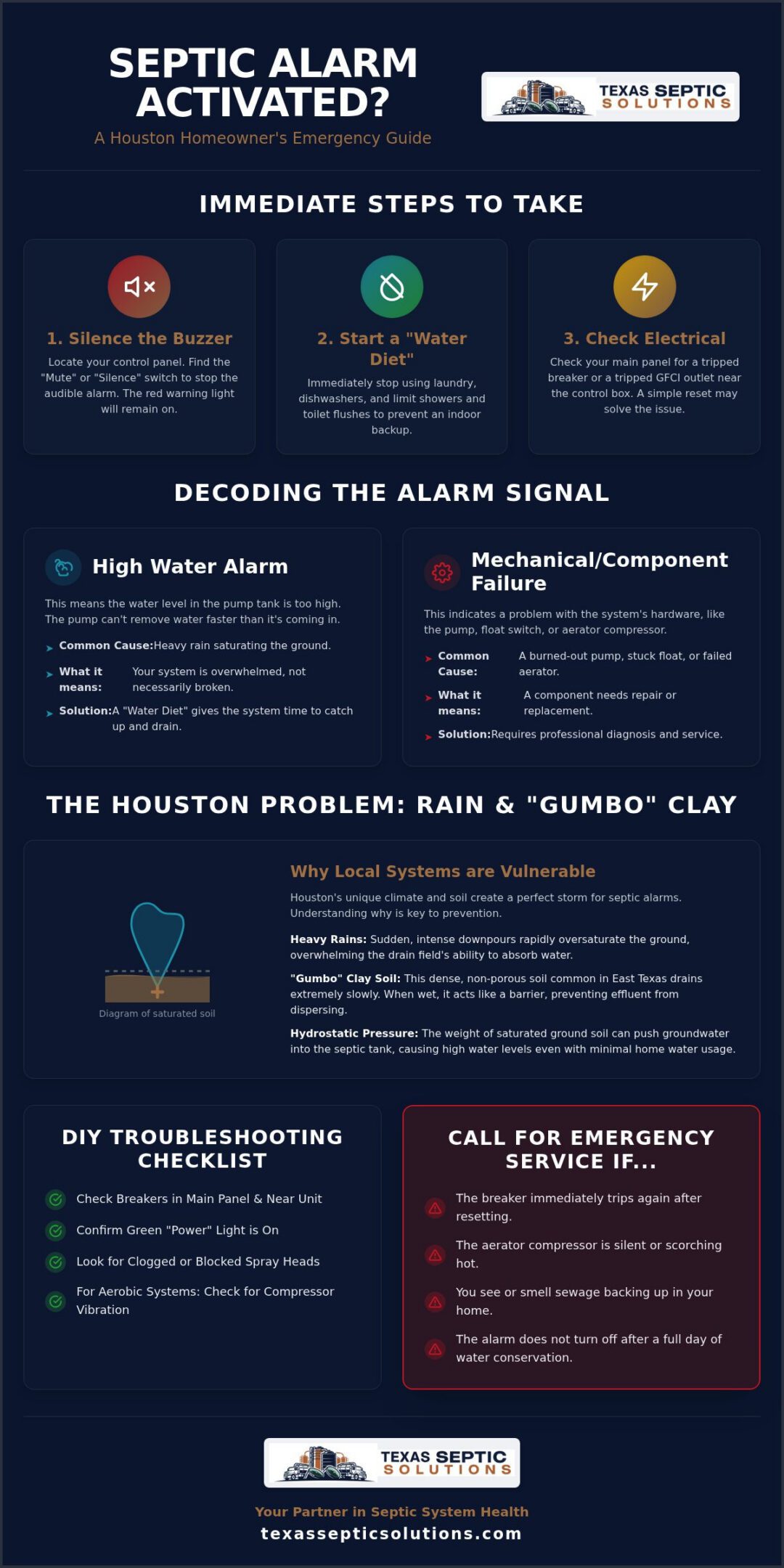
The most immediate priority is stopping the noise. Walk out to your control panel, which is typically a gray or white box mounted on the side of your home or on a post near the tank. Look for a toggle switch or a push-button labeled “Mute” or “Silence.” Flipping this switch will kill the buzzer, but it won’t turn off the red beacon light. This light must stay on until the water level in the tank returns to a safe range. Even in a properly designed and normally operating septic system, the high water alarm can trigger if the pump can’t keep up with sudden inflow. Silencing the noise gives you the peace of mind to troubleshoot without a constant siren in your ear.
The “Water Diet” Protocol for Homeowners
Once the noise is gone, you must immediately implement a “water diet.” This is the single most effective way to avoid an indoor backup. Your septic tank has a limited amount of reserve space, or “buffer capacity,” once the alarm triggers. To protect your home, you should:
- Stop all laundry and dishwasher cycles immediately. These appliances send massive “slugs” of water into the system all at once.
- Limit showers to a quick rinse or postpone them entirely.
- Avoid flushing toilets unless absolutely necessary.
By cutting off the water flow, you give the system time to process the existing liquid. In many Houston neighborhoods, the heavy clay soil slows down drainage, so this resting period is vital for recovery.
Check Your Electrical Breakers
Before you assume the pump is dead, check your power source. Look for a tripped breaker in your main electrical panel or a tripped GFCI outlet near the septic control box. Houston’s humidity and frequent lightning can often pop a breaker without damaging the actual components. If the green “Power” light on your panel is dark, the issue might be electrical rather than mechanical. Restoring power could be the simple fix you need to get the system pumping again. If the breaker trips again immediately, you likely have a short in the pump or float that requires professional attention.
High Water vs. Mechanical Failure: Decoding the Alarm Signals
Once you’ve silenced the buzzer, the next step in knowing what to do when septic alarm goes off in Houston is identifying which component is crying for help. Your control panel usually monitors two distinct issues: the water level and the mechanical health of the system. Learning how to decode these signals is vital for any homeowner who wants to avoid unnecessary service fees while protecting their property. Distinguishing between a high water event and a mechanical failure determines whether you’re facing a temporary weather delay or a required repair.
A high water alarm indicates that the liquid in your pump tank has risen above the normal operating range. This often happens because the pump cannot discharge water faster than it is entering the tank. Hydrostatic pressure is the force exerted by standing groundwater against the exterior of your septic tank, which can push water through small cracks or unsealed risers during Houston’s heavy rain events. When this happens, your system is processing more than just household waste; it is fighting the local water table. If you’re concerned about your system’s performance, you can always reach out to Texas Septic Solutions for a professional evaluation.
Aerobic System Specifics: Aerator and Compressor Alerts
Aerobic systems are common in East Texas and rely on a constant supply of oxygen to treat waste. If your compressor or aerator fails, the alarm will sound to prevent untreated effluent from leaving the system. You can often troubleshoot this by checking the compressor box for vibration. A healthy compressor should hum softly and feel warm to the touch. If it’s silent or scorching hot, the motor may have seized. Staying on top of septic system maintenance Texas regulations require is the best way to prevent these sudden failures. Proper septic system maintenance ensures that these air pumps don’t burn out prematurely due to clogged filters.
Float Switch and Pump Malfunctions
The float switch is a buoyant sensor that tells the pump when to turn on and the alarm when to sound. Sometimes, a float can become stuck on a pipe or debris, triggering a false high water alert even if the tank is empty. If you suspect a mechanical issue, look at the pump’s power light. A failed pump won’t move water, and ignoring this during Houston’s hurricane season can lead to a total system overflow. Differentiating between a failed pump and a tripped breaker is essential. If the breaker is on but the pump isn’t running while the float is up, the pump likely needs replacement. Understanding what to do when septic alarm goes off in Houston helps you make the right call before the situation escalates.
Why Houston’s Rain and “Gumbo” Clay Trigger Septic Alarms
Houston’s environment presents a unique set of challenges for onsite wastewater systems. If you’re wondering what to do when septic alarm goes off in Houston after a thunderstorm, the answer often lies in the soil beneath your feet. Our region is famous for “gumbo” clay, a heavy, dense soil that expands when wet and has incredibly poor drainage. During a heavy downpour, this soil reaches a saturation point where it can no longer absorb liquid. This “Sponge Effect” means your drain field stops accepting effluent, causing water to back up into the tank and trigger the high water alarm.
We often refer to these storms as “Diagnostic Rain.” While a effective, long-standing method for collecting, treating, and disposing of sewage works well in dry conditions, a storm reveals hidden vulnerabilities. Hydrostatic pressure from the saturated earth forces groundwater into any tiny crack in your tank, lids, or piping. If your alarm only sounds during rain, your system isn’t necessarily broken, but it’s likely “leaking” groundwater into the tank. This extra volume overwhelms the pump’s capacity and forces the system to work overtime just to keep up with the weather.
The Danger of Tank Buoyancy in Saturated Soil
One of the most critical warnings we give local homeowners is to never request a pump-out when your yard is flooded or squishy. When the ground is saturated, it acts like a liquid. An empty septic tank is essentially a large, hollow box. If you pump it dry while the surrounding water table is high, the tank can become buoyant and “pop” out of the ground like a boat. This can sever your pipes and lead to thousands of dollars in damage. It’s much safer to wait for the water table to recede before seeking professional pumping services, even if the alarm is active.
Groundwater Intrusion and Cracked Components
To prevent these rain-triggered alarms, you must ensure your system is watertight. Surface water often enters through old, cracked concrete lids or unsealed joints. Professional septic tank riser installation is a highly effective way to raise your access points above the grade, preventing runoff from seeping into the tank. If you notice soggy spots or “potholes” forming directly over your tank after it rains, it’s a clear signal that a seal has failed. Knowing what to do when septic alarm goes off in Houston includes identifying these entry points so you can stop the cycle of flood-related failures for good.
DIY Troubleshooting: What to Check Before Calling a Pro
Before you schedule an emergency service call, a few simple checks might save you time and stress. Knowing what to do when septic alarm goes off in Houston begins with a calm assessment of your home’s water usage and the system’s power supply. Sometimes, the fix is as simple as closing a running toilet or clearing away overgrown grass. Taking five minutes to perform a visual walkthrough can often reveal a problem you can resolve yourself.
Start by checking for “Silent Leaks” inside your home. A toilet flapper that doesn’t seal properly can send hundreds of gallons into your system overnight, easily overwhelming the pump. You should also perform the “Gurgling Drain” test. If you hear a “glug-glug” sound from your sinks or tubs when you flush, it confirms that the water level is high enough to restrict airflow in your plumbing. This is a clear signal that your tank is at its maximum capacity and requires immediate rest. If these steps don’t resolve the issue, it’s time to bring in the experts. You can contact Texas Septic Solutions for a comprehensive diagnostic and repair.
Electrical Safety and Breaker Resets
Safety is the absolute priority when dealing with septic electricity. If your yard is flooded, do not approach the control box or attempt to reset breakers while standing in water. If it’s safe and dry, locate your main electrical panel and look for a tripped breaker labeled “Septic” or “Aerator.” If you reset the breaker and it trips again immediately, you have a short circuit that requires a professional. A single trip might just be the result of a Houston lightning strike, but repeated trips indicate a failing component that needs attention.
Inspecting Your Aerobic Spray Heads
For homeowners in Cypress and Huffman, aerobic systems are the standard. Walk your yard and check the spray heads for clogs. Tall grass or debris can physically block the heads, creating back-pressure that triggers an alarm. You should also ensure your chlorinator isn’t packed so tightly with tablets that it restricts flow. Finally, check your timer settings. If your power went out recently, the clock might be off. This causes the system to try to discharge during your peak morning water usage instead of the middle of the night, which can trigger a high water alert.
24/7 Emergency Septic Repair and Maintenance in East Texas
DIY troubleshooting is a great first step, but some situations require a licensed expert to prevent property damage. If your alarm remains active after 24 hours of a strict water diet, or if you notice wet spots and odors near your tank, it’s time to stop the guesswork. Knowing what to do when septic alarm goes off in Houston includes recognizing when a mechanical component has reached its end of life. We provide rapid response for residents in Houston, Cleveland, and Shepherd who are facing system failures during our heavy East Texas storms. Understanding what to do when septic alarm goes off in Houston is about more than just silencing a noise; it’s about protecting your long-term investment.
When a Texas Septic Solutions technician arrives for a diagnostic visit, we don’t just silence the buzzer. We perform a comprehensive check of your pump tank, electrical connections, and aerobic components. If your pump has failed or your air compressor is no longer providing oxygen, we can often perform repairs on the spot to get your home back to normal. Our team understands the urgency of a emergency septic service call and arrives ready to solve the problem permanently.
Professional Solutions for Failing Systems
Houston’s saturated soil requires specialized solutions that standard repairs often miss. We specialize in expert pump replacement and air compressor repairs for all major aerobic brands. To combat groundwater intrusion in our heavy clay soil, we often recommend upgrading to watertight risers. These prevent surface water from overwhelming your system during floods. If your drain field is struggling with “gumbo” clay saturation, we can evaluate long-term fixes to improve your system’s processing capacity and drainage efficiency.
Schedule Your Proactive Inspection Today
The best way to handle a midnight alarm is to prevent it from ever sounding. Enrolling in a septic system maintenance plan ensures that your system is inspected regularly as required by Texas law. These checkups identify worn floats or clogged filters before they cause a total system shutdown. For homeowners with systems nearing two decades of service, we can provide an honest assessment of your septic system replacement cost to help you plan for the future. Don’t wait for the next hurricane to test your system’s limits. Contact Texas Septic Solutions for 24/7 Emergency Service today to secure your home’s functionality.
Protect Your Houston Home from Septic Emergencies
Dealing with a screaming alarm is stressful, but you now have a clear plan to manage the crisis. Remember to silence the buzzer, start an immediate water diet, and check your breakers before assuming the worst. Houston’s unique environment, specifically our dense gumbo clay and heavy seasonal rains, often pushes even the best systems to their limits. Knowing exactly what to do when septic alarm goes off in Houston protects your property from messy backups and prevents unnecessary repair costs.
While DIY checks can solve minor electrical trips, a persistent alarm requires professional diagnostic expertise to ensure your pump and aerator are functioning correctly. As a locally owned and operated business in Cleveland, TX, we have specialized expertise in East Texas clay soil conditions. We provide 24/7 emergency response to keep your household running smoothly, no matter when the alarm sounds. Schedule Your Emergency Septic Service with Texas Septic Solutions and rest easy knowing your home’s functionality is in expert hands.
Frequently Asked Questions
Is it normal for my septic alarm to go off after a heavy rain in Houston?
It’s very common for alarms to trigger during Houston’s heavy downpours. Our local “gumbo” clay soil doesn’t absorb water quickly, which causes the ground to become saturated. This saturation prevents the drain field from accepting more effluent, leading to a temporary high water level in your tank. While common, it’s a sign that your system is struggling with groundwater intrusion or soil drainage capacity.
Can I still flush my toilets if the septic alarm is red?
You can still flush your toilets, but you must do so sparingly. A red light means your tank has reached its safety reserve capacity. Every gallon you send down the drain brings you closer to a backup in your tubs or sinks. We recommend an immediate “water diet,” which means no laundry, no dishwashers, and very short showers until the alarm clears. This buys your system time to process the volume.
How long should I wait for the high water alarm to clear on its own?
You should typically wait 12 to 24 hours for a high water alarm to clear after the rain stops. If you’ve implemented a water diet and the light is still red after a full day, your pump might be failing. If you’re unsure what to do when septic alarm goes off in Houston after a full day, professional troubleshooting is required to protect your home and prevent a backup.
Will my septic system back up into the house if the alarm stays on?
Yes, if the alarm stays on and you continue using water, a backup is inevitable. The alarm is your final warning that the tank is nearly full. Once the liquid level reaches the inlet pipe from your house, sewage will begin to back up into the lowest drains, such as showers or floor drains. Monitoring the light and reducing water usage is the only way to prevent this from happening.
Why does my aerobic alarm go off only at night?
Aerobic systems often have timers set to spray effluent in the middle of the night. If your pump fails or the spray heads are clogged, the system will attempt to discharge at its scheduled time and fail, triggering the alarm. Additionally, if your household uses a lot of water in the evening, the tank level might hit the high water float just as everyone finishes their nightly routines, causing a late night alert.
Should I have my septic tank pumped immediately when the alarm sounds?
Pumping isn’t always the right first step. If the ground is saturated from a Houston storm, pumping the tank empty can cause it to “pop” out of the ground due to buoyancy. Deciding what to do when septic alarm goes off in Houston requires a calm assessment of the weather and your system’s components. Pumping should be a last resort used only when a technician confirms the tank is actually overfull.
How much does it usually cost to fix a septic alarm in Texas?
The cost depends entirely on which component failed. A simple fix like resetting a tripped breaker costs nothing, while replacing a submersible pump or an air compressor is a more significant investment. Other common repairs include replacing float switches or repairing cracked risers. Since every system in the Houston area is different, a professional diagnostic visit is the only way to get an accurate estimate for your specific repair needs.
What causes the septic alarm to beep but have no red light?
When the buzzer sounds without a red light, it often indicates a mechanical issue rather than a high water event. On aerobic systems, this is a common sign that your air compressor has lost pressure or the aerator has stopped working. The system is telling you that the treatment process has been interrupted. Check your compressor for vibration or heat; if it’s silent or cold, it likely needs a professional repair.