
What to Do After a Septic Backup: A Step-by-Step Recovery Guide
You walk into your bathroom only to find dark, foul-smelling water bubbling up from the drains and pooling across the floor. It is a moment of pure panic that every homeowner dreads. Beyond the immediate mess, you’re likely worried about the health risks of raw sewage and the potential cost of restoring your property. Knowing exactly what to do after a septic backup is the only way to protect your family and your investment from further damage.
We understand how overwhelming this situation feels, especially when you aren’t sure if the problem is a simple clog or a total system failure. You deserve a home that’s safe and sanitary, not one that feels like a biohazard zone. In this guide, we provide the clear, actionable steps you need to take right now. You will learn how to secure the area safely, follow proper cleaning protocols, and identify the root cause of the backup so it doesn’t happen again tomorrow. We’re here to help you move from the initial shock to a fully restored, functional home with the confidence of a professional recovery plan.
Key Takeaways
- Stop all indoor water usage immediately to prevent further reverse flow and minimize biohazard exposure in your living spaces.
- Discover the specific sanitization protocols and what to do after a septic backup to safely dispose of contaminated porous materials like carpet and drywall.
- Learn how to differentiate between a simple localized pipe clog and a more complex structural failure within your septic tank or drain field.
- Identify the critical warning signs that indicate you need professional emergency remediation rather than a standard DIY cleaning.
- Implement a long-term maintenance strategy and “septic-safe” household habits to ensure your system remains reliable and free of future backups.
Immediate Safety Steps: What to Do the Moment You Spot a Backup
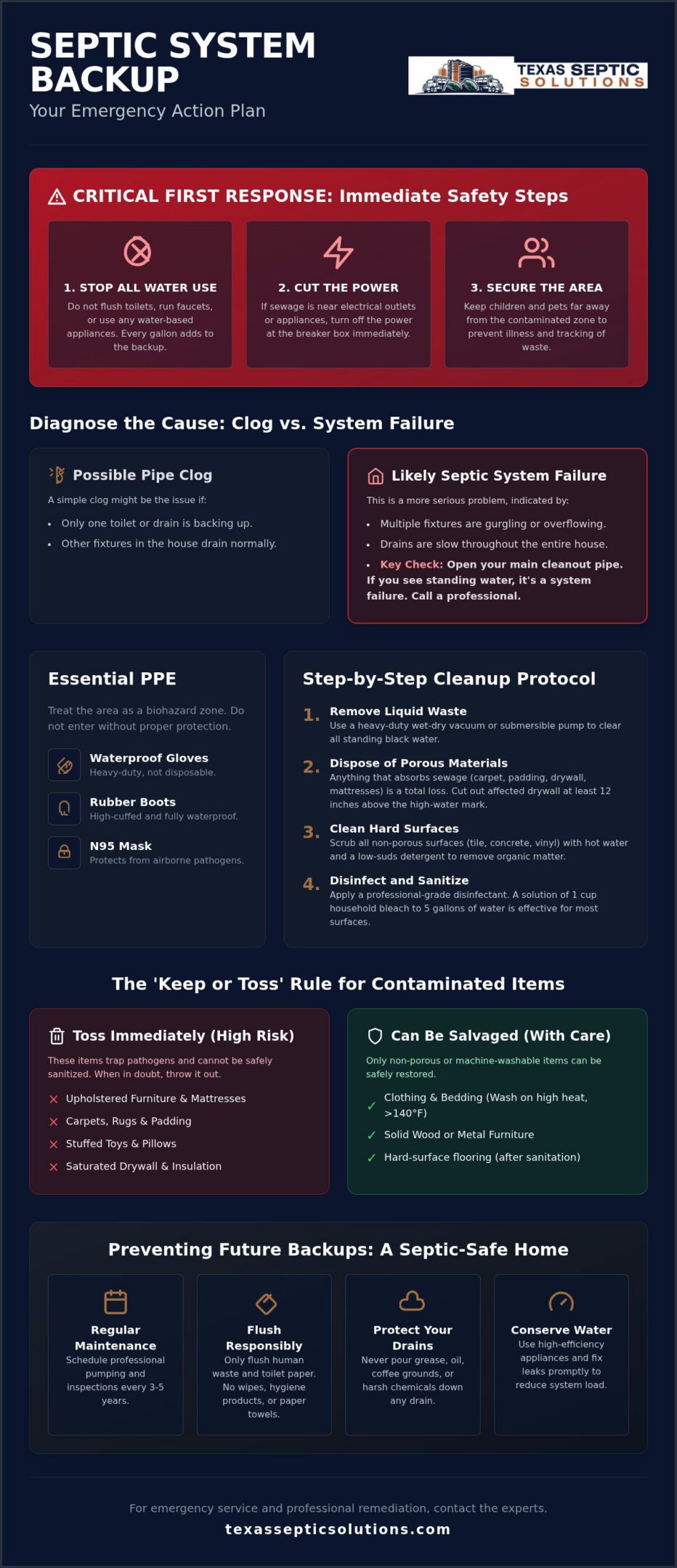
A septic backup is more than a slow drain; it is a critical failure where wastewater cannot exit your home, causing a reverse flow of sewage back through your pipes. This often results in “black water” pooling in tubs, sinks, or floor drains. This liquid is a serious biohazard containing pathogens like E. coli, salmonella, and various viruses. Understanding how a septic system works helps clarify that once the exit path is blocked, every gallon of water you use has nowhere to go but back into your living space. Since the average person generates about 70 gallons of wastewater daily, the volume can increase rapidly if you don’t act fast.
Your first priority is to stop all water usage immediately. Do not flush toilets, run the dishwasher, or start a load of laundry. Even a small amount of water from handwashing can worsen the spill. Next, address electrical safety. If sewage has reached floor outlets or baseboard heaters, turn off the power to those rooms at the breaker box. Never walk through standing water if the electricity is still on. Finally, clear the area of children and pets. Their smaller immune systems are more vulnerable to the bacteria found in raw sewage, and they can easily track contaminants into “clean” areas of the house.
Eliminating the Source of the Backup
Knowing what to do after a septic backup involves determining if the problem is a local clog or a system-wide failure. If only one toilet is backing up, you might have a simple pipe obstruction. However, if multiple fixtures are gurgling or overflowing simultaneously, the blockage is likely in your main sewer line or the septic tank itself. You can check this by locating your septic tank’s main cleanout, which is usually a white PVC pipe with a screw-on cap located between the house and the tank. If you open the cap and see standing water, the issue is definitely downstream in the tank or the drain field, and you must keep the water off until a professional arrives.
Personal Protective Equipment (PPE) Essentials
You must treat the affected area as a “hot zone” for infection. Standard household cleaners and a pair of sneakers aren’t enough to protect you from raw sewage. If you must enter the area to assess damage, you need specific gear to stay safe. Wear thick rubber boots that can be bleached later and heavy-duty, waterproof gloves. An N95 mask is also necessary because the splashing or movement of sewage can aerosolize bacteria, allowing you to inhale pathogens. Avoid touching your face or eyes while in the area, and establish a “decontamination station” at the edge of the spill where you can remove your gear without spreading waste to the rest of your home.
Step-by-Step Cleanup and Sanitization Protocol
Recovery starts with removing the physical waste as quickly as possible. Use a heavy-duty wet-dry vacuum for small areas or a submersible pump if the backup is extensive. Once the liquid is gone, you must address porous materials. Items like carpet, padding, and even drywall absorb sewage like a sponge. It is impossible to fully disinfect these materials once they are saturated with black water. Cut out affected drywall at least 12 inches above the highest point the water reached to ensure no moisture or bacteria remain trapped in the wall cavity. This aggressive approach is the only way to guarantee the area is truly safe for your family.
For hard surfaces like tile, vinyl, or concrete, start by scrubbing with hot water and a low-suds detergent. This removes the organic matter so the sanitizer can work effectively. After scrubbing, apply a professional-grade disinfectant. A solution of one cup of liquid household bleach mixed with five gallons of water is effective for most surfaces. If you are dealing with a massive failure, you might need emergency septic service to pump the tank before the cleaning can even begin. Knowing exactly what to do after a septic backup helps you act with speed and precision, protecting your property value and your family’s health.
The ‘Keep or Toss’ Rule for Household Items
Upholstered furniture, mattresses, and stuffed toys are almost always a total loss. The internal foam and batting trap pathogens that no surface cleaning can reach. However, you can often save clothing and bedding. Wash these items in a high-heat cycle, ideally at least 140 degrees Fahrenheit, using a bleach-safe detergent. If an item is sentimental but porous, consult a professional restoration specialist before attempting to keep it. When in doubt, throw it out; the risk of lingering illness is not worth the cost of a replacement.
Sanitizing the Air and Preventing Mold
Odor is the most persistent reminder of a backup. While it is tempting to use air fresheners, they only mask the smell without killing the airborne bacteria. Use high-volume fans and industrial dehumidifiers to drop the indoor humidity below 50%. This is the critical threshold for preventing mold growth in the weeks following the spill. Following these steps and focusing on preventing future septic backups through proper sanitization ensures your home remains a healthy environment. Understanding what to do after a septic backup means looking beyond the visible mess to the invisible risks like mold and bacteria.
Diagnosing the Cause: Is it the Pipes, the Tank, or the Drain Field?
Once the immediate cleanup is underway, you must determine why the system failed. Knowing what to do after a septic backup includes diagnosing the root cause so you aren’t repeating the cleanup next week. Start by checking the liquid level inside the tank. A normal operating level is just below the outlet pipe. If the water is higher than that, your drain field has likely stopped accepting water. If the level is normal but your house is still backing up, the problem is likely a pipe clog, and Select Plumbing Leak Investigators can provide the precise diagnostic testing needed to locate and repair the issue between your house and the tank.
You should also inspect the inlet and outlet baffles. These T-shaped pipes manage the flow of water and solids. If the inlet baffle is blocked by grease or debris, wastewater will back up into the house immediately. Conversely, if you notice spongy grass or surfacing sewage over your drain field, the system is struggling to treat and disperse liquid into the soil. This differentiation is the key to deciding if you need a plumber for a clog or a septic specialist for a system repair. Identifying the failure point early can save you thousands in unnecessary digging or part replacements.
Common Culprits in East Texas Septic Systems
In regions like Cleveland and Houston, soil composition plays a massive role in system health. The heavy clay found in East Texas doesn’t drain quickly. During periods of intense rain, the ground becomes saturated, leaving no room for your septic effluent to go. This leads to a hydraulic overload where the system simply cannot keep up with household demand. Additionally, we find that “flushable” wipes are the leading cause of inlet baffle clogs in Cleveland, TX. Despite the marketing, these wipes do not break down and will eventually stop your system’s flow entirely.
Aerobic System Specifics: Pumps and Alarms
If you have an aerobic system, your diagnostic process is slightly different. Pay close attention if your septic tank alarm is going off. A “high water” light usually indicates a pump failure or a clog in the spray heads, meaning the tank cannot empty itself. A “low pressure” light often points to an issue with the aerator pump itself. Check your spray heads for physical blockages like overgrown grass or dirt. If the aerator isn’t humming, the lack of oxygen will eventually cause the system to fail and back up into the house.
When to Call for Professional Septic Remediation
Sometimes the mess is too large for a mop and a bucket of bleach. Knowing what to do after a septic backup involves recognizing the limit of DIY fixes. If sewage is surfacing in multiple fixtures simultaneously, you’re likely dealing with a main line blockage or a full tank. This isn’t a job for a plunger; it’s a sign of a systemic failure. You should also seek professional help if the backup occurs immediately after a heavy rainstorm. In East Texas, saturated soil can cause hydraulic overload, preventing your system from draining. If your septic alarm is active and the water level won’t recede even after you’ve stopped water usage, you need an expert to intervene before the damage spreads.
Regular maintenance is your best defense, but if you’ve gone more than three years without professional pumping, a backup is often your system’s way of telling you it’s full. Solids can accumulate to the point where they block the inlet and outlet baffles, forcing wastewater back into your home. In these cases, simply cleaning the floor won’t solve the problem. You need to address the source within the tank to restore functionality and have a professional team guide you on what to do after a septic backup to prevent a recurrence.
The Difference Between a Plumber and a Septic Specialist
Many homeowners make the mistake of calling a standard plumber when they see a backup. While plumbers are excellent for indoor pipe leaks, they usually don’t have the vacuum trucks required to pump a 1,000-gallon tank. A septic specialist looks at the entire system, from the tank’s biology to the drain field’s soil absorption. We utilize tools like high-pressure jetting to clear sludge and grease that standard plumbing snakes leave behind. Understanding septic system repair requires a specialized knowledge of how these external components interact with your home’s plumbing.
What to Expect During an Emergency Service Call
When our team arrives for an emergency call, the first priority is relieving the pressure. We pump the tank to lower the liquid levels, which allows the backed-up water in your home to finally drain. Once the system is accessible, we often use camera inspections to find hidden clogs, root intrusions, or structural breaks in the pipes. This diagnostic approach ensures we fix the actual problem rather than just treating the symptom. Texas Septic Solutions provides 24/7 rapid response for local homeowners because we know that septic emergencies don’t stick to a 9-to-5 schedule. If you are currently facing a mess, request emergency septic service to get your home back to normal immediately.
Preventing Future Backups: Long-Term System Health
The final step in understanding what to do after a septic backup is ensuring the crisis never repeats. Once your home is sanitized and the system is back online, you must shift your focus to a proactive prevention strategy. The most critical component of this is a strict “septic-safe” flushing policy. Your system is a living biological environment, not a trash can. This means absolutely no grease, “flushable” wipes, or harsh chemicals like bleach or drain cleaners should ever enter your pipes. These substances kill the beneficial bacteria needed to break down solids, leading to the very clogs that cause backups.
Managing your household water usage is equally vital for protecting your drain field. According to industry data, the average U.S. household generates approximately 70 gallons of wastewater per person every day. When you consolidate high-water tasks like laundry, dishwashing, and long showers into a single afternoon, you risk hydraulic overloading. This surge of water can push solids out of the tank and into the drain field, causing permanent damage. Spacing out these tasks allows your system the time it needs to process waste effectively. Establishing a clear septic system maintenance plan helps you stay ahead of these issues through regular inspections and professional guidance.
The Power of Routine Pumping
Most catastrophic backups are entirely preventable with routine pumping every three to five years. While the exact frequency for septic system maintenance in Texas depends on your household size and tank capacity, waiting for a problem to appear is a costly mistake. Over time, sludge accumulates at the bottom of the tank. If it isn’t removed, it eventually reaches the outlet baffle and flows into your drain field. The cost-benefit ratio is clear; regular pumping is a minor investment compared to the significant septic system replacement cost you’ll face if the drain field fails. Knowing what to do after a septic backup means committing to a schedule that keeps your system empty and functional.
Upgrading Your System’s Defenses
You can also install hardware upgrades to provide an extra layer of protection. An effluent filter is a simple device installed at the outlet baffle that catches small solids before they can reach the drain field. It is a low-cost insurance policy for your system’s longevity. Additionally, consider adding risers to your tank lids. Risers bring the access point to the surface, making inspections and pumping much easier and less invasive for your landscaping. For those with aerobic systems, a maintenance contract is the ultimate way to secure peace of mind. These agreements ensure that a professional is checking your pumps, aerators, and spray heads on a regular basis, catching minor mechanical issues before they turn into a bathroom flood.
Restore Your Home and Protect Your System
Dealing with a septic failure is stressful, but having a clear plan makes all the difference. You now know that the first priority is safety; this means stopping water use immediately and securing the area from biohazard exposure. By following proper sanitization steps and identifying whether you have a simple pipe clog or a saturated East Texas drain field, you can prevent minor issues from turning into total system failures.
Knowing exactly what to do after a septic backup ensures you don’t just mask the odor, but solve the underlying problem. Whether you need an emergency pump-out or a long-term maintenance strategy, professional help is the most reliable way to restore your home’s functionality. We are here to provide the expertise you need to keep your system running smoothly for years to come.
For readers who also need assistance with general residential plumbing or electrical systems, you can check out Van Fleet Services for professional support and expert care for your home’s essential infrastructure.
Facing a backup right now? Call our 24/7 Emergency Line for Immediate Help! As licensed and insured Texas specialists, we provide rapid response across Cleveland, Houston, and the surrounding areas. We handle the dirty work so you can focus on your family. Your home’s health is our priority, and we are ready to help you get back to normal.
Frequently Asked Questions
Is a septic backup considered a health emergency?
Yes, a septic backup is a serious health emergency. The wastewater, often called “black water,” contains dangerous pathogens like E. coli, salmonella, and various viruses that can cause severe illness upon contact or inhalation. You must treat any area touched by sewage as a biohazard zone. It is vital to keep children and pets away from the site until a professional has completed a thorough sanitization process.
Can I use my toilets if the septic tank is backing up?
You must stop using your toilets and all other indoor plumbing immediately. Because the backup indicates that wastewater cannot exit the system, any additional water you flush will have nowhere to go but back into your home. Continuing to use water will only increase the volume of the spill and cause more extensive damage to your floors and walls. Wait until a specialist confirms the system is clear.
Will my homeowners insurance cover a septic backup cleanup?
Standard homeowners insurance policies typically exclude coverage for septic backups. Most homeowners need a specific endorsement or a separate rider to cover the high costs of professional cleanup and property restoration. We recommend reviewing your policy for “water backup and sump overflow” coverage. Understanding your financial protection is an important part of knowing what to do after a septic backup occurs.
How can I tell if my drain field is failing or just the tank is full?
The best way to tell is by checking the liquid level inside the tank. If the level is normal but your house is backed up, the problem is likely a pipe clog. However, if the tank is overfilled or you see “spongy” grass and pooling water over the drain field, the soil is likely saturated or the pipes are failing. A professional inspection is the only way to confirm a total system failure.
What chemicals should I use to clean up sewage on a concrete floor?
For hard surfaces like concrete, use a solution of one cup of liquid household bleach mixed with five gallons of water. Before applying this, you must scrub the floor with hot water and a low-suds detergent to remove organic matter. This ensures the bleach can effectively kill the pathogens. Always wear rubber boots, waterproof gloves, and an N95 mask to protect yourself from fumes and bacteria during the process.
How long does it take for a septic specialist to arrive in an emergency?
Our team prioritizes rapid response for all emergency calls to help minimize property damage. While exact arrival times depend on your specific location in Cleveland, Houston, or the surrounding areas, we offer 24/7 emergency septic service to address your needs at any hour. Getting a professional on-site quickly is the most important thing to do after a septic backup to protect your home’s structural integrity.
What happens if I ignore a septic alarm for a few days?
Ignoring a septic alarm will almost certainly result in a full sewage backup into your home. The alarm is a critical warning that your tank’s water level is too high or a pump has failed. If you don’t address the issue immediately, the tank will lose its capacity to hold wastewater, forcing raw sewage back through your lowest drains, such as bathtubs and floor drains, within a matter of hours.
Does heavy rain cause septic systems to back up?
Heavy rain is a frequent cause of backups in East Texas because it saturates the soil around your drain field. When the ground is soaked, it cannot absorb the effluent leaving your tank. This creates a hydraulic overload where the water has no exit path, eventually pushing back into your house. This issue is particularly common in areas with heavy clay soil that drains slowly after a storm.