
What Septic System Records to Keep for Your Home: The 2026 Checklist
Could a single missing folder cost you thousands during a home sale or leave a repair technician digging up your entire yard just to find a tank lid? Many homeowners don’t realize that their paperwork is just as vital to their property as the actual tank buried in the ground. Knowing exactly what septic system records to keep for your home is the difference between a quick, affordable fix and a stressful, week-long headache.
It’s normal to feel overwhelmed by technical terms like “as-built drawings” or “OSSF permits,” especially when a system failure happens at the worst possible time. We know you want to protect your investment and keep your family safe without becoming a regulatory expert. This guide will show you how to organize your documents to meet 2026 Texas Commission on Environmental Quality (TCEQ) standards and ensure easy repairs. We’ll walk through the essential checklist of permits, design maps, and maintenance logs you need to stay compliant, including the specific requirements for aerobic systems that now face stricter local oversight across East Texas. You’ll gain a clear system for organizing your records to ensure your property remains valuable and functional for the next decade.
Key Takeaways
- Learn how a complete paper trail acts as a health history for your property, helping you avoid costly diagnostic fees and speed up home sales.
- Discover exactly what septic system records to keep for your home, starting with the “as-built” drawings and original permits that define your system’s layout.
- See why keeping detailed pumping receipts and inspection reports is the best way to prove your system has been professionally maintained.
- Understand the Texas-specific requirements for aerobic systems, including the mandatory maintenance contracts needed to stay compliant with TCEQ and local county rules.
- Get a step-by-step method for organizing your physical and digital records so they remain accessible for the next 10 years or more.
Why Maintaining a Septic System Paper Trail is Essential
Your septic system is likely the most expensive utility on your property, yet it remains completely hidden from view. Because you can’t see it, a detailed paper trail serves as the only “health history” for this critical infrastructure. Think of these records as a logbook that proves the system is functioning as intended. Understanding a foundational Septic tank overview is helpful, but having the specific data for your own soil and tank size is what actually saves you money. When you know exactly what septic system records to keep for your home, you eliminate the mystery that often leads to expensive mistakes.
Complete documentation can significantly increase your home’s resale value. Potential buyers often fear hidden septic failures. Providing a binder of service dates and permits speeds up the closing process by removing doubt. These records also act as your primary defense during insurance claims. If a backup occurs, many insurance providers will deny coverage for repairs or cleanup if you can’t prove the system was pumped and inspected according to professional standards. Accurate maps also prevent “guesswork” digging, which often results in accidental pipe damage that is entirely avoidable.
The Financial Impact of Good Record Keeping
A clear service history transforms your septic system from a potential liability into a verified asset. During a real estate transaction, a lack of records can lead a buyer to assume the system is a “ticking time bomb.” This perception often results in demands for a full system replacement or a massive price reduction. By keeping a folder of every pumping receipt and repair bill, you prove the system has been cared for properly. It’s a small effort that yields a high return.
You also save on immediate out-of-pocket expenses. Professional tank locating services can cost over $500 just to find the lids if they are buried deep. If you have an accurate map, you skip this fee entirely. Additionally, many component warranties require proof of regular maintenance to remain valid. Without those papers, a simple pump failure could cost you the full retail price of the part instead of being covered by the manufacturer.
Emergency Preparedness and Troubleshooting
When a system fails at 2:00 AM, every minute matters. Having your system map ready helps 24/7 emergency septic service technicians get straight to work. There’s no time wasted probing the yard or guessing where the tank ends and the drain field begins. This speed is crucial for preventing sewage from backing up into your home and causing permanent damage.
Accurate records help identify the root cause of a problem quickly. A technician can look at your history and see that the tank was pumped recently, which suggests the issue might lie in the drain field or a mechanical component. This targeted approach reduces labor costs and prevents extensive site probing. You get your system back online faster and keep your repair bills manageable.
Core Installation and Design Documents
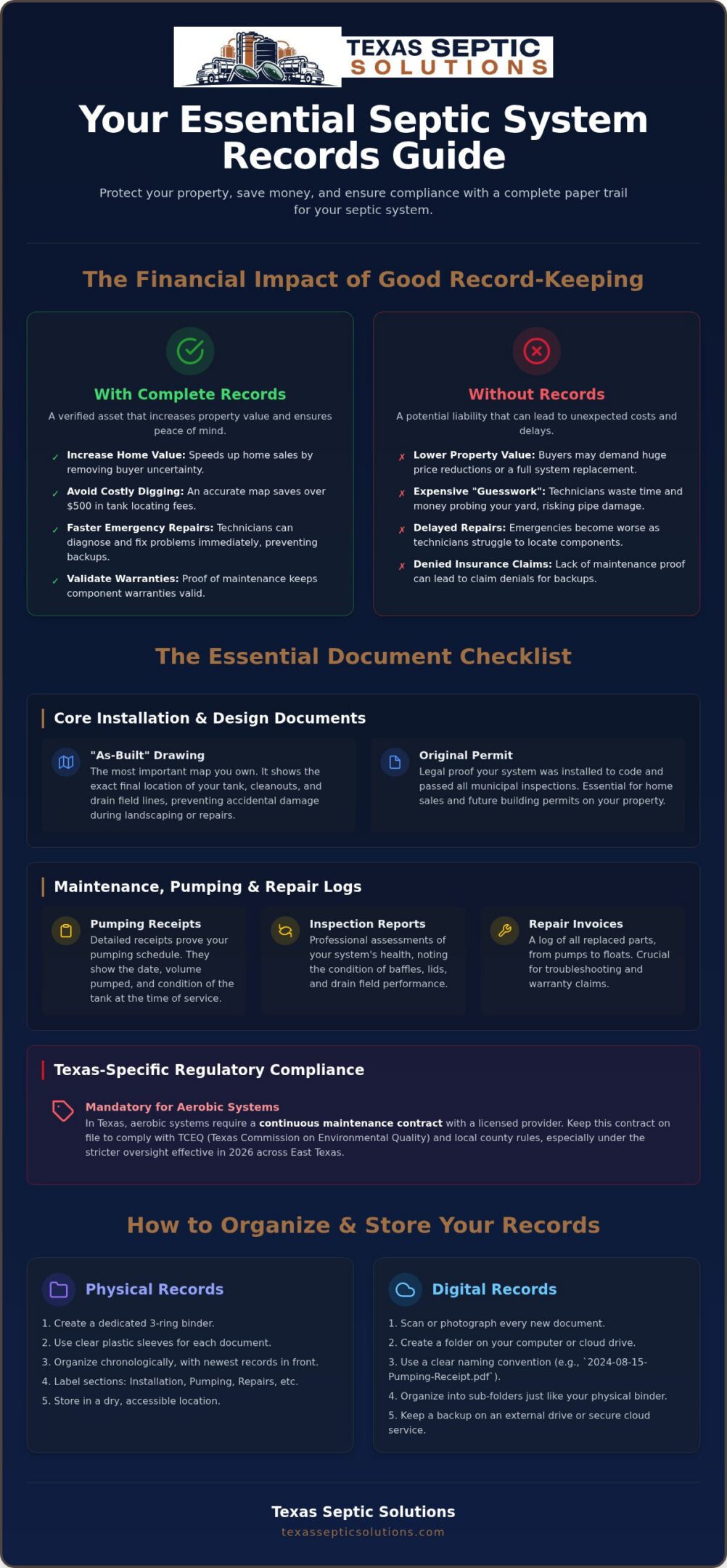
The paperwork created before your system is even buried forms the foundation of your home’s utility records. When deciding what septic system records to keep for your home, the journey begins with the technical documents generated during the planning and installation phases. These papers prove your system was built to code and provide a literal roadmap for anyone working on your property in the future. The EPA guidance on septic system records emphasizes that these primary documents are essential for both regular inspections and successful property transfers.
Your original permit is the first piece of the puzzle. This document proves that the system was legally installed and passed all required municipal inspections. Without it, you may face significant hurdles when trying to sell your home or apply for building permits for other property improvements, such as a pool or a workshop. It establishes the baseline legality of your on-site sewage facility.
The ‘As-Built’ Drawing: Your Most Important Asset
An as-built drawing is the final, verified map of the installed system. While the original design plan shows where the system was intended to go, the as-built shows exactly where the components ended up. Soil conditions or buried obstacles often force installers to shift the tank or drain field lines during construction. This map is your best defense against accidental damage. It should clearly mark the tank location, the cleanouts, and the exact path of the drain field lines. Having this map prevents a technician from having to probe your entire lawn just to find a single lid.
Soil Testing and Site Evaluation Data
Soil “perc” rates and site evaluation reports are critical for understanding how your land handles wastewater. In areas like Cleveland or Cypress, soil types can vary wildly from heavy clay to sandy loam. These reports document the specific soil layers on your property and how fast they absorb liquid. If you ever need to expand your home or repair a failing drain field, this data is invaluable. It helps technicians troubleshoot drainage issues faster by confirming whether the soil is saturated or if the problem is mechanical.
You should also keep your system design specifications. These details include your tank size in gallons, the specific pump type used in aerobic systems, and the layout of the distribution box. If a component fails, knowing the exact model and size allows for a faster, more accurate replacement. If you find yourself missing these critical documents, a professional septic system maintenance partner can often assist you in retrieving copies from local health department archives or performing a site survey to recreate your system map.
Maintenance, Pumping, and Repair Logs
Once your system is in the ground, the “static” records like permits are joined by “active” records. When considering what septic system records to keep for your home, the most frequent additions will be your maintenance and pumping logs. These documents are the only way to prove you haven’t neglected the system, which is essential for warranty claims and property value. Professional assessments of sludge levels and component health contained in inspection reports provide a clear picture of system longevity. Following EPA guidelines on septic system records, homeowners should maintain a detailed log of every professional visit to ensure long-term functionality and environmental safety.
A complete maintenance file should include the following items:
- Pumping Receipts: These show the date, the name of the licensed company, and the total volume removed from the tank.
- Inspection Reports: Detailed notes on the condition of baffles, lids, and effluent levels at the time of service.
- Repair Invoices: Documentation for any replaced pumps, floats, or electrical components.
- Filter Cleaning Schedule: Proof that the effluent filter is being rinsed regularly to prevent solids from reaching the drain field.
Tracking Your Septic Tank Pumping Frequency
Recording the specific volume pumped and the technician’s notes on the tank’s condition is vital. This data allows you to spot trends, such as rapid sludge buildup, which might indicate your household size has outgrown the current tank capacity. By reviewing your history, you can use this septic tank pumping frequency guide to predict exactly when your next service is due. Being proactive prevents the messy, expensive backups that occur when a tank is ignored for too long. It also helps you avoid the higher costs associated with emergency call-outs.
Documenting Component Repairs and Replacements
Mechanical parts don’t last forever. When a pump or aerator is replaced, save the invoice along with the model number and warranty information. If a part fails prematurely, you’ll need that paperwork to file a manufacturer claim. It is also wise to record the location of any repaired lines. Knowing where a splice was made helps you avoid that spot during future landscaping or fencing projects. Knowing the age and service history of your septic tank alarm is equally vital for handling emergency repairs. An alarm that hasn’t been tested in years might fail to warn you of a high-water event, leading to a much larger disaster in your yard or home.
Texas-Specific Permits and Regulatory Compliance
In Texas, on-site sewage facilities (OSSF) are governed by the Texas Commission on Environmental Quality (TCEQ) under Title 30, Texas Administrative Code, Chapter 285. While the state sets the minimum standards, local “Authorized Agents” in counties like Liberty and Harris often implement stricter rules to protect local groundwater. Knowing what septic system records to keep for your home means understanding that your compliance isn’t just about functionality; it’s a legal requirement. In 2025, the TCEQ issued 43,165 permits for new septic systems across the state, and with the completion of the TCEQ Rule Changes Project in early 2026, staying updated on these evolving standards is essential for every East Texas property owner.
Aerobic System Service Contracts in Texas
If you own an aerobic treatment unit (ATU), Texas law requires you to maintain a continuous service contract with a licensed provider. These systems are essentially miniature wastewater treatment plants, and they must be inspected at least three times per year, or every four months. Your records should include the results of every inspection, specifically tracking chlorine residual levels and sludge accumulation. A professional septic system maintenance plan keeps you legal by ensuring these reports are filed with the county on your behalf. Without this paper trail, you risk fines and potential system shutdowns from local health departments.
County Permits and Inspection Clearances
The requirements for a “License to Operate” (LTO) can vary significantly depending on whether you are in a high-growth area like Cypress or a more rural part of Cleveland. Some counties have now eliminated the traditional 10-acre permit exemption entirely to protect the water table. You must store your original LTO safely, as it’s the final proof that your system met all design and site evaluation criteria. If you’ve lost your original Texas septic permit, you can often request a copy from your county’s environmental health department, though permit application fees in 2026 typically range from $200 to $500.
When selling your home, Texas law mandates that the septic permit, current inspection reports, and maintenance contracts transfer to the new owner. Missing compliance documents can stall a real estate closing or force an expensive, last-minute inspection. Keeping your folder updated ensures a smooth transition and protects you from post-sale liability. If you’re unsure if your current documentation meets 2026 standards, contact Texas Septic Solutions for a compliance review to ensure your system and paperwork are in perfect order.
How to Organize and Store Your Septic Records
Gathering the right documents is only half the battle. If you can’t find your “License to Operate” when a technician arrives for an emergency repair, you’re back at square one. Knowing exactly what septic system records to keep for your home is only useful if those records are accessible during a crisis. A well-organized system saves time, reduces stress, and ensures you never pay for the same diagnostic service twice. Whether you prefer a physical binder or a digital cloud folder, the goal is to create a “Master Checklist” that stays updated for the life of your home.
Building Your Master Septic Folder
Start with a physical “Master Septic Folder.” A sturdy binder is often the most reliable tool because it doesn’t require a battery or an internet connection during a power outage. You should organize your binder into three clear sections to make navigation simple for yourself or a service provider.
- Step 1: Gather all historical receipts, the original installation permit, and the “as-built” drawing we discussed in earlier sections.
- Step 2: Create a simple log sheet at the front of the binder. This sheet should list the dates of every pumping visit, the name of the technician, and any notes about sludge levels.
- Step 3: Tape a business card or include the contact information for Texas Septic Solutions. Having a direct line for 24/7 emergency needs ensures you aren’t searching for a phone number while your yard is flooding.
Digital Record Keeping for the Modern Homeowner
Physical folders are excellent, but they are vulnerable to house fires or floods. Digital backups are your best secondary defense. Use your smartphone to take high-resolution photos of the tank lid locations before they are buried or after a fresh service visit. These photos, combined with your GPS coordinates, act as a digital map that never gets lost.
Save PDFs of every service report and maintenance contract in a dedicated “Home Maintenance” folder on a cloud service like Google Drive or iCloud. This allows you to share your entire “health history” with a real estate agent or a repair crew with a single click. Digital records are also much easier to transfer during a home sale, providing the buyer with instant peace of mind.
A final pro-tip for East Texas homeowners: keep a laminated copy of your system’s visual map near your main electrical panel. Since most septic alarms and control boxes are located near the home’s electrical hub, this is the first place a technician will look. When you sell your property, handing over this complete record set proves you’ve been a responsible steward of the land. This transparency often speeds up the closing process and protects you from post-sale liability claims regarding system functionality.
Secure Your Property’s Future with Proactive Documentation
Managing your on-site sewage facility doesn’t have to be a source of stress. By understanding what septic system records to keep for your home, you transform a hidden utility into a transparent, well-documented asset. Keeping your “as-built” maps, original permits, and detailed pumping logs ensures you’re always ready for a real estate inspection or a sudden repair. These documents prove your commitment to maintenance and protect your property value for years to come.
We’re here to help you build that perfect paper trail. From professional pumping and documentation to 24/7 emergency service, we provide the expert care your system needs across Cleveland, Houston, and East Texas. We handle the technical inspections and reports required for Texas regulatory compliance, giving you one less thing to worry about. Start a hassle-free maintenance plan with Texas Septic Solutions today to keep your records current and your system running smoothly. Taking these small steps now prevents big headaches later; you deserve total peace of mind about your home’s functionality.
Frequently Asked Questions
How do I find my septic system records if the previous owner didn’t leave any?
You can find missing records by contacting your local county health department or the Texas Commission on Environmental Quality (TCEQ). In areas like Cleveland or Houston, these agencies maintain archives of original permits and site evaluations. If government records are unavailable, a professional service provider can perform a site survey. This process helps you reconstruct the list of what septic system records to keep for your home to ensure future compliance.
Is an ‘as-built’ drawing the same as a blueprint?
An as-built drawing is not the same as a blueprint; it represents the final, verified location of components after installation. While a blueprint is a pre-construction plan, site obstacles often force installers to move tanks or lines. The as-built map is the most accurate record for troubleshooting. It shows exactly where your lids and drain field lines are buried, which prevents unnecessary digging and accidental pipe damage during future projects.
What records are required by Texas law for an aerobic septic system?
Texas law requires aerobic system owners to maintain a continuous service contract with a licensed provider. You must keep records of the three mandatory inspections performed each year, which include chlorine residual tests and sludge level checks. These reports are often filed with the local authority, but you should keep physical or digital copies in your master folder. This documentation is essential for staying compliant with TCEQ regulations and avoiding potential local fines.
How long should I keep septic pumping receipts?
You should keep your septic pumping receipts for the entire duration of your home ownership. These documents serve as a health history that proves you followed a consistent maintenance schedule. When it’s time to sell your property in Cypress or Huffman, providing a 10-year history of pumping can significantly increase a buyer’s confidence. These records are also vital if you ever need to file an insurance or warranty claim for a failed component.
Do I need to keep records of the specific brand of septic tank I have?
Yes, recording the specific brand and model of your tank and components is highly beneficial for long-term upkeep. Knowing whether you have a specific aerator or pump brand allows technicians to bring the correct replacement parts during a service call. It also helps you track manufacturer warranties. Keeping these details in your folder of what septic system records to keep for your home ensures that repairs are handled quickly and accurately without any guesswork.
Will missing septic records prevent me from selling my house in Texas?
Missing septic records won’t legally prevent you from selling your house in Texas, but it can cause significant delays during the closing process. Most buyers and lenders require a professional inspection, and a lack of permits or maintenance logs can lead to a failed inspection or demands for a price reduction. Providing a complete paper trail proves the system is an asset rather than a liability, helping you secure the best possible market value.
What should I do if my septic permit is lost?
If your septic permit is lost, your first step should be contacting the local Authorized Agent, typically the county environmental health office. They usually keep a copy of the original License to Operate on file. If the records are too old or were never filed, you may need a licensed professional to inspect the system and verify its components. This process ensures your home remains compliant with state regulations and simplifies any future real estate transactions.