
What Not to Flush Down the Toilet with a Septic System: 2026 Homeowner Guide
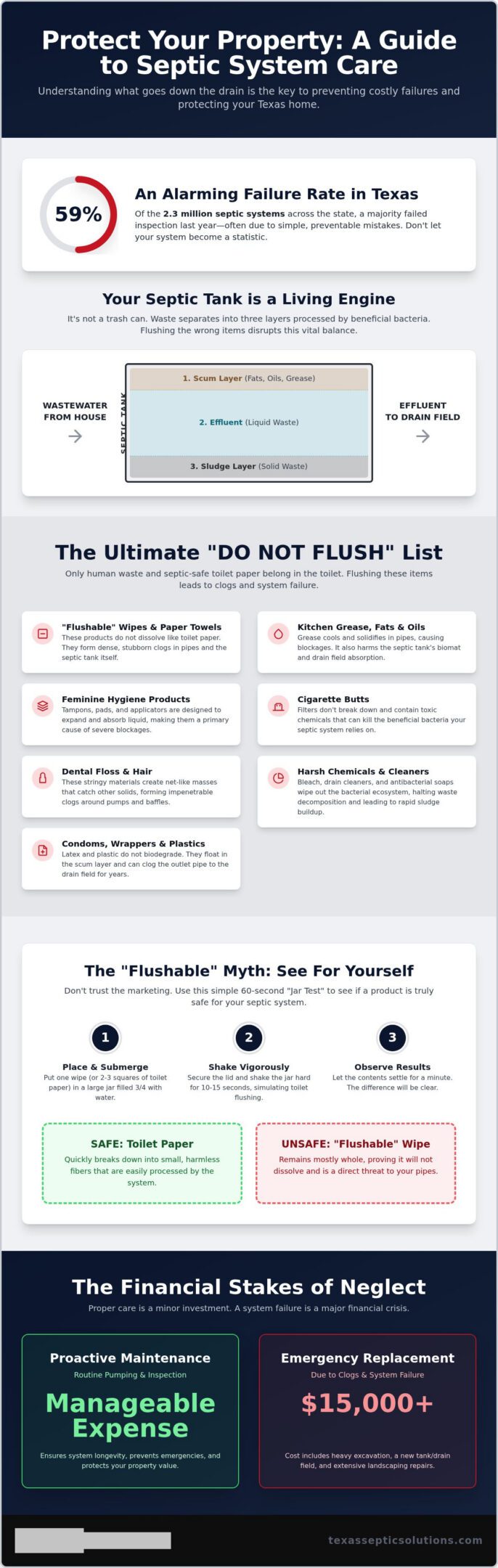
With over 2.3 million septic systems across Texas, our local soil stays busy processing waste. Recent data shows that 59% of these systems failed their inspections last year, often because of simple mistakes made at the bathroom sink or toilet. Your septic tank is a living biological engine, not a trash can; treating it like a city sewer is the fastest way to trigger a massive, preventable failure. It’s stressful to worry about what guests might be flushing or whether that “flushable” label on your wipes is actually a lie.
We understand that you want to protect your home and avoid the headache of an unexpected backup. This guide explains exactly what not to flush down the toilet with a septic system to keep your property safe and your pipes clear. You’ll get a definitive “never-flush” list, an honest look at why certain items destroy your tank’s natural balance, and clear signs that it’s time to call in a professional for a maintenance pump-out. By the end, you’ll have total confidence in managing your home’s most critical utility.
Key Takeaways
- Understand how your septic tank functions as a biological reactor and why maintaining the bacterial balance prevents expensive system failures.
- Identify the specific household items and materials that comprise the ultimate list of what not to flush down the toilet with a septic system.
- Stop falling for marketing myths by using the “Jar Test” to see if your wipes actually dissolve or if they’ll clog your pipes.
- Protect your drain field from “silent killers” like kitchen grease and extra-strength cleaners that wipe out the beneficial bacteria your system needs.
- Learn the immediate steps to take if a guest flushes a prohibited item and when to hit the “reset button” with professional pumping.
Understanding the Biological Balance of Your Texas Septic System
A septic system is a self-contained wastewater treatment plant that relies on bacterial health. It is not just a buried box; it functions as a biological reactor powered by billions of anaerobic bacteria. These microscopic workers are responsible for breaking down organic matter and keeping your system functional. Understanding How a Septic System Works is the first step in realizing why your choices at the toilet matter so much for your property’s longevity.
Inside a healthy tank, waste naturally separates into three distinct layers. The top layer, called scum, consists of fats, oils, and grease. The bottom layer is the sludge, where heavy solids settle and undergo bacterial decomposition. In the middle is the effluent, the relatively clear liquid that eventually moves to your drain field. When you ignore the rules for what not to flush down the toilet with a septic system, you disrupt this settling process. Non-flushable items often stay suspended in the effluent or clog the outlet baffle, which acts as the final gatekeeper preventing solids from entering and ruining your drain field.
Why Texas Soil and Heat Matter
Texas property owners face specific environmental challenges, especially in areas like Houston and Cypress where high clay content is prevalent. Clay soil is much less forgiving than sandy soil because it doesn’t allow water to permeate as quickly. If your system is stressed by the wrong items, the “biomat” layer in your leach field can become too thick and waterproof. This leads to surface backups and soggy spots in your yard. Our intense Texas heat also plays a role. While warmth can accelerate biological activity, it also means that any imbalance caused by chemicals or clogs will result in much stronger, more persistent odors around your home.
The Consequences of a “City Sewer” Mindset
Many homeowners move from urban areas to rural Texas and bring a “city sewer” mindset with them. Municipal systems use massive industrial filters and chemical treatments to handle almost anything people throw at them. Your home system has no such backup. Treating your toilet like a trash can is a gamble that rarely pays off. The financial stakes are significant; while a routine pumping is a manageable expense, a full system replacement can easily reach $15,000. Consistent, professional septic system maintenance Texas is the only way to ensure your system survives the long haul. Knowing what not to flush down the toilet with a septic system is the best way to avoid an emergency call.
The Ultimate List of Bathroom “No-Flush” Items
The simplest way to protect your home is to follow the “Big Three” rule: only flush human waste and toilet paper. Anything else is a risk your system isn’t designed to handle. When homeowners ask us about what not to flush down the toilet with a septic system, they often expect a short list. However, many common bathroom items act as mechanical clogs or biological toxins. Following the EPA Guidelines for Septic Systems is the most effective way to prevent premature failure and keep your Texas property running smoothly.
Items like latex condoms, plastic bandage wrappers, and cigarette butts are particularly problematic. Latex and plastic never decompose in a septic environment. They simply float or sink, eventually blocking the outlet baffle or getting stuck in the intake pipes. Cigarette butts are even worse because they introduce concentrated toxins into your tank. These chemicals can kill the beneficial bacteria responsible for breaking down waste, which halts the digestion of organic matter. This biological “kill-off” causes your system to fill up much faster than intended, leading to foul odors and potential backups.
The Danger of Dental Floss and Hair
Dental floss and hair might seem harmless, but they are the primary culprits behind many mechanical failures. These stringy materials don’t just sit in the tank. They wrap around aerobic stirrers, float switches, and effluent pumps. Over time, hair creates a “nesting” effect, catching other small solids to form a massive, impenetrable clog. This often leads to a sudden backup that requires an emergency septic service call to clear the obstruction and restore flow to your home.
Paper Products That Are NOT Toilet Paper
Toilet paper is specifically engineered to dissolve almost instantly upon contact with water. In contrast, paper towels and napkins are designed to stay strong when wet. They won’t break down in your tank and will quickly fill up the sludge layer. Facial tissues are equally dangerous because they contain chemical binders that prevent them from disintegrating. During supply shortages, some people turn to newspaper or “alternative” wipes, but these materials are far too dense for a septic system to process. If you’ve been using these items, it’s a good idea to schedule professional septic system maintenance to clear out the accumulated solids before they cause a disaster.
Debunking the “Flushable” Myth: Wipes and Hygiene Products
Many Texas homeowners feel a sense of security when they see the word “flushable” on a package of wipes. However, this label is a marketing term rather than a technical standard. There are no industry-wide regulations requiring these products to break down as quickly as toilet paper. In fact, a 2019 study by Ryerson University tested 101 different wipes and found that not a single one could fall apart in the pipes. This is a primary reason why wipes are at the top of the list for what not to flush down the toilet with a septic system.
You can prove this yourself with a simple “Jar Test.” Fill two jars with water, placing a few squares of toilet paper in one and a “flushable” wipe in the other. After shaking both, you’ll see the toilet paper dissolve into a pulp. The wipe will likely remain fully intact. This lack of disintegration causes a massive strain on your system, especially if you have an aerobic setup. Wipes are notorious for wrapping around aerator motors and stirrers, causing expensive mechanical failures that go far beyond a simple clog. The high cost of convenience isn’t worth the risk of a sewage backup into your bathroom.
Why “Flushable” Wipes Destroy Septic Tanks
Wipes are typically made of synthetic fibers or reinforced cellulose designed for durability. In a standard septic tank, waste only spends about 24 to 48 hours settling before the effluent moves toward the drain field. Because wipes don’t break down in that window, they float into the scum layer or drift toward the outlet. This eventually blocks the effluent filter, which is the most common cause of a sewage backup into the home. Following the EPA guidelines on septic system care means keeping these products out of your plumbing entirely.
Feminine Hygiene Products and Diapers
It’s a common misconception that “biodegradable” tampons or pads are safe for septic use. These products are designed to expand and absorb liquid, which is exactly the opposite of what you want in your pipes. When they enter the tank, they don’t break down; they swell. This creates instant blockages in the narrow baffles of your tank. Diapers, even those labeled as eco-friendly, contain plastic liners and absorbent gels that will never decompose in a biological reactor. The best practice is to provide a small, lined trash bin in the bathroom for these items. It’s a small change that prevents a massive headache later. Understanding what not to flush down the toilet with a septic system is about choosing long-term functionality over short-term convenience.
Beyond the Bathroom: Kitchen Waste and Household Chemicals
While most homeowners focus on what not to flush down the toilet with a septic system, the kitchen sink is often an even bigger threat to your system’s health. Fats, oils, and grease (FOG) are the silent killers of drain fields. When these substances enter your plumbing, they remain liquid while warm but quickly change state as they move away from the heat of the house. Grease solidifies in the cool pipes of a Texas winter, creating stubborn blockages that are difficult to clear without professional equipment. Once grease reaches the tank, it floats in the scum layer and can eventually bypass the outlet baffle, sealing the soil in your leach field and causing a total backup.
Chemical cleaners pose a different, more invisible threat to your property. Your septic tank is a biological reactor that relies on live bacteria to function. “Extra strength” bleach and industrial-grade drain cleaners are designed to kill germs, but they don’t distinguish between bad bacteria and the beneficial ones your system needs to stay healthy. Many companies also market “septic additives” that claim to eliminate the need for pumping. In reality, these products are often unnecessary and can sometimes harm the natural balance of your tank. Nothing replaces the effectiveness of a physical pump-out to remove accumulated solids and reset your system’s biology.
The Kitchen Sink Trap
Garbage disposals are a common luxury, but they should rarely be used with a septic system. They grind food into fine particles that don’t settle well, leading to a much faster accumulation of sludge at the bottom of the tank. Coffee grounds are another frequent offender; they don’t decompose and add significant volume to the sludge layer over time. Even tiny produce stickers from fruits and vegetables are a problem. These small plastic bits bypass almost all filters and can end up clogging the narrow distribution pipes in your drain field, leading to expensive repairs.
Chemical Killers: Bleach, Drain Cleaners, and Paint
The concentration of chemicals matters more than you might think. A single gallon of bleach is enough to sterilize a 1,000-gallon tank, effectively halting the treatment of your wastewater. If you need to clean, consider safe alternatives like vinegar and baking soda, which are much gentler on your system’s microbiology. Never rinse paintbrushes in the sink or dump old medication down the drain. These substances are toxic to the environment and the microbes in your tank. If you suspect your tank’s biological balance has been compromised by chemicals, you can schedule professional septic system pumping to clear the toxins and start fresh.
What to Do if You Have Flushed a Prohibited Item
Accidents happen, especially when you have house guests who aren’t familiar with what not to flush down the toilet with a septic system. If you realize a prohibited item has entered your pipes, your first move should be to minimize water usage immediately. Reducing the load on your system prevents the tank from reaching its capacity too quickly, which can help stop the item from being pushed into the outlet baffle or the pump chamber. This “stop the flow” approach buys you time to assess the situation before a full backup occurs.
The next step is to monitor your plumbing for specific warning signs. Listen for gurgling sounds coming from your drains or toilets, as this often indicates a trapped air pocket caused by a blockage. If you have an aerobic system, check your control panel frequently. Hearing the septic tank alarm going off is a high-priority signal that something is wrong, likely a high-water condition caused by a clog or a pump failure. In these cases, consulting a professional is essential to determine if an early pump-out is required to “reset” the tank’s biological and mechanical health.
Warning Signs of an Impending Backup
A failing system often sends signals through your landscape before it floods your bathroom. Watch for patches of lush, bright green grass over your drain field, which usually indicates that the soil is over-saturated and effluent is rising to the surface. You might also notice persistent sewage odors near the tank or inside the home. Pay close attention to the drains in the lowest part of your house, such as a walk-in shower or a laundry room sink. If these begin to drain slowly or backup first, it’s a clear indication that the main line or the tank itself is reaching a critical level.
When to Call Texas Septic Solutions
If you’ve experienced a major “bad flush” event, a professional inspection is the only way to ensure your system isn’t on the verge of a catastrophic failure. We understand the urgency of these situations, which is why we offer 24/7 service for homeowners in Cypress, Houston, and the surrounding areas. Our experts can perform a thorough check to see if a prohibited item has compromised your pump or filter. To avoid these emergencies entirely, we recommend signing up for a septic system maintenance plan. Regular inspections and scheduled pumping provide the peace of mind that your system can handle the unexpected without breaking the bank.
Protect Your Home and Your Investment
Maintaining a healthy septic system doesn’t have to be a source of constant stress. Your tank is a finely tuned biological engine that works best when you stick to the basics of human waste and toilet paper. By mastering the rules of what not to flush down the toilet with a septic system, you’re taking the most important step in preventing a $15,000 replacement bill. Remember that marketing labels like “flushable” don’t account for the unique needs of Texas soil or the sensitivity of aerobic motors. Consistent awareness and small changes in your daily habits are all it takes to keep your property functional for decades.
If you suspect a guest flushed the wrong thing, or if you’re simply due for a routine pumping, we’re here to help. Our family-owned team provides expert maintenance for both aerobic and anaerobic systems. We serve Cleveland, Houston, and the surrounding communities with pride. Whether you need a standard inspection or a 24/7 emergency response, you can rely on our local expertise. Schedule Your Septic Pumping or Inspection with Texas Septic Solutions Today and enjoy the peace of mind that comes with a healthy, reliable system.
Frequently Asked Questions
Can I flush “flushable” wipes if I have a septic system?
No, you should never flush wipes, regardless of what the packaging claims. These products are made of synthetic fibers that don’t disintegrate in water like toilet paper. In the specialized environment of a Houston or Cypress septic tank, they remain intact and float toward the outlet baffle. This leads to immediate clogs or wrapping around expensive pump components. Keeping these out is a core part of knowing what not to flush down the toilet with a septic system.
Is it okay to use bleach in a house with a septic tank?
You can use bleach in very small amounts for laundry, but you shouldn’t use it as a primary drain cleaner or for heavy-duty scrubbing. High concentrations of bleach act as a disinfectant that kills the anaerobic bacteria your system needs to process waste. If you sterilize your tank, the biological treatment stops, and solids will build up much faster. We recommend switching to vinegar or baking soda for most household cleaning tasks.
How often should I pump my septic tank if I accidentally flushed wipes?
If wipes have been flushed regularly, you shouldn’t wait for the standard three to five-year pumping interval. Wipes don’t settle into the sludge layer correctly and often stay suspended, threatening your effluent filter. We recommend scheduling an inspection and a maintenance pump-out as soon as possible to clear these non-biodegradable items. This prevents a minor mistake from turning into a major backup in your Cleveland or Huffman home.
Can I use a garbage disposal with a septic system?
We strongly advise against using a garbage disposal if your home relies on a septic system. Disposals grind food into fine particles that add a massive amount of organic load to your tank. These solids don’t settle as easily as human waste and can lead to a sludge layer that grows twice as fast. If you must use one, plan for much more frequent pumping to avoid overwhelming your system’s biological capacity.
What happens if I flush a condom or feminine hygiene product?
These items cause immediate mechanical obstructions because they are designed to be durable and absorbent. Condoms are made of latex or plastic that never decomposes, while tampons expand to several times their size once they hit the water in your pipes. They often get stuck in the narrow baffles of the tank or the intake lines. This creates a physical dam that results in sewage backing up into your lowest drains.
Are septic tank additives like RID-X necessary?
Septic additives are generally not necessary for a properly maintained system. Your tank naturally produces all the bacteria it needs through the regular introduction of human waste. While some products claim to eliminate the need for pumping, there is no chemical substitute for physically removing the accumulated solids. Instead of spending money on additives, we suggest investing in a routine maintenance plan to ensure your system remains healthy and functional.
Why does my toilet gurgle when I shower?
Gurgling is a primary warning sign that your system is struggling to breathe. It usually happens because air is trapped in the pipes by a growing blockage or because the septic tank is completely full. When you run a large volume of water like a shower, the air has nowhere to go but back up through the toilet. If you notice this in your Shepherd property, it’s time to call for a professional inspection.
What is the most common thing that clogs a septic system in Texas?
In our experience serving the Greater Houston area, “flushable” wipes and kitchen grease are the most frequent causes of system failure. These materials create a lethal combination that seals off pipes and prevents the soil in the drain field from absorbing liquid. Educating your family and guests about what not to flush down the toilet with a septic system is the most effective way to avoid the high cost of emergency repairs.