
What Happens If You Don’t Pump Your Septic Tank in Texas? (2026 Guide)
Would you rather spend a few hundred dollars on a routine service today, or hand over $20,000 for a total drain field replacement next summer? In the sweltering heat of a Houston July, that isn’t just a hypothetical question; it’s the reality many homeowners face when they push their maintenance schedule too far. We understand that life in areas like Cleveland and Cypress is busy, and your septic system is easy to forget when it’s buried and out of sight. You likely assume everything is fine as long as the toilets flush, but that silence can be deceptive.
Understanding exactly what happens if you don’t pump your septic tank Texas is the only way to protect your property and your wallet from a preventable disaster. This 2026 guide reveals the hidden risks, legal consequences under updated TCEQ regulations, and the massive repair costs that follow skipped maintenance. We will walk you through the exact timeline of a system failure, the warning signs of a full tank, and how to stay ahead of local county enforcement. By the end, you’ll know how to avoid the smell, the mess, and the legal fines that come with a neglected system.
Key Takeaways
- Understand the delicate balance of bacteria and waste layers inside your tank that keeps your system running smoothly.
- Discover what happens if you don’t pump your septic tank Texas, including how heavy clay soil and extreme heat accelerate system failure.
- Identify early warning signs like gurgling pipes or unusually lush grass before they turn into a messy, expensive backup.
- Get the facts on 2026 TCEQ regulations and the hidden costs of allowing sludge to destroy your drain field.
- Learn how professional maintenance plans and 24/7 emergency support provide a reliable safety net for your property.
The Science of Septic Failure: What Actually Happens Inside the Tank?
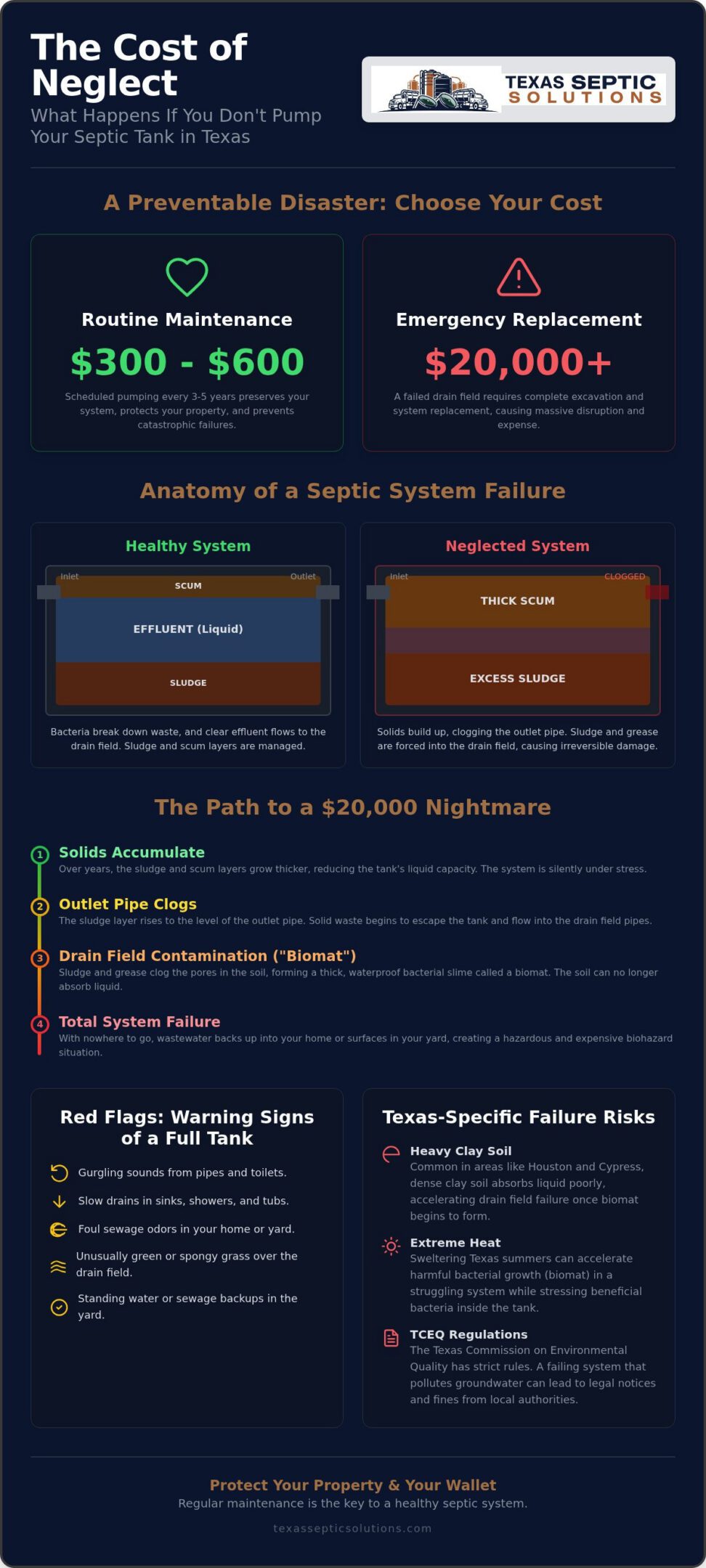
Your septic tank is a living ecosystem designed to separate waste through gravity and biology. To understand The Science of Septic Failure, you have to look at how waste organizes itself into three distinct layers. The top layer is the scum, which consists of light fats, oils, and grease. The middle layer is the effluent, which is the treated liquid that eventually exits the tank. The bottom layer is the sludge, where heavy solids settle and stay. Anaerobic bacteria live within these layers and work to break down organic matter, but they have their limits.
There is a critical tipping point in every system that occurs when the sludge and scum layers become too thick. As these solids accumulate, the space for the middle effluent layer shrinks. When the sludge reaches the level of the outlet pipe, solids begin to flow out of the tank and into your drain field. This is exactly what happens if you don’t pump your septic tank Texas homeowners often discover far too late. Septic pumping is the manual removal of non-biodegradable solids to reset the system capacity.
Scum vs. Sludge: The Hidden Danger
The scum layer forms from fats, oils, and grease (FOG) that float to the surface. Below that, the sludge blanket consists of heavier waste that sinks to the bottom. While bacteria do their best to digest these solids, they simply can’t keep up with modern living. Antibacterial soaps, harsh cleaners, and high water usage often kill the beneficial bacterial colonies your system relies on. When these layers get too thick, they stop being a storage zone and start being a source of system-wide clogs that threaten your entire property.
The “Engine Oil” Analogy for Texas Homeowners
Think of pumping your septic tank like changing the oil in your truck. You don’t wait for the engine to start smoking before you head to the shop for maintenance. If you wait for a “sign” like a backup or a foul smell, the damage to your system is likely already done. In our local communities from Cleveland to Cypress, we see this story play out frequently. Skipping a routine maintenance service might save a small amount today, but it eventually leads to a massive replacement bill that can reach tens of thousands of dollars. It’s much easier to manage a scheduled pump-out than to excavate your entire yard for a new installation.
The Costly Consequences of Neglecting Your Septic Pumping
When your tank overflows with solids, the liquid effluent is no longer the only thing leaving the system. Heavy sludge and grease travel into your drain field, where they trigger the growth of a “biomat.” This is a thick, slimy layer of bacteria that eventually seals the soil like a coat of paint. Once the soil pores are plugged, water has nowhere to go but up to the surface or back into your house. This chain reaction is the primary answer to what happens if you don’t pump your septic tank Texas homeowners should fear, as it often means your system has reached a point of no return.
Beyond the mechanical failure, there is a serious human cost. Surfacing sewage in your yard creates a breeding ground for pathogens and parasites. This isn’t just an eyesore; it’s a public health hazard for your family and pets. Inside the home, repeated backups can damage internal plumbing and lead to expensive biohazard remediation for floors and walls. Following the guidelines for Costly Consequences of Neglecting Your Septic Pumping is essential to prevent these environmental and structural disasters.
Drain Field Failure: The $20,000 Nightmare
Once solids have compromised your drain field, you cannot simply pump out the tank and expect the soil to recover. The damage to the soil structure is usually permanent. In the current market, the septic system replacement cost can easily exceed $20,000 depending on your property size and soil type. It’s a heavy price to pay for skipping a routine maintenance visit. If you suspect your system is struggling, our team offers expert septic system repair to help identify issues before they become terminal.
Structural Damage to the Septic Tank
Neglect also takes a physical toll on the tank itself. Years of accumulated sludge create immense weight that can cause concrete tanks to crack or even collapse. In high-water-table areas around Houston, unmaintained tanks are also prone to “floating” or shifting due to hydrostatic pressure during floods. Additionally, the high acidity of old waste eats away at concrete baffles and plastic filters. Once these internal components corrode, the tank can no longer properly separate waste, accelerating the destruction of your drain field. Keeping your tank pumped ensures these structural components remain intact for decades.
Texas-Specific Risks: Soil, TCEQ Regulations, and Weather
Living in the Greater Houston area means dealing with a unique set of environmental challenges that most national septic guides simply don’t mention. In communities like Cleveland and Cypress, we primarily deal with “Houston gumbo,” a heavy clay soil that’s notoriously difficult for drainage. Unlike sandy soil that offers a bit of a safety net, clay has tiny pores that clog almost instantly when sludge carries over from a full tank. This is a critical part of what happens if you don’t pump your septic tank Texas style; the soil stops absorbing liquid entirely, leaving you with a swampy yard even in the middle of a dry spell.
The intense Texas heat also plays a role in system health. While anaerobic bacteria need warmth to thrive, the extreme temperatures of a Houston summer can sometimes cause the tank environment to become overly acidic, especially if water usage is low. This chemical imbalance kills off the beneficial microbes that break down waste, causing solids to accumulate much faster than expected. For a complete look at how to manage these local factors, see our Septic System Maintenance Texas guide.
TCEQ Compliance and Real Estate Transfers
The Texas Commission on Environmental Quality (TCEQ) sets strict standards for On-Site Sewage Facilities (OSSF). If you’re planning to sell your property, a neglected septic system can be a deal-breaker. Most buyers and lenders require a professional inspection, and a tank that hasn’t been pumped can fail simply because the inspector can’t see the structural components. Beyond the sale, the legal stakes are high. Discharging untreated waste into Texas waterways can lead to environmental fines that start at $5,000. Staying on a regular pumping schedule is the easiest way to ensure you remain compliant with state law.
Flood Risks in the Greater Houston Area
Houston’s frequent flash floods create a “perfect storm” for unmaintained septic systems. When your tank is already near capacity with sludge, it has no room to handle the surge of water that accompanies heavy rain. Saturated clay soil prevents the drain field from functioning, and without any storage capacity in the tank, sewage has nowhere to go but back up into your home. We’ve seen many cases where a routine pump-out could have prevented a high-pressure backup during a storm. After any major flooding event in areas like Shepherd or Huffman, it’s vital to have your system checked for silt accumulation or structural shifts caused by hydrostatic pressure.
Warning Signs You Have Waited Too Long to Pump
You don’t always have to wait for a total backup to know your tank is full. Often, the system sends subtle signals that it is reaching capacity. One of the first things you might notice is a distinct “gurgling” sound coming from your drains or toilets after you flush. This happens because air pockets are trapped in the pipes by rising sludge levels. If you hear this, it’s a clear indicator of what happens if you don’t pump your septic tank Texas homeowners should act on immediately. When air can’t move freely through the vent stacks, a messy backup is usually only days away.
Outside, your yard might actually look “too good” to be true. If you see patches of exceptionally lush, vibrant green grass over your drain field while the rest of your lawn is struggling in the Texas heat, you have a problem. This “lush green grass” phenomenon means the soil is being oversaturated with nutrient-rich effluent that can no longer be absorbed deep into the ground. Eventually, this leads to a “rotten egg” smell near the tank. That odor is hydrogen sulfide gas, a byproduct of waste that has nowhere else to go. If you smell it, your system is already in the early stages of failure.
Indoor vs. Outdoor Symptoms
Inside your home, the first signs of trouble usually appear in the lowest drains, such as showers or tubs. If multiple fixtures are draining slowly at the same time, it isn’t a simple clog in one pipe; it’s a system-wide capacity issue. Outdoors, look for standing water or “spongy” soil near the tank area even when it hasn’t rained. If you have an aerobic system, you must never ignore a septic tank alarm going off. That light or buzzer is your final warning that the pump or high-water float has been triggered, and immediate action is required to prevent a flood.
The “Invisible” Failure: Nitrate Contamination
Sometimes, the most dangerous failures don’t involve a smell or a backup at all. When a tank is overfilled, it can leak high concentrations of nitrates into the surrounding soil. For rural properties in areas like Shepherd or Huffman that rely on well water, these nitrates can seep into the groundwater. You might have a perfectly flushing toilet while your drinking water is becoming contaminated. This is why “no backup” does not always mean “no problem.” Regular water testing and scheduled pumping are the only ways to ensure your family stays safe from this invisible threat. If you’re noticing any of these red flags, don’t wait for a disaster. Contact us for emergency septic service to protect your home and health.
The Professional Solution: Pumping and Maintenance with Texas Septic Solutions
While the previous sections detailed the disaster scenarios of a neglected system, there is a straightforward way to protect your property. Texas Septic Solutions provides a dependable path to system longevity through professional pumping and comprehensive care. We don’t just provide a “pump and run” service that only skims the liquid from the top. Instead, our technicians perform a thorough cleaning that removes the heavy sludge blanket at the bottom of the tank, effectively resetting your system’s capacity. This proactive approach is the best way to avoid the stress of what happens if you don’t pump your septic tank Texas property owners often face during the rainy season.
For those already facing an overflow, our team offers 24/7 emergency septic service across the Houston and Cleveland areas. However, the most cost-effective strategy is joining our septic system maintenance plan. These plans ensure your system is inspected and pumped on a schedule that fits your household’s actual water usage and the specific soil conditions of your property, removing the guesswork and preventing the sudden failure of your drain field.
Why Local Expertise Matters in Shepherd and Huffman
Our team serves as your “Neighborly Expert” in communities like Shepherd and Huffman. We understand how local weather patterns and “Houston gumbo” clay soil interact with your specific system type. Every county has slightly different OSSF codes; our deep familiarity with local regulations ensures your property remains compliant with TCEQ standards. Because we are based right here in the community, we offer rapid response times and a level of accountability that national franchises simply cannot match. We know the history of the area and the unique challenges our neighbors face.
Booking Your 2026 Maintenance: What to Expect
When you book your 2026 maintenance, our technicians do more than just empty the tank. We perform a detailed visual inspection of the baffles, filters, and tank walls to catch early signs of corrosion or structural wear. If we find an issue, we can perform a septic system repair immediately. This early intervention prevents a minor crack or a clogged filter from turning into a total system collapse. Don’t wait for a backup or a foul smell to ruin your week. Schedule your Texas Septic Solutions pump-out today and keep your home functioning exactly as it should.
Secure Your Property with Proactive Septic Care
Skipping maintenance might seem like a simple way to save money today, but the long-term reality is much more expensive. Now that you understand what happens if you don’t pump your septic tank Texas, you can see how easily solids can destroy a drain field or lead to significant legal fines. From the “Houston gumbo” clay soil to strict TCEQ regulations, our local environment doesn’t offer much room for error. Staying on a regular schedule is the only way to ensure your system remains a silent, functional part of your home instead of a costly emergency.
As your family-owned local authority, we are here to help you manage these requirements with ease. We provide TCEQ-compliant maintenance and 24/7 emergency service in Cleveland, Houston, and Cypress to keep your system running perfectly. Protect your home and schedule your septic pumping today with Texas Septic Solutions. Taking this small step now provides the peace of mind that your property is protected for years to come.
Frequently Asked Questions
How often should I pump my septic tank in Texas?
Most conventional systems in the Houston area require pumping every three to five years. However, this timeline depends heavily on your household size and water usage. If you have a large family in Cypress or Huffman, you might need service more frequently to prevent sludge carryover. Understanding what happens if you don’t pump your septic tank Texas homeowners often find is that waiting too long leads to irreversible soil damage in our local clay.
Can I pump my septic tank myself in Texas?
You cannot pump your own septic tank in Texas. State law requires that all septic waste be handled by a licensed sludge transporter registered with the TCEQ. This ensures the waste is disposed of at an authorized facility rather than illegally dumped. Attempting to pump it yourself isn’t just dangerous due to toxic gases; it also exposes you to significant legal fines and potential environmental damage to your Cleveland or Shepherd property.
How do I know if my septic tank is full?
The most accurate way to know if your tank is full is to have a professional measure the sludge and scum layers. While slow drains and gurgling pipes are common indicators, they often appear only after the system is already overstressed. Our technicians in Shepherd use specialized tools to check the depth of the sludge blanket. If the solids occupy more than one third of the tank’s total volume, it is time for a pump-out.
What is the average cost of a septic backup repair in Houston?
While we don’t provide fixed pricing without an inspection, industry data shows that a major backup repair in the Houston area can be incredibly expensive. If the neglect leads to a total drain field failure, replacement costs often range from $5,000 to over $15,000. These figures don’t include the cost of cleaning sewage from inside your home. It’s always more affordable to pay for a routine pump-out than to face a terminal system diagnosis.
Is it bad to pump your septic tank too often?
It isn’t harmful to the structure of your tank to pump it frequently, but it is usually an unnecessary expense. Your system relies on healthy bacterial colonies to break down organic waste. Pumping too often resets these colonies before they can become fully effective. For most properties in Huffman or Cypress, sticking to a professional maintenance plan is the best way to balance system health with your household budget without over-servicing the tank.
Does a full septic tank smell inside the house?
A full septic tank can definitely cause odors inside your home. When the tank reaches capacity, sewer gases like hydrogen sulfide can be pushed back through your plumbing traps. This often happens if the vent stack is blocked or if the rising sludge level is preventing air from moving freely. If you notice a “rotten egg” smell in your laundry room or bathroom, it’s a strong sign that your system needs immediate professional attention.
Do aerobic systems need pumping more often than conventional ones?
Aerobic systems typically require more frequent pumping than conventional ones. Because these systems use oxygen to break down waste more quickly, they often have smaller tanks that can’t hold as much sludge. In the Houston area, aerobic systems are subject to specific TCEQ maintenance contracts that require regular inspections. These inspections help determine exactly when your specific unit needs to be pumped to prevent mechanical failure of the aerator or spray heads.
What happens if I ignore my septic tank alarm?
Ignoring a septic tank alarm is a recipe for a property disaster. The alarm triggers when the water level is dangerously high or the pump has failed. If you continue to use water after the alarm sounds, you’ll likely experience a backup into your home within hours. For residents in Cypress or Cleveland, we offer 24/7 emergency septic service to address these alarms immediately. Never silence the alarm and assume the problem will fix itself.