
What Does a Septic Inspection Cover? The 2026 Texas Homeowner’s Checklist
What if the most expensive component of your Texas property isn’t the roof or the kitchen remodel, but a buried tank you haven’t thought about in years? For many homeowners in our community, the septic system is out of sight and out of mind until something goes wrong. It’s completely natural to feel a sense of dread when it’s time for a professional to open that lid, especially with the updated 2026 TCEQ regulations now in effect. You want to be sure your home is safe and your investment is protected. Learning exactly what does a septic inspection cover helps strip away that uncertainty and puts you back in control of your property’s health.
We’re here to show you that a real inspection is much more than just a quick visual check of your lawn. It is a forensic deep dive into the mechanical and structural integrity of your system. This article provides a clear, step by step breakdown of the diagnostic process for both aerobic and anaerobic setups. We will cover everything from tank sludge levels to the latest drainage field standards, giving you the peace of mind that your system meets every local requirement. By the end of this checklist, you’ll have a professional’s perspective on how to spot trouble early and keep your home running smoothly for years to come.
Key Takeaways
- Learn how current TCEQ standards protect your property value and why structural checks are your first line of defense against system failure.
- Understand exactly what does a septic inspection cover, from measuring sludge layers to verifying the integrity of your tank walls and baffles.
- Identify the critical differences between aerobic and anaerobic protocols, including the specific mechanical tests required for newer Texas homes.
- Save time and money by preparing your site with our checklist for locating lids and organizing your system’s maintenance history.
- Gain the confidence to decode your final report and prioritize repairs before a “marginal” status turns into a costly emergency.
Why Septic Inspections Are Essential for Texas Homeowners
A septic inspection is essentially a comprehensive health check for your On-Site Sewage Facility (OSSF). With approximately 2.6 million households in Texas relying on these systems, the Texas Commission on Environmental Quality (TCEQ) maintains strict oversight to protect public health. They set the core standards under 30 TAC Chapter 285 to keep our local communities safe and functional. When homeowners ask what does a septic inspection cover, they’re often looking for a guarantee that their system won’t fail during a heavy Houston rainstorm. Understanding how septic systems work helps you see why these professional evaluations are the foundation of any responsible property management plan.
Buying or Selling a Home with a Septic System
Standard home inspectors often skip the septic system entirely. They might check if the water goes down the drain, but they won’t pull the tank lids or inspect the distribution box. For Houston-area real estate, this is a major deal-breaker. A hidden failure can tank a property’s value or delay a closing by weeks. A professional inspection provides a deep diagnostic of the tank’s structural integrity and the drain field’s absorption rate. Proactive septic system maintenance in Texas ensures that when the time comes to sell, your report is a tool for the sale rather than a barrier to it.
Environmental and Health Protections
Protecting the East Texas watershed starts in your backyard. Our region’s clay-rich soils present unique drainage challenges that can lead to surfacing sewage if the system isn’t tuned properly. These failures pose direct risks to your family and pets. A thorough evaluation identifies early signs of saturation or groundwater contamination. By looking at what does a septic inspection cover, you’ll see it includes checking for leaks that could lead to full system replacements. It’s a small investment that prevents massive environmental and financial headaches. We treat every inspection as a chance to secure your home’s functionality and your family’s safety.
The Core Checklist: What a Standard Septic Inspection Covers
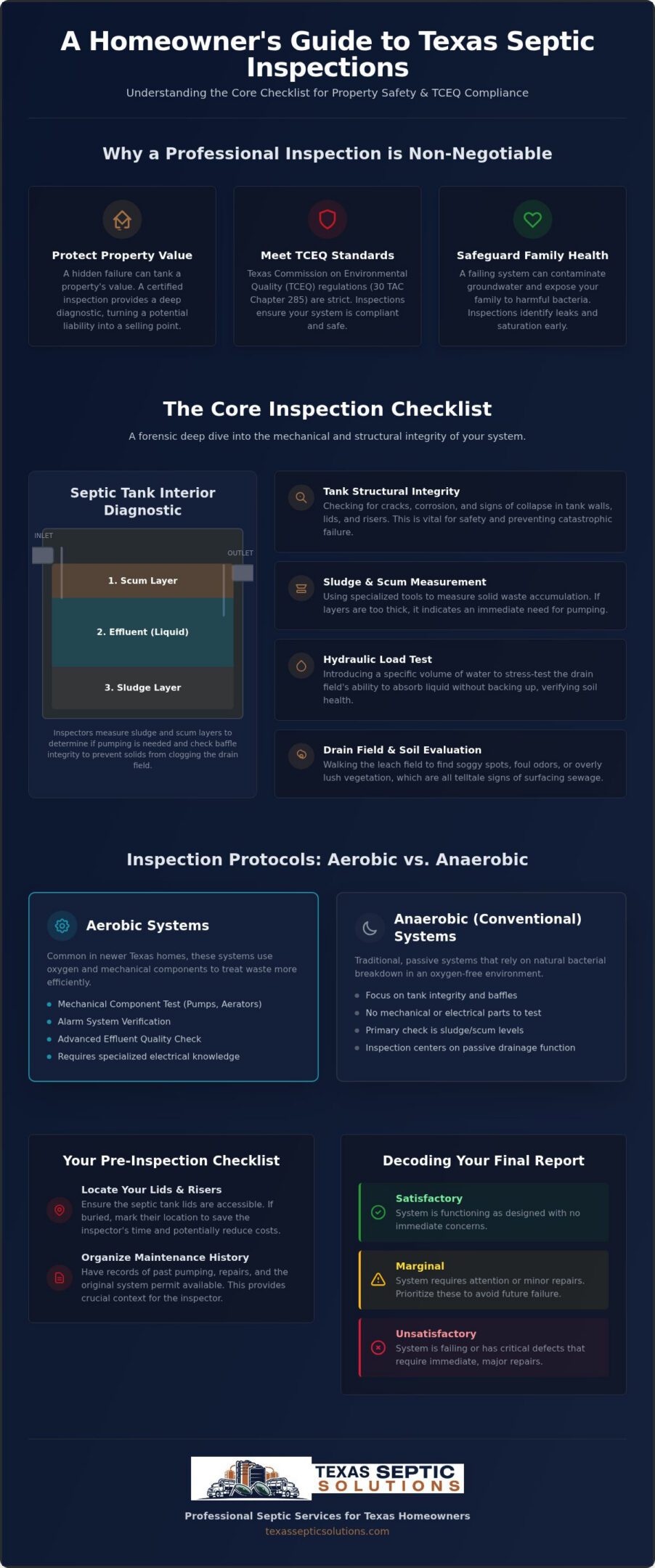
A professional evaluation is a multi-point forensic diagnostic. It starts with the structural integrity of the septic tank itself. We look for cracks, corrosion, or signs of collapse that could lead to a catastrophic failure. In concrete tanks, hydrogen sulfide gas can weaken the walls over time, making this check vital for safety. When homeowners ask what does a septic inspection cover, they’re often surprised to learn it includes measuring the internal sludge and scum layers. We use specialized tools to determine exactly how much solid waste has accumulated. If these layers are too thick, it’s a clear sign that you need to schedule a visit from Texas Septic Solutions to prevent solids from overflowing into your drain field.
We also verify that the inlet and outlet baffles are intact. These components are the gatekeepers of your system. They ensure that only liquid effluent moves forward while solids stay in the tank where they belong. Understanding exactly what does a septic inspection cover helps you prioritize small repairs before they become midnight emergencies. Finally, we perform a hydraulic load test. This involves introducing a specific volume of water into the system to see if the drain field can absorb it without backing up. It’s the ultimate stress test for your property’s soil health.
The Septic Tank Interior Diagnostic
Checking the liquid level is our first clue to the system’s status. If the water level is unusually high, it suggests a blockage or a saturated drain field. Conversely, a low water level often points to a leak in the tank walls. We also inspect the lids and risers to ensure they’re watertight and secure. A loose lid isn’t just a maintenance issue; it’s a significant safety hazard for families and pets. If your system has an effluent filter, we’ll pull it to check for clogs and ensure it’s still protecting your pipes effectively.
Drain Field and Soil Evaluation
The inspection continues above ground. We walk the entire leach field to look for telltale signs of trouble like soggy spots, foul odors, or patches of suspiciously lush vegetation. These “hot spots” often indicate that sewage is surfacing rather than filtering through the soil correctly. We use soil probes to check for standing water in the trenches, which confirms if the field is nearing the end of its lifespan. We also verify that no heavy vehicles, sheds, or pools are encroaching on the absorption area. Soil compaction is a leading cause of premature system failure in our region.
Aerobic vs. Anaerobic: How Inspection Protocols Change
In Texas, your soil type dictates the technology buried in your backyard. Many newer homes, especially those built on the heavy clay common in Houston and Cleveland, rely on Aerobic Treatment Units (ATUs). While traditional anaerobic systems use gravity and natural soil bacteria, ATUs act like a miniature wastewater treatment plant. This mechanical complexity means the answer to what does a septic inspection cover changes significantly. Instead of just checking tank levels, a professional must evaluate electrical systems, air compressors, and disinfection components. Most Texas counties mandate maintenance contracts for these systems, typically requiring three inspections per year to remain compliant with TCEQ standards.
A major part of the aerobic protocol involves the control panel. If you’ve ever experienced a septic tank alarm going off, you know how stressful it can be. During a routine check, we test the float sensors and the high-water alarm to ensure they’ll alert you before a backup occurs. This proactive approach turns a potential emergency into a simple component replacement. We treat these inspections as a safety net for your home’s functionality.
Testing the Aerobic Components
Oxygen is the lifeblood of an aerobic system. We check the air compressor, also known as the aerator, to ensure it provides enough oxygen for the beneficial bacteria to thrive. We also cycle the submersible pump to verify it’s moving effluent to the disposal area efficiently. A critical safety step is checking the disinfection system. Whether your system uses a liquid chlorinator, chlorine tablets, or a UV light, we ensure it’s functioning to kill pathogens before the water leaves the system. If this stage fails, the “what does a septic inspection cover” list must immediately include repairs to protect your family’s health.
Spray Field Inspection
Unlike traditional drain fields that stay underground, aerobic systems often use surface irrigation. We test each spray head to ensure proper pressure and coverage across your lawn. It’s vital that these heads don’t spray toward your home, property lines, or water wells. We also verify the integrity of the “purple pipe” system. These pipes are color-coded to indicate reclaimed water, and they must be clearly marked and buried at the correct depth. We check that the spray area meets all local setback requirements, ensuring your system remains legal and neighbor-friendly.
The Homeowner’s Pre-Inspection Checklist: How to Prepare
Preparation is the best way to ensure a smooth and cost-effective evaluation. If you’ve never had a professional on-site, you might wonder what does a septic inspection cover and how you can help. Taking a few proactive steps ensures the technician can focus on the system’s health rather than spending hours digging for buried components. Clear the area around your tank and drain field of any debris, overgrown brush, or parked vehicles. When you understand what does a septic inspection cover, you realize that preparation isn’t just about tidying up; it’s about giving the technician clear access to critical data.
One of the most important things you can do is stabilize the system’s water levels. We recommend stopping heavy water usage, like laundry loads or back-to-back showers, at least 24 hours before the appointment. This allows the tank to reach its “normal” operating level. This step is essential for an accurate hydraulic load test, which we use to see if your drain field is processing effluent correctly. If the system is flooded with fresh laundry water, it can skew the results and lead to a marginal rating that might have been avoided.
Locating Your System Components
Finding your buried components is often the biggest hurdle for new homeowners. You can usually find a septic map, known as an as-built drawing, through your local county health department or the TCEQ records. If a map isn’t available, we often use a tile probe to locate the edges of the tank and the buried lids. If your lids are currently under several inches of dirt, digging them up yourself before the inspector arrives can save on labor costs. Installing risers is a great long-term investment that brings the lids to the surface, making future checks much faster and more affordable.
Documentation and History
Your system’s history tells a story that the inspector needs to hear to give an accurate diagnosis. Have your records ready, especially the date of your last septic tank pumping. Knowing the frequency of past service helps us determine if the current sludge levels are normal for your household size or if there’s an underlying issue with your system’s efficiency.
Be prepared to discuss these points with your inspector:
- Any recent slow drains, gurgling pipes, or foul odors.
- Past alarm events or mechanical repairs to pumps and aerators.
- The number of full-time occupants in the home to help assess the system load.
- The location of any secondary structures like workshops, pools, or guest houses.
Providing this context allows us to give you a more accurate assessment of your system’s remaining lifespan and overall health. If you’re ready to get your system checked by a local expert, schedule your professional inspection with Texas Septic Solutions today.
What Happens After the Inspection? Understanding Your Report
Once the field work is complete, you’ll receive a detailed report that serves as the legal record of your system’s health. This document translates the technical findings from our earlier discussion on what does a septic inspection cover into a clear verdict. Most Texas reports use three primary ratings: Satisfactory, Marginal, or Failing. A Satisfactory rating means your system is operating within TCEQ guidelines. Understanding what does a septic inspection cover helps you see that a Marginal rating isn’t a failure; it is an opportunity to address worn components like an aging aerator or a slightly clogged filter before they cause a total system shutdown.
A Failing status requires immediate action to protect your property and the local environment. We help you prioritize these repairs based on safety and urgency. It is often beneficial to work with a full-service provider who can transition seamlessly from the diagnostic phase to the repair phase. Choosing a company like Texas Septic Solutions means you have a partner who is already familiar with your system’s specific history. This relationship is the perfect foundation for a long-term septic system maintenance plan for your property’s future health.
Common Failures and Next Steps
If the inspection reveals a cracked tank or missing baffles, these must be addressed to prevent groundwater contamination. We also look for biomat buildup in the drain field. This is a slimy layer of bacteria that can eventually waterproof your soil trenches and cause backups. While some biomat issues can be cleared through specialized cleaning, severe cases might indicate your system is at the end of its lifespan. In these instances, we provide clear guidance on septic system replacement costs so you can plan your budget without surprises.
Choosing a Certified Texas Inspector
Always verify that your inspector holds a current TCEQ license. Texas law is very specific about who can sign off on these reports, especially for aerobic systems that require specialized mechanical knowledge. We pride ourselves on being a reliable local authority for homeowners in Houston and Cleveland. Our team remains ready 24/7 to handle any urgent issues discovered during your 2026 evaluation. Scheduling your next check-up now ensures you stay ahead of regulatory changes and keep your home’s most critical utility in peak condition.
Protect Your Property with a Proactive Diagnostic
Understanding exactly what does a septic inspection cover transforms a stressful requirement into a smart property management strategy. By focusing on the structural integrity of your tank and the mechanical precision of your aerobic components, you’re doing more than just meeting TCEQ standards. You are actively protecting your home’s value and your family’s health. We’ve seen how simple site preparation and a clear understanding of your final report can prevent a “marginal” status from turning into a total system failure. Your septic system is a major investment. It deserves the care of a seasoned expert who knows the unique soil challenges of our East Texas region.
Our team of certified TCEQ licensed technicians is ready to provide the thorough, dependable service you need. Whether you’re in Houston, Cleveland, or the surrounding areas, we offer the stability of routine maintenance alongside the safety net of 24/7 emergency service. Don’t wait for a backup to tell you there’s a problem. Schedule Your Professional Septic Inspection with Texas Septic Solutions Today and gain the peace of mind that comes with a healthy, compliant system. We’re here to help you keep your home running smoothly for years to come.
Frequently Asked Questions
How much does a septic inspection cost in Texas?
Industry data shows that a comprehensive septic evaluation in Texas typically ranges between $300 and $600. Basic visual checks for real estate are often cheaper, while full forensic diagnostics involving specialized equipment sit at the higher end. The final price often depends on the tank’s size and how deep the lids are buried. We suggest contacting a local expert to get a firm quote that accounts for your specific system type and property location.
Does a septic inspection include pumping the tank?
Pumping isn’t always included in a standard inspection, but it’s often recommended as a paired service. Emptying the tank allows a technician to see the floor and walls to check for structural cracks that are otherwise hidden. If the sludge levels are high, the inspector will likely advise pumping to prevent drain field damage. It’s smart to clarify with your provider whether they bundle these services or if pumping is a separate maintenance fee.
How long does a professional septic inspection take?
A professional evaluation generally takes between 90 minutes and three hours to complete properly. The time varies based on the system’s complexity and how quickly the technician can locate and uncover the lids. Aerobic systems often take a bit longer because the inspector must test electrical components, aerators, and spray heads. You can help the process move faster by clearing away brush and having your system maps ready before the technician arrives at your property.
Is a septic inspection required by law in Texas?
Texas state law doesn’t require an inspection for every real estate transaction, but most lenders for FHA or VA loans will insist on one. However, aerobic systems are a different story. If you have an aerobic treatment unit, TCEQ regulations require a maintenance contract that includes three inspections every year. These recurring checks are mandatory to ensure your system meets environmental standards and to help you avoid potential legal issues or fines from local authorities.
Can I perform my own septic inspection for a home sale?
You cannot perform your own inspection for a home sale or for regulatory compliance. Lenders and the TCEQ require a report from a licensed professional with the specific expertise to evaluate onsite sewage facilities. A certified technician has the training to spot structural weaknesses and mechanical failures that aren’t obvious to the untrained eye. Hiring a professional protects you legally and ensures that the buyer receives an accurate, honest assessment of the system’s current condition.
What are the most common reasons a septic system fails inspection?
Most systems fail due to structural problems like cracked concrete or broken baffles that allow solids to escape the tank. High sludge levels that haven’t been pumped in years are another common reason for a failing report. In our region, saturated drain fields that can’t absorb water during a hydraulic load test are a frequent issue. Mechanical failures in the air compressor or water pump also cause many aerobic systems to fail their mandatory state inspections.
How often should I have my septic system inspected in Houston?
If you have an aerobic system in Houston, state law requires an inspection every four months, or three times per year. Conventional systems don’t have the same legal frequency but should still be checked every one to three years. If you’re curious about what does a septic inspection cover during these visits, it’s a thorough check of sludge levels and mechanical parts. Regular evaluations are the best way to keep your system healthy in our heavy clay soil.
What is the difference between a visual inspection and a full inspection?
A visual inspection is a quick check of the plumbing and the lawn’s surface. It doesn’t provide a complete picture of what does a septic inspection cover. A full inspection is much more thorough. It involves pulling the tank lids, checking the internal sludge layers, and testing the drain field’s capacity with a hydraulic load test. We always recommend a full inspection because it’s the only way to find hidden leaks or structural cracks inside the tank.