
What Are the Signs of a Bad Septic Pump? A 2026 Texas Homeowner’s Guide
Imagine waking up on a humid July morning to find your yard smelling like a swamp and your drains gurgling in protest. It’s a scenario no homeowner wants to face, yet many find themselves asking what are the signs of a bad septic pump only after the backup has already reached the bathroom floor. Whether you’re dealing with the expansive clay of the Blackland Prairie or the high water tables near the coast, your septic pump works overtime to keep your home functional. When that pump fails, the clock starts ticking before a minor nuisance becomes a major health hazard.
We understand that the fear of raw sewage and the confusion over aerobic versus anaerobic components can be overwhelming. You want to protect your home without being blindsided by massive emergency fees. This guide identifies the critical warning signs of a failing pump before they turn into a full-blown crisis on your Texas property. You’ll learn how to diagnose common issues, take steps to prevent an immediate backup, and know exactly when it’s time to call in a local expert to keep your system running smoothly through 2026 and beyond.
Key Takeaways
- Learn to identify early red flags like tank alarms and unusual grinding noises to understand what are the signs of a bad septic pump before a backup occurs.
- Follow a simple troubleshooting checklist to see if a tripped breaker or a stuck float switch is causing your system issues.
- See how unique Texas environmental factors like extreme soil heat and heavy seasonal rains can shorten the life of your pump’s motor.
- Determine if it’s time for a replacement or a repair based on your pump’s age and the specific mechanical failures you’re seeing.
- Know when to stop DIY efforts and call for professional 24/7 emergency service (find out more) to avoid a sewage emergency on your property.
Understanding Your Septic Pump’s Role in Your Home
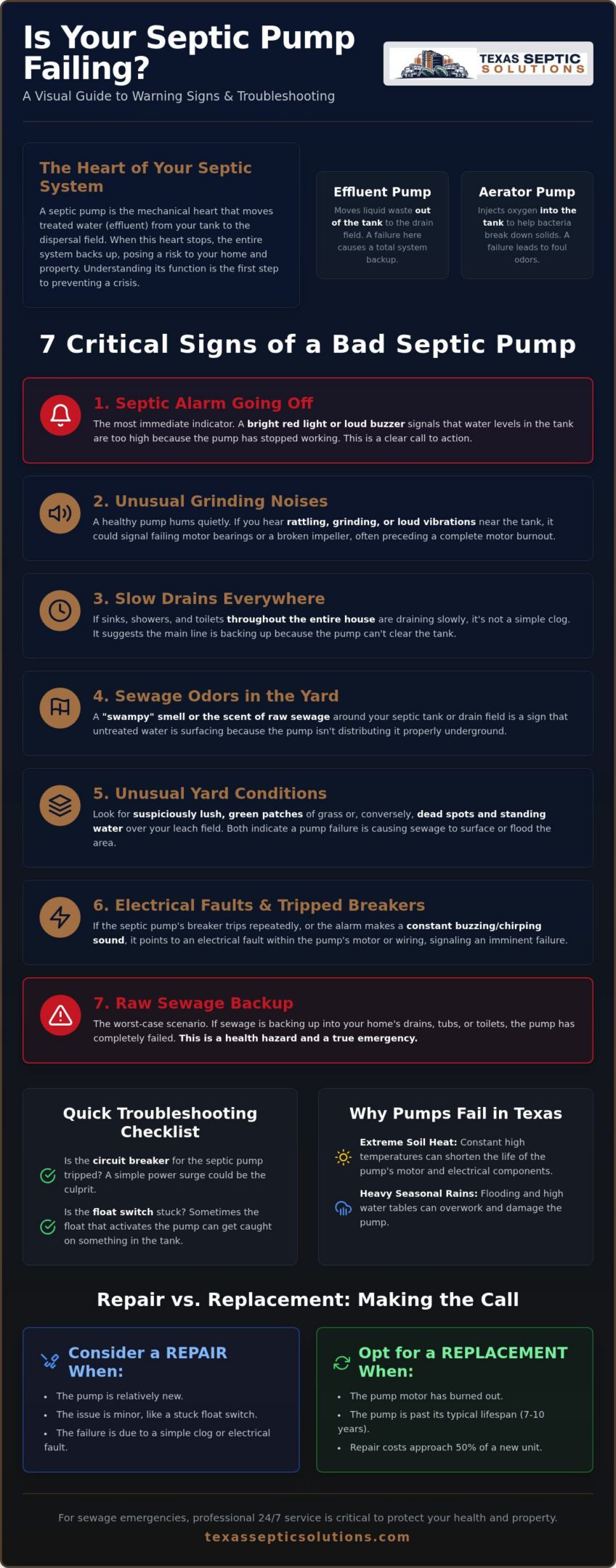
Your septic system is a complex biological and mechanical network designed to treat waste safely on your property. At its center, the septic pump acts as the “heart” of the entire operation. While gravity handles much of the work in older setups, modern systems rely on mechanical force to move treated water where it needs to go. A septic pump is the mechanical component responsible for pressurized effluent distribution. When this heart stops beating, the entire system grinds to a halt, leading to immediate pressure buildup and potential disaster. Knowing what are the signs of a bad septic pump can save you thousands in avoidable repair costs and property damage.
In Texas, the soil and landscape often dictate the type of system you have. Many homeowners in our region utilize aerobic treatment units because they handle heavy clay soils better than traditional gravity-fed lines. Understanding how a septic system works is the first step in recognizing when something is wrong. If you aren’t sure what are the signs of a bad septic pump, you might miss the subtle warnings before your yard becomes a swamp and your drains stop flowing.
Effluent Pumps vs. Aerator Pumps
It is common for Texas homeowners to be confused by the different mechanical parts in their tanks. Most aerobic systems, frequently found in East Texas, actually use two distinct types of pumps. The effluent pump, also known as a discharge pump, is responsible for moving liquid waste out of the pump chamber and into the dispersal field or spray heads. Without it, the water has nowhere to go but back into your house. It is the heavy lifter of the waste management process.
The aerator pump serves a different but equally vital purpose. It injects oxygen into the treatment tank to keep beneficial bacteria alive so they can break down solid waste. Identifying which component is failing is the first task for any neighborly expert assessing your system. A dead aerator leads to smelly, untreated water, while a dead effluent pump leads to a total system backup. Both require immediate attention to keep your home’s utility lines clear and functional.
Why a Functioning Pump is Vital for Texas Properties
A reliable pump protects more than just your plumbing; it protects your land and your community. In areas like Huffman and Shepherd, maintaining a functional system is critical for preventing the contamination of local groundwater. If a pump fails to distribute effluent evenly, your leach field can become flooded and permanently damaged. This often leads to dead spots or, conversely, suspiciously lush green patches in your yard that indicate a surfacing sewage problem. Keeping your pump in top shape ensures that raw sewage stays contained and treated, shielding your family from significant health hazards.
7 Critical Signs of a Bad Septic Pump
When your waste management system begins to fail, it rarely happens in total silence. Most homeowners start noticing small irregularities before a full-blown emergency strikes. If you’re wondering what are the signs of a bad septic pump, the first place to look is your control panel. A septic alarm, usually manifested as a bright red light or a loud buzzer, is the most immediate indicator that your pump has stopped working. This alert means the effluent level in your tank has risen too high, and the pump isn’t moving it out to the dispersal field. It’s a clear signal that you need to act before sewage finds another way out of the tank.
Beyond the alarm, listen for unusual noises coming from your yard. A healthy submersible pump should operate with a low, consistent hum. If you hear rattling, grinding, or a loud vibrating sound near the tank area, the motor bearings or the impeller may be failing. These mechanical sounds often precede a total motor burnout. You should also pay attention to how your home breathes. Slow-draining fixtures throughout the entire house, rather than just in one bathroom, suggest that the main line is backed up because the pump can’t clear the tank. These are among the most common signs of a failing septic system that require professional attention.
Interpreting Septic Alarm Patterns
Understanding your alarm can save you from unnecessary panic. A steady red light usually indicates a high-water condition, meaning the pump simply isn’t running. On the other hand, a constant buzzing or chirping sound often signals an electrical fault, such as a short circuit or a tripped float switch. If your septic tank alarm is going off, check your electrical panel for a tripped breaker before calling for service. Sometimes, a simple power surge is the culprit rather than a dead motor.
Physical Symptoms in the Yard and Home
Your lawn often tells the story of what’s happening underground. Lush, overly green grass localized directly over the pump chamber is a major red flag. While it might look healthy, it actually indicates that the soil is being over-fertilized by effluent that isn’t being pumped away correctly. You might also notice soggy patches or standing water in your yard, even when it hasn’t rained recently. Inside the home, keep an ear out for gurgling sounds in the pipes when you flush the toilet or run the dishwasher. If you see sewage backing up into the lowest drains of the house, like a ground-floor shower, the pump has likely failed completely. If you’re experiencing these symptoms, contacting Texas Septic Solutions for a diagnostic check can prevent a messy and expensive cleanup.
Foul odors are the final, unmistakable warning. If you smell rotten eggs or hydrogen sulfide near the tank area or coming from your indoor drains, the waste isn’t being processed or moved. Knowing what are the signs of a bad septic pump allows you to catch these issues while they’re still manageable repairs rather than total system replacements.
Troubleshooting a Failing Pump: Is it the Pump or Something Else?
Finding your septic alarm active doesn’t always mean you’re facing a total motor replacement. Before you assume the worst, it’s helpful to perform a few quick checks to determine if the issue is a simple fix or a mechanical failure. Knowing what are the signs of a bad septic pump often involves ruling out external factors that mimic a broken unit. Start by checking your electrical panel. A tripped circuit breaker or a blown fuse is a common culprit, especially after a heavy rainstorm or a power fluctuation. If the breaker has tripped, flip it back on and wait to see if the pump resumes its cycle.
If the power is on but the system remains silent, the next step is to inspect the pump’s float switch. This component acts as the “on/off” trigger for your pump based on the water level in the tank. Sometimes debris, like a stray root or a buildup of grease, can pin the float in the “down” position, preventing the pump from ever receiving the signal to start. If you listen closely near the tank and hear the motor humming but no water is moving, you likely have a clogged impeller. Finally, verify the pump intake screen isn’t blocked. This usually happens when “flushable” wipes or excessive kitchen grease find their way into the chamber, choking the pump’s ability to pull in effluent.
The Role of the Float Switch
The float switch is a frequent source of “false” signs of a bad pump. Because it sits in a harsh environment, it can become tangled with other wiring or weighted down by sludge. To safely test a float switch, you can use a fiberglass pole to gently lift the float while the power is on. If the pump kicks on immediately, the motor is healthy, and the float simply needs adjustment or cleaning. Routine Texas septic system maintenance involves checking these floats during regular inspections to ensure they move freely as the water level rises.
Electrical Issues vs. Mechanical Failure
In the humid Houston metro climate, electrical components are under constant stress. Corroded wiring in the junction box is a frequent cause of intermittent pump failure. The high humidity can eat away at connections, leading to shorts that look like a dead motor. Additionally, the intense power surges common during Texas summer storms can fry a pump’s control board or internal windings in an instant. If you’ve checked the breaker and the floats but the system still won’t engage, it’s time to stop the DIY efforts. Attempting to handle high-voltage wiring in a wet environment is dangerous. For a professional diagnosis and safe resolution, you should schedule a septic system repair with a licensed technician who can test the motor’s amperage and continuity.
Why Septic Pumps Fail Frequently in Southeast Texas
Operating a septic system in Southeast Texas presents a unique set of challenges that homeowners in other regions simply don’t face. While we’ve discussed the mechanical indicators, understanding why these failures happen locally helps you stay ahead of the curve. The “Texas Heat Factor” is a primary culprit. Submersible pump motors generate significant internal heat during operation. When our soil temperatures soar during a typical Houston summer, the surrounding earth acts as an insulator rather than a heat sink. This prevents the motor from cooling efficiently, which eventually bakes the internal components and leads to premature burnout.
Our weather patterns also play a massive role in system stress. In areas like Cypress and Cleveland, heavy seasonal rainfall and flash flooding can cause the water table to rise rapidly. When groundwater levels are high, your pump must work much harder to push effluent into a saturated drain field. These extended run cycles put immense pressure on the motor and the float switches. If you start wondering what are the signs of a bad septic pump after a major storm, it’s often because the pump has been running continuously for days to keep up with the water volume. Additionally, the Houston area’s frequent lightning strikes and power grid instability can send surges through your control panel, frying delicate circuits before the breaker even has a chance to trip.
The Impact of Soil and Drainage
The notorious “gumbo” clay soil found across the Houston metro is another major factor in pump failure. This heavy clay drains slowly, forcing the pump to operate for longer periods to move the same amount of liquid. Local soil expansion during wet-dry cycles stresses septic connections by physically shifting the tank or conduits, which can snap electrical lines or crack PVC pipes. During hurricane season, groundwater infiltration can also overwhelm your tank. If your tank isn’t perfectly sealed, extra water leaks in, forcing the pump to process thousands of additional gallons that never even went down your drains.
Preventative Maintenance for Texas Systems
You can’t change the weather or the soil, but you can change how you protect your equipment. Consistent septic system maintenance is the best way to clear out debris and grease that force your pump to struggle. We also recommend installing surge protectors specifically designed for septic control panels to guard against lightning damage. Often, a professional septic system maintenance plan will catch minor pump wear, such as a failing capacitor or a sticking float, long before it leaves you with a sewage emergency. If you’re concerned about your system’s performance after a hot summer or a wet spring, contact Texas Septic Solutions for a comprehensive inspection to ensure your pump is ready for the next season.
By staying proactive, you can extend the life of your motor and avoid the stress of a sudden failure. Knowing what are the signs of a bad septic pump is only half the battle; addressing the environmental stressors of East Texas is what keeps your home functional for the long haul.
Repair vs. Replacement: When to Call the Pros
Once you’ve identified the indicators of a failing system, the next logical question is whether you can fix the existing unit or if you need a total upgrade. Deciding between repair and replacement often comes down to the age of your equipment and the specific nature of the failure. If your pump is over 10 to 15 years old, replacement is usually the more cost-effective choice. At this stage, the internal seals and motor windings are likely reaching the end of their functional life. Investing in a major repair for an aging unit often leads to another service call just a few months later as the next component fails. We provide 24/7 diagnostic services to help you make this choice under pressure, ensuring you don’t spend money on a “band-aid” fix when a long-term solution is required.
Not every issue requires a new pump. Minor problems, such as a bad capacitor or a stuck float switch, can often be repaired on-site during a single visit. These are relatively simple electrical fixes that restore full functionality without the expense of a new motor. However, if you’re dealing with total motor burnout or a cracked pump housing, immediate replacement is the only safe path forward. Knowing what are the signs of a bad septic pump, like a seized impeller or a dead motor that won’t respond to power, helps you understand when a repair is no longer a viable option. Continuing to run a damaged pump can lead to a complete system backup into your home.
While local expertise is essential for Texas-specific soil conditions, companies like CM Pumps Ltd represent the high standard of pump installation and servicing required for domestic and commercial systems worldwide.
Evaluating the Cost and Longevity
When comparing the cost of a service call versus a full septic system replacement, consider the health of your entire property. “Limping” a bad pump along by manually resetting the breaker or shaking the floats can eventually destroy your expensive drain field. If the pump fails to move effluent effectively, solids can carry over into the dispersal lines, leading to a much more expensive repair down the road. Upgrading to a high-efficiency pump in 2026 also offers the benefit of better energy ratings and improved durability against the Texas heat, providing peace of mind for another decade or more.
Next Steps: Emergency Response
If you suspect a pump failure, stop all water usage immediately. Every gallon you send down the drain stays in the tank and brings you closer to a backup. To prepare for a technician’s arrival, locate your pump chamber and clear any overgrown brush or debris from the lid. This allows for faster access and a more efficient repair process. For homeowners in Cleveland, Houston, and the surrounding areas, contact Texas Septic Solutions for rapid dispatch. Our team is built for high-pressure failures and routine upkeep alike, providing the reliable local expertise you need to keep your home functional. We’ll help you confirm what are the signs of a bad septic pump and get your system back online before a minor issue turns into a costly sewage emergency.
Secure Your Texas Property Against Septic Failure
Your septic pump is the frontline defense for your home’s waste management system. By recognizing early warnings like control panel alarms and unusual grinding sounds, you stay ahead of messy backups. We’ve explored how Southeast Texas challenges, from intense soil heat to heavy rainfall in Cypress and Cleveland, shorten your pump’s lifespan. Understanding what are the signs of a bad septic pump is the best way to avoid the stress and expense of a sudden utility crisis on your property.
If your system is showing signs of struggle, you don’t have to handle it alone. Texas Septic Solutions has served the Houston metro area for years with dependable, local expertise. Our licensed and insured specialists are ready to provide a clear diagnosis and professional resolution, whether you need a minor on-site repair or a high-efficiency replacement. Don’t wait for a small gurgle to become a major emergency. Get 24/7 Emergency Septic Pump Repair Now and rest easy knowing your home is in good hands. We’re here to keep your system running reliably through every Texas season.
Frequently Asked Questions
How long does a septic pump typically last in Texas?
A septic pump in Texas typically lasts between 8 and 12 years. The extreme soil temperatures and heavy clay common in areas like Houston and Cypress put significant stress on the motor. While pumps in cooler climates might reach 15 years, our local environment forces these units to work much harder. Regular maintenance can help you reach the upper end of this range.
Can I replace a septic pump myself?
Replacing a pump yourself is not recommended and may violate state regulations. In Texas, all septic repairs must be supervised by a provider licensed by the TCEQ under the OSSF program. Handling high-voltage electrical components in a wet environment is dangerous. Improper installation also risks environmental contamination and can lead to expensive fines or system-wide failure.
What should I do if my septic alarm is buzzing but there is no water backup?
If your alarm is buzzing without a backup, it means your tank has reached a high-water level but hasn’t overflowed yet. You should stop all water usage immediately. Check your electrical panel for a tripped breaker. If the power is on, your pump or float switch has likely failed, and you have a limited window before sewage backs up into your home.
How much does it cost to replace a septic pump in 2026?
The cost to replace a septic pump varies based on the type of system you have and the horsepower required for your property. Aerobic discharge pumps differ in price from heavy-duty grinder pumps. The total investment typically includes the unit itself, licensed labor, and any necessary electrical updates to meet current TCEQ standards. A professional diagnostic visit is the best way to get an accurate estimate.
Will a bad septic pump cause my toilets to bubble?
Yes, bubbling or gurgling toilets are frequent indicators of a failing system. When the pump can’t move effluent out of the tank, air and waste are pushed back toward your home’s plumbing. This gurgling is often one of the first things people notice when asking what are the signs of a bad septic pump, signaling that the system is struggling to breathe and a backup is imminent.
Can heavy rain cause my septic pump to fail?
Heavy rain is a leading cause of pump failure in East Texas. Saturated drain fields and groundwater infiltration force the pump to run constantly to keep the tank empty. This excessive cycling can lead to motor burnout. Additionally, rising water tables can flood the pump chamber, causing electrical shorts if the connections aren’t perfectly sealed against the moisture.
What is the difference between a grinder pump and an effluent pump?
An effluent pump moves treated liquid waste, while a grinder pump shreds solid waste into a slurry before moving it. Grinder pumps are typically used when waste must be pumped uphill or over long distances to a city sewer connection. Most residential aerobic systems in our area rely on effluent pumps to distribute water to spray heads or drip lines once solids have settled.
Is a failing septic pump a health hazard for my family?
A failing septic pump is a significant health hazard. When the pump stops, untreated sewage can back up into your home or pond on the surface of your yard. This exposes your family and pets to harmful bacteria and pathogens. It also risks contaminating local groundwater, which is why a quick response to what are the signs of a bad septic pump is vital for your family’s safety.