
What Are the Risks of an Overflowing Septic Tank in Huffman, TX?
Could a wet patch in the yard put your family, home, and drainfield at risk? If you’re asking “what are the risks of an overflowing septic tank Huffman homeowners should know about,” the concern is justified: sewage can expose people and pets to harmful germs, back up indoors, damage soil and landscaping, and pose a risk to nearby water.
It’s unsettling to spot standing water, smell sewage, or see drains backing up, especially when you’re unsure whether there’s an immediate health hazard. Treat visible sewage or a suspected overflow as unsafe. Keep people and pets away, limit water use in the house, and don’t open or attempt to repair the system yourself.
This guide covers the health, property, and environmental risks, warning signs that may point to a system problem, and practical steps to limit exposure while help is arranged. You’ll also learn when professional pumping may help, why repair or further assessment may be needed if pumping doesn’t address the cause, and how emergency septic service can help in Huffman.
Key Takeaways
- Learn how a tank overflow differs from a plumbing backup or wastewater surfacing in the yard, and why visible wastewater needs prompt attention.
- Understand the risks Huffman residents should watch for, including exposure to harmful organisms and damage to indoor and outdoor areas.
- Know the first steps to take: reduce water use, keep people and pets away, avoid contact, and arrange a professional assessment.
- See why pumping may help when accumulated solids contribute to an overflow, but repair or further assessment may be needed if pumping doesn’t resolve the cause.
- Use pumping and service records to support a maintenance plan suited to your household, tank size, and system condition.
What happens when a septic tank overflows in Huffman?
A septic overflow happens when wastewater can’t remain contained and move through the system as intended. It may back up into plumbing or escape onto the ground. A plumbing backup means wastewater is returning through toilets, tubs, or sinks. Wastewater surfacing outdoors appears above or around the drainfield. These signs can be related, but they aren’t interchangeable, and appearance alone can’t confirm the cause.
For homeowners asking, “what are the risks of an overflowing septic tank Huffman properties can face?”, recognizing the signs is a useful first step. A Septic Tank separates and holds wastewater and solids before wastewater moves onward through the system. If that process is disrupted, visible wastewater or a household backup may signal a problem that needs prompt attention.
How can an overflowing septic system show up?
Inside, sewage may push back through a toilet, shower, or sink. A backup affecting more than one fixture can point to a broader system issue, but it doesn’t identify the exact fault. Outdoors, wastewater may pool above or around the drainfield, leaving ground that stays wet or unusually soft. Persistent sewage odors are another warning sign, though odor alone isn’t a diagnosis.
A plumbing backup doesn’t prove that the tank itself has overflowed, and a damp patch doesn’t confirm a drainfield failure. Still, visible wastewater shouldn’t be ignored. Avoid walking through or touching it while you arrange a professional assessment.
Why can overflow occur?
Several problems can lead to an overflow. The tank may be full of accumulated solids, a blockage may restrict wastewater flow, a component may be damaged, or the drainfield may not be accepting wastewater properly. These are possibilities, not conclusions you can draw from a smell or puddle. An assessment helps determine whether pumping, repair, or further evaluation is appropriate.
Heavy water use can add pressure to a system that’s already struggling. Several loads of laundry, long showers, and frequent toilet flushing send more wastewater into the system in a short time. That added flow may reveal or worsen an existing problem, but it doesn’t prove heavy use caused the overflow.
Visible wastewater is a warning to act, not a reliable way to diagnose the system. Note where and when signs appear, reduce unnecessary water use, and leave the tank and affected area undisturbed until the system can be assessed.
The health risks of septic overflow for people and pets
Untreated wastewater may contain disease-causing organisms, including bacteria and viruses. Avoid direct contact because these organisms can enter the body through accidental swallowing, reach irritated or broken skin, or transfer from contaminated surfaces to hands and then the mouth.
If you’re wondering what are the risks of an overflowing septic tank Huffman households should take seriously, exposure is a key concern. People don’t need to drink wastewater to come into contact with it: splashes, wet shoes, tools, toys, and other items can carry contamination away from the visible spill. Children and pets may be especially likely to touch or investigate affected areas, so keep them well clear.
How can contact with sewage affect household safety?
Contact with contaminated water or surfaces can expose someone through skin contact, accidental swallowing, or transfer from hands and objects. Exposure doesn’t mean illness will follow, and symptoms alone can’t identify the source. If someone may have had contact with sewage, wash exposed skin with soap and clean water, keep contaminated items separate from household belongings, and contact a healthcare professional with questions or concerns.
What should you do around visible wastewater?
Keep everyone away from standing wastewater and visibly contaminated ground. Don’t walk through it, let pets roam there, or attempt cleanup without appropriate protection. Avoid touching contaminated belongings; keep them apart from clean items and follow public-health guidance if exposure or indoor contamination is suspected. If sewage has reached living areas, take extra care to prevent it from spreading to other surfaces.
For background on septic system care and reducing the chance of system problems, the EPA SepticSmart Program offers homeowner education materials. In the immediate moment, prioritize distance and avoid DIY contact with wastewater. Texas Septic Solutions provides emergency septic service in Huffman, so emergency septic help can be a practical next step while you keep people and pets safely away.
How septic overflow can damage your home, yard, and drainfield
Septic overflow can affect more than the spot where wastewater first appears. If it backs up indoors or continues surfacing outdoors, it may contaminate floors and belongings, make parts of the yard unusable, and signal a system problem that needs assessment. The extent of the damage depends on where the wastewater has traveled and how long it has been present.
For homeowners asking what are the risks of an overflowing septic tank Huffman properties may face, treat visible wastewater as a warning, not a complete diagnosis. A wet patch over the drainfield may point to a concern, but it doesn’t confirm that the field has failed.
What property damage can an overflow cause?
When wastewater enters the home, it can reach flooring, baseboards, stored items, and other surfaces. Outdoors, it may contaminate areas used by people or pets and leave parts of the yard too wet to use safely. The cleanup needed depends on the affected materials and how far the wastewater has spread. Don’t assume ordinary household cleaning is enough to address sewage contamination. Keep people away and seek appropriate guidance.
How can a drainfield be affected?
A saturated or impaired drainfield may not absorb wastewater properly, which can contribute to wet ground or wastewater surfacing. Those signs call for professional assessment, but they don’t prove the drainfield is the cause. Pumping may help if accumulated solids are contributing to the problem, but it won’t necessarily clear a blockage or fix a damaged component. If symptoms continue after pumping, repair or further assessment may be needed. Read this septic system repair guide for more on addressing system problems.
The difference between an immediate visible effect and a possible longer-term concern helps explain why assessment matters:
| Immediate visible effects | Possible longer-term concerns |
|---|---|
| Wastewater on floors or belongings | Contamination may require more than routine household cleaning |
| Standing water or soggy ground | Ongoing yard disruption or a drainfield that needs assessment |
| Recurring backups or surfacing wastewater | An unresolved blockage, component issue, or other system problem |
These are possible outcomes, not guarantees. The location and persistence of wastewater help a professional assess what needs attention and whether pumping, repair, or additional evaluation is appropriate.
What to do if your septic tank is overflowing in Huffman
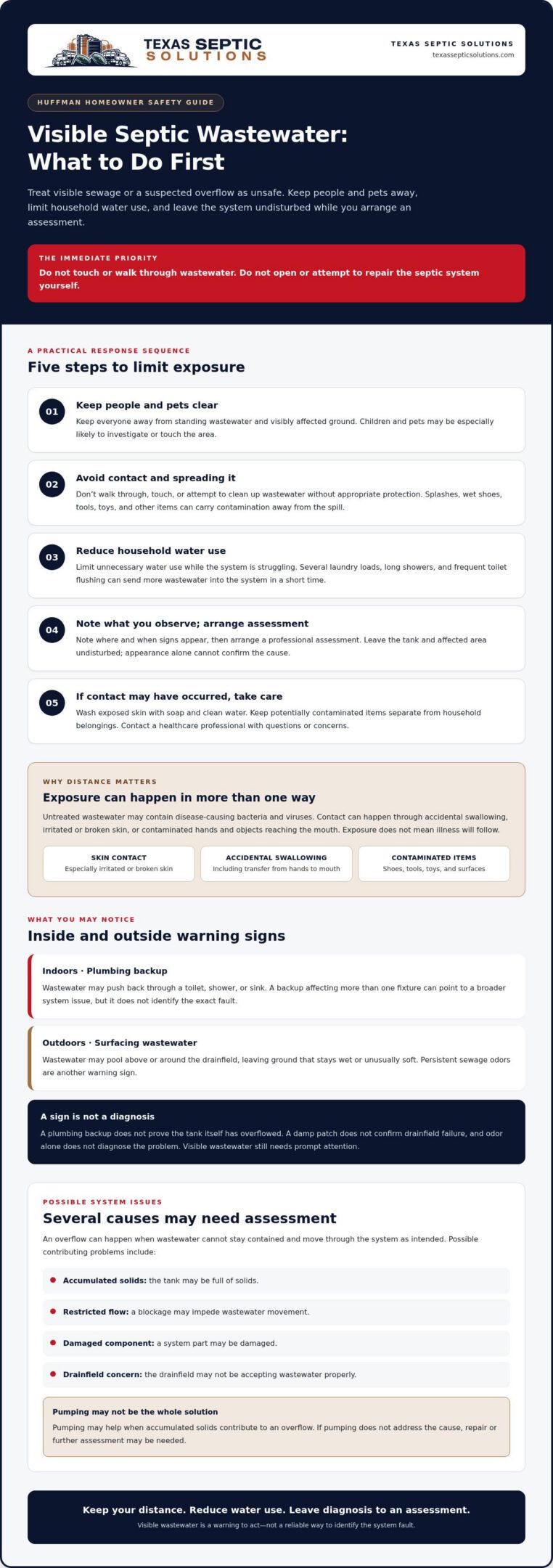
If wastewater is backing up or surfacing outdoors, focus first on reducing exposure and limiting additional flow into the system. You don’t need to identify the cause yourself. A professional assessment can determine whether pumping, repair, or further evaluation is needed.
Which immediate steps can reduce further exposure?
- Reduce water use. Pause laundry, dishwashing, showers, and other nonessential water use to avoid adding wastewater to a system that may already be struggling.
- Keep people and pets away. Block access to indoor backup areas and visible wastewater outdoors. Don’t walk through affected ground or let children or pets investigate it.
- Avoid contact and DIY fixes. Don’t attempt unprotected cleanup, pour chemicals into drains as a quick fix, or open the septic tank. Never enter a tank or other confined space; doing so can be extremely dangerous.
- Arrange professional assessment. Note where wastewater is appearing, whether plumbing is backing up, and whether an alarm is active. Sharing these details can help guide the next steps.
These precautions apply whether you’re dealing with a backup inside your home or wastewater on the property in Huffman. Avoid moving contaminated items through clean areas, and follow appropriate public-health guidance if sewage has reached living spaces or exposure is suspected.
When should you request urgent septic help?
Seek prompt help if sewage is backing up indoors, wastewater is spreading toward occupied areas, or the system repeatedly overflows. An alarm alongside backup symptoms also warrants prompt assessment. An alarm can signal a system issue, but it doesn’t identify the cause by itself. For more on responding to an alarm, read the septic tank alarm guidance.
Professional pumping may help when accumulated solids contribute to the overflow. If pumping alone doesn’t resolve the problem, a blockage, damaged component, or another system issue may need repair or further assessment. Texas Septic Solutions provides emergency septic service in Huffman. Request emergency septic service to arrange help and determine what the system needs.
How Huffman homeowners can prevent repeat septic overflow
After an overflow, prevention starts with understanding what contributed to it and keeping a clear record of system care. Pumping frequency isn’t the same for every household. It depends on factors such as tank size, household water use, and system condition, so one fixed schedule may not fit every property.
Keep a simple record of pumping dates, maintenance visits, repairs, alarms, and recurring signs such as slow drains or wet areas. Share that history during an assessment. It can help identify changes over time and support a maintenance plan suited to your home. For more practical care tips, see this Texas septic maintenance guide.
What habits can help reduce septic-system strain?
Where practical, spread water-heavy activities across the week rather than running several loads of laundry, taking long showers, and doing other high-use tasks at once. Be mindful of how water use adds up, but remember that appropriate use depends on your household and system. Everyday habits can help reduce unnecessary strain, but they can’t correct a blockage or damaged component.
How can professional pumping and repair help?
Professional pumping removes accumulated solids from the tank and may help when those solids contribute to overflow. It isn’t a universal fix: if wastewater continues to back up or surface, another cause may need attention. A professional assessment can help determine whether pumping is appropriate or whether repair or further evaluation is needed. The septic tank pumping guide explains more about the process.
If you’re still asking what are the risks of an overflowing septic tank Huffman homeowners should prepare for, respond to warning signs early and keep up with system-specific maintenance. Recurring symptoms deserve attention rather than repeated pumping without understanding the cause.
For an active overflow, indoor sewage backup, or wastewater spreading across your property, Texas Septic Solutions provides 24/7 emergency septic service in Huffman. Request emergency septic service for help addressing the immediate problem.
Protect your home with a clear next step
Knowing what are the risks of an overflowing septic tank Huffman homeowners may face makes it easier to respond safely. Sewage can expose people and pets to harmful organisms, while persistent wastewater may affect indoor surfaces, belongings, usable yard space, or the drainfield. Keep clear of contaminated areas and reduce water use while arranging help.
Overflow doesn’t always mean the tank simply needs pumping. Pumping can remove accumulated solids, but recurring symptoms may point to a blockage or damaged component that needs repair or further assessment. Keep service records and address warning signs early to help guide ongoing maintenance.
Texas Septic Solutions provides professional septic pumping, repair, maintenance, and 24/7 emergency septic service in Huffman, Cleveland, Houston, Cypress, and Shepherd. If wastewater is backing up or surfacing, get help with an urgent septic problem. Request service to address the immediate issue and determine the appropriate next step.
Frequently Asked Questions
What are the health risks of an overflowing septic tank?
Overflowing sewage may contain bacteria, viruses, and other disease-causing organisms, so avoid contact with it. Exposure can happen through splashes on skin, accidentally swallowing contaminated water, or touching polluted surfaces and then your mouth. Keep children and pets away from affected areas, and don’t handle contaminated items unnecessarily. If someone may have been exposed, wash skin with soap and clean water, separate contaminated belongings, and contact a healthcare professional with concerns.
Can an overflowing septic tank contaminate a well or groundwater?
It can pose a contamination risk if wastewater reaches soil and moves toward groundwater or a nearby well, but an overflow doesn’t automatically mean a well is contaminated. Keep people away from visible wastewater and note how close it is to any water source. If you suspect a well may be affected, seek guidance from the appropriate public-health authority about safe water use and testing rather than assuming the water is safe.
What should I do first if sewage is backing up into my Huffman home?
Stop or sharply reduce water use, including laundry, dishwashing, showers, and unnecessary flushing. Keep people and pets away from the backup, avoid touching sewage, and don’t attempt unprotected cleanup. Don’t open the septic tank or pour chemicals into drains. Arrange a professional assessment and describe which fixtures are affected, when the backup began, and whether an alarm is sounding. These details can help guide the next steps.
Is septic overflow an emergency?
It needs prompt attention, especially if sewage is inside the home, spreading toward occupied areas, or repeatedly surfacing outdoors. An alarm together with backup symptoms also calls for timely assessment. Keep clear of contaminated areas and limit water use while help is arranged. Texas Septic Solutions provides 24/7 emergency septic service in Huffman, Cleveland, Houston, Cypress, and Shepherd.
Will pumping an overflowing septic tank fix the problem?
Sometimes, but pumping isn’t a fix for every cause. It removes accumulated solids and may help if a full tank contributed to the overflow. A blockage, damaged component, or drainfield concern may require repair or further assessment. If wastewater continues to back up or surface after pumping, don’t assume the problem is resolved. A professional can assess the system and determine whether pumping alone is appropriate.
Can heavy rain cause a septic system to overflow in Huffman?
Heavy rain may contribute to problems if saturated ground limits how well the drainfield can absorb wastewater, particularly when the system is already struggling. But rain alone doesn’t establish the cause, and a wet yard can have other explanations. Note whether symptoms began during or after rainfall, reduce water use if the system is backing up, and arrange an assessment if wastewater surfaces or household plumbing stops draining properly.
How can I prevent my septic tank from overflowing again?
Keep records of pumping, maintenance, repairs, alarms, and recurring symptoms, then use them to plan care suited to your household, tank size, and system condition. Spread water-heavy activities across the week where practical. Pumping can remove accumulated solids, but recurring backups or wet areas may need repair or further assessment. Regular septic maintenance helps track system condition and address warning signs before they become a larger problem.