
Ways Holiday Guests Can Affect Your Houston Septic System
A full house can put a septic system under strain faster than a holiday menu suggests. To understand how to protect your septic system from holiday guests in Houston, spread out showers and laundry, keep grease and food scraps out of drains, and flush only human waste and toilet paper. Even a temporary increase in guests can double or triple a household’s normal septic load in a short time.
When hosting, it’s easy to focus on meals and sleeping arrangements, but extra water use and what goes down the drains matter too. A few simple habits can reduce the added load on your septic system and help prevent small problems from disrupting the gathering.
This guide explains how guest numbers affect septic capacity, what to keep out of toilets and garbage disposals, and how composting food scraps can help. You’ll also learn which warning signs call for professional service, so you can enjoy the gathering while keeping an eye on your system.
Key Takeaways
- Extra guests can increase wastewater quickly, so spacing out showers and high-water tasks can ease the added strain.
- Keep cooking grease and oils out of drains, and compost food scraps instead of relying heavily on the garbage disposal.
- Make it easy for guests to use bathroom bins, and remind them to flush only human waste and toilet paper.
- Learn which signs, including persistent odors or slow drains, can point to a problem that needs professional attention.
- Texas Septic Solutions can help with septic maintenance, pumping, and repairs when your system needs professional care.
1. What Happens to Your Septic System When You Have a Big Party or Holiday Guests?
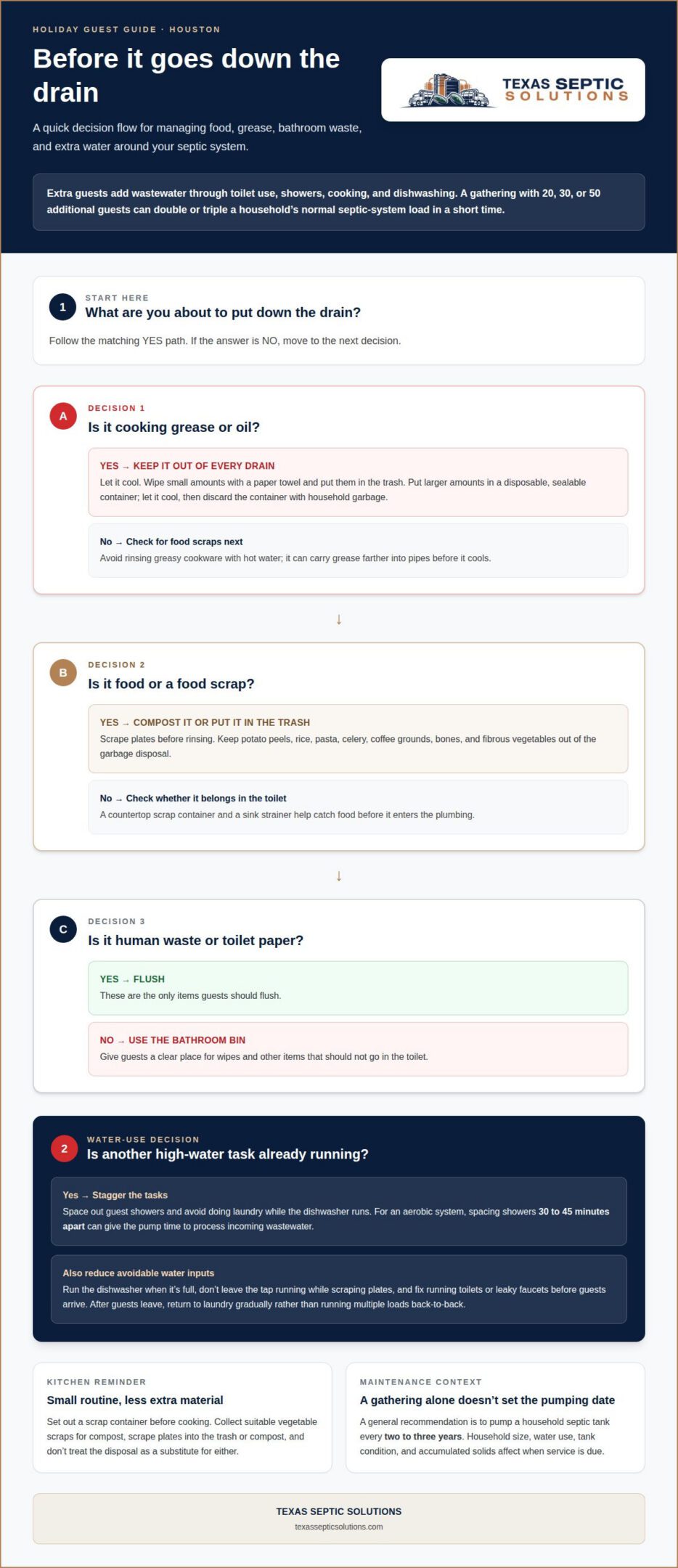
Holiday guests add wastewater through extra toilet use, showers, cooking, and dishwashing. A gathering with 20, 30, or 50 additional guests can double or triple a household’s normal septic-system load in a short time. That sudden increase matters because a septic system is designed to manage a household’s everyday wastewater, not an unlimited rush of water.
Kitchen drains deserve special attention during the holidays. Grease and oils from roasting pans, frying, and gravy can cool inside plumbing and stick to pipe walls. Food particles can add to the buildup, narrowing the passage and contributing to clogs. A slow kitchen drain after a large meal may be an early sign that scraps or grease are collecting where wastewater should flow freely.
Keep cooking grease out of sinks, toilets, and garbage disposals. After frying or roasting, let the pan cool, then wipe away leftover grease with a paper towel and put it in the trash. Pour larger amounts into a disposable, sealable container, let them cool, and discard the container with household garbage. Don’t rinse greasy cookware with hot water, which can carry grease farther into pipes before it cools.
For example, scrape a roasting pan into a container before washing it. Wipe away the remaining film with a paper towel, then wash the pan with dish soap. This simple routine keeps fats, oils, and grease out of septic wastewater. Grease doesn’t break down like ordinary liquid waste. Accumulated deposits can restrict flow and contribute to system failure.
Houston and Harris County maintenance requirements can depend on a property’s location and septic-system type. Start by identifying whether the address is within Houston city limits and whether the system is conventional or aerobic. These details help determine which local requirements apply, so don’t assume one rule covers every property in the area.
For pumping, a general recommendation is to pump a household septic tank every two to three years. Hosting guests doesn’t automatically mean the tank needs pumping immediately beforehand. Household size, water use, tank condition, and accumulated solids all affect whether service is due, so follow the system’s maintenance schedule rather than treating a party as the only trigger.
Permit and inspection responsibilities rest with the local authority that has jurisdiction over the property. In Houston and Harris County, the relevant office can depend on the address and system type. Those details determine which authority handles the applicable permit or inspection process.
Heavy Houston-area rain can saturate soil around a drain field, making it harder for wastewater to disperse. Floodwater can also cover parts of the field and interfere with normal drainage. During wet conditions, limit unnecessary water use and keep vehicles and lawn chairs off the drain field to avoid compacting soil.
2. Composting food scraps instead of using a garbage disposal
A garbage disposal sends food particles into plumbing and, eventually, the septic system. Scraps such as potato peels and rice add solids the system must handle. Holiday meal preparation and cleanup can send a steady stream of scraps down the drain. Collecting suitable scraps for compost or putting them in the trash keeps this extra material out of the system.
Set a countertop container near the cooking area before guests begin helping in the kitchen. Scrape plates into the trash or compost container before rinsing them. Keep celery, potato peels, rice, and pasta out of the garbage disposal because they can contribute to clogs and strain. Coffee grounds, bones, and fibrous vegetables also belong outside the drain.
Food scraps can collect in pipes or the septic system, while grease can contribute to blockages. Limiting disposal use helps reduce both problems. If the gathering produces more scraps than usual, use a kitchen bin and empty it as needed. Don’t treat the disposal as a substitute for a compost bin or trash can.
- Collect vegetable peelings and tops in a separate container for composting.
- Scrape leftover food into the trash before washing plates or cookware.
- Keep coffee grounds, bones, rice, pasta, and fibrous scraps out of the disposal.
- Use sink strainers to catch small particles before they enter the plumbing.
Reduce water use by spacing out guest showers and avoiding laundry while the dishwasher runs. Staggering these tasks spreads out wastewater entering the septic system instead of sending several large water flows at once. For an aerobic system, spacing showers 30 to 45 minutes apart can give the pump time to process incoming wastewater.
Plan kitchen routines around the same principle. Run the dishwasher when it’s full, and don’t leave a tap running while scraping plates. Fix a toilet that keeps running and address leaky faucets before guests arrive, since constant water inputs add to the system’s load.
Give guests a clear place for food scraps and a bathroom bin for items that shouldn’t go in the toilet. Only human waste and toilet paper should be flushed. Keeping scraps, wipes, and other waste out of drains reduces avoidable material entering the sewage flow.
These kitchen and water-use habits help limit extra solids and wastewater during a gathering. After guests leave, return to laundry gradually instead of running multiple loads back-to-back. Spacing out large water inputs helps avoid overloading the septic system.
3. Warning signs requiring professional service
During a holiday gathering, watch for changes in drains, toilet performance, and the yard. Slow-running sinks or showers can signal that wastewater isn’t moving through the plumbing as it should. If several drains slow down together, don’t treat it as a problem with just one fixture. Reduce water use and arrange professional septic service instead of continuing to add wastewater.
A sewage backup needs prompt attention. Stop using toilets, sinks, showers, the dishwasher, and laundry appliances connected to the system. Don’t flush again to test the toilet or run water to see whether the backup clears. Contact an emergency septic service professional to assess the system and address the cause. Avoid using affected plumbing until the problem has been evaluated.
Check the yard for standing water or unusually fast-growing grass over the drain field. These changes, especially alongside slow drains or sewage smells, can point to a clogged drain field. A strong sewage odor indoors or outdoors also needs attention. Note where the smell or wet area appears and whether it began after heavy guest water use.
An aerobic septic system’s alarm requires a measured response. If its red light comes on after heavy water use, stop water use and give the pump a few hours to lower the tank’s water level. A temporary overload can take 2 to 4 hours to lower the level enough for the alarm light to turn off. If the red light remains on after more than 12 hours without water use, professional service may be needed.
- Slow drains in multiple rooms: stop adding avoidable wastewater and arrange an assessment.
- Toilet or plumbing backup: stop using connected fixtures and call for professional help.
- Standing water or fast-growing grass: note the location and keep guest traffic off the drain field.
- Persistent sewage odor: record whether it’s indoors or outdoors and seek professional attention.
- Red aerobic-system alarm: pause water use, allow a few hours, and act if it remains lit after more than 12 hours without water use.
One slow sink can have a local plumbing cause, but widespread symptoms need closer attention. For example, if a guest shower drains slowly while the toilet backs up, don’t assume the gathering simply overwhelmed a functioning system. The combination can signal a problem that needs professional diagnosis.
Keep guests away from wet areas near the drain field, and don’t cover standing water with soil or direct it toward another part of the yard. These signs don’t identify a single cause on their own, but sewage odors, backups, and persistent alarm lights are clear reasons to stop adding water and seek professional septic service.
4. Items guests should not flush
Keep the toilet’s job simple during a holiday gathering: flush human waste and toilet paper only. Other household items can catch in plumbing or contribute to blockages, even if they seem small or soft. A single item may start a clog, while repeated flushing adds more material and can increase the chance of a backup.
Common bathroom items to keep out of the toilet include wipes, cotton swabs, dental floss, feminine hygiene products, and paper towels. A wipe labeled “flushable” still belongs in a trash bin in a home with a septic system. Paper towels are for wiping spills, not for flushing. Dental floss can tangle with other material, while swabs and hygiene products can obstruct plumbing.
Make the right choice easy for guests. Place a lined trash bin beside each bathroom toilet, and keep a spare liner nearby. A small sign near the toilet can say, “Flush only human waste and toilet paper.” That direct reminder helps visitors who may not know the household uses a septic system.
- Put bathroom wipes and paper towels in the trash.
- Discard cotton swabs, dental floss, and feminine hygiene products in a lined bin.
- Flush only human waste and toilet paper.
Kitchen cleanup also affects what enters household plumbing. Scrape plates into the trash before washing dishes, and collect scraps rather than rinsing them into a drain. Food waste can build up in a garbage disposal connected to a septic system. Grease, bones, coffee grounds, and fibrous vegetable scraps should stay out of the disposal too.
Tell guests where to put waste before serving a large meal. For example, set a food-scrap container near the sink and a clearly visible trash bin near the dining area. When washing dishes, scrape plates first, then rinse them. This keeps scraps from being carried into plumbing with dishwater.
More guests mean more toilet flushes, bathroom visits, and kitchen cleanup. The system receives that added volume whether visitors know the home uses septic or not. A brief reminder before guests arrive, along with accessible bins in bathrooms and the kitchen, gives everyone a simple routine to follow.
If a guest accidentally flushes a wipe or another unsuitable item, don’t keep flushing to force it through. Stop using that toilet if it drains slowly or backs up, and watch for problems elsewhere. A sewage backup or repeated slow drains calls for professional attention, especially during an emergency gathering when household plumbing needs to remain functioning.
5. How guest numbers can increase septic system loads
Guest count matters because each person adds toilet use, showers, handwashing, and kitchen wastewater. Adding 20, 30, or 50 guests over a holiday weekend can double or triple a household’s normal septic-system load in a short time. That surge can stress the septic tank and drain field, especially when several water-heavy activities happen together.
There isn’t one guest limit that fits every septic system. Capacity depends on tank and drain-field size, system design, soil conditions, and the household’s usual water use. A system serving a small household may face a sharper change when visitors arrive than one designed for higher use. Existing maintenance issues can further reduce how well it handles a short-term increase.
Look at the pattern of water use, not just the headcount. Back-to-back showers, a dishwasher cycle, and laundry running together send wastewater into the system in concentrated bursts. A single laundry load or closely spaced guest showers can add 40 to 50 gallons to an aerobic septic system. Spacing these activities gives the system time between larger inputs.
For Houston homeowners thinking about how to protect your septic system from holiday guests, spread showers throughout the day and avoid running laundry while the dishwasher operates. Ask guests to report slow drains or a toilet that isn’t clearing normally. These changes can signal strain before a full backup occurs. Note when symptoms started and which fixtures were in use.
Events with 50 or more guests call for serious consideration of a portable restroom. That can reduce toilet use inside the home and ease the extra wastewater load. It won’t change kitchen water or shower use, so continue spacing out those activities. Keep guests and vehicles off the drain field during the gathering.
After guests leave, don’t make the next day a laundry marathon. Give the septic system a few days to recover before resuming laundry-heavy routines or heavy appliance use. Then space laundry loads out instead of completing them all in one day. This reduces repeated large water inputs while the household returns to its normal routine.
Persistent slow drainage, foul odors, or plumbing backups after a busy weekend need attention. More people can increase wastewater volume, but symptoms may also point to an existing system issue. If signs continue after water use returns to normal, arrange professional septic service before continued use causes more disruption or repairs.
Planning how to protect your septic system from holiday guests in Houston can also include a maintenance visit before a large event. Schedule septic system maintenance to assess the system’s condition and help plan for the added load.
Texas Septic Solutions
Texas Septic Solutions helps homeowners prepare for added septic use with maintenance and pumping, and can address system problems through repair. If holiday guests are coming, professional maintenance can help identify concerns before extra wastewater puts more strain on the system. If slow drains, sewage odors, standing water, or an alarm persist, arrange professional service rather than continuing heavy water use.
When a system needs more than routine care, septic repair can address problems affecting normal operation. The right next step depends on what the system is showing and whether it needs maintenance, pumping, or repair.
Contact Texas Septic Solutions to discuss septic care for your home.
Make your next gathering easier to plan
Before planning a holiday menu or inviting a larger crowd, consider what your home’s septic system may need before the next busy season. Protecting your septic system from holiday guests in Houston starts with matching your preparations to the system’s condition, not just the guest list. If you’re unsure whether routine upkeep is enough, a professional assessment can clarify the next practical step.
Texas Septic Solutions provides septic maintenance and repair, as well as new septic system installation when a replacement is needed. This support can help homeowners address current concerns or plan for a system suited to their property. Choose the next step based on what your system needs, whether preventative care or work to resolve a problem.
Contact Texas Septic Solutions today to discuss your septic system and prepare for your next gathering. A little planning can help you welcome guests with greater confidence.
Frequently Asked Questions
What Happens to Your Septic System When You Have a Big Party or Holiday Guests?
More guests mean more wastewater entering the system through bathroom use, showers, and kitchen cleanup. The impact depends on how many people live in the home normally, the system’s design, and whether water-heavy tasks happen together. For example, a house hosting a full meal and overnight visitors may see more simultaneous use than a gathering where visitors only stop briefly. Spread water use throughout the day, and watch for changes in drainage.
What should holiday guests avoid flushing into a septic system?
Only human waste should be flushed; never flush wipes (even “flushable” ones), paper towels, toilet paper, feminine hygiene products, grease, garbage-disposal food scraps, or harsh chemicals. Put a lined bin beside the toilet and explain what belongs there before guests use the bathroom. In Houston-area homes, including Cleveland, Cypress, Huffman, and Shepherd, a visible reminder helps visitors follow the household’s septic rules without guesswork.
How should laundry, showers, and dishwashing be spaced out to prevent septic overload?
Spread water-heavy activities across the day instead of running them together. For example, schedule showers at different times, run the dishwasher after meal cleanup, and leave laundry for a separate period. With an aerobic septic system, spacing showers 30 to 45 minutes apart can help the pump process wastewater. If an alarm sounds, immediately minimize water use, check the circuit breaker, and contact Texas Septic Solutions right away.
What are signs a septic system is overloaded or failing?
Watch for multiple slow drains, sewage odors, plumbing backups, standing water, or unusually fast-growing grass over the drain field. An aerobic system’s red alarm light is another warning. After stopping water use, give the system a few hours; if the red light remains on after more than 12 hours without water use, contact a professional. Don’t keep testing fixtures by flushing or running taps, since that adds wastewater.