
Urgent Septic Care Houston: Rapid Intervention for System Failures
Imagine waking up at 2 AM to the sound of a piercing septic alarm or, worse, the sight of raw sewage creeping into your bathtub. It’s a homeowner’s worst nightmare that demands immediate action. You’re likely feeling a mix of panic and frustration right now, worried about the health of your family and the potential cost of a major repair. We understand that when your system fails, you don’t just need a technician. You need a reliable partner who can restore your home’s functionality without taking advantage of the crisis. Finding urgent septic care Houston shouldn’t add to your stress; it should be the beginning of the solution.
In this guide, we’ll show you how to identify, triage, and resolve critical septic issues with expert strategies designed for the Houston area’s unique soil and regulations. You’ll learn exactly what to do when the alarm sounds and how to secure a clear diagnosis that stops the backup immediately. We’ll also cover how to ensure you receive fair, transparent pricing for urgent interventions. Our goal is to help you get your life back to normal quickly while ensuring your system remains healthy for the long haul.
Key Takeaways
- Identify the “Urgent Three” warning signs, including sewage backups, persistent alarms, and standing water, to determine if your system requires immediate intervention.
- Learn why urgent septic care Houston focuses on rapid stabilization and pumping to lower effluent levels before interior property damage occurs.
- Understand how Houston’s heavy “Gumbo Clay” soil and flash flood patterns create unique challenges for septic drainage and tank stability.
- Discover the critical differences between a standard scheduled pump-out and a high-priority emergency service call during a system collapse.
- Access a clear roadmap for resolving crises with 24/7 support and transparent communication that prioritizes your home’s functionality and safety.
Understanding Urgent Septic Care in Houston
Urgent septic care isn’t just another service on a maintenance checklist. It’s a rapid response designed to stop a system collapse before it ruins your property or compromises your family’s health. To understand why this happens, it helps to know the basics of What is a Septic System? and how it manages waste. While these systems are built to be self-contained treatment facilities, they can reach a breaking point where gravity and biology simply can’t keep up. In these moments, urgent septic care Houston homeowners rely on focuses on one primary goal: immediate stabilization. We lower the effluent levels to stop backups and restore your home’s ability to drain wastewater safely.
When “Later” Is Not an Option
Waiting until Monday morning for a septic issue that starts on Saturday night is a recipe for disaster. Once raw sewage begins backing up into your home, you’ve passed the point of no return. This is a utility crisis, not a minor inconvenience. Delaying professional help doesn’t just mean a smelly house; it can lead to total drain field failure. In Houston’s dense residential areas, a saturated yard can quickly become a public health hazard. The financial impact of ignoring these signs is steep. A simple urgent pump-out and stabilization are far more affordable than replacing an entire drain field that has been choked by solids because the tank wasn’t addressed in time.
Urgent Care vs. Standard Maintenance
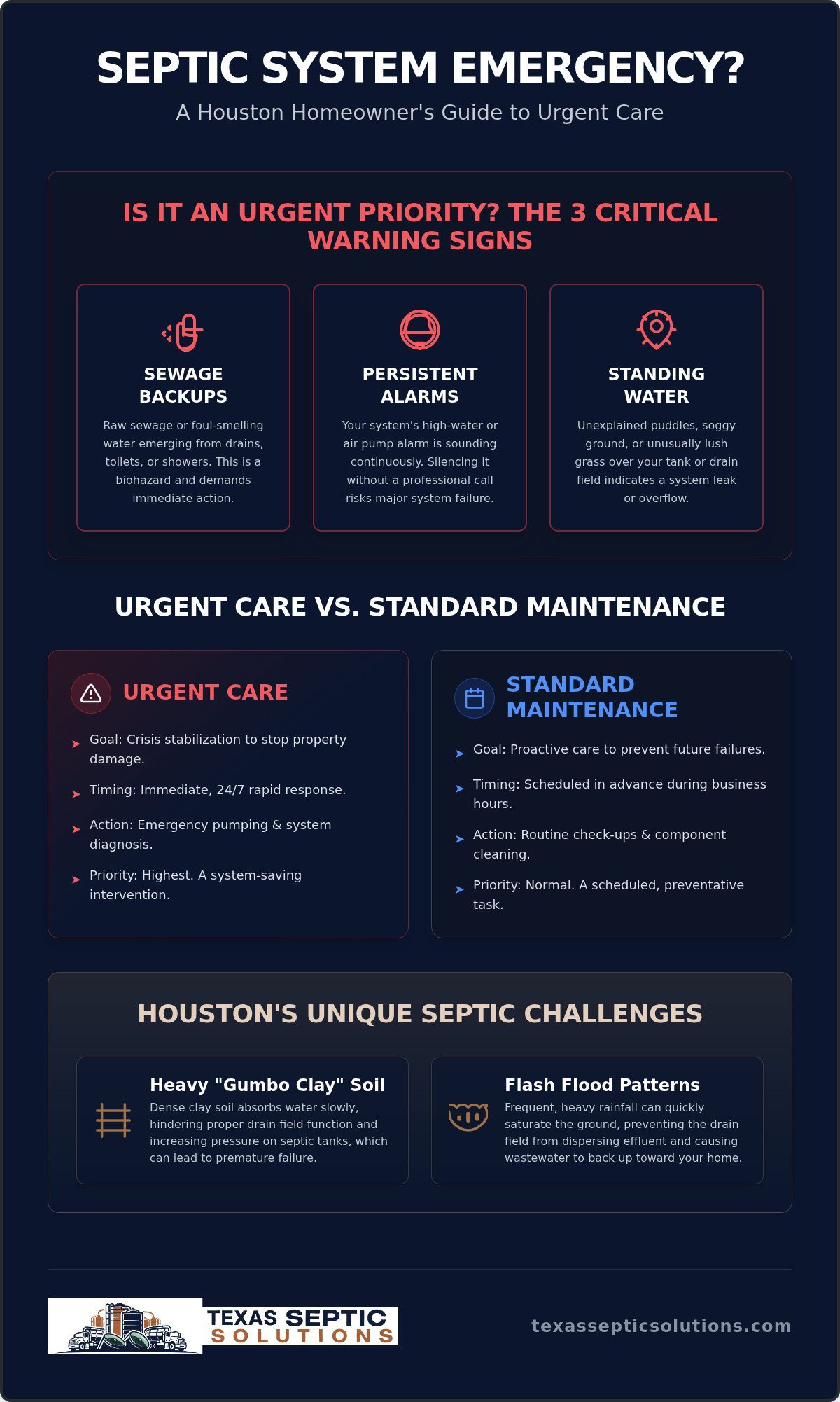
Standard maintenance is a scheduled, proactive visit to keep things running smoothly. Urgent care is a tactical operation. A standard technician might not have the high-capacity pumping equipment or the specific diagnostic tools needed to handle a midnight emergency. Finding reliable urgent septic care Houston means choosing a team that recognizes the difference between a routine pump-out and a system-saving intervention. At Texas Septic Solutions, we treat these calls as top priorities. We understand that a failing system in Harris County impacts your entire family’s daily life. While a maintenance visit might involve a routine check of the aerobic system’s aerator, an urgent call involves rapid site assessment and immediate pumping to prevent interior flooding. We are built for the high-pressure demands of unexpected failures, ensuring your home remains a safe place to live.
Triage: Is Your Septic Issue an Urgent Priority?
Determining if your situation requires urgent septic care Houston services depends on a few critical factors. While a slow drain might wait a day, there are three scenarios where delay isn’t an option: sewage backups, persistent alarms, and standing water over your tank. We categorize these as the “Urgent Three.” If you see raw sewage in your drains or smell a heavy sulfur odor inside, your system has likely reached its limit. Gurgling pipes are another early warning sign you shouldn’t ignore. They indicate that air is being trapped by rising effluent levels, signaling an impending failure. It’s vital to differentiate between a simple clog in one pipe and a systemic failure. If every fixture in the house is sluggish, the problem is your septic system, not a single drain. Safety is paramount here. If you smell strong gases or see standing sewage, keep children and pets away. Methane is a real risk, and raw sewage is a biohazard that requires professional cleanup.
The Septic Alarm: Your System’s Cry for Help
Your alarm is more than just a noise; it’s a diagnostic tool. Most systems have two types of alerts: a high-water alarm and an air pump alarm. A high-water alarm suggests your tank is overfilled, often due to a pump failure or excessive water usage. An air pump alarm usually points to a mechanical issue with the aerator in aerobic systems. If your septic tank alarm is going off, the first step is to silence it, but the second must be calling a professional. Silencing the buzzer and then forgetting about it is a recipe for a flooded yard or a backed-up home. If you’re unsure which alarm you’re hearing, reaching out for a professional assessment can prevent a minor mechanical glitch from turning into a total system collapse.
Visual and Olfactory Warning Signs
Beyond the alarm, your senses can tell you a lot. A strong sulfur or “rotten egg” smell near the tank or drain field is a clear indicator of a leak or a venting issue. In the heat of a Houston summer, your yard should look consistent. If you notice “lush green spots” where the grass is suddenly thick and vibrant over your drain field, it’s a sign your system is leaking nutrient-rich effluent into the upper soil layers. This isn’t a sign of a healthy lawn; it’s a sign of a failing field. Standing water in the drain field is the final stage of failure, meaning the soil is completely saturated and can no longer process waste. For more detailed steps on handling these failures, consult the EPA guide to septic system malfunctions. Recognizing these signs early allows for the urgent septic care Houston families need to avoid the high cost of a full system replacement.
Our Urgent Care Stabilization and Pumping Process
When our team arrives for urgent septic care Houston calls, our primary objective is to lower the temperature of the crisis. We begin with a rapid site assessment to pinpoint the exact failure point. We don’t just look at the surface; we investigate the tank, the control panel, and the drain field to see the full picture. Many homeowners are surprised to learn about the various reasons for septic system failure, such as hydraulic overload or grease capping. By identifying the root cause immediately, we can move from panic to a structured plan of action. Our first physical step is almost always lowering the effluent levels to stop any active backups into your home.
The Critical Pumping Phase
Pumping is the “reset button” for a failing septic system. In a Houston crisis, we perform an immediate pump-out to clear the tank and intake lines. This isn’t a standard maintenance pump; it’s a strategic intervention. We focus on a thorough “bottom-up” cleaning to remove heavy solids and sludge that might be obstructing the flow. If your system has been stressed by grease trap issues or non-flushable items, this phase is vital. Clearing the tank allows us to see the internal components that were previously submerged, making it possible to find cracked pipes or clogged baffles that led to the overflow in the first place.
Diagnostic Triage and Temporary Fixes
Once the tank levels are managed, we shift into technical triage. We test the pumps, floats, and electrical components under a simulated load to see how they perform. For aerobic systems, we check the sprayers for blockages; for anaerobic systems, we inspect the lateral lines. Our technicians examine the control panel for electrical shorts or burnt-out components that often trigger those loud alarms. Stabilization means restoring enough flow so your family can use the toilets and showers while we finalize a long-term plan. After we’ve secured the system, we provide a clear roadmap for any necessary septic system repair. This ensures you aren’t left guessing about the next steps or the final costs of restoring your home’s functionality.
Why Houston Homes Require Specialized Urgent Septic Services
Houston’s environment is unique, and your septic system feels every bit of it. The primary culprit is “Gumbo Clay,” a heavy, high-plasticity soil that dominates the local landscape. Unlike sandy soils that allow water to pass through quickly, this clay holds onto moisture. When the ground becomes saturated during a typical Houston downpour, the soil simply cannot absorb any more effluent. This causes immediate pressure on your system, often leading to the sudden need for urgent septic care Houston residents experience during the rainy season. Beyond the soil, flash flooding presents a physical threat to the infrastructure itself. A rising water table can actually cause a partially empty septic tank to become buoyant, potentially shifting the tank or snapping the connected lines. Our team understands these local geological pressures and how they impact Harris County environmental standards.
The Impact of Houston’s Soil on Drain Fields
Because our local soil is so dense and unforgiving, it requires a more rigorous approach to septic system maintenance in Texas. In many cases, standard anaerobic systems struggle here, which is why aerobic treatment units are so prevalent in our area. During hurricane season, soil saturation can trigger a “point of no return” for older drain fields. If the water has nowhere to go, it stays in the pipes and eventually makes its way back into your home. To protect your system, we recommend keeping heavy equipment off the drain field and ensuring your gutters are diverted far away from the tank area. If you find yourself in a situation where the ground is underwater and your drains are gurgling, contact our team for immediate stabilization to prevent a total system collapse.
Weather-Related Septic Emergencies
Houston’s extreme weather doesn’t just impact the soil; it attacks the mechanical parts of your system. High humidity and intense summer heat can accelerate the wear on air pumps and control panels. During power outages, aerobic systems stop treating waste effectively because the aerator loses power. If the outage lasts more than a few hours, the system can quickly become septic, leading to foul odors and potential backups once power returns. We also see a spike in calls for urgent septic care Houston after major storms for “post-flood” checkups. Silt and debris can clog sprayers or intake lines, and electrical components may short out from residual moisture. Ensuring these parts are protected and inspected after a weather event is the best way to maintain long-term reliability in our challenging climate.
Securing Reliable Urgent Septic Care with Texas Septic Solutions
When your home’s wastewater system fails, the clock starts ticking immediately. At Texas Septic Solutions, we provide the urgent septic care Houston families need to protect their property and peace of mind. We maintain 24/7 availability because we know that a septic alarm or a backup doesn’t wait for a convenient time to strike. Our team arrives ready to work, whether it’s high noon or two in the morning. We don’t hide behind industry jargon or complicated explanations. Instead, we offer grounded, transparent communication that focuses on solving the problem at hand. Our service area is broad, covering Cleveland, Houston, Cypress, Huffman, and Shepherd, ensuring that help is never too far away when a crisis hits.
Our capabilities go far beyond a simple emergency visit. We provide a one-stop shop for everything from rapid stabilization and pumping to long-term infrastructure needs. If our diagnostic triage reveals that your system has reached the end of its lifespan, we can walk you through the process of a septic system replacement. We handle the heavy lifting, from initial design to final installation, ensuring your new system meets all current Harris County standards. Our goal is to be more than just a service provider; we want to be the guardian of your home’s functionality.
Why Our Neighborly Expert Approach Matters
Facing a septic crisis is stressful enough without having to deal with a detached or clinical service company. Our “neighborly expert” vibe is built on a foundation of local pride and accountability. We’ve seen every possible scenario in the Houston area, from flooded drain fields to burnt-out aerobic pumps, and we remain unfazed by these challenges. This experience allows us to offer straightforward pricing and reliable solutions without the fear of unnecessary upsells. We believe in building long-term relationships through trust. When we respond to a high-pressure emergency, we do so with the same care and attention to detail we would give our own neighbors. This commitment to the community is what sets us apart from abstract corporate providers who value volume over local expertise.
Next Steps: From Crisis to Maintenance
Once we’ve stabilized your system and resolved the immediate threat, the focus shifts to preventing the next emergency. Transitioning from urgent care to a proactive septic system maintenance plan is the best investment you can make for your property. Routine inspections and scheduled pumping keep your system healthy and help identify small mechanical issues before they turn into midnight disasters. Most aerobic systems in Texas require regular checkups by law, and our plans make that compliance effortless. Don’t wait for another backup to take action. Contact Texas Septic Solutions today for the immediate assistance you need and the long-term care your home deserves.
Restore Your Home’s Functionality Today
Dealing with a septic failure is stressful, but it doesn’t have to be a permanent disaster. By recognizing the warning signs and acting quickly, you can prevent minor mechanical glitches from turning into expensive full-scale replacements. Whether it’s the heavy “Gumbo Clay” soil causing drainage issues or a persistent alarm that won’t quit, professional intervention is the only way to ensure your family’s safety. Texas Septic Solutions provides the urgent septic care Houston homeowners trust to stabilize their systems and stop backups in their tracks.
Our licensed and insured professional technicians are ready to help with 24/7 emergency availability throughout Houston, Cleveland, Cypress, Huffman, and Shepherd. We don’t just fix the immediate crisis; we help you build a plan for long-term reliability. You don’t have to face a utility crisis alone. Reach out to our team of experts to get your system back on track and your home life back to normal. Get Urgent Septic Care in Houston Now
We are ready to respond whenever the crisis hits. Your home’s functionality is our priority, and we are here to ensure your septic system remains a reliable asset for years to come.
Frequently Asked Questions
What is considered a septic emergency in Houston?
A septic emergency in Houston is any situation where wastewater can no longer leave your home safely or is surfacing in your yard. This includes raw sewage backing up into tubs and sinks, a persistent high-water alarm that won’t stop, or large pools of standing water over your tank. These issues require immediate attention to prevent biohazard contamination and permanent damage to your drain field or interior flooring.
How quickly can Texas Septic Solutions respond to an urgent care request?
We maintain 24/7 availability for all emergency needs, ensuring we’re ready to respond whenever a crisis hits. Our technicians prioritize urgent septic care Houston calls to stabilize systems as quickly as possible. While exact arrival times depend on your specific location in areas like Cypress or Huffman, we aim for the fastest possible dispatch to stop backups and lower tank levels before property damage worsens.
Can I use my water while waiting for an urgent septic technician?
You should stop all water usage immediately if you suspect a system failure. Every gallon of water that goes down the drain, whether from a shower, dishwasher, or toilet flush, has nowhere to go but back into your home or out onto your lawn. Minimizing water flow is the best way to prevent further interior flooding while you wait for a professional technician to arrive and stabilize the tank levels.
Why is my septic alarm going off after a heavy Houston rain?
Heavy Houston rains often saturate the dense “Gumbo Clay” soil, preventing your system from shedding effluent effectively. This causes the water level in the tank to rise, triggering the high-water alarm. In some cases, rainwater might be leaking into the tank through a loose lid or cracked riser. If the alarm persists after the rain stops, it’s a sign that your system needs urgent septic care Houston families rely on to recover.
Is urgent septic pumping different from regular pumping?
Urgent septic pumping focuses on immediate stabilization rather than routine maintenance. While a regular pump-out is a scheduled cleaning, an urgent call involves rapidly lowering levels to stop an active backup and performing a “bottom-up” clear of intake lines. This process allows our technicians to see submerged components and identify the mechanical or structural failure that caused the overflow, providing a clear path for necessary repairs during a high-pressure situation.
What should I do if sewage is backing up into my bathtub right now?
If sewage is backing up into your bathtub, stop all water usage and keep children and pets away from the area. This is a biohazard situation that requires professional intervention. Don’t attempt to use chemical drain cleaners, as they won’t solve a septic failure and can damage your system’s healthy bacteria. Your next step is to call for emergency service to have the tank pumped and the source of the failure identified.
How much does urgent septic care typically cost in Harris County?
The cost of urgent care in Harris County depends on the time of day, the severity of the failure, and the specific equipment needed for stabilization. Emergency interventions typically carry a higher rate than scheduled maintenance due to the rapid dispatch and after-hours staffing required. We provide transparent, grounded pricing after an initial site assessment so you know exactly what to expect. This ensures there are no surprises during an already stressful utility crisis.
Do you provide urgent care for both aerobic and anaerobic systems?
We specialize in both aerobic and anaerobic systems, providing expert troubleshooting for every type of residential setup. Whether you have an aerobic treatment unit with sprayers or a traditional anaerobic system with lateral lines, our technicians understand the unique mechanical and biological requirements of each. We carry the specialized tools and components needed to repair air pumps, control panels, or distribution lines, ensuring your specific system is restored to full functionality.