
Understanding Aerobic Septic System Alarms: A Texas Homeowner’s Guide
Imagine it is 2:00 AM on a Tuesday, and a piercing, metallic buzz suddenly echoes through your home. Your first instinct is likely panic, followed by the fear that your bathroom is about to become a disaster zone. We know that understanding aerobic septic system alarms is the last thing on your mind when that siren is blaring, but it is your best defense. That loud, annoying sound is actually a diagnostic signal designed to protect your property.
We agree that a septic alarm is incredibly stressful, especially when you are worried about the cost of repairs or sewage backing up. However, you can learn to manage these signals with confidence. You deserve a home that runs smoothly without the constant fear of a utility failure.
This guide will teach you how to decode your system’s warnings, perform safe troubleshooting, and identify if you are facing a minor glitch or a critical failure. We will walk you through how to silence the alarm safely and explain exactly when it is time to call for professional help to avoid a total system backup.
Key Takeaways
- Distinguish between air pressure failures and high water levels by identifying the specific combination of lights and sounds your system uses.
- Gain confidence in understanding aerobic septic system alarms so you can safely silence the buzzer while addressing the mechanical warning.
- Learn the “water lockdown” protocol to prevent sewage backups and protect your system during an active alarm event.
- Understand how Houston’s heavy rain and local clay soils affect your system’s drainage and when weather is the primary culprit.
- Use a clear diagnostic checklist to decide between calling for 24/7 emergency repair or scheduling a routine maintenance check.
Decoding the Siren: What Your Aerobic Septic Alarm is Trying to Tell You
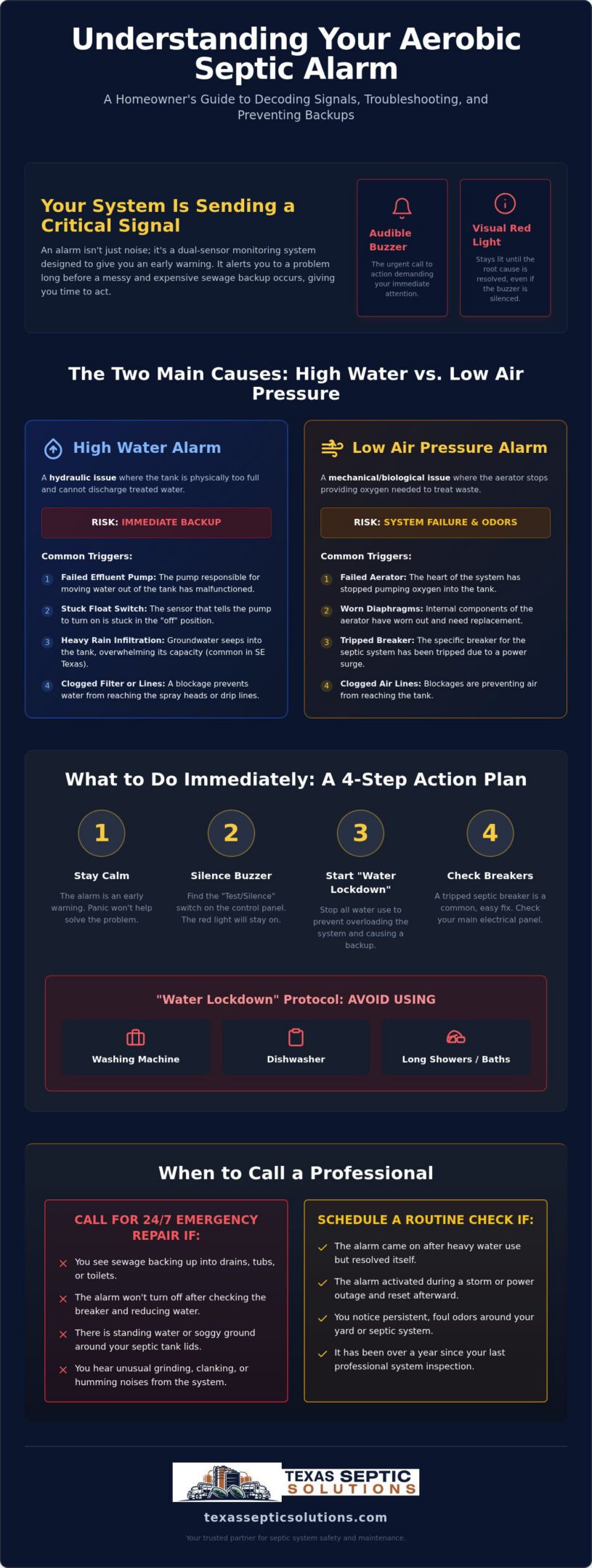
When that alarm goes off, it’s easy to feel overwhelmed. Your system isn’t just making noise to be difficult; it’s communicating through a dual-sensor monitoring system. These sensors track two vital functions: air pressure and water levels. Understanding aerobic septic system alarms starts with recognizing that this siren is actually an early warning tool. It’s designed to alert you long before a backup occurs, giving you a window of time to address the issue. An aerobic alarm is a safety mechanism triggered by mechanical or hydraulic imbalance.
You will usually notice two distinct signals: an audible buzzer and a visual red light. The buzzer is the urgent call to action that demands your immediate attention. The red light is the status indicator. Even if you silence the noise, that red light will stay glowing until the underlying problem is resolved. Think of it as a “check engine” light for your backyard.
The Role of the Control Panel
The control panel acts as the brain of your entire system. It monitors the aerator pump and the effluent pump simultaneously to ensure the biological process stays healthy. If the aerator stops providing oxygen or the effluent pump fails to discharge treated water, the panel triggers the alarm. Most panels feature a “Test/Silence” switch. Flipping this to “Silence” will stop the buzzing, but it doesn’t fix the problem. Under Texas law, specifically TCEQ regulations, every aerobic system must have a functioning alarm and control panel. This is a mandatory safety requirement for all installations across the state to protect groundwater and public health.
Common Triggers for a First-Time Alarm
If this is the first time you’ve heard the siren, the cause might be simpler than you think. Common triggers include:
- Sudden Water Surges: Doing five loads of laundry back-to-back or having a house full of weekend guests can temporarily overwhelm the tank’s capacity.
- Power Fluctuations: In areas like Houston, Cypress, and Cleveland, summer storms often cause power blips. These surges can trip the septic breaker or confuse the control panel’s sensors.
- Component Wear: Over time, mechanical parts like float switches or aerator diaphragms naturally wear down and require professional attention.
Taking the time for understanding aerobic septic system alarms helps you stay calm and assess these factors. You can often determine if the issue is a temporary overload or a mechanical failure that requires a professional service call.
High Water vs. Low Air Pressure: Identifying the Root Cause
Most homeowners feel a surge of stress when the septic alarm triggers, but understanding aerobic septic system alarms helps you narrow down the problem to two main categories: water levels or air pressure. While both require attention, they signal very different internal conditions. A “High Water” alarm is usually a hydraulic issue, meaning the tank is physically too full. A “Low Air” alarm is typically a mechanical or biological issue, meaning the system isn’t getting the oxygen it needs to treat waste.
You can usually tell them apart by the panel’s behavior. A high water event almost always triggers both the red light and the audible buzzer. This happens when the water level rises enough to lift the “high water float” switch. Conversely, a low air pressure alarm might only trigger the buzzer on some older models, or it may have a separate indicator light labeled “Comp” or “Aerator.” High water is an immediate backup risk that could send sewage into your home, while low air is a treatment risk that eventually leads to foul odors and environmental contamination.
Symptoms of High Water Level Failures
If you see the red light glowing, your effluent pump likely isn’t moving water out of the tank fast enough. This often happens because of a failed discharge pump or a float switch that’s become stuck in the “off” position. In areas like Cleveland or Huffman, heavy rainfall can also cause “infiltration.” This is when groundwater seeps into the tank through unsealed risers or lids, overwhelming the system’s capacity. Additionally, a clogged effluent filter can trap water inside the tank, preventing it from reaching your spray heads or drip lines. If you suspect a mechanical failure is the culprit, reaching out for professional septic system repair can prevent a messy backup.
Symptoms of Aerator and Air Pressure Issues
Your aerator is the heart of the system; it pumps oxygen into the wastewater so “good” bacteria can break down solids. If the alarm sounds but the water level looks normal, check the aerator. Listen for the familiar hum of the pump. If it’s silent, it may have a blown internal diaphragm or a tripped breaker. Sometimes the pump runs fine, but a broken air line or a clogged diffuser deep in the tank prevents air from reaching the water. Without this oxygen, your aerobic bacteria will die off within hours. This causes the system to turn “septic,” leading to dark, smelly water being sprayed onto your lawn.
Gaining a better understanding aerobic septic system alarms allows you to relay specific details to a technician. Knowing whether your aerator is humming or your pump tank is full helps us arrive prepared with the right parts to get your system back in balance quickly.
Immediate Troubleshooting Steps for Texas Homeowners
When the alarm starts blaring, your first priority is to stop the noise and assess the situation calmly. Locate your control panel and flip the switch to the “Silence” or “Mute” position. This stops the buzzer, but it does not fix the problem. You must keep a close eye on the red warning light. If that light stays on, the system is still in a state of failure. Understanding aerobic septic system alarms involves recognizing that the silence is a temporary reprieve, not a resolution.
Once you’ve silenced the buzzer, follow these immediate steps to prevent a backup:
- Implement a Water Lockdown: Stop all non-essential water use immediately.
- Check the Breaker Box: Look for tripped circuits labeled “Septic,” “Pump,” or “Aerator.”
- Perform a Yard Walk: Check your spray heads and the area around the tanks for pooling water.
The ‘Water Lockdown’ Protocol
A “Water Lockdown” is your most effective tool for preventing a disaster. This means no laundry, no dishwasher runs, and keeping showers as brief as possible. If the alarm was triggered by a temporary surge, such as a heavy laundry day, this lockdown gives the effluent pump time to “catch up” and lower the water level. We recommend waiting between 6 and 12 hours. If the red light hasn’t turned off by then, you likely have a mechanical failure. For a step-by-step guide on managing this crisis, see our article on Septic Tank Alarm Going Off? Here Is Exactly What to Do Right Now.
Safe Visual Inspections
Safety is paramount when inspecting your system. Never enter a septic tank or stick metal tools into the control panel. Instead, perform a surface-level check. Walk to your aerator housing and listen for the hum. If the pump feels excessively hot to the touch or is vibrating violently, it needs professional attention. In your yard, look for “marshy” spots or areas where water is pooling near the spray heads. Saturated soil in these areas suggests the drain field is struggling to absorb effluent. This is often a sign of a clogged filter or a failing discharge pump. By understanding aerobic septic system alarms and their physical symptoms, you can provide our team with accurate information for a faster repair.
Weather, Power, and Local Factors in Southeast Texas
Southeast Texas presents a unique set of challenges for any utility system. When it comes to understanding aerobic septic system alarms, you have to account for our local climate and geology. Houston’s heavy rain cycles often lead to “infiltration,” where groundwater finds its way into your tank through unsealed lids or riser joints. This sudden volume increase can trigger a high-water alarm even if your household water usage remains low. It is a common frustration for many residents during the spring and fall monsoon seasons.
In communities like Cypress and Cleveland, the dense clay soil complicates drainage. During wet seasons, this clay becomes saturated and stops absorbing water, putting immense back-pressure on your discharge pump. Additionally, the extreme Texas heat is a silent killer for mechanical parts. The rubber diaphragms inside your aerator pump are designed to be flexible, but triple-digit temperatures can cause them to become brittle and crack. This leads to a low-pressure alarm that won’t go away until the part is replaced. If your system is struggling with these local stressors, you can find more detailed solutions in our guide on Septic System Repair in Texas.
Post-Storm Septic Recovery
If an alarm sounds during a major thunderstorm, don’t panic. It’s often caused by a temporary power surge or the tank taking on extra rainwater. Once power is restored, the aerator might need a few hours to stabilize the oxygen levels. One critical rule: never schedule a septic tank pumping when the ground is flooded. Emptying a tank in saturated soil can cause “tank flotation,” where the entire structure literally pops out of the ground because of the surrounding water pressure. Wait for the yard to dry before calling for service. We’re built to handle these high-pressure situations and can help you manage the surge once the weather clears.
The ‘Yellow Water’ Problem
Homeowners in Huffman and Shepherd often deal with high iron content or “yellow water” chemistry. These minerals can lead to premature clogging of your effluent filters and spray heads, which eventually triggers a high-water alarm. Regular upkeep is the best way to prevent these mineral deposits from causing a total system failure. Our Septic System Maintenance Plan is designed to catch these local chemistry issues before they become emergency repairs. Understanding aerobic septic system alarms means knowing that sometimes the water itself is the culprit.
If your alarm is currently blaring after a storm or due to local soil issues, we are ready to assist. Connect with Texas Septic Solutions for a rapid response to ensure your system recovers safely and stays compliant with local regulations.
When to Call Texas Septic Solutions for Emergency Repair
Deciding whether to call for emergency septic service or wait for a scheduled appointment is the final step in understanding aerobic septic system alarms. While some triggers are temporary surges, others indicate a system on the verge of a total collapse. We provide 24/7 emergency septic service across Cleveland, Cypress, and Houston because we know that septic failures don’t follow a 9-to-5 schedule. Ignoring these signals can turn a simple component repair into a complete system replacement. In Texas, installing a new aerobic system can cost between $9,500 and $18,000, so addressing alarms early is a vital financial decision.
When our technicians arrive, they perform a professional diagnostic check that goes far beyond just silencing the noise. We test the electrical amperage of your pumps to see if they are drawing too much power, which often signals an impending motor failure. We also check float switch resistance and inspect the aerator’s internal pressure to ensure the biological treatment process is active. This methodical approach allows us to fix the root cause, ensuring your home remains functional and compliant with local health regulations.
The 24/7 Emergency Checklist
- Sewage Backups: Wastewater is visibly backing up into your home’s drains, tubs, or toilets.
- Persistent Alarms: The red alarm light stays on for more than 12 hours even after you have implemented a total water lockdown.
- Electrical Hazards: You detect an electrical burning smell or see smoke coming from the control panel or aerator housing.
- Surface Pooling: Large amounts of grey or black water are pooling over your tanks or in the spray field.
Waiting until Monday morning might seem like a way to save money, but it often leads to expensive soil contamination cleanup or permanent damage to your discharge pump. Our team is ready to respond to residents in Huffman, Shepherd, and the surrounding areas at any hour to prevent these disasters.
Preventing the Next Alarm
The most effective way to silence the alarm for good is through a proactive maintenance plan. Regular inspections every four months are required by Texas law, and they allow us to catch pump wear or float fatigue before the siren ever sounds. These visits include cleaning filters and testing the aerator’s performance to keep your system in peak condition. Additionally, professional septic system pumping every three to five years removes the high-solids buildup that eventually burns out effluent pumps. Taking these steps ensures that the next time you hear a sound at 2:00 AM, it won’t be your septic alarm. Contact Texas Septic Solutions for 24/7 Emergency Service or Maintenance to protect your home today.
Secure Your Peace of Mind and System Health
You now have the tools to handle a blaring siren without panicking. Remember that the alarm is your system’s way of asking for help before a minor glitch becomes an expensive backup. By distinguishing between high water levels and aerator failures, you can take immediate steps like a water lockdown to protect your property. Gaining a thorough understanding aerobic septic system alarms ensures you know exactly when a situation requires a professional hand.
We are here to help you navigate these challenges with expert aerobic system diagnostics and local expertise. Whether you’re dealing with Houston’s heavy rains or the tough clay soils of Cleveland and Cypress, our team provides the reliable support you need. If your alarm is active and troubleshooting hasn’t cleared the red light, don’t wait for a backup to occur. Call Texas Septic Solutions Now for 24/7 Emergency Repair. We are dedicated to keeping your home running smoothly so you can focus on what matters most. You don’t have to face utility stress alone; we’re just a phone call away.
Frequently Asked Questions
Is it safe to use my toilets if the septic alarm is going off?
You can use your toilets sparingly, but you must implement a “water lockdown” immediately. Most aerobic tanks have a small reserve capacity that allows for a few emergency flushes after the alarm sounds. However, this space is limited. If you continue to take long showers or run the dishwasher, you risk a sewage backup into your home. Stop all non-essential water use until the cause is identified and resolved.
Can a power outage cause my aerobic septic alarm to trip?
Yes, power fluctuations are a very common cause for these alerts in Southeast Texas. When electricity returns after a storm, your control panel may alarm because the air pressure hasn’t reached the required level yet. In other cases, a power surge can trip the specific breaker for your aerator or effluent pump. Check your main electrical panel and the septic control box for any tripped switches before calling for a repair.
How do I silence my septic alarm buzzer without turning off the system?
You can silence the buzzer by flipping the “Silence” or “Mute” toggle switch located on the exterior of your control panel. This stops the audible noise but does not turn off the system or fix the underlying issue. The red light will remain illuminated until the problem is corrected. This feature is designed to save your ears while you wait for a technician to arrive and perform a diagnostic check.
What does a red light on my septic control panel mean if there is no sound?
A red light without a buzzer usually means someone has already flipped the silence switch or the audible alarm component has failed. It still signifies a critical issue with either high water levels or low air pressure. In some panel models, a light without a sound might indicate a specific fault with the aerator pump’s compressor. Regardless of the noise, a glowing red light requires immediate investigation to prevent a total system failure.
Will the septic alarm reset itself once the water level goes down?
In many cases, the alarm will reset itself if the trigger was a temporary high-water surge. Once the effluent pump moves enough water out of the tank to let the high-water float drop back down, the light and buzzer should turn off automatically. If the alarm persists for more than 12 hours after you have stopped using water, it indicates a mechanical failure that won’t resolve on its own and requires professional attention.
How much does it usually cost to fix an aerobic septic alarm issue in Texas?
The cost to resolve an alarm issue depends entirely on which component failed. Simple fixes like a tripped breaker or a stuck float switch are relatively inexpensive compared to major component failures. More significant repairs, such as replacing a failed aerator pump or a discharge pump, involve higher equipment costs. Routine maintenance is the most effective way to avoid these unexpected expenses by catching wear and tear before it leads to a breakdown.
What happens if I ignore my aerobic septic system alarm for a few days?
Ignoring the alarm puts your home at high risk for a sewage backup and can lead to expensive environmental cleanup. Without understanding aerobic septic system alarms, you might miss a failing aerator, which causes the beneficial bacteria in your tank to die. Once the bacteria are gone, the system will produce foul odors and spray untreated waste onto your lawn. This can result in fines from local authorities and permanent system damage.
Why does my septic alarm only go off when it rains heavily?
This is typically caused by rainwater infiltration, which is common in Houston and Cypress. Groundwater or surface runoff enters the tank through unsealed riser lids or cracks in the structure. In areas with heavy clay soil, the ground becomes saturated and prevents the system from discharging water effectively. This causes the water level to rise and trip the high-water float. Sealing your tank lids and risers can often prevent these weather-related events.