
Tree Roots in Septic Tank Solutions: The 2026 Texas Homeowner’s Guide
Imagine walking out to your yard on a humid Texas morning only to find a soggy, foul-smelling patch of grass right where your kids usually play. It’s a frustrating reality for many homeowners when thirsty oaks or elms find their way into your plumbing. You might notice slow-flushing toilets or strange gurgling sounds, signaling that roots are staging a silent takeover. Finding effective tree roots in septic tank solutions is about more than just a quick fix. It’s about protecting your home from the stress of a total system replacement and ensuring your daily routine isn’t interrupted by a backup.
We know how much you value your property and the trees that make it feel like home. This 2026 guide provides a clear roadmap to identify, remove, and prevent root intrusion using proven chemical, mechanical, and professional strategies. We’ll cover everything from the first diagnostic pumping to long-term prevention plans that don’t require you to cut down your favorite shade trees. You’re going to learn exactly how to clear your drains and build a maintenance strategy that keeps your septic system healthy for the long haul.
Key Takeaways
- Identify early warning signs like gurgling pipes and unusually lush yard patches to catch root intrusion before it causes a total backup.
- Learn how microscopic rootlets exploit small gaps in pipe joints and tank seams to grow into system-shattering obstructions.
- Compare different tree roots in septic tank solutions, including chemical treatments and mechanical clearing, to choose the safest method for your property.
- Understand why diagnostic pumping and camera inspections are the most effective first steps for locating and removing deep-seated root masses.
- Discover how routine maintenance plans and professional inspections can prevent future growth without requiring the removal of your trees.
Signs of Tree Root Intrusion in Texas Septic Systems
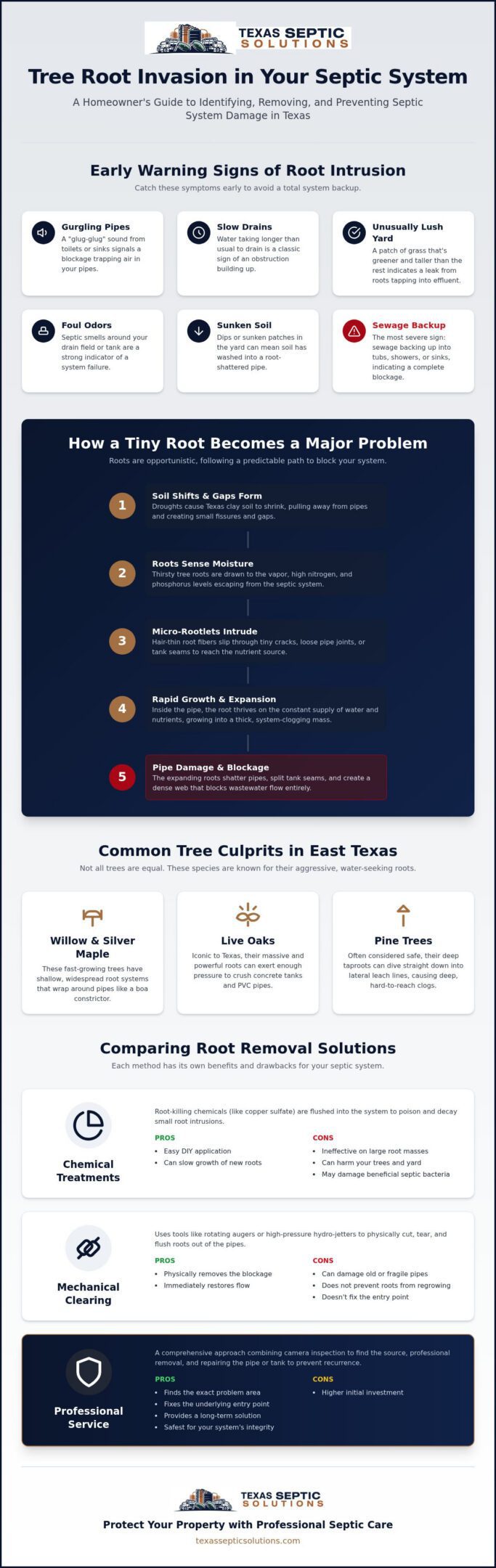
Your plumbing shouldn’t talk back to you. If your sinks or toilets make a distinct “glug-glug” sound after you finish a load of laundry or take a shower, it’s often the first warning sign of a blockage. Understanding what a septic system is and how it functions helps you realize that air and water need a clear, unobstructed path to move through your pipes. When roots invade, they act like a filter, catching toilet paper and solid waste, which traps air and creates those gurgling noises. If you don’t address this early, you’ll move quickly through the backup hierarchy, starting with slow drains and ending with a messy sewage overflow in your tubs or sinks.
Beyond the sounds, your yard often tells the story before your pipes do. Keep an eye out for “hot spots” of growth. If you notice a patch of grass over your tank or drain field that is significantly greener or taller than the rest of the lawn, it isn’t just good luck. It’s a sign that tree roots in septic tank solutions are needed because those roots have already tapped into the nutrient-rich effluent. In some cases, you might even see sunken patches of soil where the dirt has been sucked into a root-shattered pipe, creating a dangerous void underground.
The Role of Texas Soil in Root Growth
In areas like Houston and Cleveland, our heavy clay soils play a major role in septic failure. This clay expands and contracts aggressively with the weather. During a typical Texas summer drought, the soil shrinks and pulls away from your pipes, creating tiny fissures or “moisture trails.” Thirsty roots follow these trails with incredible precision. They act like tiny vampires, sensing the high nitrogen and phosphorus levels inside your system. Once a hair-thin rootlet finds a crack, it enters the pipe and begins to thrive on the constant supply of water and nutrients, eventually expanding until it splits the line wide open.
Common Tree Species That Cause Septic Havoc
Not all trees are created equal when it comes to septic safety. In East Texas, we see specific species that are particularly aggressive seekers of wastewater:
- Willow and Silver Maple: These are fast-growing water seekers with shallow, spreading root systems that can wrap around a pipe like a boa constrictor.
- Live Oaks: While iconic to the Texas landscape, their massive, powerful root systems can exert enough pressure to crush older concrete tanks or lift entire sections of PVC piping.
- Pine Trees: Many homeowners think pines are safe, but their deep taproots can dive straight down into lateral leach lines, causing localized clogs that are difficult to reach without professional equipment.
Identifying these signs early is the best way to avoid the fear of a total system replacement. If your yard or your drains are showing these symptoms, it’s time to look at professional diagnostic options to see exactly what’s happening underground.
How Roots Breach Your Septic Tank and Drain Field
Roots are opportunistic. They don’t start as massive intruders. Instead, they begin as microscopic fibers that can slip through a gap no wider than a credit card. Common entry points include pipe joints where the glue has failed, seams between the tank and its lid, or cracked baffles. Once inside, that hair-thin rootlet finds a constant supply of water and nutrients. It expands rapidly. This expansion creates a wedge effect that can eventually shatter PVC pipes or force concrete seams apart. This is why finding permanent tree roots in septic tank solutions requires more than just cutting the visible growth; you have to address the entry point.
Beyond structural damage, roots interfere with the biological health of your system. In the drain field, they disrupt the formation of the biomat. This is the layer of microorganisms responsible for filtering wastewater before it returns to the groundwater. When roots clog these lines, the effluent has nowhere to go but up, leading to the soggy patches mentioned earlier. Proper landscaping around a septic system is the best way to prevent this from happening in the first place. If you suspect an intrusion, scheduling professional septic system maintenance can help identify these breaches before they become catastrophic.
Vulnerabilities in Older Concrete Systems
Older concrete tanks in East Texas are particularly susceptible to root intrusion. Over time, the hydrogen sulfide gas produced by the waste naturally corrodes the concrete, making it porous and brittle. This soft concrete is easy for roots to penetrate. Additionally, many older systems used mortar joints between pipe sections rather than modern rubber gaskets or solvent-welded PVC. These mortar joints eventually crack due to soil shifts, inviting thirsty oaks and pines to enter. Regular inspections are critical for these older systems because a small crack can lead to a full structural collapse if left unaddressed.
Aerobic System Specifics: Why Roots Love Air
Aerobic systems present a unique challenge because roots love oxygenated water. In these systems, roots often target the spray heads or the lines leading to them. If roots enter the pump chamber, they can tangle around the float switches or the aerator itself. This leads to mechanical failure and can even pull moisture into electrical components, causing shorts. Texas law requires owners of aerobic septic systems to maintain a service contract with a TCEQ-licensed maintenance provider, with inspections occurring at least three times per year for the first two years. These visits are the perfect time to check for root growth near the aerator before it causes an expensive pump failure.
Comparing Solutions: Chemical, Mechanical, and Structural Repairs
Choosing the right tree roots in septic tank solutions involves balancing immediate relief with long-term prevention. Many homeowners feel a sense of urgency when drains slow down, but rushing into a fix without understanding the options can lead to repeat issues. Effective root management typically falls into three categories: killing the growth, physically removing the mass, or repairing the pipe to lock roots out for good. Each method has its place depending on whether you’re dealing with a minor hair-like intrusion or a massive, pipe-shattering oak root.
Chemical Treatments: Copper Sulfate vs. Foaming Agents
Chemicals are often the first line of defense for maintenance. Copper sulfate is a traditional choice that kills roots on contact, but it has significant downsides. It’s an indiscriminate killer that can harm the beneficial bacteria your system needs to process waste. It also tends to settle at the bottom of the pipe. Since roots usually enter through cracks at the top, liquid chemicals often flow right under the problem without touching it.
Foaming agents are a much more effective chemical option. When flushed, these products expand to fill the entire diameter of the pipe, ensuring the herbicide reaches the “ceiling” where the roots are hanging. It’s important to remember that chemicals only kill the roots; they don’t remove them. The dead root mass stays in the pipe until it eventually decays, which means you might still experience slow drains for a few weeks after treatment. For lasting results, one dose is never enough; you’ll need a consistent application schedule to keep new rootlets from taking hold.
Mechanical Removal: Clearing the Blockage
When you have a total backup, you need mechanical intervention. This usually involves a motorized snake or an auger, often called a “roto-rooter” approach. These machines use rotating blades to cut through thick root masses and restore flow immediately. While effective for emergencies, mechanical clearing is a blunt-force solution. The blades can easily catch on loose joints or brittle sections of older concrete pipes, potentially causing more damage than the roots themselves.
Hydro-jetting is a more modern and safer mechanical alternative. It uses high-pressure water streams to scrub the interior of your pipes clean. This doesn’t just cut the roots; it flushes out the grease and debris that the roots were catching. However, even the best mechanical clearing is only a temporary fix. Roots are like a pruned hedge; once you cut them, they’ll grow back even thicker and more aggressively unless you follow up with a chemical treatment or a structural repair.
The only permanent way to stop the cycle is to seal the entry points. Once the lines are clear, professional technicians can use epoxy liners or specialized sealants to close the cracks that invited the roots in the first place. This structural approach ensures your tree roots in septic tank solutions provide a permanent shield for your home’s utility lines.
Step-by-Step Guide to Clearing Roots and Preventing Growth
Resolving a root issue requires a methodical approach. It isn’t just about clearing the line once; it’s about creating a hostile environment for future growth. We recommend a five-step process to protect your investment. First, start with diagnostic pumping. You can’t see where the roots are entering if the tank is full. Clearing the tank allows a technician to inspect the baffles and seams for breaches. Second, use hydro-jetting to scour the lines clean. This high-pressure water removes the immediate obstruction and any grease buildup that roots love to feed on.
The third step involves applying a foaming root inhibitor. This specialized product expands to coat the entire pipe, killing any lingering rootlets that the jetter might have missed. Fourth, you should consider structural sealing or installing physical root barriers. These barriers, often made of heavy-duty plastic or geotextile fabric, are buried between your trees and the septic components. Finally, establish a long-term maintenance schedule. Regular inspections are the most effective tree roots in septic tank solutions because they catch growth before it destroys your drain field.
DIY vs. Professional Intervention
You can safely use over-the-counter foaming treatments as a preventative measure if your drains are clear. However, there are red flags that mean it’s time to call in the experts. If you’re experiencing sewage backups in your showers or gurgling in multiple fixtures at once, a DIY bottle won’t solve the problem. These symptoms suggest a deep root mass that requires professional equipment to clear. If your system is failing, don’t wait for a total collapse. You can schedule an emergency septic service to get your home back in working order immediately.
Landscaping for Septic Safety
Prevention starts with what you plant. We recommend the “25-foot rule” for any new trees; keep them at least that far away from your tank and drain field. For existing landscapes, you can install a physical root barrier at least two feet deep to redirect growth away from your pipes. If you want to add greenery near your system, stick to septic-safe plants like shallow-rooted grasses or perennials. Avoid water-hungry species like willows or elms, as they’ll seek out your septic lines even from a distance. Proper landscaping ensures your yard stays beautiful without compromising your underground utilities.
Professional Root Removal and System Restoration in Texas
Hiring a general plumber for a root-clogged septic system is often a short-term fix for a long-term problem. While a plumber excels at fixing indoor fixtures or clearing sink drains, they usually lack the heavy-duty equipment required to navigate the exterior lines of an on-site sewage facility. A septic specialist brings a deeper understanding of soil dynamics and system biology. We don’t just clear the pipe; we evaluate the health of the entire system to ensure the roots haven’t compromised the tank’s structural integrity or the drain field’s ability to filter effluent.
Visual verification is a critical part of our professional process. We use high-definition camera inspections to see exactly what’s happening inside your pipes before and after the repair. This technology allows us to confirm that the tree roots in septic tank solutions we’ve implemented have successfully cleared the obstruction. It also helps us identify hairline cracks that might invite future growth. By seeing the problem clearly, we can apply targeted repairs rather than relying on guesswork, which saves you money and prevents unnecessary digging in your yard.
Many homeowners worry that a root-damaged leach field is a death sentence for their septic system. In many cases, a leach field can be saved if the intervention happens quickly. Through a combination of hydro-jetting and biological treatments, we can often restore the filtration capacity and clear the lateral lines of root debris. Our team prioritizes property protection during these repairs. We use low-impact machinery and strategic access points to ensure your landscaping remains as intact as possible while we restore your home’s functionality.
Emergency 24/7 Root Repair Services
Root-related backups don’t wait for business hours. A midnight sewage overflow can quickly become a health hazard and a financial nightmare. We provide 24/7 emergency septic service across Cleveland, Houston, and Cypress to handle these high-pressure situations. Our rapid response teams arrive equipped to pump the tank and clear main line obstructions immediately. This fast action prevents environmental contamination and protects your home’s interior from costly water damage. We’re built for these moments, providing a calm, professional resolution when you need it most.
The Value of a Maintenance Plan
The most effective way to handle root intrusion is to never let it become an emergency. Routine pumping acts as a diagnostic checkup; it’s the moment we can spot early root filaments before they have a chance to expand and shatter your pipes. Investing in a Septic System Maintenance Plan ensures that your system is inspected by licensed professionals who know exactly what to look for in the Texas climate. The cost of a yearly plan is a fraction of the price of an emergency system replacement. If you’re concerned about the trees near your tank, Contact Texas Septic Solutions for a professional root inspection today!
Secure Your Home’s Future with Proactive Root Management
Managing your septic system doesn’t have to be a source of constant stress. By recognizing early warning signs like gurgling pipes and implementing effective tree roots in septic tank solutions, you can protect your property from expensive structural damage. Remember that clearing an immediate blockage is only half the battle. Sealing those entry points and maintaining a regular inspection schedule is what keeps your system running smoothly for decades.
As a locally owned and operated team in Cleveland, TX, we understand the specific challenges our East Texas landscape presents. Whether you need specialized hydro-jetting for deep root removal or a 24/7 emergency response to a midnight backup, we have the equipment and local expertise to handle it. Don’t wait for a total system failure to take action. Schedule a Professional Septic Inspection with Texas Septic Solutions today to ensure your drain field remains clear and functional. You’ve worked hard for your property; let us help you keep it running exactly the way it should.
Frequently Asked Questions
Will copper sulfate kill my trees if I use it in my septic tank?
Copper sulfate generally won’t kill your entire tree because it only kills the specific root tissue it contacts. The chemical is absorbed by the root tips inside the pipe, causing localized death without traveling back to the main trunk in lethal doses. However, we don’t recommend it as a primary choice for tree roots in septic tank solutions because it can significantly disrupt the beneficial bacteria your tank needs to process waste effectively.
How often should I use a root killer in my septic system?
For most homeowners with established trees, applying a foaming root inhibitor twice a year is the standard maintenance schedule. We typically suggest one application in the spring and another in the fall to coincide with peak root growth cycles. If you’ve already experienced a major intrusion, your technician might recommend more frequent doses until the entry points are structurally sealed. Consistent maintenance is far more effective than a single, heavy-handed treatment.
Can tree roots grow through a concrete septic tank?
Roots can absolutely penetrate a concrete septic tank, especially as the system ages. Over several decades, the concrete can become porous or develop hairline fractures due to soil shifts or hydrogen sulfide corrosion. Once a tiny rootlet finds a crack or a weak seam between the tank and the lid, it will grow and expand. This pressure can eventually lead to large cracks, structural collapse, or significant leaks that require professional repair.
What is the best way to remove roots from a leach field?
Hydro-jetting is the most effective way to clear roots from a leach field without digging up the entire yard. This process uses high-pressure water to scrub the interior of the lateral lines and flush out root masses and debris. After the lines are clear, applying a foaming root killer ensures that any remaining fibers are neutralized. This two-step approach restores flow and protects the biomat from further mechanical interference by thirsty trees.
How much does it cost to have roots professionally removed from a septic tank?
The cost of professional root removal varies based on the severity of the intrusion and the equipment required. A simple diagnostic pumping is the first step, but if the roots have reached the drain field, you may need hydro-jetting or camera inspections to ensure a complete fix. While we can’t provide flat rates here, investing in professional removal is always more affordable than the price of a full system replacement caused by a total collapse.
Are there any trees that are safe to plant near a septic system in Texas?
In the Texas climate, it’s safest to stick with shallow-rooted plants like native grasses, flowers, or small shrubs near your system. If you must have trees, choose slow-growing species with non-aggressive root systems and keep them at least 25 feet away from the tank. Avoid water-hungry trees like Willows, Elms, or Silver Maples. These species are notorious for traveling long distances to find the moisture and nutrients inside your septic lines.
Can I use rock salt to kill roots in my septic pipes?
Rock salt is a traditional DIY remedy that can dehydrate and kill roots, but we generally advise against it. Salt is highly corrosive and can damage older metal pipes or concrete tank walls over time. More importantly, large amounts of salt will kill the essential bacteria that break down solids in your tank. This leads to a “dead” system that requires more frequent pumping and can eventually cause your drain field to clog with unprocessed waste.
What happens if I ignore tree roots in my septic system?
Ignoring root intrusion leads to a hierarchy of failures that starts with slow drains and ends with a total system backup. As roots expand, they physically break pipes and block the flow of effluent. This causes sewage to back up into your home’s tubs and sinks, creating a health hazard. Eventually, the structural damage becomes so severe that the only remaining tree roots in septic tank solutions involve a complete and expensive system replacement.