
The Ultimate Septic Tank Service Checklist for Rental Properties in Houston
Imagine getting a 2 AM emergency call from your tenants during a triple-digit Houston heatwave, not because the AC failed, but because the backyard is suddenly a swamp of raw sewage. For many landlords, this nightmare is a reality caused by a simple “flushable” wipe or a forgotten pumping schedule. Managing a septic tank service for rental property Houston locations requires a proactive strategy that accounts for high turnover and varying tenant habits. You shouldn’t have to wait for a backup to think about your underground infrastructure.
We understand that your rental is a major investment, and the last thing you need is a five-figure repair bill eating your profits. This guide provides a landlord-specific maintenance plan designed to protect your property and avoid unexpected emergencies. You will learn how to create clear tenant guidelines that reduce your liability, stay compliant with Texas health regulations, and build a reliable defense against system failure. From routine pumping schedules to 24/7 emergency readiness, we are laying out everything you need to keep your property functional and your overhead predictable.
Key Takeaways
- Establish a proactive schedule for septic tank service for rental property Houston locations to prevent catastrophic failures and protect your long term investment.
- Implement clear lease addendums and tenant education guides to reduce your liability and prevent prohibited items from damaging your system.
- Stay compliant with Texas state regulations by understanding the mandatory maintenance contract requirements for aerobic septic systems.
- Focus on the “big three” of professional upkeep—pumping, filter cleaning, and mechanical inspections—to ensure your system handles high tenant turnover.
- Partner with a reliable local expert who offers 24/7 emergency support to resolve unexpected backups before they lead to expensive property damage.
The Landlord’s Responsibility: Septic Systems in Houston Rentals
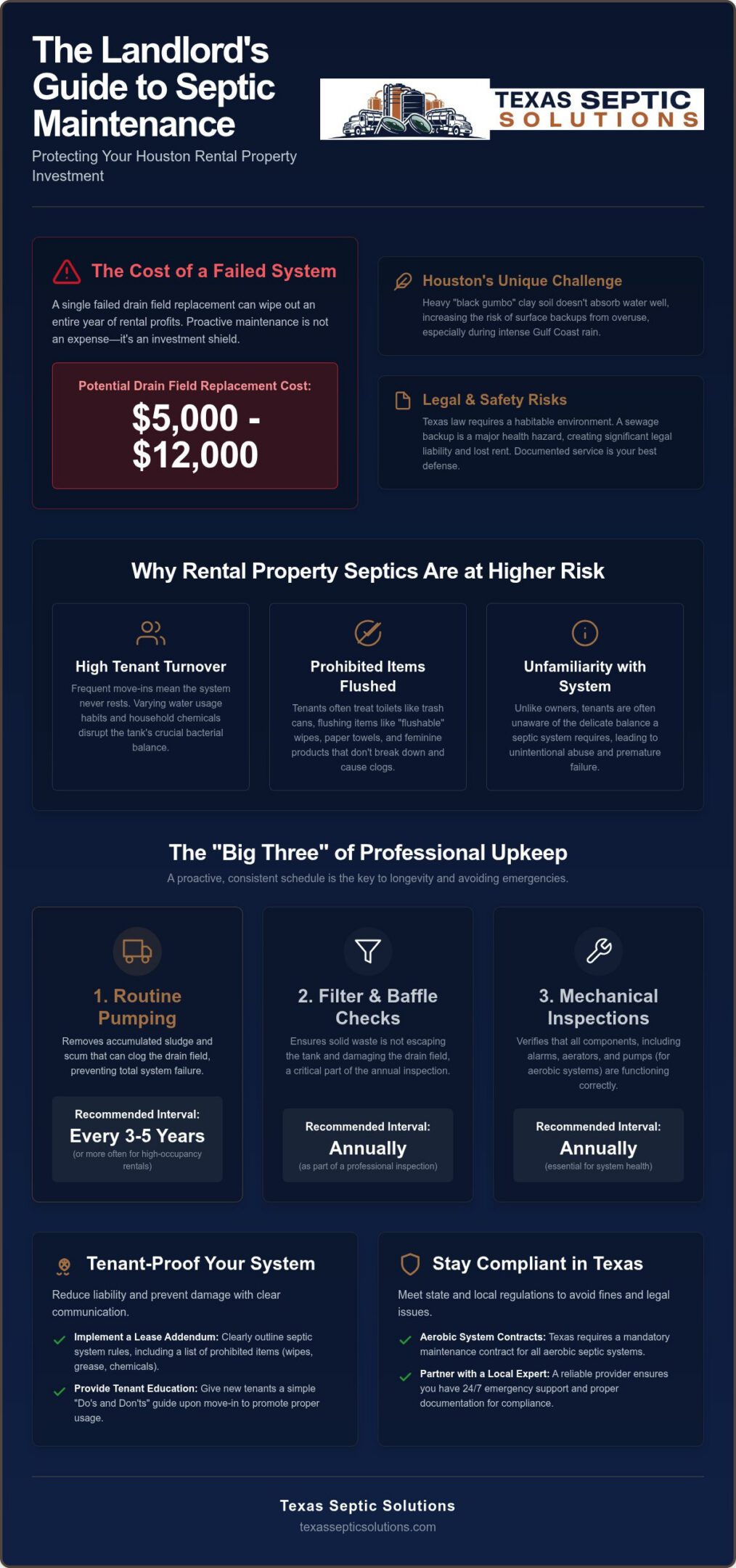
Owning a rental property in the Houston area is a fantastic way to build long term wealth, but it comes with a unique set of utility demands. Your septic system is a complex, living biological engine that requires consistent oversight. Scheduling regular septic tank service for rental property Houston homes is the only way to avoid the “set it and forget it” trap. If you don’t stay ahead of maintenance, a single failed drain field can cost between $5,000 and $12,000 to replace; this can wipe out your entire annual rental profit in one afternoon.
Houston is famous for its “black gumbo” clay soil. This heavy earth doesn’t absorb water well, especially during our intense Gulf Coast rain events. When a tenant overuses water or flushes the wrong items, the gumbo soil can’t recover quickly, leading to messy surface backups. Understanding What is a Septic System? and how it interacts with our local geography is the first step in protecting your investment. Implementing a professional septic system maintenance plan isn’t just a chore; it is a vital business asset that keeps your ROI stable and your property functional.
Why Rental Septics Fail Faster
Tenants rarely treat a property with the same care as an owner. They often treat toilets like trash cans, flushing “flushable” wipes, feminine products, or paper towels that never break down. High tenant turnover also creates significant stress on the system. Every new resident introduces different water usage habits and household chemicals that can kill the beneficial bacteria in your tank. In the Houston heat, these issues escalate quickly. We often see systems fail because tenants simply don’t understand the delicate balance required to keep a septic tank working. Frequent move-ins mean the system never gets a rest, leading to faster sludge buildup and more frequent pumping needs.
The Legal and Safety Risks of Neglect
Texas law requires landlords to provide a habitable and sanitary environment for their residents. A sewage backup is a major health hazard that renders a home unlivable. If a tenant gets sick or has to move out because of a preventable backup, you could face significant legal liability and lost rent. Documenting your professional septic tank service for rental property Houston is your best defense. These records prove that you’ve performed due diligence and maintained the property to state standards. It’s much easier to show a service log to an insurance adjuster or a judge than it is to explain why you ignored a three year pumping interval. Regular service keeps your tenants safe and your liability low.
Essential Septic Maintenance Checklist for Rental Properties
Every successful Houston landlord knows that a reactive maintenance strategy is just a slow way to lose money. To protect your investment, you need a proactive schedule that accounts for the heavy use common in rental units. While owner-occupied homes might stretch their service intervals, your septic tank service for rental property Houston should prioritize the “big three”: pumping, filter cleaning, and mechanical inspections. By sticking to a strict timeline, you ensure the system’s longevity and keep your tenants satisfied.
Consistency is key when managing underground infrastructure. We recommend a professional routine septic tank pumping every 3 to 5 years, depending on the number of occupants. If you have a high-turnover property or a large family in a small unit, you may need to shorten this window. Pumping removes the accumulated solids that can otherwise clog your drain field and lead to a total system failure.
Annual Professional Inspection Points
A professional should visit your property at least once a year to verify that everything is running smoothly. Following standard guidelines for septic system care and maintenance helps you avoid the most common causes of system failure. During this visit, a technician will perform several critical checks:
- Sludge and scum measurement: Determining exactly when the next pump-out is needed based on actual tank levels.
- Baffle and filter check: Inspecting these components to ensure solids aren’t escaping into your drain field.
- Mechanical testing: Verifying that alarms, aerators, and pumps are functioning correctly; this is vital for aerobic systems.
If you need a reliable partner for these checks, Texas Septic Solutions provides the expert oversight property managers depend on.
The “Between Tenant” Quick-Check
The move-out period is the perfect time to perform a quick visual audit. Completing a thorough septic tank service for rental property Houston during the turnover phase ensures the system is ready for the next set of residents. Add these items to your walk-through list:
- Drainage tests: Verify that all toilets flush vigorously and no slow drains exist in sinks or tubs.
- Drain field walk: Look for surfacing water or patches of grass that are significantly greener than the rest of the yard.
- Filter maintenance: Clean the effluent filter to prevent backups during the next lease term.
Checking these points during every vacancy window can save you from a 2 AM emergency call later. It’s much easier to address a slow drain while the house is empty than it is to coordinate a repair around a tenant’s schedule.
Tenant-Proofing Your System: Guidelines and Liability
While you can control your maintenance schedule, you can’t always control what your tenants do behind closed doors. Providing a consistent septic tank service for rental property Houston landlords involves more than just pumping; it requires active tenant management. To protect your investment, you must bridge the gap between technical maintenance and daily usage. Clear communication and legal safeguards are your best tools for ensuring your system isn’t compromised by a single bad decision in the bathroom or kitchen.
If a tenant’s negligence leads to a backup, you need a clear path for recourse. Incorporating a septic-specific addendum into your lease agreement is standard practice for experienced property managers. This document should explicitly state that if a septic system repair is required due to the disposal of prohibited items, the financial burden falls on the resident. This aligns with Texas Commission on Environmental Quality (TCEQ) regulations that emphasize the owner’s responsibility to ensure the system functions without creating a public nuisance.
The Forbidden Flush List
The biggest threat to your rental’s plumbing isn’t age; it is the “flushable” wipe. These products don’t break down like toilet paper and are the primary cause of pump failures and clogs in the Houston area. You should provide every new tenant with a clear list of forbidden items. This list must include grease, feminine hygiene products, paper towels, and harsh chemical cleaners like bleach or drain openers that kill essential tank bacteria. A sample sentence for your lease might read: “Tenant acknowledges the property uses a septic system and agrees to flush only human waste and septic-safe toilet paper; any damage caused by prohibited items will be billed to the Tenant.”
Educating Your Tenants
Don’t assume your tenants know how a septic system works. Many people moving to the outskirts of Houston, Cypress, or Huffman may be coming from city sewer systems. Providing a “Septic 101” flyer during move-in can prevent thousands of dollars in damage. This guide should explain the importance of spacing out laundry loads to avoid hydraulic overloading, which can flood a drain field during heavy rains. Most importantly, teach them about the hardware. If they hear a septic tank alarm going off, they need to know it is an immediate priority. Instruct them to silence the alarm and call you or your service provider immediately rather than waiting for a visible backup. Being proactive with education turns your tenants into the first line of defense for your property’s infrastructure.
Houston Compliance: Aerobic Systems and Local Regulations
Staying on the right side of local health departments is just as important as the physical maintenance of your system. In the Greater Houston area, regulatory oversight is strict because our high water table and specific soil conditions create a high risk for environmental contamination. When you manage a septic tank service for rental property Houston locations, you aren’t just answering to your tenants; you are answering to Harris, Montgomery, or Fort Bend County authorities. Failure to maintain your system according to state standards can result in hefty fines, with some jurisdictions like Harris County levying penalties up to $1,000 per day for non-compliance.
While older properties might still use traditional gravity-fed systems, the majority of newer rental units in our region utilize aerobic treatment units (ATUs). Traditional systems rely on the soil to do the heavy lifting of filtration. In contrast, aerobic systems use oxygen to break down waste faster, making them more efficient for the tight lots and heavy soils found in our suburbs. However, this increased efficiency comes with much higher regulatory requirements and mechanical complexity.
Understanding Aerobic System Maintenance Contracts
Texas law is very clear: if your rental property has an aerobic system, you must maintain a valid service contract with a licensed provider. These systems are essentially miniature wastewater treatment plants in your backyard. Most Texas jurisdictions require a licensed technician to perform three inspections per year. During these visits, the technician checks the air compressor, cleans the filters, and ensures the disinfection system is working. As a landlord, you are responsible for ensuring the system always has chlorine tablets. If a county inspector finds an empty chlorinator or a lapsed contract, the property can be flagged as uninhabitable. Professional monitoring protects you from these regulatory headaches and ensures the mechanical components don’t fail prematurely.
Soil and Environmental Factors in Houston
The “black gumbo” clay found throughout Cypress and Huffman acts like a sponge that refuses to drain. During the heavy rain events common in our region, this clay becomes saturated, leaving nowhere for effluent to go. This saturation is why aerobic systems, which spray treated water onto the surface, are often the only legal option for newer builds. You must ensure your spray heads are positioned correctly and that tenants don’t build structures or park vehicles over the disposal area. Preventing groundwater contamination is a legal duty that protects the long term value of your land and the health of the surrounding community. If you need to secure a compliant maintenance contract today, contact Texas Septic Solutions for professional service that meets all local requirements.
Choosing Texas Septic Solutions for Your Houston Rental
Managing a rental portfolio in the Greater Houston area means balancing dozens of priorities at once. You need a partner who understands that a utility failure isn’t just a technical repair; it’s a threat to your tenant relationship and your monthly cash flow. We provide a specialized septic tank service for rental property Houston owners can rely on for both routine care and rapid crisis management. Our team acts as an extension of your property management staff, providing the “neighborly expert” guidance needed to navigate the specific challenges of our local environment.
Whether your properties are in the heavy clay of Cypress or the expanding suburbs of Huffman, we understand how the local climate impacts your infrastructure. If you are developing new lots or replacing an aged system, we also offer professional septic system installation. Starting with a properly designed system for a new rental build is the best way to ensure low maintenance costs for the next two decades. We don’t just drop a tank in the ground; we build a foundation for your property’s long term functionality.
Our Rental-Focused Service Model
We’ve designed our business to meet the specific needs of property managers. This starts with direct, streamlined communication to ensure scheduling never becomes a headache for you or your tenants. We provide detailed reporting and high-resolution photos for your records after every service call. This documentation is vital for landlord records and provides the evidence you need if you must bill a tenant for damages caused by negligence. When a crisis occurs, we offer priority scheduling and 24/7 emergency response for critical failures. Our goal is to resolve the issue before it leads to tenant displacement or expensive interior water damage.
Ready to Secure Your Rental Property?
Proactive care beats reactive repair every single time. By the time you see a backup in the yard, the damage to your drain field or aerobic components is often already done. Investing in a consistent maintenance plan is the most effective way to “tenant-proof” your investment and keep your ROI predictable. We are ready to help you move from a state of constant utility anxiety to a “set it and forget it” maintenance strategy that works for your business model.
Protecting your property’s long-term value starts with a simple conversation. We invite you to reach out for a maintenance consultation to review your current systems and compliance status. Let us handle the underground infrastructure so you can focus on growing your rental business. Contact Texas Septic Solutions today and experience the peace of mind that comes with having a reliable local authority on your team.
Secure Your Houston Rental Investment for the Long Term
Managing a rental property is demanding enough without the constant threat of sewage backups or regulatory fines. You’ve seen that a defensive maintenance strategy, built on regular pumping and clear tenant guidelines, is the best way to keep your ROI stable. By staying ahead of local compliance and educating your residents on the “forbidden flush” list, you turn a potential liability into a manageable business asset. Don’t let a preventable system failure derail your rental business; consistency is your greatest ally in the Houston heat.
When you partner with a professional for septic tank service for rental property Houston homes, you’re investing in the longevity of your land and the satisfaction of your tenants. We understand the specific challenges of our local soil and the pressure of property management. Contact Texas Septic Solutions for a rental property maintenance consultation today! As local Houston experts, we offer comprehensive maintenance plans and 24/7 emergency service to handle any unexpected system failures. We’re here to help you protect your property and ensure your underground infrastructure remains worry free for years to come.
Frequently Asked Questions
How often should I pump the septic tank at my Houston rental property?
You should schedule professional pumping every 3 to 5 years for a standard rental home. However, high-occupancy properties or those with frequent tenant turnover often require more frequent attention. Because tenants are less likely to conserve water or watch what they flush, a 3-year interval is a safer bet to prevent solids from overflowing into the drain field. Regular septic tank service for rental property Houston locations is the best way to avoid expensive emergency repairs.
Can I charge my tenant for septic repairs if they flushed wipes?
You can typically charge tenants for repairs if you can prove the damage was caused by negligence, such as flushing wipes or feminine products. It’s vital to have a clear septic addendum in your lease agreement that outlines prohibited items. When our technicians perform a repair, we can provide documented evidence and photos of the obstruction. This documentation is essential for landlords who need to justify withholding a security deposit or billing for service calls.
What is the most common cause of septic failure in Houston rental homes?
The most frequent cause of failure is the flushing of non-biodegradable items like “flushable” wipes and paper towels. These items clog pumps and baffles, leading to immediate backups. In the Houston area, the heavy clay soil also plays a role; it cannot absorb excess water during storms if the system is already stressed by sludge. Combining tenant education with a consistent maintenance plan is the most effective way to prevent these common infrastructure failures.
Is an aerobic system maintenance contract required for my rental property in Harris County?
Yes, Texas state law requires all owners of aerobic septic systems to maintain a valid service contract with a licensed provider. In Harris County and surrounding areas, this typically involves three professional inspections per year. These checks ensure the aerator is functioning and the disinfection system has adequate chlorine. Failing to maintain this contract can lead to daily fines from local health departments and may even result in the property being declared uninhabitable.
What should my tenants do if the septic alarm starts buzzing?
Instruct your tenants to silence the alarm using the button on the control panel and contact you or a professional service provider immediately. An alarm usually indicates a high-water event or a mechanical failure with the pump or aerator. Tenants should stop using water, including showers and laundry, until a technician arrives. We offer 24/7 emergency support to address these alarms before they turn into a messy and expensive indoor backup.
How do I know if my rental property septic system needs a total replacement?
Persistent backups that occur even after pumping are a major red flag. If your drain field stays soggy during dry weather or you notice structural cracks in an old concrete tank, it may be time for a replacement. We specialize in new septic system installation and can perform a comprehensive site evaluation to determine if a repair is possible or if a modern aerobic system is required to meet current local codes and soil requirements.
Do Houston heavy rains affect my rental property’s septic system?
Intense Houston rain events can saturate the “black gumbo” clay soil, preventing the drain field from absorbing treated effluent. This hydraulic overload often causes slow drains or surface ponding in the yard. During these periods, it’s critical that tenants minimize water usage to prevent the system from backing up into the house. A well-maintained system with a clean effluent filter will recover much faster once the ground begins to dry out after a storm.
What are the signs that my rental property’s drain field is failing?
Look for standing water or spongy soil over the disposal area, even when it hasn’t rained recently. Unusually lush, bright green grass over the drain field lines is another common sign that the soil is no longer filtering waste properly. You may also notice persistent sewage odors or gurgling sounds in the pipes. These symptoms indicate that the soil is clogged with solids, often requiring professional intervention or a total system redesign to restore functionality.