
The Ultimate Septic Inspection Checklist: What Texas Homeowners Need to Know in 2026
Imagine you’re days away from closing on your home sale when a single report brings everything to a sudden halt. For many Texans, a septic inspection feels like a high-stakes exam where you don’t know the questions and the grading is expensive. It’s normal to feel dread when a technician starts talking about baffles, effluent, or tank integrity. You want a smooth transaction and the peace of mind that your property is environmentally sound, not a surprise repair bill that eats your equity.
We understand that your septic system is likely the most expensive utility on your property. That’s why we’ve built this comprehensive 2026 guide to help you master the process. You’ll learn exactly what inspectors look for under Texas Commission on Environmental Quality (TCEQ) standards and how to spot red flags before they become disasters. We’ll walk through a step-by-step checklist that covers everything from aerobic maintenance contracts to the differences between a visual check and a full pump-out. This roadmap will help you protect your investment and secure that final signature at the closing table.
Key Takeaways
- Understand how the humid Texas climate and local regulations impact your system’s health and your property’s resale value.
- Learn the specific components checked during a professional septic inspection, from tank integrity to the condition of inlet and outlet baffles.
- Identify the differences between a visual check and a full inspection to ensure you have the right documentation for a real estate closing.
- Prepare your property effectively by locating tank lids and clearing vegetation to ensure a smooth, efficient visit from your technician.
- Use our homeowner’s checklist to spot early warning signs and avoid the high costs of a total system failure.
Why a Professional Septic Inspection is Non-Negotiable in Texas
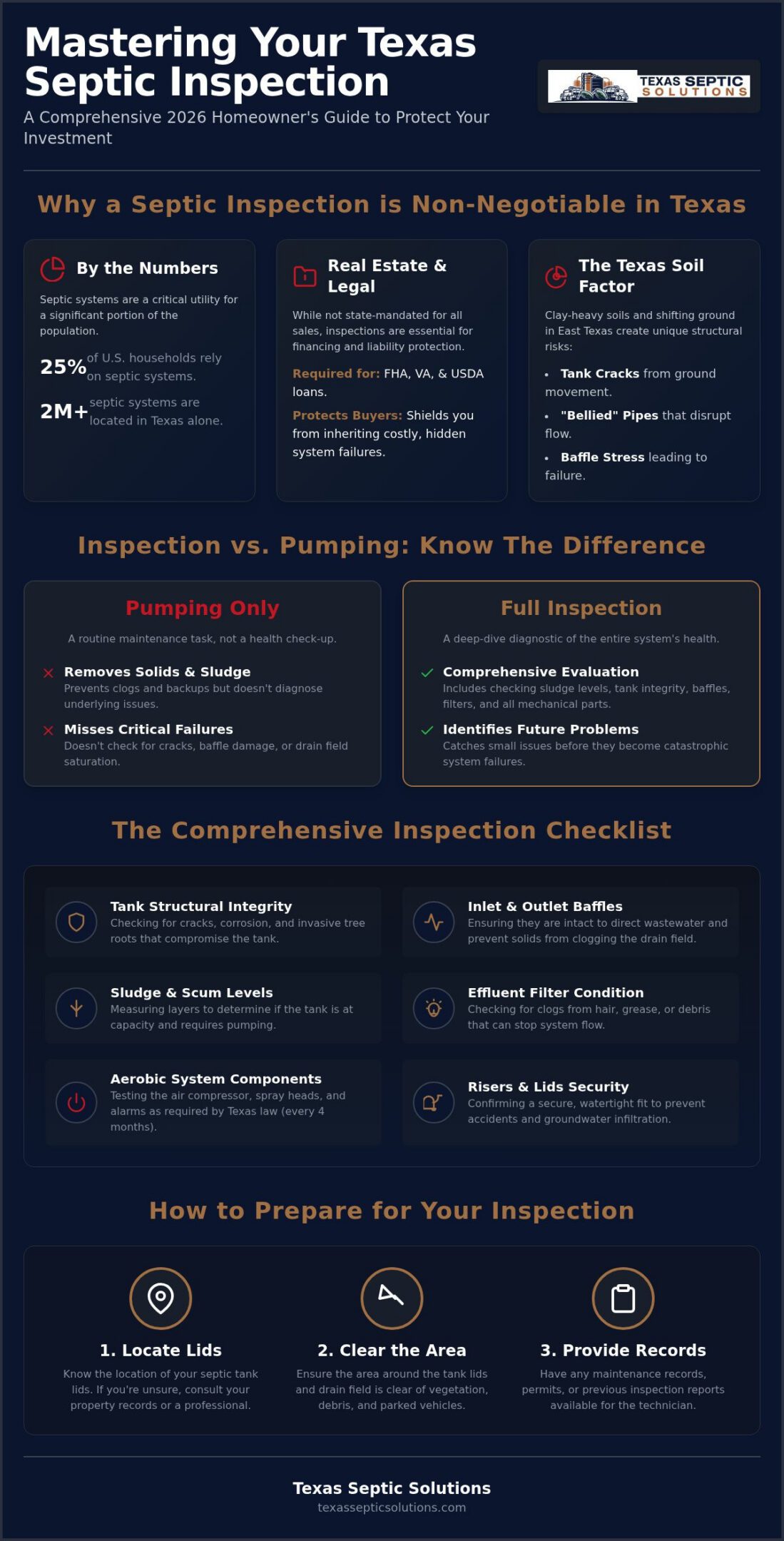
A septic inspection isn’t just a box to check during a home sale. It’s a strategic audit of your property’s most expensive utility. With approximately 25% of U.S. households relying on these systems, and Texas being home to more than 2 million of them, staying ahead of maintenance is critical. A failing system isn’t just a nuisance; it’s a liability for the local water table and your property value. In our state, where soil conditions and weather patterns are unpredictable, professional oversight is the only way to ensure your system remains a functional asset rather than a buried disaster.
Real Estate and Legal Requirements
In 2026, Texas state law still doesn’t mandate an inspection for every private property transfer. However, if you’re using an FHA, VA, or USDA loan, your lender will almost certainly demand a professional report before they release funds. For buyers, this documentation is your only shield against inheriting massive repair costs. It’s common for a system to look fine on the surface while the internal components are failing. Without a formal report, you could find yourself needing a total septic system replacement just weeks after moving in.
The Texas Soil Factor
Geography plays a massive role in how your system performs. In the Houston and Cypress areas, clay-heavy soils create unique challenges. Clay doesn’t absorb liquid as quickly as sandy soil, which often leads to drain field saturation during our heavy rain seasons. In communities like Shepherd and Huffman, high humidity and intense storms can overwhelm a system that hasn’t been properly maintained. The ground in East Texas is also prone to shifting, which can cause significant structural stress.
This ground movement often leads to several common issues:
- Cracks in concrete tank walls that allow groundwater to seep in.
- Disconnected or “bellied” pipes between the house and the tank.
- Structural stress on the inlet and outlet baffles.
Local expertise is vital here. A technician who understands East Texas soil knows how to differentiate between normal settling and a critical structural failure that requires immediate attention.
Full Inspection vs. Pumping
It’s a common mistake to assume that having your tank pumped out is the same as getting a full septic inspection. Pumping is a routine maintenance task that removes solids to prevent clogs. A comprehensive inspection is a deep dive into the system’s mechanics. We evaluate how septic systems work by checking the sludge levels, testing the alarms on aerobic systems, and verifying that the effluent is moving correctly through the filters. If you only pump the tank, you’re missing the chance to catch small cracks or baffle issues before they cause a total system collapse.
The Comprehensive Septic Inspection Checklist: What We Look For
A professional septic inspection is a methodical deep dive into your system’s health. We don’t just look at the surface; we evaluate every component to ensure it can handle the daily demands of your household. We begin with the tank’s structural integrity. Whether your tank is concrete or plastic, we check for hairline cracks, signs of corrosion, and root intrusion. In East Texas, aggressive tree roots are a common culprit for tank damage, as they can wedge into small seams and eventually cause a total structural failure.
Beyond the walls of the tank, we examine the internal components that keep the system flowing. This includes the inlet and outlet baffles, which are critical for directing wastewater and keeping solids where they belong. If a baffle is damaged or missing, solids can escape into your drain field, leading to a premature and expensive system collapse. We also check the effluent filter to ensure it isn’t clogged with hair, grease, or non-biodegradable debris.
Inside the Tank: The Core Evaluation
Once we open the lids, we measure the sludge and scum layers using specialized tools. This data tells us if your system is operating at a healthy capacity or if it’s overdue for pumping. For homeowners with aerobic systems, this stage is even more involved. Texas law requires these systems to be inspected every four months. We test the air compressor, the spray heads, and the septic tank alarm to ensure you’re alerted the moment a pump or mechanical part fails. We also inspect the risers and lids for a secure, watertight fit to keep your family and pets safe from accidental falls.
The Drain Field and Distribution Box
The final stage of the process takes us to the absorption area. We probe the soil around the drain field to check for “black slime” or effluent breakout, which indicates the soil is no longer absorbing liquid properly. We also look for specific vegetation patterns. While “greenest grass” over a drain field might look nice, it’s often a sign that the lines are leaking or the soil is saturated. We check the distribution box to verify that liquid is moving evenly to all lateral lines. If you’re worried about your system’s performance, our team at Texas Septic Solutions can perform a thorough septic system maintenance check to give you a clear picture of your system’s status.
Operating levels within the tank also provide vital clues. If the liquid level is too low, the tank might have a leak below the water line. If it’s too high, it suggests a backup in the drain field or a blockage in the outlet pipe. Catching these signs early can be the difference between a minor repair and a major headache.
Visual vs. Full Septic Inspections: Choosing the Right Level
Choosing between a visual check and a comprehensive septic inspection depends entirely on your goals. If you’re conducting routine maintenance to stay ahead of sludge buildup, a visual assessment might provide a quick status update. However, if you’re involved in a real estate closing, a surface-level glance isn’t enough. You need to know the state of the infrastructure buried beneath your lawn. Understanding the difference between these two levels of service can save you from inheriting a system on the verge of collapse.
The Dye Test and Surface Check
A visual inspection is essentially a non-invasive scan of the system’s current state. We start with a dye test, where a fluorescent tracer is flushed down a toilet or drain. If that dye appears on the surface of your yard shortly after, it’s a clear indicator of a major backup or a broken line. While this method is effective for spotting immediate, catastrophic failures, it’s limited. It won’t reveal cracks in the tank’s floor or reveal how much sludge has accumulated. Many real estate contracts accept this as a minimum requirement, but savvy buyers know that a “pass” on a visual test doesn’t guarantee a healthy system.
Advanced Diagnostics: Cameras and Pumping
A full inspection is the gold standard for property protection. To truly assess the tank’s structural integrity, we must pump it out. This allows us to see the bottom of the tank and check for the corrosive effects of hydrogen sulfide gas or structural cracks caused by shifting East Texas soil. Without pumping, a technician is basically guessing what’s happening below the water line. If we find evidence of structural damage, we often recommend a professional septic system repair consultation to address the issue before it leads to a total failure.
Modern technology has also introduced sewer cameras into the diagnostic process. These waterproof cameras are fed through the lines to identify specific blockages, root intrusions, or “bellies” in the pipe where waste can settle. This eliminates the guesswork and allows us to pinpoint the exact location of a problem without digging up your entire yard. If you’re investing in a new property, this level of detail is the only way to ensure your investment is sound and your system meets 2026 Texas standards.
Preparation Checklist: How to Get Ready for Your Inspector
Proper preparation ensures your septic inspection is accurate and efficient. One of the most critical rules is to avoid pumping your tank immediately before the technician arrives. If the tank is empty, the inspector cannot evaluate the liquid levels, check for backflow, or see the system under normal operating conditions. We need to see the “working” state of your system to provide a valid report for your property records or real estate closing. An empty tank hides potential leaks and prevents us from seeing how the effluent moves through the baffles.
Documentation and History
Having your paperwork ready is the best way to prove you’ve been a responsible homeowner. Try to locate your “as-built” map or original permit records from the county. These documents show exactly where the tank and drain field are buried, saving time and preventing unnecessary digging. A documented history can speed up the inspection process significantly. If you’ve been following a septic system maintenance plan, keep those records handy. Proving that you’ve had regular service and pumping increases property value and gives buyers confidence that the system isn’t a ticking time bomb.
Physical Access and Site Prep
Clear the way for your technician by identifying the tank lids and clearing any overgrown brush or debris. In areas like Cypress or Cleveland, fast-growing vegetation can quickly hide access points. If your lids are buried deep, consider installing risers to make future access easier and safer. Ensure your pets are secured inside and the inspector has clear, unobstructed access to the entire yard. It’s also important to avoid using heavy machinery or parking vehicles near the drain field before the appointment. Compacting the soil can skew the results of the absorption test, especially in our heavy clay-rich Texas ground.
Be prepared to share any recent issues you’ve noticed with the system’s performance. If you have an aerobic system and have experienced a septic tank alarm going off, tell the inspector when it happened and if it was triggered by heavy rain. This local context helps us diagnose whether the issue is a mechanical failure or a result of the local soil becoming saturated. If you need a reliable report for your home sale, schedule your septic inspection today with our expert team to ensure everything is in working order.
Reliable Local Expert: Why Texas Septic Solutions is the Right Choice
Choosing a partner for your septic inspection means finding someone who understands the specific environmental and regulatory challenges of East Texas. We’ve spent years working in Cleveland, Houston, and Cypress, giving us a deep familiarity with local soil types and municipal standards. We don’t just provide a checklist; we offer the calm reliability of a team that has seen every possible scenario. Our goal is to alleviate the stress of property ownership by providing clear, actionable information that protects your investment.
Real estate transactions often move at a breakneck pace. If you’re facing a tight closing window and need an immediate report, our 24/7 availability ensures you aren’t left waiting. We’re built for both routine maintenance and high-pressure situations, providing the promptness you need to keep your home sale on track. This neighborly expert approach means you get honest advice without the clinical detachment of a large corporation.
Serving the East Texas Community
Our roots are firmly planted in Huffman, Shepherd, and the surrounding areas. This local presence is a major advantage when navigating the specific health department rules that vary from county to county. Since many Texas counties act as authorized agents for the TCEQ, knowing the local inspectors and their specific expectations can prevent unnecessary delays. We operate as a one-stop-shop, meaning we can handle everything from the initial assessment to a full septic system replacement if your current system has reached the end of its lifespan. Having a single point of contact for both inspections and repairs ensures that nothing is lost in translation.
Next Steps: Booking Your Inspection
When you receive your final report, it won’t be filled with alienating technical jargon. We provide transparent, honest advice on the health of your system, highlighting exactly what’s working and what needs attention. If the system doesn’t pass, we don’t just leave you with a problem. We help you prioritize necessary repairs based on safety, environmental impact, and your specific budget. This level of accountability is why homeowners across the region trust us as their long-term maintenance partner. We’re ready to help you secure your property and ensure your system meets every 2026 standard. Schedule your professional septic inspection with Texas Septic Solutions today.
Secure Your Property with a 2026 Ready Septic Audit
A professional septic inspection is more than a formality for a real estate closing; it’s the ultimate safeguard for your home’s most vital utility. We’ve explored how local Texas soil and shifting weather patterns in areas like Cleveland and Cypress demand specialized expertise to avoid a total system collapse. By following our preparation checklist and choosing a full diagnostic over a simple visual check, you ensure your system remains environmentally safe and structurally sound for years to come.
At Texas Septic Solutions, we take pride in being your neighborly expert. We combine deep local knowledge with 24/7 emergency service to support you through every stage of property ownership. Whether you need detailed inspection reports for a buyer or a routine health check for your own peace of mind, our team is ready to provide transparent, honest results. Don’t leave your property’s health to chance when expert help is just a call away.
Book Your Professional Septic Inspection Now and let us help you protect your investment with the reliable care your Texas home deserves.
Frequently Asked Questions
How long does a typical septic inspection take?
A standard septic inspection typically takes between 1.5 and 3 hours to complete. This timeframe depends on how easily your technician can access the tank lids and the overall complexity of the system. If your lids are buried deep in the heavy clay soil common in Cypress, the process might take longer. We perform a thorough walkthrough of the tank, the internal components, and the drain field to ensure every part meets Texas standards.
Can a septic inspection fail if the grass is too green?
Lush, green grass over your drain field is often a red flag rather than a sign of a healthy lawn. This pattern suggests the soil is receiving too much nutrient-rich effluent, which could indicate a leak in the lateral lines or a saturated drain field. While green grass alone won’t fail an inspection, it prompts our team to probe the soil for “black slime” or standing water that confirms a failure.
Should I pump my septic tank before an inspection?
Don’t pump your tank immediately before a scheduled inspection. An empty tank prevents the inspector from evaluating the normal operating levels or checking for backflow from the drain field. We need to see the system in its “working” state to identify leaks or baffle issues. If the tank needs pumping as part of a full inspection, we can handle that service once the initial evaluation of the liquid levels is complete.
What are the most common reasons a septic system fails inspection in Texas?
In the Houston and Cleveland areas, structural damage from shifting clay soil is a frequent cause of failure. Roots from nearby trees can also intrude into tank seams or lateral lines. Other common issues include:
- Broken or missing inlet and outlet baffles.
- Saturated drain fields that can no longer absorb liquid.
- Mechanical failures in aerobic air compressors or septic tank alarms.
These issues are often caught early during routine maintenance visits.
How much does a septic inspection cost in Houston or Cleveland?
Costs for a professional evaluation vary based on the depth of the check and whether the tank requires pumping. A comprehensive inspection that includes a full pump-out and a deep dive into the system’s mechanics will naturally cost more than a surface-level visual check. For an accurate quote tailored to your property in Huffman or Shepherd, contact our team directly so we can assess your specific system type.
Is a camera inspection necessary for every septic system?
A sewer camera isn’t required for every routine check, but it’s an invaluable tool for diagnosing specific problems. We use camera technology when we suspect a blockage, root intrusion, or a “belly” in the pipe between your home and the tank. This diagnostic approach allows us to pinpoint the exact location of an issue without digging up your entire yard. It provides the clarity needed for complex real estate transactions.
What happens if my septic system fails the inspection during a home sale?
If your system fails, it doesn’t necessarily mean the home sale is over. The report will detail the specific issues, allowing you to negotiate repairs or a replacement with the buyer. In many cases, a failure is caused by a fixable component like a broken baffle or a clogged filter. Our team provides transparent reports and honest advice to help you prioritize these repairs so you can reach the closing table with confidence.
How often should I have my septic system inspected if I’m not selling my home?
For conventional systems, we recommend a professional septic inspection every one to three years to monitor sludge levels. However, if you have an aerobic system, Texas law requires inspections every four months. These frequent checks are managed through a mandatory maintenance contract. Regular oversight helps you catch minor structural cracks or mechanical wear before they turn into an emergency, ensuring your system remains safe and functional for the long term.