
The Dangerous Risks of DIY Septic Tank Pumping: Why Professional Service Matters in 2026
Could trying to save a few hundred dollars on home maintenance actually cost you your health, your home’s value, and a $10,000 emergency repair bill? Many East Texas homeowners are tempted to handle waste management themselves to avoid rising costs or deal with unpleasant sewage odors. It’s understandable to want a quick fix when your system feels like a ticking time bomb. However, the hidden risks of DIY septic tank pumping often turn a simple chore into a dangerous and expensive mistake.
We’re here to help you understand the critical safety, financial, and legal hazards involved in maintaining your own system. This article explores the physical dangers of toxic septic gases like hydrogen sulfide, the strict 2026 Texas environmental laws, and why professional intervention is the only way to ensure your family’s safety. You’ll learn how a professional inspection prevents system failure and keeps you compliant with TCEQ regulations, giving you the peace of mind that your home remains a safe, functional environment for your family.
Key Takeaways
- Learn how to protect your family from lethal gases like methane and hazardous pathogens that thrive in untreated sewage.
- Understand the critical risks of DIY septic tank pumping that can lead to “tank float” or catastrophic system damage.
- Stay compliant with 2026 Texas environmental laws to avoid heavy fines and legal liabilities from improper waste disposal.
- Discover why professional pumping includes a comprehensive inspection that identifies minor issues before they turn into $10,000 repairs.
- Find out how local expertise in East Texas soil conditions ensures your system remains functional and safe for the long term.
The Hidden Dangers: Why DIY Septic Tank Pumping is a High-Stakes Gamble
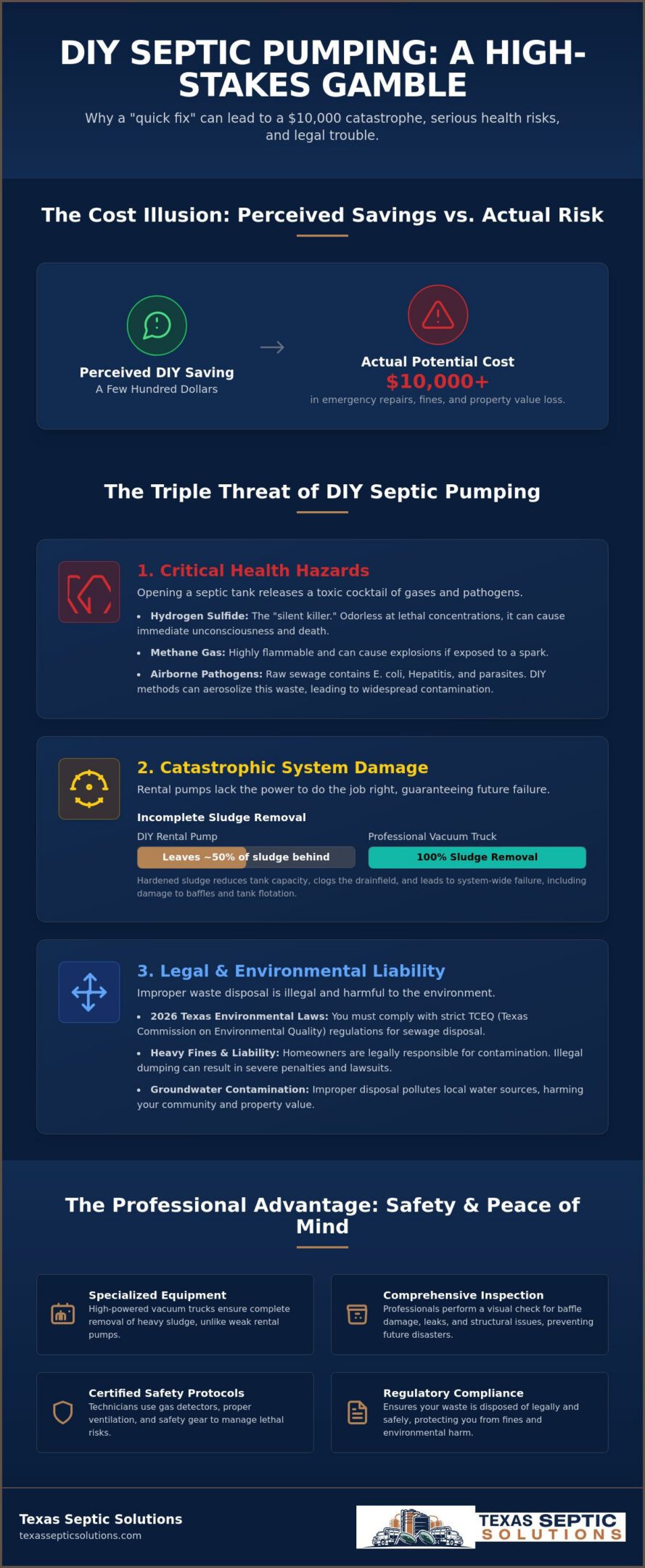
Pumping your septic system isn’t just about draining a tank of water. It is a precise process of removing accumulated solids and thick sludge that settle at the bottom over time. Many homeowners think they can save money by renting equipment, but the risks of DIY septic tank pumping often lead to expensive consequences within the first year. When you only remove the liquid effluent, the heavy sludge remains. This material quickly hardens, reducing your system’s capacity and eventually pushing solids into your drainfield. This “surface cleaning” approach is a temporary fix that fails to address the core maintenance needs of your property.
Professional service involves more than just a vacuum. It requires specialized vacuum technology designed to create enough lift to pull heavy, viscous waste from several feet underground. A septic tank functions as a delicate ecosystem. If you don’t use the right tools to clear the entire tank, you’re essentially leaving a ticking time bomb in your yard. The “cost-saving” mindset of doing it yourself usually backfires when you have to call for an emergency pump-out just 12 months later because the system has backed up again.
The Complexity of Modern Septic Systems
Modern systems require more than just a hose and a pump. Aerobic systems, which are very common in East Texas due to our clay soil, have mechanical components and multiple chambers that conventional systems don’t. One of the most common mistakes DIYers make is damaging the septic baffle. This component is essential for keeping solids out of your drainfield. If you hit it with a heavy rental hose or accidentally dislodge it, you’ll likely need an immediate septic system repair. A professional doesn’t just pump; they perform a visual inspection to ensure these components are intact and functioning correctly, something a homeowner cannot do without proper training.
The Myth of the Rental Pump
You might see a “trash pump” at a local rental shop and think it’s up to the task. It isn’t. Professional vacuum trucks use high-powered suction specifically built for septic waste. Consumer-grade pumps and hoses lack the power to reach the “sludge layer” at the bottom where the heaviest waste sits. Beyond the equipment failure, the physical toll is immense. Handling heavy concrete lids and managing high-pressure equipment without experience increases the risks of DIY septic tank pumping significantly. Without professional-grade gear, you’re likely to leave nearly half the waste behind, which defeats the entire purpose of the job.
Fatal Fumes and Pathogens: Immediate Health Risks
Opening the lid of a septic tank exposes you to more than just a bad smell. It releases a concentrated mixture of gases and airborne pathogens that can cause immediate harm. One of the most overlooked risks of DIY septic tank pumping is the “silent killer” effect of gases trapped within the system. Without the proper training and safety equipment, a simple maintenance task can quickly turn into a medical emergency. Professional teams use specialized gas detectors and ventilation because they know that what you can’t see is often the most dangerous part of the job.
Beyond the air quality, the physical structure of the tank area poses a threat. Soil around the tank can become unstable over time, especially in the high-moisture environments common in East Texas. A “cave-in” while you’re standing over an open tank is a terrifying reality that can lead to being trapped in raw sewage. This is why a professional septic system inspection is so valuable; technicians are trained to spot signs of structural weakness before the lid is even removed.
Toxic Gas Exposure
Methane and hydrogen sulfide are the primary concerns. Methane is highly flammable, but hydrogen sulfide is even more deceptive. At low concentrations, it smells like rotten eggs, but at high levels, it deadens your sense of smell entirely. You might think the air is clearing when, in reality, you’re inhaling lethal doses. If you lean over the tank to guide a rental hose, you are in the direct path of these fumes. Septic gas asphyxiation is a leading cause of tank-related fatalities. Professionals never work alone and always ensure the area is well-ventilated to prevent unconsciousness or death.
Biohazard Contamination
Raw sewage is a breeding ground for dangerous pathogens like E. coli, Hepatitis, and various parasites. When you attempt to pump a tank without professional-grade vacuum seals, microscopic spray can aerosolize into the air. This invisible mist can land on your clothes, your lawn, or even your skin. If you don’t have the right Personal Protective Equipment (PPE), you’re bringing these biohazards back into your home. Spilling untreated effluent on your yard doesn’t just kill the grass; it creates a long-term health risk for your children and pets who play in that area. To keep your home environment safe, it’s always better to rely on professional septic pumping that contains waste securely from start to finish.
System Damage and Financial Pitfalls of Self-Pumping
Saving money is a common goal for homeowners, but septic maintenance is the wrong place to cut corners. One of the most catastrophic risks of DIY septic tank pumping is a phenomenon known as “tank float.” In high-water-table areas like Houston and parts of East Texas, the ground stays saturated. If you pump a tank completely dry during the wrong conditions, the upward pressure of the groundwater can literally push the tank out of the earth. Professional technicians understand local soil hydration levels and know when it’s safe to pump and when to wait. A floated tank is a total system loss, turning a simple maintenance task into a massive septic system replacement cost that can reach five figures.
Beyond structural displacement, DIY attempts often ruin the delicate biological balance inside the tank. Your system relies on specific bacteria to break down waste. If you use the wrong tools or attempt to “scrub” the tank clean, you kill these beneficial colonies. This stops the decomposition process, causing solids to build up faster than they should. Professionals use precise vacuuming techniques that remove the waste without stripping the tank of its necessary bacterial foundation. This expertise ensures your system continues to function long after the service truck leaves your driveway.
Compromising the Drain Field
The drain field is the most expensive part of your septic system. When an amateur attempts to pump, they often stir up the “scum” layer of fats and oils without fully removing it. This agitation pushes suspended solids directly into the effluent filter or out into the lateral lines. These solids clog the soil pores in your yard, leading to permanent soil compaction and drainage failure. Professional teams use “back-flushing” to safely break up heavy solids before removal, ensuring nothing escapes into the drain field. Once a drain field is clogged with grease and solids, it rarely recovers without a full replacement.
Structural Integrity and Components
Heavy rental equipment and awkward hoses pose a physical threat to your tank’s components. It’s surprisingly easy to crack a concrete lid or puncture a plastic tank wall when you aren’t trained in equipment handling. Many modern systems also include sensitive electronics like float switches and sensors. If you snag these with a rental hose, you might find your septic tank alarm going off shortly after you finish. Repairing these internal components requires specialized knowledge and can quickly exceed the cost of a professional pump-out. In East Texas, our dense clay soils exert immense pressure on empty tanks. Professionals manage this pressure to prevent the walls from collapsing inward during the pumping process.
Texas Regulations and Environmental Liability
Texas law is clear about wastewater management, and the rules don’t stop at your property line. While the physical act of pumping is difficult, the legal requirements for waste disposal are often where homeowners find themselves in the deepest trouble. The Texas Commission on Environmental Quality (TCEQ) regulates every aspect of septic waste handling. One of the most significant risks of DIY septic tank pumping is the lack of a disposal manifest. When a professional pumps your tank, they provide a paper trail proving the waste was transported to a licensed treatment facility. Without this record, you have no legal proof that you’ve followed state environmental standards.
Environmental liability is a serious concern for East Texas property owners, especially those near the San Jacinto river basin. If raw sewage from an improper DIY attempt leaches into the groundwater, you could be held responsible for downstream contamination. The TCEQ can assess civil penalties ranging from $50 to $25,000 per day for violations of state statutes or permits. These aren’t just abstract threats; they are active enforcement tools used to protect our local water supply. Choosing to handle this yourself means you’re personally absorbing all the legal risk for any spill or improper discharge that occurs on your land.
Disposal Laws in East Texas
In Liberty and Harris Counties, illegal discharge is a criminal offense. You cannot simply dump septic waste into a trench or a back corner of your acreage. This “backyard burial” is a misdemeanor that carries fines of $50 to $200 for a first offense, but subsequent convictions can lead to fines up to $1,000 or even jail time. All septic waste must be taken to a certified treatment plant that is equipped to handle the high levels of nitrogen and pathogens found in residential sludge. Professionals maintain the specific permits required to use these facilities, ensuring your waste is processed safely and legally.
Insurance and Property Value
Your home insurance policy likely contains clauses regarding professional maintenance. If you experience a massive sewage backup and the adjuster discovers you’ve been performing DIY pumping, they may deny your claim. They view uncertified work as a failure to maintain the property correctly. Additionally, when you sell a home in Cleveland or Cypress, savvy buyers and inspectors will ask for service records. Having a documented septic system maintenance plan in place protects your property value and makes the closing process much smoother. Prospective owners want to see that a “Reliable Local Authority” has kept the system in top shape. To avoid these legal and financial headaches, it’s always best to schedule professional septic services with a team that understands Texas compliance inside and out.
The Professional Solution: Texas Septic Solutions Advantage
Choosing a professional partner means you’re no longer gambling with your home’s infrastructure. While the risks of DIY septic tank pumping range from physical injury to massive financial loss, our team provides a grounded, reliable alternative. At Texas Septic Solutions, we don’t just empty your tank; we provide a comprehensive inspection with every service. We look for early signs of baffle wear, tank cracks, or drain field saturation that an amateur would miss. Serving neighbors in Houston, Cypress, Huffman, Shepherd, and Cleveland, we take pride in keeping our East Texas communities safe and compliant.
Our process is built on accountability. When our truck pulls into your driveway, you’re getting more than a service provider; you’re getting a guardian of your home’s functionality. We’ve seen every possible scenario in the field, and we remain unfazed by the challenges of complex aerobic or conventional systems. This level of expertise is something a rental pump simply cannot provide. By choosing professional service, you ensure your waste is disposed of according to strict 2026 Texas environmental laws, keeping you clear of the legal liabilities discussed earlier.
Expertise You Can Trust
Our fleet of specialized vacuum trucks is designed to handle the unique challenges of East Texas terrain. Whether your system is tucked behind a line of pines or sits in a low-lying area, our high-reach hoses and high-powered suction get the job done right. Our certified technicians are trained to identify system fatigue before it leads to a catastrophic backup. We also understand that emergencies don’t wait for business hours. That’s why we offer 24/7 availability. If a DIY attempt has already gone wrong, we’re ready to step in and provide immediate septic system repair to stabilize your home and protect your property.
Protecting Your Investment
A proactive septic system maintenance Texas plan is the most effective way to avoid the five-figure repair bills that follow a failed system. We handle the manifest records, the heavy lifting, and the technical inspections so you don’t have to worry about the risks of DIY septic tank pumping. Join the hundreds of satisfied homeowners in Shepherd and the surrounding areas who value peace of mind over the false economy of DIY work. We’re built for both the mundane tasks of upkeep and the high-pressure demands of unexpected failures. Contact Texas Septic Solutions for professional pumping today and let us protect your home, your health, and your wallet.
Secure Your Property and Peace of Mind Today
Maintaining a healthy septic system is about more than just checking a box on your home maintenance list. It’s about protecting your family’s health from toxic fumes and ensuring your property remains a safe, valuable asset. We’ve explored how the risks of DIY septic tank pumping extend far beyond a messy afternoon, often leading to structural damage and severe legal penalties under Texas law. By trusting a local authority, you ensure every gallon of waste is handled with TCEQ-compliant disposal methods and that your system receives a professional inspection to prevent future failures.
Texas Septic Solutions is here to take the stress out of utility management. Whether you’re in Cleveland, Houston, Cypress, Huffman, or Shepherd, our team is ready to provide the reliable service your home deserves. We offer 24/7 emergency service to ensure you’re never left dealing with a system failure alone. Don’t wait for a small issue to become a $10,000 repair bill.
Schedule Your Professional Septic Pumping in East Texas
Let’s work together to keep your system efficient, your home compliant, and your yard safe for years to come.
Frequently Asked Questions
Is it legal to pump my own septic tank in Texas?
It is illegal to transport or dispose of septic waste yourself in Texas. The Texas Commission on Environmental Quality (TCEQ) requires only licensed professionals to handle, haul, and dispose of this waste at certified facilities. While you can physically open your own tank, you cannot legally complete the disposal process. Attempting to dump waste on your property is a misdemeanor that can lead to significant fines or even jail time.
How much money do I actually save by pumping my own septic tank?
You might save a small amount on the initial service fee, but you often lose money in the long run. Rental fees for specialized pumps and hoses add up quickly. More importantly, DIY attempts don’t include the comprehensive inspection that identifies small leaks or baffle issues. The financial risks of DIY septic tank pumping become clear when a missed minor issue turns into a $10,000 drain field replacement.
What happens if I accidentally damage my septic tank while pumping it?
Damaging your tank during a DIY attempt usually leads to immediate system failure and expensive repairs. Cracking a concrete lid or puncturing a plastic tank wall requires professional intervention. You might also accidentally snag internal components like float switches or effluent filters. These mistakes trigger system alarms and can cause raw sewage to back up into your home, requiring emergency repairs that far exceed the cost of professional pumping.
Can septic tank gases really be fatal for homeowners?
Septic gases like methane and hydrogen sulfide are absolutely fatal under the right conditions. Hydrogen sulfide is particularly dangerous because it deadens your sense of smell at high concentrations, making you think the air is safe. Inhaling these concentrated fumes while leaning over an open tank can cause immediate unconsciousness or asphyxiation. Professionals use gas detectors and specialized ventilation equipment to manage these “silent killers” safely during every service call.
How do I dispose of the waste if I pump the tank myself?
You cannot legally dispose of septic waste yourself on your property or in storm drains. Texas law requires all septage to be taken to a licensed treatment facility that can process high levels of pathogens and nitrogen. Professionals maintain the specific permits and manifest records required to use these sites. Illegal dumping is a criminal offense in Texas and can result in heavy civil penalties from environmental regulators.
What are the signs that my septic tank was not pumped correctly?
Common signs of an improper pump-out include persistent sewage odors, slow drains, or lush green patches over your drain field. If the heavy sludge layer at the bottom wasn’t fully removed, the tank will fill up and cause backups almost immediately. Standard rental pumps often lack the power to pull out these settled solids, leaving the most problematic waste behind to clog your system’s pipes and soil.
How often should a professional pump my septic tank in East Texas?
Most East Texas homeowners should have their tanks professionally pumped every 3 to 5 years. However, aerobic systems are more complex and require three inspections per year by a licensed provider to remain compliant with state law. Factors like your household size and water usage will determine your specific needs. Regular pumping prevents solids from escaping into the drain field, which is essential for the long term health of your system.
Can I use a standard pool pump or trash pump for my septic tank?
Standard pool or trash pumps are not designed to handle the thick sludge and heavy solids found in a septic tank. These consumer-grade pumps will likely clog, overheat, or burn out within minutes. Professional vacuum trucks use industrial suction to clear the entire tank safely and effectively. Using the wrong equipment is one of the major risks of DIY septic tank pumping that leads to broken tools and an unfinished, messy job.