
The Best Septic Safe Toilet Bowl Cleaners: 2026 Homeowner Guide
What if the very product you use to keep your bathroom “clean” is actually the biggest threat to your home’s most expensive utility system? It’s a frustrating reality for many homeowners across the Greater Houston area. You want a sparkling white bowl, but the harsh chemicals often required to cut through stubborn Texas hard water stains can act like a poison for your septic tank. Choosing the wrong septic safe toilet bowl cleaner doesn’t just clear away grime; it can wipe out the beneficial bacteria that prevent your system from backing up or requiring a costly, unplanned repair.
We know you want a home that’s both sanitary and functional without the constant fear of a plumbing disaster. You shouldn’t have to choose between a fresh bathroom and a healthy tank. This 2026 guide will show you exactly how to find products that actually do what they promise. We’ll explain why most “natural” labels are just marketing fluff, which third-party certifications you can actually trust, and which specific ingredients will keep your system running smoothly. You’ll finish this article with a clear plan to maintain your home like a pro while protecting your long-term investment.
Key Takeaways
- Understand how standard cleaners act as bactericides and why protecting your tank’s biological ecosystem is the first step in preventative maintenance.
- Learn to identify a truly septic safe toilet bowl cleaner by looking for third-party certifications instead of unregulated marketing claims.
- Discover why concentrated gels are the most effective solution for tackling tough Texas hard water stains without harming your system.
- Recognize the warning signs, like gurgling toilets or slow drains, that indicate you need professional pumping rather than just a change in cleaning products.
Why Your Choice of Toilet Bowl Cleaner Matters for Your Septic System
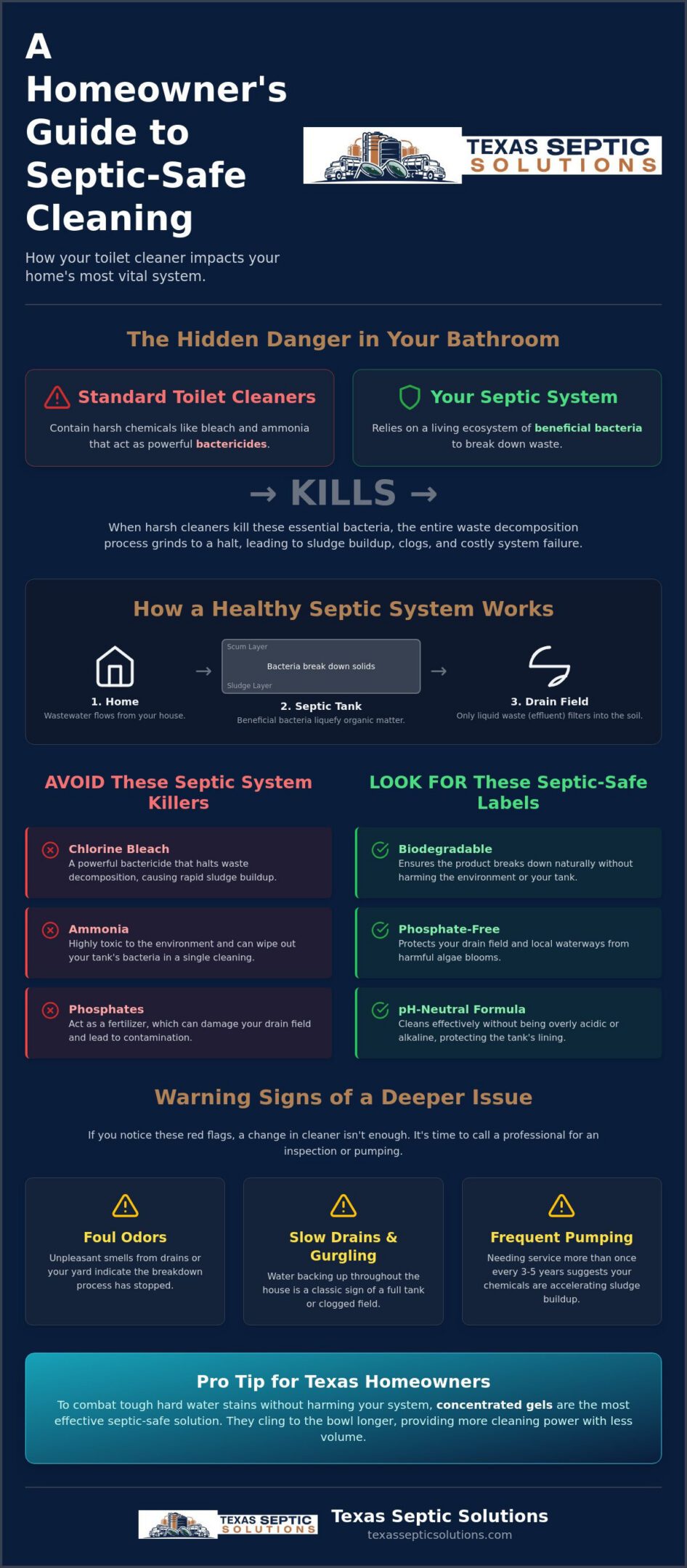
Your septic tank is far more than a buried box of waste. It’s a complex, living ecosystem powered by anaerobic bacteria that work around the clock. These microscopic workers have one job: to break down solids into liquid. When you use standard cleaning products, you’re often introducing active bactericides like bleach or ammonia into this delicate environment. These chemicals don’t distinguish between “bad” germs on your toilet seat and the “good” microbes in your tank. They kill everything they touch. We define a septic safe toilet bowl cleaner as a product formulated to maintain a neutral pH and preserve the biological balance required for waste decomposition.
When the bacterial colony in your tank dies off, the natural breakdown process grinds to a halt. Instead of being liquefied, solids begin to accumulate rapidly. This leads to an accelerated buildup of sludge that can eventually migrate out of the tank and into your drain field. Once solids reach the soil, they cause permanent damage that can lead to complete system failure. Choosing the right cleaner is the simplest way to prevent this chain reaction from starting.
The Role of Bacteria in Waste Breakdown
These bacteria are the engine of your home’s utility system. They liquefy organic matter, ensuring that only effluent (liquid waste) moves into your leach field. If these bacteria are wiped out, solids remain solid. This leads to heavy sludge buildup that can eventually migrate into your soil, clogging the “biomat” layer that allows water to filter back into the earth. For homeowners in the Greater Houston area, this is especially critical during the high-usage summer months. Increased water flow from guests or laundry can easily overwhelm a system where the bacterial colony has been weakened by harsh chemicals. Understanding how septic systems work helps illustrate why protecting these microbes is the foundation of preventative care.
Signs Your Cleaner is Killing Your System
You’ll know if your cleaning routine is backfiring by watching for a few key red flags. Foul odors coming from your drains or the yard near your drain field are often the first sign that the biological breakdown has stopped. You might also notice slow drains throughout the house, even when there isn’t a physical clog in the pipe. If you find yourself needing emergency septic pumping 24/7 more frequently than once every three to five years, your choice of chemicals is likely the culprit. Using a septic safe toilet bowl cleaner ensures that your tank stays healthy between professional service visits, saving you from the stress of a sudden, messy backup.
Ingredients to Look For (and Avoid) in Septic Safe Cleaners
Finding a septic safe toilet bowl cleaner isn’t as simple as grabbing the first bottle with a green leaf on the label. Since the term “septic safe” isn’t strictly regulated by federal law, the burden of proof falls on the homeowner to check the ingredient list. You should prioritize labels that explicitly state the product is “Biodegradable,” “Phosphate-Free,” and “Non-Toxic.” For the most reliable baseline, the EPA provides clear guidance on septic maintenance that warns against flushing high volumes of toxic household chemicals.
Chlorine bleach is the single most destructive substance you can flush into a healthy septic tank. While it’s great at whitening, it’s a powerful bactericide that kills the very microbes your system needs to function. Beyond the biological impact, highly acidic or alkaline cleaners can slowly degrade the concrete or plastic lining of your tank over decades. We recommend sticking to pH-neutral formulas that clean effectively without compromising the physical integrity of your infrastructure. If you’re concerned about your system’s current condition, a professional septic inspection is the best way to verify your tank’s health.
The ‘Big Three’ Ingredients to Avoid
- Chlorine Bleach: Even small, frequent doses from “drop-in” tablets can halt the decomposition process, leading to rapid sludge buildup and potential backups.
- Ammonia: This chemical is highly reactive and toxic to the environment. It can kill off large portions of your tank’s bacterial colony in a single cleaning session.
- Phosphates: These minerals act as a fertilizer. When they reach your drain field, they can trigger algae growth that clogs the soil and prevents water from filtering properly.
Safe and Effective Alternatives
In the Greater Houston area, hard water stains from calcium and magnesium are a constant headache. You don’t need harsh chemicals to keep your porcelain white. Look for these septic-friendly alternatives instead:
- Citric and Lactic Acid: These are natural descalers. They dissolve mineral scale and hard water rings without harming your tank’s delicate flora.
- Enzyme-based Cleaners: These products contain beneficial bacteria and enzymes that actually “feed” the biology of your tank while you clean the bowl.
- Essential Oils: Use cleaners scented with lemon, tea tree, or peppermint oils. They provide a fresh scent without the synthetic phthalates found in traditional “blue” cleaners.
Roundup: The Best Types of Septic-Safe Cleaners for 2026
Choosing the right septic safe toilet bowl cleaner in 2026 means balancing cleaning power with biological safety. You have more options than ever, but they aren’t all created equal. In our experience servicing systems across Greater Houston, we’ve found that the delivery method of the cleaner often determines how well it handles our local water conditions. Whether you prefer a store-bought solution or a homemade mixture, the goal remains the same: keep the porcelain white without starving your tank’s bacteria.
Concentrated gels are currently the top choice for many Texas homeowners. Because our local water is notoriously high in mineral content, stubborn scale and hard water rings are common. Gels are designed to cling to the sides of the bowl, allowing the active ingredients to break down calcium deposits over several minutes. Eco-friendly pods offer a different advantage; they’re pre-measured for convenience and often contain concentrated enzymes that provide a small biological boost to your system with every flush. For daily maintenance, plant-based sprays are ideal for light soilage, while professional-grade bio-cleaners remain the gold standard for those who want to prioritize long-term system health above all else.
Commercial Septic-Safe Options
When you’re walking the aisles of a Houston grocery store, don’t let the “green” packaging fool you. Many brands use “septic-safe” as a marketing term without undergoing rigorous testing. To be sure products are safe for your specific system, we recommend looking for third-party certifications like the EPA Safer Choice or Green Seal labels. You can also verify products are safe by requesting a Material Safety Data Sheet (MSDS) from the manufacturer. This document provides a full chemical breakdown, helping you spot hidden bactericides that might not be listed on the front of the bottle.
DIY Septic-Safe Cleaning Recipes
If you prefer total control over what goes down your drains, DIY recipes are a reliable and cost-effective alternative. The classic baking soda and vinegar method is a staple in many households. It’s completely safe for your tank, though it often lacks the “punch” needed to remove heavy mineral buildup. For those tougher stains, we suggest using Borax. It’s a natural mineral that acts as an effective scrubber without being abrasive to your pipes or toxic to your bacteria. Another great option is a simple solution of Castile soap and water. It’s incredibly gentle on your tank’s ecosystem and your hands, making it a perfect choice for weekly upkeep.
Best Practices: How to Clean Your Toilet Without Damaging Your System
Keeping your bathroom sanitary shouldn’t be a battle against your home’s infrastructure. While choosing a septic safe toilet bowl cleaner is the first step, how you use that product determines whether your tank stays healthy or heads toward a backup. We recommend a “less is more” approach. Instead of dumping large volumes of product into the bowl, use only what’s necessary and allow the cleaner to sit for the full recommended time. This sit time lets the natural acids or enzymes do the heavy lifting, reducing the need for excessive chemical volume.
We also urge you to skip the “silent killers” of septic health. Flushable wipes, regardless of what the packaging claims, don’t break down fast enough for a septic tank and often lead to clogs. Similarly, blue in-tank tablets release a constant stream of chemicals with every flush, which can slowly sterilize your tank’s bacterial colony. Sticking to a regular septic system maintenance Texas schedule is the most reliable way to ensure your cleaning habits aren’t causing hidden damage.
Frequency and Volume Matters
Consistency beats intensity every time. A light weekly cleaning is far better for your system than a heavy monthly scrubbing that requires massive amounts of cleaner. This is especially critical during periods of heavy Texas rain when the water table is high. When the ground is saturated, your septic system is already under stress; adding a large chemical load can disrupt the settling process. Follow the “One-Flush Rule” by flushing immediately after scrubbing to ensure the septic safe toilet bowl cleaner is properly diluted by the tank’s water volume rather than entering as a concentrated slug.
Dealing with Hard Water Stains in Texas
If you live in Cypress or Cleveland and rely on well water, you’re likely fighting stubborn iron and calcium deposits. These rings often tempt homeowners to reach for the harshest chemicals available. Don’t do it. A wet pumice stone is a fantastic, chemical-free alternative for removing mineral buildup without harming your bacteria. Just keep the stone lubricated with water to avoid scratching the porcelain. If you notice that even careful cleaning isn’t fixing slow drains or odors, it’s likely time for professional septic system pumping to clear out accumulated solids and restore balance.
When Cleaning Isn’t Enough: Signs of a Deeper Septic Issue
You can scrub until the porcelain shines, but a clean bowl won’t stop a tank that’s reached its physical limit. While using a septic safe toilet bowl cleaner is vital for preserving your system’s biology, it’s important to recognize when your problems are structural rather than cosmetic. A sparkling toilet can still be the site of a messy backup if the tank is full or the drain field is failing. No cleaner can fix a structurally damaged drain field, so understanding the warning signs of a deeper issue is your best defense against a utility disaster.
If you hear a rhythmic gurgling sound after you flush, that’s your system telling you it’s struggling. This sound usually indicates that air is being pushed back through the pipes because the tank is full or a filter is clogged. Similarly, if you notice patches of bright green, spongy grass over your tank or drain field, your system is likely leaking nutrient-rich effluent to the surface. In the Greater Houston area, where heavy rains can saturate the soil, we recommend a professional inspection every one to three years to catch these issues before they turn into emergencies.
Troubleshooting Persistent Odors
Persistent smells in your bathroom are often misdiagnosed. If the odor is localized strictly around the base of the toilet, you might just need to replace the wax ring that seals the unit to the floor. However, if the smell is widespread or strongest near your yard’s vent stack, it’s time to consider a professional septic system repair. Your plumbing’s P-trap is designed to hold a small amount of water to block septic gases from entering your home; if those gases are bypassing the trap, your system’s ventilation or pressure balance is likely compromised.
Professional Pumping: The Ultimate Solution
A septic safe toilet bowl cleaner is a great tool for daily maintenance, but it isn’t a magic wand for a neglected tank. Even the most efficient bacterial colony can’t break down inorganic solids, plastics, or the “sludge” that naturally accumulates over time. This heavy material must be physically removed to prevent it from flowing into and ruining your drain field. At Texas Septic Solutions, we take a comprehensive approach to routine maintenance and emergency care, ensuring your system remains a reliable part of your home for decades. Don’t wait for a backup to disrupt your life—Schedule your septic pumping in Houston or Cleveland today!
Protect Your Home with Smarter Cleaning Habits
Maintaining a functional bathroom doesn’t have to put your septic system at risk. By prioritizing a truly septic safe toilet bowl cleaner and avoiding destructive chemicals like chlorine bleach, you’re doing more than just cleaning; you’re protecting one of your home’s most vital utilities. Remember that consistency and using the right ingredients, such as citric acid or enzymes, will always outperform harsh, high-volume scrubbing. However, even the best cleaning routine can’t replace the need for professional oversight and periodic pumping.
If you’ve noticed slow drains or gurgling sounds, it’s time to move beyond the spray bottle. Our team provides local expertise and 24/7 emergency response throughout Houston, Cleveland, and Cypress. We’re here to be your partner in preventative care, ensuring your system remains efficient for years to come. Keep your system healthy with expert maintenance from Texas Septic Solutions. As professional maintenance and pumping experts, we’re ready to handle everything from routine inspections to unexpected failures. With a proactive plan and the right products, you can enjoy total peace of mind regarding your home’s maintenance.
Frequently Asked Questions
Is Clorox toilet bowl cleaner septic safe?
Traditional Clorox toilet bowl cleaners are generally not septic safe because they contain high concentrations of sodium hypochlorite, also known as bleach. This chemical is a powerful bactericide that kills the beneficial microbes in your tank. If you prefer this brand, only use their specific “Free & Clear” versions that are explicitly labeled as phosphate-free and safe for septic systems.
Can I use vinegar and baking soda to clean my toilet if I have a septic tank?
You can safely use vinegar and baking soda to clean your toilet without any risk to your septic system. This combination is non-toxic and won’t disrupt the biological balance of your tank. While it’s a great natural alternative, it may require more physical scrubbing to remove the heavy mineral scale often found in Texas water compared to a specialized septic safe toilet bowl cleaner.
How often should I clean my toilet when on a septic system?
We recommend a light cleaning once per week to stay ahead of stains and grime. Frequent light maintenance is much better for your system than a monthly “deep clean” that requires large volumes of product. By cleaning weekly, you can use smaller amounts of cleaner, which ensures your tank’s bacteria aren’t overwhelmed by a sudden influx of foreign substances.
Will antibacterial soap kill my septic tank bacteria?
Antibacterial soaps are specifically designed to kill bacteria, which makes them a threat to the living ecosystem inside your septic tank. When used in large quantities, these soaps can thin out the microbial colony that liquefies solids. It’s much safer to use biodegradable, non-antibacterial soaps that clean your hands and home without harming your system’s biological processing power.
What happens if I accidentally use bleach in my septic system?
A single, accidental use of bleach will kill some bacteria, but it likely won’t cause a total system collapse. Your tank’s microbial population can usually recover from a one-time event if you return to safe habits immediately. However, repeated use will stop the decomposition process entirely, leading to rapid sludge buildup and eventually requiring a professional to restore the tank’s health.
Are ‘flushable’ wipes really safe for my septic tank?
No, “flushable” wipes are not safe for septic tanks and should never be flushed. These wipes are made of synthetic fibers that don’t break down quickly enough in a septic environment. They often get caught in the inlet pipe or the effluent filter, leading to messy backups that require emergency service to clear. Always dispose of wipes in the trash.
Do I need to add septic ‘boosters’ or enzymes if I use safe cleaners?
You don’t strictly need to add boosters or enzymes if you’re using a septic safe toilet bowl cleaner and your system is healthy. A well-maintained tank naturally produces the bacteria it needs to function. However, if your system has recently been exposed to harsh chemicals or heavy usage, an enzyme treatment can help support the natural breakdown process until the colony stabilizes.
What is the best way to remove hard water rings in a septic-safe way?
The best way to remove stubborn hard water rings without chemicals is using a wet pumice stone. This physical scrubbing method effectively lifts calcium and iron deposits common in Cypress and Cleveland wells without introducing any toxins into your plumbing. For a liquid solution, look for cleaners powered by citric acid, which dissolves mineral scale while remaining completely safe for your tank.