
The Best Septic Safe Laundry Detergents: A 2026 Homeowner’s Buying Guide
Could your favorite “eco-friendly” laundry detergent actually be the reason your septic system is failing? It’s a frustrating reality for many Texas homeowners who find that even products labeled as natural can disrupt the delicate bacterial balance of their tanks. You shouldn’t have to choose between clean clothes and a functional plumbing system. Finding a truly septic safe laundry detergent is about more than just reading the front of the bottle; it’s about understanding the chemistry that keeps your system’s bacterial engine running smoothly.
With the TCEQ updating OSSF regulations in early 2026, staying proactive about what goes down your drain is more important than ever. We understand the worry that comes with potential backups and the confusion caused by misleading marketing. This guide promises to clear the air by showing you exactly which ingredients to avoid to prevent system damage. You will learn the critical differences between liquid and powder formulas and get a clear list of the best products to keep your home functional and your maintenance costs low. Let’s look at how the right choices today can save you from expensive repairs tomorrow.
Key Takeaways
- Identify the specific chemicals that turn your septic tank into a sterile environment and stop the natural breakdown of waste.
- Discover why liquid formulas are the preferred septic safe laundry detergent over powders that contain non-dissolvable fillers.
- Learn how to adjust your washing schedule to avoid hydraulic overload and keep solids from escaping into your drain field.
- Understand how your choice of detergent impacts your long-term maintenance costs and the frequency of professional pumping.
Understanding the Science: How Laundry Detergent Affects Your Septic System
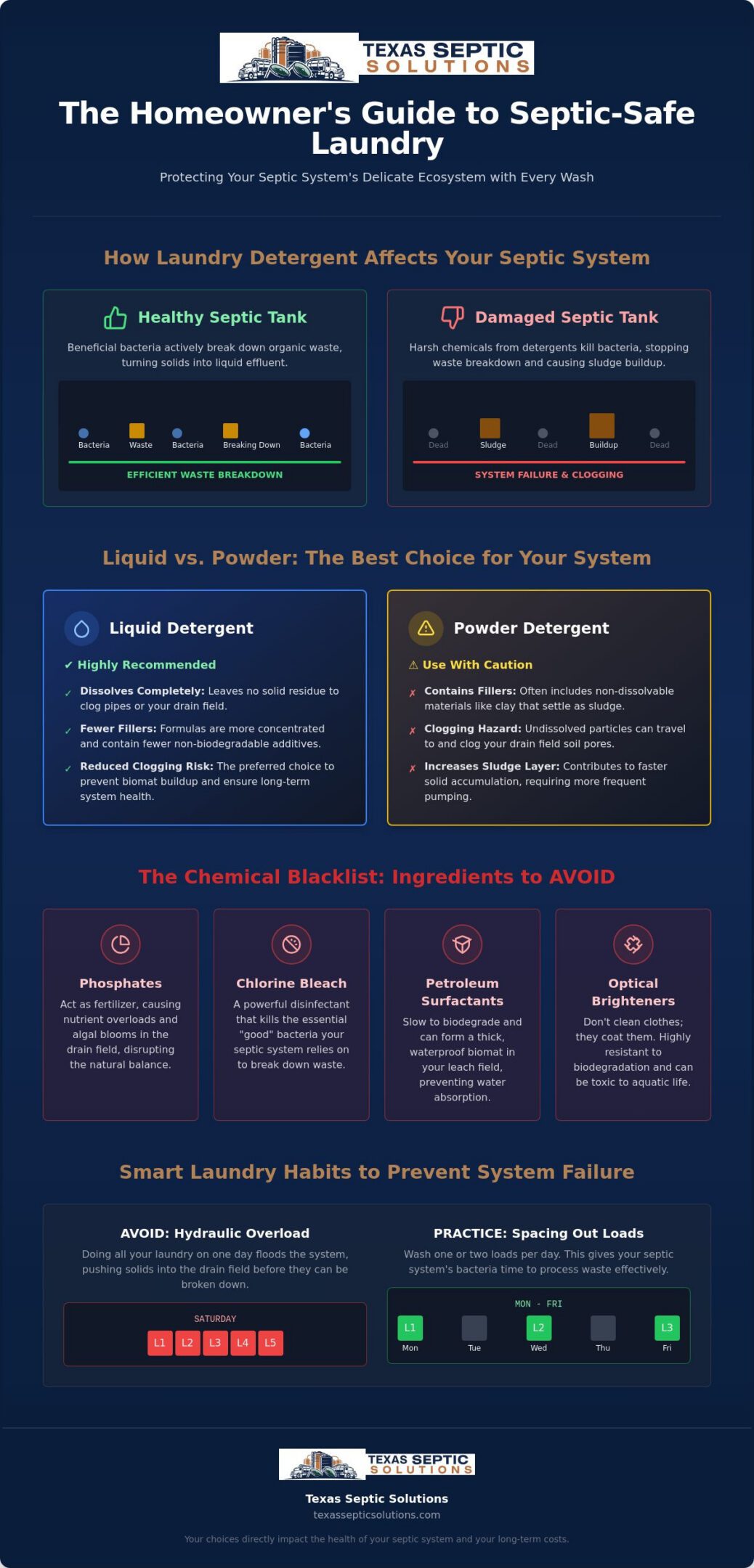
Your septic tank functions as a complex, living ecosystem. It isn’t just a holding container; it’s a biological processor where billions of beneficial bacteria work 24/7 to break down organic waste. When you understand how septic systems work, it becomes clear that every drop of water from your washing machine impacts this delicate balance. Harsh chemicals found in standard detergents can turn this thriving environment into a sterile wasteland. When the bacteria die, the waste breakdown stops, leading to sludge buildup and system failure.
There are two primary ways the wrong detergent damages your home. First is chemical toxicity, where ingredients like chlorine bleach or synthetic fragrances kill the microbial colonies. Second is physical clogging. Many cheaper detergents use “fillers” such as clay or sodium sulfate that don’t dissolve. These solids settle in your tank or, worse, travel out to your soil. Ultimately, a septic safe laundry detergent is defined as a formula that biodegrades quickly without harming microbial colonies.
The Role of Beneficial Bacteria in Waste Breakdown
In Texas, homeowners typically manage either conventional anaerobic systems or aerobic treatment units. Anaerobic bacteria work slowly in the absence of oxygen to liquefy solids, while aerobic systems use air pumps to support more aggressive bacteria. Both types are the “engine” of your system. They turn heavy solids into a clarified liquid called effluent. If your detergent choices stall this engine, solids will accumulate much faster than they should. This often results in the need for more frequent pumping or, in extreme cases, a total system backup that requires emergency repair.
The Drain Field Connection: Why Clogging Starts in the Laundry Room
The damage doesn’t stop inside the tank. When undissolved detergent particles and dead bacterial matter escape the tank, they head straight for your leach field. This creates a thick, slimy layer known as “biomat.” While some biomat is normal, an overgrowth triggered by poor laundry habits will clog soil pores. Once the soil can no longer absorb water, you’ll see soggy spots in the yard or experience slow drains. This is why choosing a septic safe laundry detergent is a cornerstone of septic system maintenance Texas residents rely on to avoid total field replacement.
The Septic-Safe Buying Guide: What to Look for on the Label
Don’t let a colorful label or a picture of a leaf fool you into thinking a product is safe for your home’s wastewater system. While many brands use “natural” imagery, the technical reality inside your tank is what matters most. A true septic safe laundry detergent must be free of chemicals that act as biocides. Your goal is to find a formula that cleans your clothes without sterilizing the tank that processes your family’s waste.
The term “biodegradable” can be a bit of a trap. Technically, almost everything biodegrades eventually, but your septic system needs ingredients to break down within the days they spend in the tank. If a detergent takes months to decompose, it will simply settle as sludge or flow out into your drain field. To protect your investment, you should prioritize pH-neutral formulas. Your tank operates best in a range between 6.0 and 9.0 pH. Extreme alkalinity can shock the microbial colonies, leading to a “dead” tank that requires professional septic system pumping to reset.
The Chemical Blacklist: Ingredients to Avoid
- Phosphates: These minerals act as fertilizers. While they help clean clothes, they cause nutrient overloads in the soil and can disrupt the natural bacterial balance in your tank.
- Chlorine Bleach: This is a powerful disinfectant designed to kill bacteria. Unfortunately, it doesn’t distinguish between “bad” germs on your clothes and the “good” bacteria in your septic system.
- Petroleum-Based Surfactants: These synthetic foaming agents are derived from crude oil. They are notorious for being slow to break down and can contribute to the development of a thick, waterproof biomat in your leach field.
- Optical Brighteners: These chemicals don’t actually clean; they just coat fabrics to reflect light and make whites look “brighter.” They are highly resistant to biodegradation and can be toxic to the environment.
Recommended Certification Marks for Homeowners
Instead of guessing, look for third-party verifications. The EPA’s Safer Choice program is one of the most reliable standards. It ensures that every ingredient has been vetted for environmental safety and septic compatibility. You should also look for the USDA Certified Biobased label, which confirms the product is made from plant-derived ingredients rather than petroleum. For a deeper dive into specific brands, the Environmental Working Group (EWG) provides detailed ratings that can help you avoid hidden toxins. Choosing concentrated formulas is another smart move. These products reduce the total chemical load and amount of water entering your system with every wash, supporting long-term health.
Liquid, Powder, or Pods? Comparing Detergent Formats for Septic Health
Liquid detergents represent the safest choice for any homeowner on a septic system. Because they are already in a fluid state, they dissolve completely in both cold and hot water cycles. This ensures that no solid particles settle in the bottom of your tank or travel into your drain field. Liquid detergent is generally superior for preventing mechanical clogs because it fully integrates with the wash water before it ever reaches your plumbing. It’s the most reliable way to ensure your septic safe laundry detergent actually does its job without leaving a physical footprint behind.
When you’re shopping, look for products that carry the EPA’s Safer Choice program seal in a liquid format. These have been tested not only for chemical safety but also for their physical impact on wastewater infrastructure. Choosing a liquid formula is a simple way to avoid the mechanical issues that often lead to expensive service calls.
The Powder Problem: Fillers and Solubility
Powdered detergents are often the most economical option, but they come with a hidden cost for septic owners. Manufacturers frequently use “bulking agents” like clay or sodium sulfate to give the powder its volume. These ingredients are non-biodegradable and often fail to dissolve completely in modern, water-saving machines. Over time, this undissolved powder can clump together in your pipes, forming hard, rock-like “stones” that restrict flow and eventually lead to a total blockage.
If you prefer using a powder, you must take extra precautions to protect your system. Always use warm or hot water washes to encourage better solubility, as cold water often leaves the granules intact. However, even with hot water, the risk of sediment buildup remains high. We recommend switching to a liquid septic safe laundry detergent to eliminate this physical threat to your system’s longevity and keep your pipes clear.
The Pod Controversy: Casing Residue and Microplastics
Laundry pods are incredibly convenient, but they present a unique challenge for septic health. The outer casing is typically made of Polyvinyl Alcohol (PVA), a plastic-like material designed to dissolve in water. In reality, pods don’t always break down fully, especially in high-efficiency washers that use less water. This can lead to “slugs” of highly concentrated detergent hitting your tank all at once, which shocks the beneficial bacteria colonies.
Our technicians at Texas Septic Solutions often find undissolved pod remains and gummy plastic residue during routine septic tank pumping. This residue can coat the interior of your pipes and the tank’s baffles, eventually leading to clogs that require professional intervention. For the best long-term results, sticking to traditional liquid measurements is the most reliable way to protect your home’s functionality.
Beyond the Bottle: Laundry Habits to Prevent System Failure in Texas
Choosing the right septic safe laundry detergent is only half the battle. Even the most eco-friendly formula can’t save a system that is being overwhelmed by poor washing habits. Many homeowners in the Houston and Cleveland areas fall into the trap of the “Laundry Day” myth, where they save a week’s worth of clothes for a single marathon session on Saturday. This practice is a leading cause of hydraulic overload. When you send five or six loads of water into your tank in a few hours, you don’t give the solids time to settle. The resulting surge flushes grease, lint, and undissolved waste directly into your drain field, where it can cause permanent damage.
Spacing Out Your Loads for Bacterial Recovery
The most effective way to protect your system is the “One Load Per Day” rule. Your septic tank is a settling chamber that requires time and stillness to separate solids from liquids. By spacing out your laundry, you allow the beneficial bacteria to process the organic matter without being constantly diluted by fresh greywater. If you start seeing soggy spots in your yard or notice your drains are running slower than usual, your tank is likely struggling with too much water at once. Spreading your chores throughout the week ensures the “bacterial engine” we discussed earlier stays healthy and active.
Texas Water Hardness and Your Septic System
Homeowners in Cypress, Huffman, and Shepherd often deal with significant water hardness. The high mineral content in our local water can make it difficult for detergents to suds up properly, which often tempts people to use “extra” detergent to get clothes clean. This is a mistake. Excess detergent, even a septic safe laundry detergent, adds an unnecessary chemical load to your tank and can lead to scaling in your pipes.
Instead of adding more soap, consider using half a cup of distilled white vinegar in the rinse cycle. Vinegar acts as a natural water softener and fabric conditioner that won’t harm your tank’s microbial balance. It’s a much safer alternative to commercial fabric softeners, which often contain petroleum-based chemicals that coat the interior of your system and lead to a need for septic system repair. If you are concerned about how your local water is affecting your system’s health, you can contact us for a system inspection to ensure everything is flowing correctly.
By combining smart product choices with better washing schedules, you significantly reduce the stress on your home’s infrastructure. These small adjustments in your daily routine are the best way to avoid the high costs of unexpected failures and keep your system running for decades.
Professional Maintenance: When Detergent Choice Isn’t Enough
While switching to a septic safe laundry detergent is a vital step for your home’s health, it isn’t a substitute for professional oversight. Even the most biodegradable products leave behind a small amount of residue that accumulates over time. If your tank is already near capacity, no amount of “green” cleaning will prevent a backup. Integrating your household choices into a comprehensive septic system maintenance plan is the only way to ensure long-term reliability and avoid the stress of unexpected utility failures.
If you notice gurgling sounds in your pipes or faint sewage odors near your washing machine, these are red flags. They often indicate that years of detergent fillers or chemical imbalances have already compromised your system’s efficiency. In Cleveland and Houston, where soil conditions vary significantly, these issues can escalate quickly if left unaddressed. Proactive care is always more affordable than an emergency replacement of your drain field.
The Importance of Regular Pumping and Inspections
Even with the best habits, non-biodegradable solids known as “sludge” eventually fill the bottom of your tank. Detergents simply cannot break these down. During a professional inspection, our technicians check the sludge levels and the health of your tank’s baffles to ensure solids aren’t escaping. For a typical family of four doing daily laundry, we generally recommend pumping every three to five years. This prevents the “sludge layer” from rising high enough to clog the exit pipes and flood your yard with wastewater.
Contact Texas Septic Solutions for Expert Care
We take pride in being a dependable partner for homeowners across Southeast Texas. Whether you need a routine check-up or find yourself facing a midnight emergency, we’re built to respond. Our team provides 24/7 emergency septic service to handle unexpected failures before they become property-wide disasters. We understand the local landscape and the specific challenges Texas homeowners face with their utility systems.
We currently serve neighbors in Cleveland, Houston, Cypress, Huffman, and Shepherd. Our goal is to provide straightforward, local expertise that takes the stress out of home upkeep. Don’t wait for a backup to tell you your tank is full or that your septic safe laundry detergent isn’t enough to overcome years of neglect. Schedule your routine pumping or system inspection today to keep your home functional and your family comfortable.
Secure Your Home’s Infrastructure Today
Choosing a septic safe laundry detergent is one of the easiest ways to protect your property investment. By avoiding harsh chemical additives and switching to liquid formulas, you directly support the beneficial bacteria that keep your tank functional. Remember that small changes, like spacing out your laundry loads and using vinegar as a natural softener, prevent the hydraulic overload that leads to messy backups. These proactive habits are your first line of defense against costly repairs and system failures.
However, even the most careful habits can’t replace the need for periodic professional care. Our team at Texas Septic Solutions brings expert local knowledge of Texas soil and regulations to every job. We offer comprehensive maintenance plans designed for long-term savings and provide 24/7 emergency septic service for those times when things go wrong. Whether you are in Cleveland, Houston, or the surrounding areas, we are here to ensure your system remains a silent, reliable part of your home.
Keep your system running smoothly; Schedule a Septic Inspection with Texas Septic Solutions to verify your tank’s health and plan for the future. Taking action now prevents headaches later and keeps your home running exactly as it should.
Frequently Asked Questions
Is Gain or Tide laundry detergent safe for septic systems?
Most standard Gain and Tide liquid detergents are safe for septic systems when used in moderate amounts. You should avoid versions that contain added bleach or heavy disinfectants, as these can kill the beneficial bacteria in your tank. While these brands are functional, they often contain synthetic surfactants that take longer to break down than plant-based alternatives. Always follow the recommended dosage to prevent excessive sudsing.
Can I use bleach in my laundry if I have a septic tank?
You can use small amounts of bleach occasionally, but regular use will harm your system’s bacterial balance. Chlorine bleach is a powerful disinfectant designed to kill germs, which means it also destroys the microbes that break down waste in your tank. If you need to brighten whites, try switching to an oxygen-based bleach or using distilled white vinegar. These alternatives are much safer for long-term system health.
Are laundry pods bad for septic systems?
Laundry pods are generally discouraged because their Polyvinyl Alcohol (PVA) coatings don’t always dissolve completely. In many high-efficiency washers, these plastic-like casings can remain partially intact and create a gummy residue in your pipes or tank baffles. For the most reliable results, we recommend using a high-quality liquid septic safe laundry detergent. Liquids integrate fully with the water and leave no physical debris behind to cause clogs.
What is the best natural alternative to fabric softener for septic owners?
Distilled white vinegar is the best natural alternative to commercial fabric softeners for any septic owner. Standard fabric softeners often contain petroleum-based chemicals and oils that coat the interior of your tank and contribute to sludge buildup. Vinegar naturally softens fabrics and removes soap residue without harming your tank’s microbial colonies. It’s an affordable, effective way to keep your clothes soft and your plumbing clear of greasy films.
How many loads of laundry can I do a day with a septic system?
You should aim to do only one load of laundry per day to prevent hydraulic overload. Doing multiple loads back-to-back sends a massive surge of water into the tank, which doesn’t give solids enough time to settle. This surge can flush lint and undissolved waste directly into your drain field, causing permanent soil clogging. Spacing out your laundry throughout the week is a simple habit that extends the life of your system.
Does “septic-safe” on a label mean it won’t harm the environment?
Not necessarily, because the “septic-safe” label specifically refers to the product’s impact on your tank’s functionality rather than the broader ecosystem. While most septic safe laundry detergent options are phosphate-free and biodegradable, some may still contain synthetic dyes or fragrances. To ensure a product is both safe for your tank and the environment, look for third-party certifications like the EPA Safer Choice or USDA BioPreferred seals.
What happens if I use the wrong detergent in my septic tank?
Using the wrong detergent can effectively “kill” your septic tank by wiping out the beneficial bacteria colonies. When these microbes die, the natural breakdown of organic waste stops, causing solids to accumulate much faster than normal. This leads to foul odors, slow-running drains, and eventually a total system backup. Over time, the chemicals and undissolved fillers can also migrate to your drain field, leading to expensive soil repairs.
Should I use a septic tank additive if I use a lot of detergent?
No, you should avoid using additives as a “fix” for using too much detergent. Most additives are unnecessary and can actually disrupt the natural settling process in your tank by keeping solids in suspension. If you’re worried about detergent buildup, the best solution is to reduce your soap usage or switch to a more concentrated, plant-based formula. Regular professional pumping is the only proven way to remove the accumulated sludge that detergents leave behind.