
The 2026 Warehouse Septic System Inspection Checklist for Shepherd, TX
Could a single overlooked inspection point in your Shepherd warehouse bring your entire 2026 operations to a grinding halt? We know that managing a high-traffic facility in San Jacinto County is stressful enough without worrying about the hidden complexities of an On-Site Sewage Facility. You’re likely focused on logistics and growth, not the specific nuances of the latest TCEQ rule changes or San Jacinto River Authority mandates. Scheduling a regular septic system inspection for warehouses Shepherd TX is often the only thing standing between a productive workday and a costly environmental violation.
We understand the fear of operational downtime and the frustration that comes with confusing local regulations. Our goal is to take that weight off your shoulders by providing a comprehensive, Shepherd-specific checklist that ensures your facility stays compliant and avoids the high cost of emergency repairs. We’ll walk you through the essential 2026 maintenance steps, explain local permitting requirements, and show you how to maintain long-term system reliability even under heavy commercial loads. By staying proactive, you can protect your bottom line and keep your facility running smoothly all year long.
Key Takeaways
- High hydraulic loads and Shepherd’s dense clay soil make specialized drain field management essential for preventing system saturation and backup.
- A professional septic system inspection for warehouses Shepherd TX identifies structural issues like tank cracks or baffle failures before they cause operational downtime.
- Staying compliant with TCEQ and San Jacinto County regulations requires understanding mandatory maintenance contracts, especially for commercial aerobic systems.
- Learning to spot early failure signs, such as slow-draining breakroom sinks or odors near the drain field, can save your facility thousands in emergency repair costs.
- Professional inspections provide the detailed documentation and reporting necessary for maintaining accurate facility records and long-term infrastructure health.
Why Warehouse Septic Inspections in Shepherd Are Non-Negotiable
Managing a warehouse in Shepherd means dealing with unique environmental and operational challenges that residential homeowners never have to face. Your facility is a high-traffic hub where the utility systems are under constant pressure. If the septic system fails, your entire operation stops. A professional septic system inspection for warehouses Shepherd TX isn’t just a routine chore; it’s a critical strategy to protect your business from sudden, expensive shutdowns. Proactive checks identify “silent” failures, such as minor leaks or slow-settling solids, before they escalate into a 24/7 emergency that halts your production lines.
The Impact of Shepherd’s Heavy Clay Soil
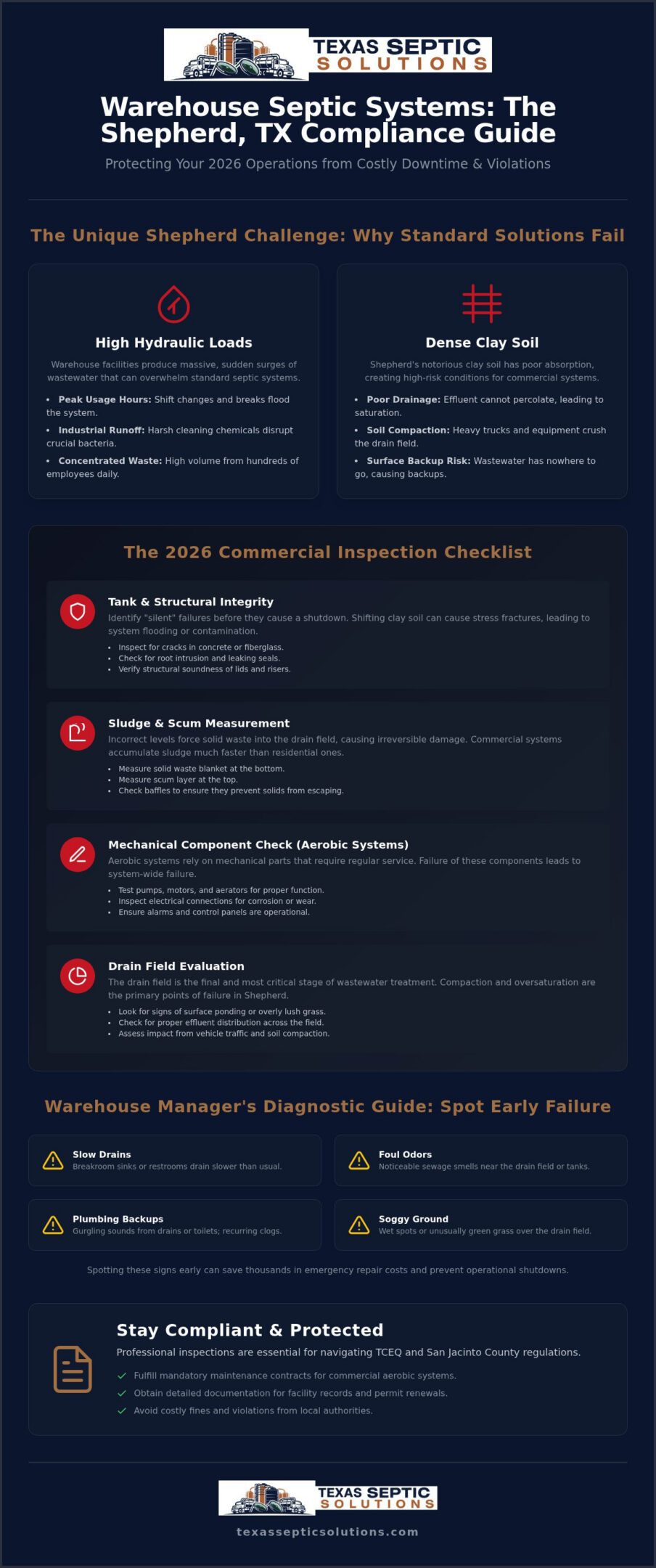
Shepherd and the surrounding San Jacinto County area are known for dense, heavy clay. This soil is notorious for poor drainage and low absorption rates. While a basic understanding of how septic systems work is helpful, commercial managers must realize that clay slows down the percolation of effluent significantly. In a warehouse setting, where hundreds of gallons can enter the system during shift changes, the soil can quickly become saturated. This often requires larger drain fields or specialized aerobic systems to manage the volume. Additionally, the constant movement of heavy trucks and forklifts in loading zones can compact this clay soil, further destroying its ability to process wastewater and increasing the risk of a surface backup.
Commercial vs. Residential: The Load Factor
The hydraulic load of a warehouse is vastly different from a standard home. You aren’t just managing gray water from a single family; you’re handling concentrated waste from dozens or even hundreds of employees. Standard residential pumping schedules simply don’t work in a commercial setting. Because warehouses experience “peak usage hours” during lunch breaks or shift transitions, the sudden surge of water can overwhelm a system that hasn’t been properly maintained. We’ve seen how industrial runoff or harsh cleaning chemicals used in facility maintenance can also disrupt the bacterial balance in your tank, leading to faster sludge buildup. A dedicated septic system inspection for warehouses Shepherd TX ensures your system is sized and serviced correctly for these specific commercial demands.
A sewage backup is more than just a mess; it’s a liability. It creates health code violations and leads to massive revenue loss if you’re forced to close your doors for repairs. By staying ahead of maintenance, you ensure your facility stays compliant with TCEQ standards and remains a safe, functional environment for your team. We take pride in being the local authority that helps Shepherd businesses avoid these preventable disasters.
The 2026 Commercial Septic Inspection Checklist: Key Components
A professional septic system inspection for warehouses Shepherd TX involves more than just a quick glance. It’s a technical deep dive into the infrastructure that keeps your facility hygienic and operational. Because warehouse systems handle significantly larger volumes than residential units, a structured checklist ensures no component is overlooked. We start with a structural integrity check, looking for cracks in the concrete or fiberglass tanks. In Shepherd, shifting clay soil can cause stress fractures or allow root intrusion from nearby vegetation, which leads to groundwater contamination or system flooding.
Inside the Tank: Sludge and Scum Levels
A core part of the inspection is measuring the sludge blanket. We use specialized tools to determine how much solid waste has accumulated at the bottom versus the scum layer at the top. If these levels are too high, your system’s retention time drops, pushing solids into the drain field. If our team finds that the internal components are failing, a timely septic system repair can replace damaged baffles before they allow solids to escape. For clarity, effluent is the partially treated liquid waste that flows out of the septic tank and into the next stage of the treatment process.
The Mechanical Heart: Pumps and Aerators
Commercial warehouses often rely on aerobic systems that use mechanical aerators to break down waste efficiently. Our checklist includes testing these motors for proper oxygenation and checking electrical connections for corrosion, which is common in the humid East Texas climate. We also verify that your septic tank alarm is properly calibrated. In a warehouse, where water usage spikes during shift changes, the alarm must be set to trigger at levels that give you enough time to react before a backup occurs. Ensuring these sensors are functional is a non-negotiable part of a thorough septic system inspection for warehouses Shepherd TX.
Finally, we evaluate the drain field. We look for surface saturation or unusually lush grass, which are common signs of a failing septic system that indicate the soil can no longer process effluent. If you haven’t had your facility checked recently, scheduling a maintenance visit now can prevent these mechanical issues from turning into a total system shutdown.
Navigating Shepherd & San Jacinto County Regulatory Compliance
Compliance for commercial properties in Shepherd is a multi-layered process involving both state and local authorities. For most warehouses, the primary governing body is the Texas Commission on Environmental Quality (TCEQ), specifically under Title 30 of the Texas Administrative Code, Chapter 285. This regulation applies to any system treating less than 5,000 gallons of wastewater per day. However, on a local level, the San Jacinto River Authority (SJRA) manages the actual permitting and applications. Staying current with a septic system inspection for warehouses Shepherd TX ensures you don’t run afoul of the TCEQ rule updates expected to finalize in early 2026. These changes aim to clarify aerobic treatment standards, making professional oversight more critical than ever.
San Jacinto County Commercial Standards
Local ordinances in San Jacinto County are strict regarding commercial discharge, especially for high-volume facilities. If your warehouse operates an aerobic system, state law mandates a maintenance contract with a licensed provider. These systems require a professional inspection every four months. We’ve found that proactive septic system maintenance Texas plans are the most effective way to satisfy these legal requirements. Regular reporting to the SJRA is mandatory, and failing to submit these records can lead to permit revocation. We handle the paperwork so you can focus on your warehouse logistics.
Environmental Protection and Liability
In the East Texas watershed, the risk of groundwater contamination is a serious legal and environmental concern. A single leak can lead to heavy fines and potential lawsuits. Professional inspections serve as your primary legal defense, proving that you’ve exercised due diligence in maintaining your infrastructure. During a septic system inspection for warehouses Shepherd TX, we also verify that your system still matches the original site plan filed with the county. If you’ve expanded your warehouse or added more restrooms without updating your permit, you’re at risk. We use soil testing and site evaluations to ensure your system continues to meet the drainage demands of your specific location. Detailed record-keeping isn’t just for the government; it’s vital for insurance claims and adds significant value if you ever decide to sell the property.
Detecting Early Failure: A Warehouse Manager’s Diagnostic Guide
As a facility manager, you don’t have time to wait for a total system failure. Detecting early warning signs is the difference between a quick pump-out and a massive excavation project. Start by listening to your facility. Slow-draining sinks in the breakroom or gurgling sounds in the restroom pipes are often the first indicators that the tank is reaching capacity. In a warehouse setting, where the septic system inspection for warehouses Shepherd TX is often ignored until it’s too late, these sounds are your system’s way of asking for help. Odors are another dead giveaway. If you smell sewage near the drain field or around the building exterior, the treatment process is likely compromised.
The ‘Silent’ Signs of Drain Field Stress
Surfacing effluent is often the final stage of long-term failure. By the time you see standing water, the soil is already fully saturated. In Shepherd, the heavy clay soil makes this even more critical. You should also watch for “too green” patches of grass. While lush vegetation might look healthy, it actually signals that the grass is over-feeding on untreated wastewater. Heavy machinery is another silent killer. If forklifts or delivery trucks have been driving over the septic area, the weight can collapse the distribution pipes or compact the soil. Walk your perimeter weekly and look for:
- Soggy spots even during dry weather.
- Darker, thicker grass over the lateral lines.
- Depressions in the soil where pipes may have shifted.
- Foul odors that linger near the facility perimeter.
Immediate Action Steps for Facility Managers
If you suspect a failure, act fast. Stop all non-essential water use immediately. This includes shutting off breakroom dishwashers and limiting restroom access if possible. Communicate clearly with your staff. A simple “Restroom Maintenance in Progress” sign can prevent further hydraulic stress while you wait for professional help. Having a documented septic system maintenance plan ensures your team knows exactly who to call and what steps to take during a crisis. This proactive approach minimizes property damage and keeps your warehouse operational.
Don’t let an alarm trigger turn into a disaster. If your high-water alarm is buzzing, it’s time for a professional septic system inspection for warehouses Shepherd TX. Our team is ready to diagnose the issue and get your facility back to full capacity. If you’re seeing any of these red flags, contact Texas Septic Solutions for an immediate inspection to protect your business infrastructure.
Scheduling Your Professional Warehouse Inspection in Shepherd
General plumbers are great for fixing a leaky faucet in the office breakroom, but they often lack the heavy-duty equipment required for a full-scale septic system inspection for warehouses Shepherd TX. Managing a commercial facility means overseeing massive tanks and extensive drain fields that process thousands of gallons daily. You need a partner who understands high-volume hydraulic loads and the specific soil challenges of San Jacinto County. At Texas Septic Solutions, we focus on the specialized needs of Shepherd commercial clients, providing the diagnostic accuracy that general contractors simply can’t match.
What to Expect During a Professional Visit
During a professional visit, we perform a methodical walkthrough of your entire system. We start by accessing the tank risers to inspect the internal structure and measure sludge levels. Our team uses non-invasive diagnostic tools, such as high-definition sewer cameras, to see inside your lines without the need for destructive excavation. We test the flow from your facility to ensure there are no obstructions in the main lateral lines. Once the physical check is complete, you’ll receive a detailed inspection report. This document is a vital part of your facility’s maintenance records, providing a prioritized list of any needed repairs and a clear picture of your system’s current health.
Protecting Your Commercial Investment
Regular inspections offer a significant return on investment when compared to the total septic system replacement cost. Replacing a commercial-grade aerobic system in Shepherd is a major capital expense that also involves permit fees and potential site redesigns. By catching minor mechanical issues early, you extend the life of your infrastructure and avoid the chaos of a total shutdown. Our 24/7 emergency response serves as a safety net for your operations, ensuring that even if an unexpected failure occurs, your downtime is kept to an absolute minimum. Transitioning from a one-time inspection to a long-term preventative maintenance plan is the smartest move a warehouse manager can make to protect their commercial investment. Contact Texas Septic Solutions today for a professional commercial evaluation of your Shepherd warehouse.
Securing Your Warehouse Operations for 2026 and Beyond
Maintaining a high-volume facility in Shepherd requires more than just luck; it takes a proactive approach to infrastructure. We’ve covered why the local clay soil demands specialized attention and how staying ahead of TCEQ regulations protects your business from legal and operational headaches. A thorough septic system inspection for warehouses Shepherd TX is your best defense against the high costs of emergency repairs and unexpected downtime. By identifying mechanical issues or drain field stress before they escalate, you ensure your warehouse remains a productive, safe environment for your entire team.
As your locally owned and operated partner in Shepherd, we’re here to provide the expert oversight you need. Our TCEQ licensed specialists understand the unique demands of commercial systems and offer 24/7 emergency support as a constant safety net for your facility. Don’t wait for a backup to disrupt your logistics. Schedule your professional warehouse septic inspection with Texas Septic Solutions today. We’ll help you build a reliable maintenance foundation that keeps your business moving forward with confidence and total peace of mind.
Frequently Asked Questions
How often should a warehouse septic system in Shepherd be inspected?
Most commercial systems require a professional inspection at least once a year, though aerobic systems legally mandate checks every four months in Texas. High-traffic facilities often schedule more frequent visits to manage heavy hydraulic loads and prevent backups. Regular oversight ensures that solids don’t overwhelm the tank and damage the drain field. We recommend aligning your schedule with San Jacinto County and TCEQ guidelines to maintain full legal compliance and operational safety.
What is the difference between a residential and commercial septic inspection?
Commercial inspections focus on significantly higher wastewater volumes and more complex mechanical components than residential checks. While a home system manages basic gray water, a warehouse inspection evaluates industrial-scale aerators, high-capacity pumps, and larger drain fields. We also look for specific waste types, such as industrial cleaners or heavy restroom usage during shift changes, which can disrupt the bacterial balance in a way residential systems rarely experience in Shepherd.
Does San Jacinto County require special permits for warehouse septic systems?
Yes, San Jacinto County requires specific permits for all commercial On-Site Sewage Facilities (OSSF), including warehouse systems. These permits are managed through the San Jacinto River Authority rather than the TCEQ directly. You must have an approved site plan and a professional soil evaluation before construction begins. For warehouses using aerobic systems, you’re also required to file a notarized “Affidavit to the Public” with the County Clerk’s Office during the permitting process.
What are the signs that my warehouse drain field is failing in Shepherd’s clay soil?
Common indicators include standing water, unusually lush grass over the lateral lines, and slow-draining plumbing inside the facility. Shepherd’s dense clay soil has poor absorption rates, so the first sign of failure is often surface saturation near the treatment area. If you notice foul odors near the facility perimeter or soggy patches during dry spells, your drain field is likely reaching its capacity. A septic system inspection for warehouses Shepherd TX can confirm these issues.
Can a warehouse septic system be repaired, or does it always need replacement?
Many commercial systems can be successfully repaired if the issues are caught early. We frequently replace damaged baffles, fix electrical issues in aerators, or repair cracked tanks to restore full functionality. However, if the drain field has completely collapsed or the soil is permanently clogged, a new installation might be the only viable solution. Proactive maintenance is the best way to avoid the higher costs and logistical headaches of a total system replacement.
How much time does a full commercial septic inspection take?
A comprehensive septic system inspection for warehouses Shepherd TX typically takes between two and four hours to complete. This duration depends on the size of the facility and the complexity of the treatment system. Our team performs a thorough walkthrough, tests all mechanical components, and measures sludge levels without disrupting your daily operations. You’ll receive a detailed report following the visit that outlines our findings and any recommended maintenance steps for your records.
What happens if my warehouse septic system fails an inspection?
If your system fails, we provide a prioritized list of repairs needed to bring the facility back into compliance. A failure doesn’t always mean a total shutdown, but it does require immediate attention to avoid fines or environmental damage. We work with you to address the most critical issues first, such as pump failures or tank leaks. Once repairs are finished, we help you document the resolution for San Jacinto County and state reporting records.
Do you offer emergency septic services for warehouses in Shepherd?
We provide 24/7 emergency septic service to handle urgent failures at any hour for local businesses. Warehouse operations don’t stop just because a pump fails or a tank backs up, so our team stays ready to respond quickly to critical waste management issues. Whether it’s a holiday or the middle of the night, we arrive equipped to perform rapid repairs and get your facility’s utility systems back online before significant property damage occurs.