
Signs of Septic System Stress from Overuse in Huffman: A Homeowner’s Guide
Imagine hosting a weekend barbecue in Huffman only to notice the sinks draining slower with every guest who uses the restroom. You’re likely worried that your entire system is failing, and the fear of raw sewage backing up into your home is enough to ruin anyone’s peace of mind. It’s a common stressor for those living near Lake Houston, where heavy clay soils make drainage difficult, especially when you start noticing the signs of septic system stress from overuse Huffman properties often experience during periods of high activity. You might be confused about whether the issue is a simple tank pump-out or a total drain field failure.
This guide will help you identify the subtle warning signs of hydraulic overload before they turn into a permanent, expensive disaster. We’ll show you how to distinguish between a temporary backup and a deep system failure. You’ll also learn the immediate actions you can take to relieve the pressure on your tank and how to find a reliable local pro to confirm if your system is still reversible. Knowing these warning signs now can save you thousands in emergency repairs later.
Key Takeaways
- Understand how hydraulic overload disrupts your system’s natural balance by pushing more water into the soil than it can effectively process.
- Identify the subtle signs of septic system stress from overuse Huffman properties often show, such as gurgling pipes or drains that slow down only during peak hours.
- Learn why Huffman’s high clay content and proximity to the Lake Houston basin make your drain field more susceptible to saturation and failure.
- Discover immediate “water fast” techniques you can use to give your system the rest it needs to recover from temporary stress.
- Find out how professional pumping and routine maintenance can reset an overwhelmed system and prevent the need for a costly emergency replacement.
What is Septic System Stress? Understanding Hydraulic Overload
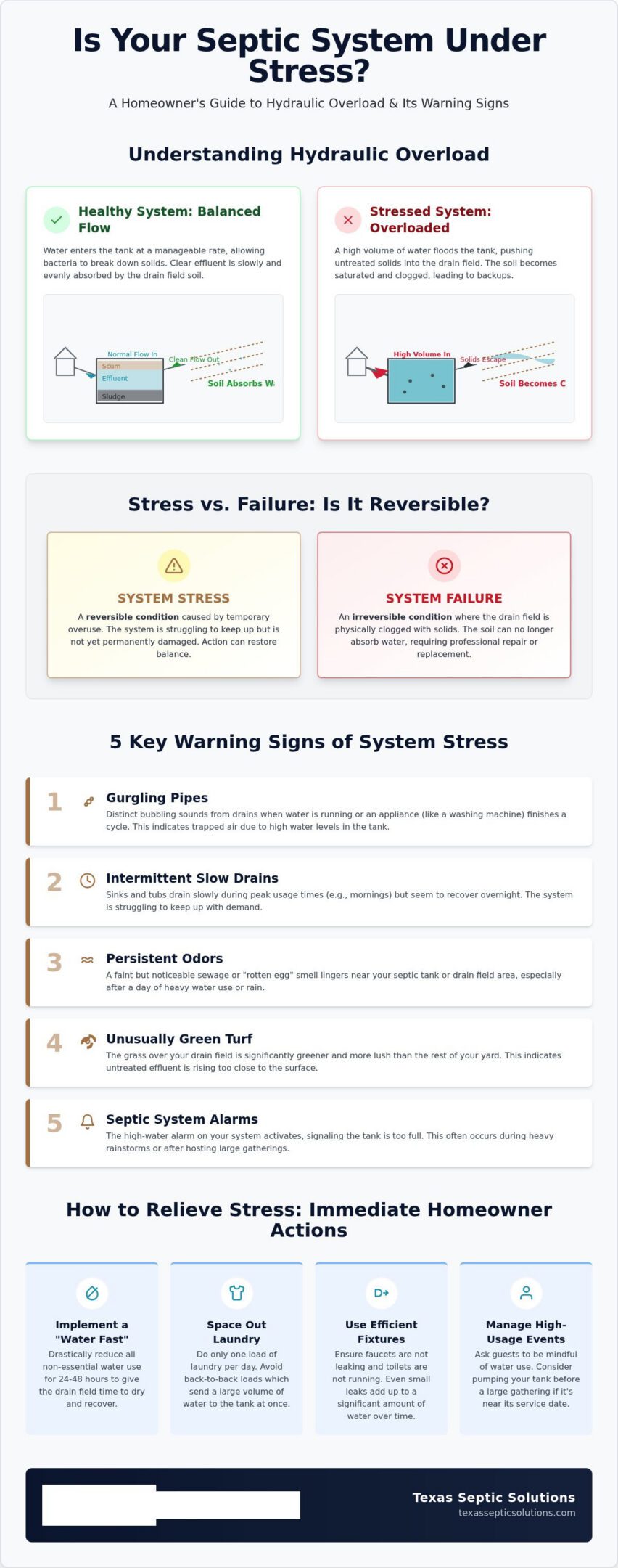
Many Huffman homeowners assume a slow drain means their system has reached the end of its life. In many cases, you’re actually seeing the early signs of septic system stress from overuse Huffman properties experience when water demand peaks. This is known as hydraulic overload. It occurs when the volume of water entering the system exceeds the rate at which the soil can absorb it. Think of your septic system as a living organism rather than just a buried box.
Inside your Septic tank, anaerobic bacteria are the silent workers that break down organic matter. When you introduce too much water too quickly, you disrupt this delicate biological process. We distinguish between mechanical stress, such as a collapsed pipe or a broken baffle, and biological stress, where the bacterial colony is literally overwhelmed and pushed out of the tank.
Understanding this distinction is vital. Stress is the yellow light of septic health. It’s a warning that your current habits are pushing the system toward a breaking point. If you ignore these early indicators, you risk a total system failure that eventually requires an expensive emergency replacement.
The Biological Balance Inside Your Tank
In a functional setup, heavy solids settle as sludge while oils float to the top as scum. The clarified water in the middle should move slowly into the drain field. When high flow rates occur, this gray water moves too fast, carrying solids out into the soil where they don’t belong. This flushing out of the tank’s bacteria prevents the proper breakdown of waste. Hydraulic overload is the primary cause of early system fatigue in Huffman due to our unique local environmental factors.
Stress vs. Failure: Is it Too Late?
The biggest question we hear is whether a system can be saved. Stress is typically a reversible condition. You can often resolve it through strict water management, spread-out laundry schedules, or professional pumping. However, if you ignore the signs of septic system stress from overuse Huffman homes display, you may cross the line into failure. Failure happens when the drain field is physically clogged and cannot process effluent at any speed. Once the stress becomes structural or the soil is saturated with solids, professional septic system repair is the only way to get your home back to normal.
5 Warning Signs of Septic System Stress in Huffman Homes
Identifying the signs of septic system stress from overuse Huffman residents often overlook is the first step toward saving your drain field. Your system usually gives you several warnings before a total backup occurs. These symptoms align with common signs of a failing septic system, but at this stage, the damage might still be reversible if you act quickly. Watch for these five specific indicators in your home and yard:
- Gurgling pipes: You hear distinct bubbling sounds in the drains when the dishwasher or washing machine finishes a cycle.
- Intermittent slow drains: Sinks and tubs drain slowly during the morning rush but seem fine by the evening.
- Persistent odors: A faint scent of sewage lingers near the tank or drain field after a day of heavy water use.
- Unnatural turf growth: The grass over your leach field looks remarkably green and lush, even during a dry East Texas summer.
- System alerts: A septic tank alarm going off after hosting a large gathering or during a heavy rainstorm.
Plumbing Noises and Drainage Speed
Plumbing systems shouldn’t make noise. When you hear gurgling, it’s often air being trapped in the pipes because the water level in your septic tank has risen above the inlet pipe. This happens when the tank can’t process water as fast as you’re sending it down the drain. If your drains are slow in the morning but “fix themselves” overnight, it’s a classic sign of hydraulic stress. The system is struggling to keep up with peak demand but manages to catch up while the household sleeps. We recommend tracking these occurrences to see if they correlate with specific activities like back-to-back laundry loads.
Visual and Olfactory Clues in the Yard
The way your yard looks can tell you a lot about what’s happening underground. That beautiful, bright green patch of grass over your drain field isn’t a sign of a healthy lawn. It’s actually a sign that untreated effluent is rising too close to the surface, effectively over-fertilizing the grass. Huffman’s high humidity can also make sewage odors more noticeable, as the heavy air traps gasses escaping from a stressed system. These signs of septic system stress from overuse Huffman homeowners witness are often exacerbated by the local soil’s inability to breathe. If you see standing water or feel spongy turf underfoot, your system is moving from stress into advanced failure.
If you’re noticing these patterns, a professional septic inspection can help you determine if your system just needs a rest or if it requires more significant attention.
Why Huffman Geography Increases Septic Overuse Risks
While general septic advice is helpful, it often fails to account for the specific environmental pressures we face in East Texas. In Huffman, geography is the single biggest factor in how your system handles daily water volume. Unlike the sandier regions further inland, our local environment creates a “perfect storm” for hydraulic overload. If you don’t understand these local conditions, you’ll likely miss the early signs of septic system stress from overuse Huffman properties frequently display before a major failure.
Our proximity to the Lake Houston basin and the prevalence of heavy, expansive soil mean your drain field has to work twice as hard to process the same amount of water as a system in a different climate. High humidity also plays a role, as it slows down the natural evaporation of moisture from the surface of your leach field. This keeps the ground wetter for longer, leaving very little “breathing room” for your system to recover between uses.
Huffman Soil Composition and Drainage
The primary culprit in local septic issues is “gumbo” clay. This heavy soil is notorious for expanding when it gets wet. As the clay particles swell, they effectively “seal” the drain field, making it nearly impossible for effluent to percolate through the ground. This is why Huffman systems often struggle most during the rainy spring and fall seasons. When the soil is already saturated by East Texas rainfall, any extra water from a long shower or a heavy laundry day can trigger the signs of septic system stress from overuse Huffman homeowners dread. In contrast to sandier soils that allow for rapid drainage, our clay traps water, leading to a much higher risk of hydraulic backup.
The Lake Houston Effect
Living near the water is a perk of the area, but it presents unique challenges for underground utilities. Proximity to Lake Houston often means dealing with a high water table. During periods of heavy rain or lake surges, groundwater can rise significantly, pushing water back toward your septic system. This creates a “saturated soil” problem where your drain field literally has nowhere to send the effluent. Because of these intense geographic factors, local residents generally need more frequent septic system maintenance than homeowners in other parts of the state. Identifying the common signs of a failing septic system early is essential for navigating these geographic hurdles without facing a total system replacement.
How to Relieve Hydraulic Stress: Immediate Homeowner Actions
If you’ve spotted the signs of septic system stress from overuse Huffman homes often exhibit, you need to act immediately to prevent a total system shutdown. The most effective first step is a household “water fast.” This isn’t just about using less water; it’s about giving your system the time it needs to process the backlog of effluent currently sitting in your tank and drain field. When your system is stressed, every gallon counts.
Start by identifying and stopping “silent” water contributors. A single running toilet can dump hundreds of gallons of extra water into your system daily, which is enough to push a struggling tank over the edge. You should also stop using your garbage disposal immediately. Research shows that disposals can increase solids in a septic tank by up to 50%, forcing the bacteria to work harder when they’re already overwhelmed. If these immediate changes don’t stop the gurgling or slow drains, it’s time to call in a professional for emergency septic service before the situation worsens.
- Repair leaks: Check every faucet and toilet for drips or runs.
- Divert gutters: Ensure downspouts point away from the drain field area.
- Stop the disposal: Compost or toss food scraps in the trash instead.
- Limit showers: Keep them short and avoid back-to-back usage.
Water Conservation Tactics for Stressed Systems
For Huffman homes dealing with saturated clay soil, we recommend a strict rule: no more than two loads of laundry per day. Spreading your laundry throughout the week rather than doing five loads on a Saturday prevents a massive surge of water from hitting the tank all at once. This “rest period” is essential for the drain field to regain its absorptive capacity. Over the long term, installing low-flow showerheads and toilets can permanently reduce your risk of future hydraulic overload by lowering the baseline volume your system has to handle.
Managing External Water Sources
In our part of East Texas, rainfall is often as much of a threat as indoor water use. You don’t want to “drown” your drain field with rainwater coming off your roof. Ensure your yard is graded so that surface runoff flows around the septic area rather than pooling on top of it. Additionally, never park vehicles or heavy equipment on your drain field. This is especially critical when the ground is wet, as the weight can compact the soil or even crush the underlying pipes, turning a reversible stress issue into a permanent mechanical failure.
Professional Solutions for Recovering a Stressed System
While adjusting your water habits is a vital first step, professional intervention is often necessary to fully save a system that has been pushed to its limit. If you’ve reached the point where you’re noticing the signs of septic system stress from overuse Huffman properties frequently display, you need a strategy that goes beyond simple conservation. Professional septic pumping is the most effective way to “reset” your system. By removing the accumulated waste, we create an immediate void in the tank that allows your drain field to rest and dry out without the constant pressure of incoming effluent.
Aerobic systems, which are increasingly common in Huffman due to our local clay soil and high water table, require even more specialized attention. In Texas, state law actually requires a mandatory service contract for these units, including inspections at least three times per year. These regular checks ensure that the mechanical components, like aerators and pumps, are functioning correctly to process waste before it reaches the soil. If these components fail during a period of high use, the stress on your system accelerates rapidly.
The Reset: Pumping and Inspection
Professional pumping does more than just empty the tank; it removes the sludge layer that could otherwise migrate into your drain field. When a system is under hydraulic stress, solids are more likely to be pushed out of the tank, where they can cause permanent soil clogging. During a Huffman septic inspection, our technicians look for specific issues like clogged effluent filters or broken baffles that might be contributing to your drainage problems. These mechanical repairs are often simple and affordable when caught early. In contrast, ignoring these issues can lead to a total failure, where the septic system replacement cost can range from $6,500 to over $20,000 depending on the system type and soil conditions.
Long-term Health with Texas Septic Solutions
Texas Septic Solutions operates as your “Reliable Local Authority” for all things septic in the Huffman area. We understand the unique challenges posed by the Lake Houston basin and the heavy East Texas “gumbo” clay. Our team is built for both routine upkeep and the high-pressure demands of emergency failures, providing 24/7 service when you need it most. The best defense against the signs of septic system stress from overuse Huffman homeowners face is a proactive septic system maintenance plan. These plans ensure your system is inspected and pumped on a schedule that matches your household’s actual needs, preventing hydraulic overload before it starts. Contact Texas Septic Solutions for a system health check in Huffman today to ensure your system remains reversible and reliable for years to come.
Protect Your Huffman Home from Septic Failure
Your septic system is one of the most critical components of your home’s functionality. By recognizing the signs of septic system stress from overuse Huffman homeowners often face, you can take action before a temporary overload turns into a permanent drain field disaster. Remember that Huffman’s heavy clay soil and high water table mean your system requires more attention than those in other parts of Texas. Catching gurgling pipes or slow drains early allows for simple fixes like professional pumping or water management rather than a full replacement.
Texas Septic Solutions is here to be your reliable local authority. We understand East Texas soil conditions and offer 24/7 emergency service to handle high-pressure failures whenever they occur. We also provide comprehensive preventative maintenance plans starting for 2026 to keep your system healthy year-round. Don’t wait for a backup to disrupt your life. Schedule a Septic System Health Check in Huffman today and rest easy knowing your home is in expert hands. We’re ready to help you keep your system running smoothly for years to come.
Frequently Asked Questions
Can a septic system recover from overuse on its own?
Yes, a system can often recover from temporary hydraulic stress if you implement an immediate water fast. This allows the drain field time to process the existing effluent without new water pushing in. However, if the stress has already caused solids to migrate into the soil, the recovery won’t happen without professional help. A simple rest period is often the first step in seeing if your system is still reversible.
How often should I pump my septic tank in Huffman to avoid stress?
Most Huffman homes should have their tanks pumped every three to five years to maintain optimal performance. Because our local soil has such high clay content, you might need more frequent service if you have a large household. Regular pumping prevents the sludge layer from getting too high, which is a major contributor to the signs of septic system stress from overuse Huffman residents often report during holiday gatherings or rainy seasons.
Is it normal for my septic system to smell after heavy rain?
While odors after a storm are common in East Texas, they shouldn’t be ignored. Heavy rain saturates the soil around your drain field, which prevents septic gasses from escaping through the ground as they normally would. This forced gas often vents back toward the house or through the yard. If the smell persists after the ground dries, it usually indicates that your system is struggling to breathe and may need a professional inspection.
What is the most common sign of a stressed septic system?
The most frequent indicator is gurgling sounds coming from your drains when a high-volume appliance like a washing machine finishes its cycle. This noise happens because air is trapped in the pipes by a rising water level in the tank. Recognizing these early signs of septic system stress from overuse Huffman properties show can help you pivot to water conservation before you face a complete and costly sewage backup into your home.
Can too much laundry really break my septic system?
Absolutely. Doing several loads of laundry in a single afternoon creates a massive surge of water that can wash out the beneficial bacteria in your tank. This high flow rate doesn’t give solids enough time to settle, meaning they get pushed directly into your drain field pipes. Over time, these fine particles clog the soil pores, leading to a permanent failure that requires an expensive replacement instead of a simple repair.
How do I know if my drain field is saturated or just stressed?
You can usually tell by the location and severity of the symptoms. A stressed system typically shows up as slow drains or gurgling inside the house during peak water use. A saturated drain field is more advanced, characterized by standing water in the yard, spongy turf, or sewage backing up into lower-level tubs. If your yard stays wet even when it hasn’t rained, your drain field has likely lost its ability to absorb water.
Does a septic tank alarm always mean there is an emergency?
An alarm is a warning that the water level in your tank is higher than it should be. While it’s not always an immediate disaster, it does mean the system is at risk of backing up. It could be caused by a failed pump, a blown fuse, or simply a massive surge of water from a party. You should silence the alarm and call for a professional health check to identify the root cause before an emergency occurs.
Should I use septic tank additives to help an overworked system?
We generally advise against relying on additives to fix an overworked system. Most additives don’t address the core issue of hydraulic overload, which is a volume problem rather than a biological one. In fact, some chemicals can actually harm the natural bacteria your system needs to function. The most reliable solution for a stressed tank is professional pumping, which physically removes the waste and gives your system a fresh start.