
Septic Tank Treatments vs. Professional Maintenance: The Houston Homeowner’s 2026 Guide
If a $20 bottle of enzymes could truly replace a professional pump-out, why are so many Houston homeowners still facing $10,000 drain field replacements? It’s a fair question. We know you want to protect your property without overspending, and the promise of a “miracle” additive is tempting when you’re worried about foul odors or unexpected backups. However, the reality of septic tank treatments vs professional maintenance Houston is often hidden beneath layers of marketing and misinformation.
You probably feel that keeping your system healthy shouldn’t be a guessing game involving hardware store chemicals. We agree. In this 2026 guide, you’ll discover why professional maintenance is the only reliable way to protect your Houston property and your wallet. We are going to look at the specific risks of additives in our heavy Texas clay, the essential role of mechanical pumping, and how a proactive plan prevents the high cost of emergency failures. Let’s ensure your septic system remains a silent, functional part of your home.
Key Takeaways
- Understand the critical differences between septic tank treatments vs professional maintenance Houston and why additives alone cannot remove the solids that lead to system failure.
- Discover why Houston’s heavy clay soil makes professional pumping essential for protecting your drain field from permanent, costly damage.
- Compare the manageable cost of routine maintenance against the $15,000 price tag of a full system replacement.
- Learn a simple two-step framework for 2026 that prioritizes professional inspections and regular filter cleaning to keep your home functional.
- Find out how local expertise and 24/7 support provide a reliable, long-term alternative to the “quick fix” promises of DIY chemical products.
Septic Tank Treatments vs. Professional Maintenance in Houston
Many Houston homeowners find themselves standing in the plumbing aisle of a hardware store, staring at boxes of septic additives. These products, known as septic tank treatments, are biological or chemical compounds designed to be poured down a drain to boost bacterial activity. In contrast, professional maintenance involves a comprehensive approach including physical inspections, effluent filter cleaning, and mechanical pumping. Because service fees can feel like an unwanted expense, it’s easy to see why residents in areas like Cypress or Huffman look for a “miracle” solution. However, the debate over septic tank treatments vs professional maintenance Houston usually ends when a system backs up into the yard. Simply put, treatments manage bacteria, while maintenance manages physical volume.
The “Sweet Septic” Allure: Why Additives are Popular
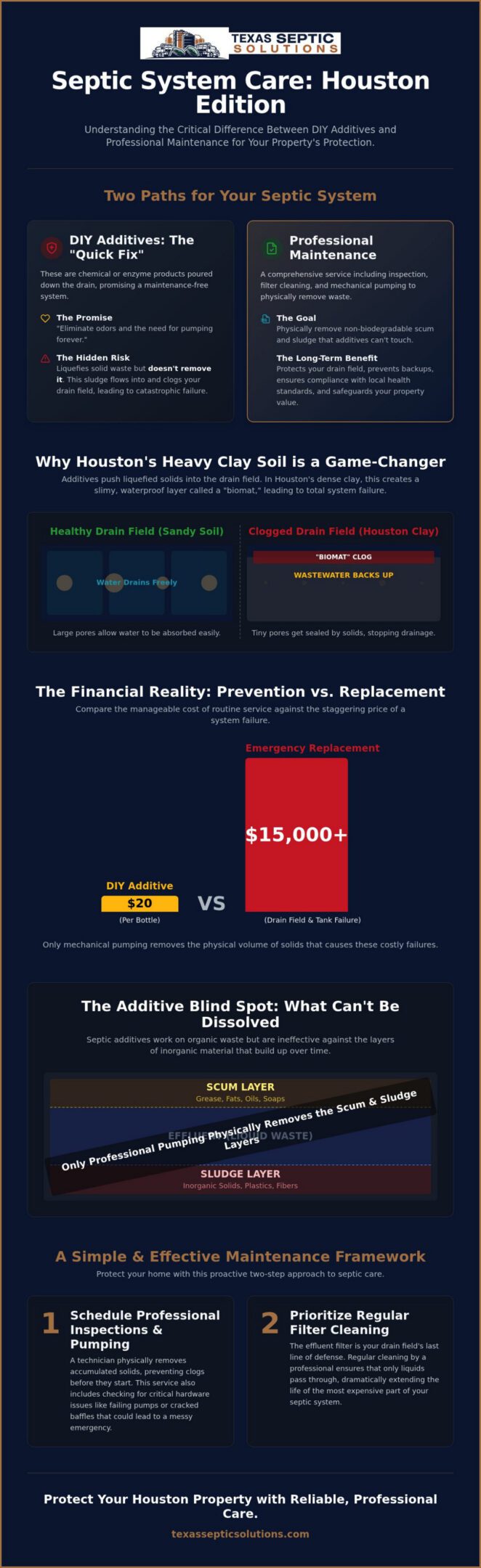
The primary draw of additives is convenience. For a few dollars a month, you can “pour and forget,” convinced that you’re doing your part for your home’s infrastructure. Marketing campaigns often promise that these enzymes will eliminate the need for pumping forever. In the real world of Texas septic systems, these claims rarely hold up. Our local soil is often dense clay, which doesn’t drain as easily as sandy soil. When additives break down solids into smaller particles without them being physically removed, those particles can actually flow into and clog your drain field. This turns a small maintenance task into a massive repair job. You’re essentially trading a routine service for a catastrophic failure later on.
The Reality of Professional Septic Care
Reliable septic health requires more than just a chemical boost. Professional care focuses on the mechanical removal of non-biodegradable “scum” and “sludge” layers that naturally accumulate over time. Understanding how septic systems work reveals that certain materials, like plastics, grease, and inorganic fibers, will never break down, regardless of which treatment you use. A professional technician does more than just pump; they check for hardware issues like cracked baffles or failing pumps that could lead to a midnight emergency. Regular service also ensures your property stays in compliance with local Houston and Harris County health standards. This proactive approach protects your home’s value and prevents the foul odors that can ruin a backyard gathering. Relying on a professional partner means you have a guardian for your home’s most critical utility.
How Septic Additives Work (And Where They Fail in Houston)
To understand why additives often fall short, you have to look at the biology inside your tank. Most standard systems rely on anaerobic bacteria, which live without oxygen, to break down waste. Aerobic systems, common in newer Houston builds, use oxygen-loving bacteria that work much faster. Septic treatments usually contain enzymes or “booster” bacteria designed to accelerate this digestion. While this sounds good on paper, it often creates a false sense of security. A tank that looks “clear” because solids have been liquefied can actually be a ticking time bomb for your drain field. According to how septic systems work, these liquefied solids can stay suspended in the water rather than settling. When they flow out of the tank, they clog the soil pores in your yard.
You should also be wary of harsh chemical treatments. Some products marketed to “clear clogs” contain solvents or high-acid formulas that actually kill the beneficial bacteria your system needs to function. Once that biological colony is wiped out, your system stops treating waste entirely. This leads to the very odors and backups you were trying to avoid. Following EPA guidelines on septic care is a much safer bet for long-term stability.
The Impact of Houston Clay Soil
Houston is famous for its heavy clay soil, which presents a unique challenge for drainage. Clay has incredibly small pores and poor absorption rates compared to sandy soils. When additives flush suspended solids into a clay-heavy drain field, those particles settle and create a “biomat.” This is a thick, slimy layer of bacteria and waste that eventually seals the soil completely. Once the soil is sealed, water has nowhere to go but up into your yard or back into your house. This is why septic tank treatments vs professional maintenance Houston is such a critical comparison; only mechanical pumping can remove the volume of solids that clay simply cannot handle.
Inorganic Waste: The Additive Blind Spot
Additives are completely powerless against the modern household’s waste stream. No amount of “miracle” enzymes will digest the following items:
- Flushable wipes (which aren’t actually flushable)
- Plastic wrappers and feminine hygiene products
- Cooking grease and heavy oils
- Cigarette butts and paper towels
These items accumulate as a physical “scum” or “sludge” layer. If you rely solely on additives, these blockages grow until they trigger a system failure. If you’ve been using additives and haven’t had a pump-out in years, it’s a good idea to schedule professional septic pumping to clear out these undigestable materials before they cause a backup.
Comparing Costs, Risks, and Results: Additives vs. Pro Pumping
Breaking down the math of septic tank treatments vs professional maintenance Houston reveals a clear winner for your long-term budget. While a bottle of monthly additives might only cost $20, those small expenses add up to hundreds of dollars over a few years. That is money spent on a product that cannot physically remove a single pound of sludge from your tank. In contrast, a routine professional pump-out clears the system entirely, giving you a fresh start. It is the difference between buying a chemical promise and investing in a mechanical reality that actually works.
The real financial danger isn’t the cost of the treatment; it’s the cost of the failure it might hide. When additives allow solids to escape into your drain field, the resulting damage is often permanent. Replacing a failed drain field is a massive undertaking that can cost as much as a small car. You can find a detailed breakdown of these potential expenses in our Septic System Replacement Cost in Texas guide. Beyond the immediate repair bills, a lack of professional maintenance records can hurt your home’s resale value, as savvy buyers in the Houston market look for documented proof of system health.
Short-Term Savings vs. Long-Term Liability
Choosing additives over maintenance is a gamble with low odds. Many homeowners find that the “savings” of skipping a pump-out vanish the moment a backup occurs. This isn’t just an industry opinion. Extensive Washington State University research on septic additives indicates that these products are generally unnecessary and can even be harmful by keeping solids suspended in the water. A professional inspection offers a much higher return on investment by catching small hardware issues before they become five-figure disasters. This proactive care provides the peace of mind that a bottle of enzymes never could.
Environmental and Regulatory Risks
Neglecting your system doesn’t just affect your wallet; it carries legal and environmental risks. The Texas Commission on Environmental Quality (TCEQ) sets strict standards for septic discharge under 30 TAC Chapter 285. If your system fails and begins to contaminate local Houston groundwater, you could face significant fines from Harris County authorities. Our high water tables mean that a leaking or overflowing tank can quickly spread pathogens through the soil. Professional maintenance ensures your system stays in compliance with state law and protects the local environment we all share. It’s about being a responsible neighbor while protecting your property’s integrity. Maintaining safety standards is critical in any field, and for those who require professional-grade gear, you can learn more about Colorado Safety Supply Company.
Relying on a bottle of chemicals to protect your home is a reactive strategy that often leads to failure. To truly safeguard your property, you need a proactive framework that addresses the physical needs of your system. When comparing septic tank treatments vs professional maintenance Houston, remember that a plan is only as good as its consistency. We recommend following these four essential steps to ensure your system remains reliable for years to come.
- Step 1: Schedule professional inspections. Have a licensed technician evaluate your system every 1 to 3 years. For aerobic systems, Texas law requires more frequent checks, typically three times per year, to ensure disinfection components are functioning correctly.
- Step 2: Clean the effluent filter. This small component prevents solids from entering your drain field. You should clean it every 6 months to maintain proper flow. If you aren’t comfortable doing this yourself, a pro can handle it during a routine visit.
- Step 3: Monitor water usage. Spreading out laundry loads and fixing leaky faucets prevents “washout,” where excessive water pushes solids out of the tank before they can settle.
- Step 4: Use additives as supplements only. If you choose to use biological treatments, treat them like a daily vitamin. They can support healthy bacteria, but they are never a replacement for mechanical pumping.
For a more detailed breakdown of these tasks, you can explore our Septic System Maintenance Plan Guide.
When to Call a Professional Immediately
Don’t wait for a total system failure to seek help. Some warning signs are subtle, while others are impossible to ignore. If you notice “The Houston Swamp,” which is a patch of unusually green, soggy grass over your drain field, your system is likely struggling to process effluent. Slow drains and gurgling pipes are also early indicators that a backup is imminent. If your septic tank alarm is going off, treat it as an emergency and call for service right away to prevent internal damage to your home.
Managing Your Drain Field in Wet Weather
Houston’s heavy rainfall and storm seasons put immense pressure on septic systems. When the ground is saturated, the clay soil loses its ability to absorb liquid, which can cause effluent to rise to the surface. Professional maintenance includes checking your property’s surface drainage to ensure rainwater isn’t pooling over your tank or drain field. During the rainy season, it’s vital to minimize water use inside the house to give your field time to recover. If your system hasn’t been serviced in over three years, our team can help you establish a professional septic maintenance schedule to protect your property during the next big Texas storm.
Why Texas Septic Solutions is the Smarter Alternative to DIY Treatments
Deciding between septic tank treatments vs professional maintenance Houston shouldn’t feel like a gamble with your home’s safety. While grocery store shelves are packed with products promising a quick fix, those additives don’t account for the unique environmental pressures of Southeast Texas. Texas Septic Solutions offers a grounded, reliable alternative that addresses the physical reality of your system. From new system installation to routine pumping and complex repairs, we provide the comprehensive care that a bottle of enzymes simply cannot match. We position our professional service as the only Sweet Septic alternative Houston residents can trust for long-term property protection.
Our Comprehensive Maintenance Plans
Our maintenance plans are built around your specific household needs. We don’t believe in a one-size-fits-all approach. Whether you’re in a large family home in Cypress or a smaller property in Shepherd, we customize our scheduling based on your tank capacity and water usage. These plans include proactive filter cleaning and baffle inspections, which are your primary defense against system failure. By catching small issues early, our maintenance plans essentially pay for themselves by preventing the high costs of emergency call-outs and major part replacements. It’s the ultimate insurance policy for your home’s functionality.
Ready for Any Emergency in Houston
When a backup happens at 2:00 AM on a Saturday, a DIY treatment is useless. We provide 24/7 emergency septic service for all of Houston and the surrounding areas. Our technicians live and work in this community, so they understand exactly how the heavy clay in Huffman and Cleveland affects your drain field’s performance. We are well-versed in Texas-specific OSSF regulations and TCEQ standards, ensuring your system remains compliant and safe at all times. This local expertise is vital for navigating the high water tables and drainage challenges unique to our region.
If your alarm is sounding or you’ve noticed the warning signs of a struggling system, you need a neighborly expert who can respond immediately with the right tools for the job. Don’t let a small problem turn into a total system failure while waiting for a chemical treatment to work. Schedule your professional septic pumping or maintenance today and experience the peace of mind that comes with reliable, local authority.
Protect Your Houston Property with Reliable Septic Care
Understanding the reality of septic tank treatments vs professional maintenance Houston is the first step toward avoiding a backyard disaster. While additives might offer a temporary bacterial boost, they simply cannot remove the inorganic solids and sludge that threaten your drain field. In our heavy clay environment, mechanical pumping remains the only proven way to ensure your system functions safely for years to come.
Our expert OSSF certified technicians are ready to help you move beyond the “pour-and-forget” mentality. We provide 24/7 emergency septic service and comprehensive maintenance plans across Houston, Cleveland, Cypress, and Huffman. By choosing professional care, you’re not just maintaining a tank; you’re protecting your home’s value and your family’s health.
Get a Professional Septic Maintenance Quote Today and let us take the guesswork out of your home’s utility management. Your septic system is a long-term investment. With the right partner, it’ll remain a silent, dependable part of your property for decades to come.
Frequently Asked Questions
Do septic tank treatments really work in Houston?
Septic treatments can boost bacterial colonies, but they don’t work as a standalone solution for Houston properties. Our heavy clay soil requires a high level of solids management that additives just can’t provide. When you compare septic tank treatments vs professional maintenance Houston, it’s clear that physical removal is the priority. Additives might liquefy some waste, but that liquid often carries suspended solids straight into your drain field, causing permanent clogs.
How often should I pump my septic tank in Houston, TX?
Most households in Houston should have their septic tank pumped every 3 to 5 years. This interval depends on the number of people in your home and the size of your tank. Aerobic systems are a different story, as Texas law requires inspections three times a year. Regular pumping prevents the sludge layer from reaching your outlet pipe, which is the most common cause of premature system failure in our region.
Is there a safe alternative to Sweet Septic for my Houston home?
The only safe and effective alternative to retail additives is a professional maintenance plan. These plans address the root causes of system issues rather than just masking odors or attempting to dissolve solids. By focusing on filter cleaning and baffle inspections, you ensure your system operates at peak efficiency. This proactive approach is far more reliable than relying on a “miracle” product from a hardware store shelf.
What happens if I never pump my septic tank and just use additives?
If you rely solely on additives and skip pumping, your tank will eventually fill with non-biodegradable sludge. Once this layer reaches a certain height, solids will be pushed into your drain field. This leads to soil compaction and “biomat” buildup, which effectively seals your yard against drainage. The result is usually a total system failure and a replacement bill that can easily exceed $10,000 for local homeowners.
Can I use additives in an aerobic septic system?
You should be extremely cautious with additives in an aerobic septic system. These systems are finely balanced environments that rely on specific oxygen-loving bacteria. Many standard additives are designed for anaerobic tanks and can disrupt the treatment process. Instead of DIY enzymes, aerobic systems require specific chlorine tablets for disinfection as mandated by state health codes. Always consult your maintenance provider before pouring anything new down your drains.
Why does my septic system smell even if I use treatments?
Persistent odors usually indicate a mechanical problem or a full tank that treatments can’t fix. Smells often come from a blocked vent pipe, a dried-out P-trap, or a failing effluent filter that has become clogged with solids. In some cases, the “miracle” treatment itself might be disrupting the natural bacterial balance, leading to increased gas production. A professional inspection is the only way to find and fix the actual source of the scent.
How much does professional septic maintenance cost in Houston?
The cost of professional maintenance in Houston varies based on several factors rather than a flat fee. We look at the total capacity of your tank, its current depth, and how easily our technicians can access the lids. Systems that haven’t been serviced in many years may require more intensive cleaning. Investing in a routine maintenance plan is always more affordable than paying for emergency repairs or a full drain field restoration.
Are septic additives legal in the state of Texas?
Septic additives are legal in Texas, but they must comply with Texas Commission on Environmental Quality (TCEQ) standards. State regulations prohibit products that contain chemicals harmful to groundwater or those that interfere with the soil’s ability to treat effluent. While you can legally buy them, most licensed installers and health officials in Harris County recommend professional pumping as the primary method for long-term system health and environmental safety.