
Septic Tank Pumping Costs for Manufacturing Plants in Cypress
A manufacturing plant’s septic pumping cost in Cypress depends on the job, not a one-size-fits-all rate. For septic tank pumping at manufacturing plants in Cypress, the price depends on factors such as tank size, access, and the amount of sludge to remove, and is provided after a quote request. Regular pumping and sludge removal can help keep backups, odors, and avoidable repairs from disrupting daily operations.
A clear budget matters, especially when a septic issue could affect work across your facility. The right pumping plan depends on how the system is used and what it needs. Understanding the main cost factors can help you plan with greater confidence.
This article explains what can affect a pumping quote, how commercial needs differ from residential systems, and how routine maintenance supports septic system performance. It also covers what to expect during pumping and when slow drains or sewage odors warrant attention.
Key Takeaways
- Understand which site and system details shape a pumping quote, so you can plan maintenance around your facility’s needs.
- Learn why commercial septic systems may need a different pumping approach from residential systems.
- Spot warning signs such as slow drains, sewage odors, or standing water, and know when they call for attention.
- See how sludge removal and routine maintenance fit into preventing backups and avoidable system problems.
- Find out what to consider when deciding whether your facility needs pumping, repair, maintenance, or a new system.
Preventing septic backups, odors, and costly repairs
Plant teams can reduce disruption by spotting changes early and tracking system maintenance. A clear record of symptoms, pumping, and repairs helps reveal patterns before operations are affected.
Recognizing Signs of Needed Pumping
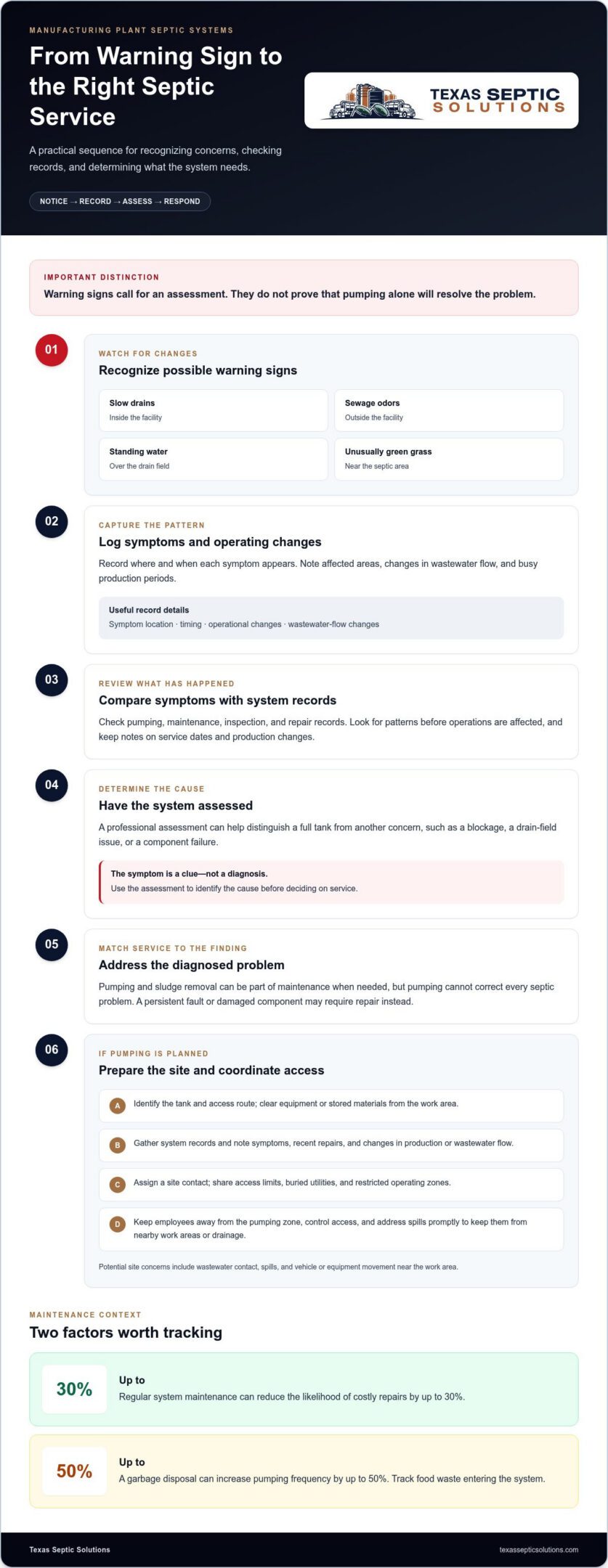
Look for slow drains inside the facility, sewage odors outside, standing water over the drain field, or unusually green grass near the septic area. These signs may indicate a system problem, but they do not identify its cause. Record where and when symptoms appear, then compare them with pumping and maintenance records.
A manufacturing plant may notice several slow drains during a busy production period. Note the affected areas and any changes in wastewater flow, then arrange an assessment to determine whether the tank needs pumping or the system needs another repair.
What are the signs a manufacturing plant septic tank needs pumping? Slow drains, sewage odors, standing water over the drain field, and unusually green grass near the septic area are common warning signs. Treat them as reasons to assess the system, not proof that pumping alone will resolve the issue.
Follow a simple troubleshooting sequence. First, log the location and timing of each symptom. Next, review recent maintenance and pumping records. Then have the system assessed to distinguish a full tank from a blockage, drain-field concern, or component failure. The repair should address the diagnosed cause, since pumping cannot correct every septic problem.
Regular system maintenance can reduce the likelihood of costly repairs by up to 30%. A garbage disposal can increase pumping frequency by up to 50 percent, so track food waste entering the system. For a persistent fault or damaged component, septic tank repair may be needed instead of another routine pumping visit. When critical facility repairs or ongoing operations demand rapid dispatch of replacement components and equipment, dedicated logistics providers such as Salus Securities & Courier Services (SS Courier) offer same-day urgent transportation solutions.
Which Orange County rules apply to industrial septic systems and wastewater disposal? Orange County rules do not govern a facility in Cypress, Texas; Harris County is the relevant county. Harris County requires permits for new well construction and major repairs.
Preparing the Plant for Pumping
How should a plant prepare for septic tank pumping? Identify the tank and access route, clear equipment or stored materials from the work area, and tell staff which nearby operations may be affected. Gather system records and note symptoms, recent repairs, and changes in production or wastewater flow. These steps help the service team access the tank and understand the facility’s concerns.
Before work begins, assign a site contact to coordinate access and communicate with employees. Keep the marked work area clear, and share the location of buried utilities or restricted operating zones. A licensed professional can then assess the site conditions and the system’s needs.
What safety and environmental risks arise during industrial septic tank pumping? Potential concerns include contact with wastewater, spills, and vehicle or equipment movement near the work area. Keep employees away from the pumping zone, control access, and promptly address any spill to prevent it from reaching work areas or nearby drainage. Beyond day-to-day containment, broader environmental and waste management innovations are being advanced by groups such as Greenovations Venture Studio, which backs and builds green-economy enterprises.
Commercial and residential septic pumping
Manufacturing facilities and homes both need wastewater removed from septic tanks, but their service plans differ. Compare system use, facility routines, and maintenance records before setting a pumping schedule.
Manufacturing Facility Pumping Services
A manufacturing plant should assess how wastewater enters its septic system and how site operations affect access. For example, a facility with changing production schedules should record heavy-use periods alongside pumping and inspection records. This helps staff plan service around actual use instead of copying a household routine.
Before arranging pumping, identify the tank location, access route, and nearby work areas. Share operating details and past service notes so the assessment can account for the facility’s conditions. A thorough review helps clarify whether pumping is needed or an inspection should examine another system concern.
Commercial pumping decisions should reflect the site’s wastewater patterns, not just the building’s label. A plant with steady operations may use its records differently from one with seasonal production or changing staffing. Log service dates, operational changes, and system observations. These details give the facility team a practical basis for planning future work.
Coordinate site access with the person responsible for facilities or operations. That contact can identify the tank, communicate access limits, and help prevent routine work from conflicting with nearby activity. Clear coordination also helps staff understand which areas need to remain accessible during service.
Commercial and Residential Service Needs
Residential pumping generally serves a household’s wastewater needs, while commercial service must account for the facility’s operations and access conditions. Homeowners in Cypress, Texas, should have their septic tanks pumped every 3-5 years. That interval is a residential benchmark, not an automatic schedule for a manufacturing site.
For a residential system, household use and maintenance history help guide planning. For a manufacturing facility, production patterns and system records provide relevant context. In both settings, inspection and pumping records help owners see what has been done and identify changes that warrant attention.
Use a simple comparison when organizing maintenance:
- Residential: Record pumping dates and household changes, then use the Cypress interval as a planning reference.
- Manufacturing: Track operational shifts, service history, and access needs before arranging a visit.
- Both: Keep inspection findings with maintenance records so future decisions have useful context.
Residential schedules cannot be assumed to suit commercial wastewater use. A facility manager can review the system’s service history, note operational changes, and use those records to plan pumping and inspections. This keeps the decision tied to the site rather than a household timetable.
Septic pumping prices in Cypress
There isn’t one flat price for every septic pumping job in Cypress. The cost depends on the scope and site conditions, and is provided after a quote request. For septic tank pumping for manufacturing plants in Cypress, tank size, access, and the amount of material to remove help shape the work involved.
Start by describing the system and site clearly. Tank capacity affects the volume to be removed, while restricted access can change how crews reach the tank. Share the tank location, access conditions, and service history. These details help clarify whether the request is for routine pumping or a more involved assessment.
Separate routine pumping from repair needs when planning a budget. If wastewater is backing up, drains are slow, or the drain field has standing water, pumping may not address the underlying problem. A failing component or drain-field issue may require a separate assessment and repair. Describe the symptoms so the work can be scoped around the facility’s actual concern.
- Tank details: Provide the tank’s known size and location.
- Access: Explain obstacles between the work area and tank.
- Service history: Share previous pumping or repair records.
- Current symptoms: Note backups, odors, or drain-field changes.
These details help plant managers coordinate service efficiently. For example, a tank behind a secured production area may require facility staff to arrange access, while a tank with a clear route has different site needs. Accurate information helps define the work before the service visit and reduces delays caused by access or location confusion.
Are permits required for septic pumping or maintenance in Cypress? Harris County requires permits for new well construction and major repairs. That requirement applies to those activities, not routine pumping or maintenance.
For septic tank pumping for manufacturing plants in Cypress, keep service records with maintenance and repair documentation. Include prior service dates, tank details, and observations from each visit. During a real estate transaction, those records can help explain service history, but they do not replace a septic inspection.
Plan costs around the actual work needed, not just the word “pumping.” Routine tank service differs from work that uncovers a failing component or drain-field concern. Describe wastewater use, symptoms, and access conditions when requesting a quote. This gives the service scope a practical starting point and helps the facility plan its next steps.
Treat that range as a starting point rather than a site-specific quote: the final scope still depends on the tank and route conditions described above. Confirm the details with the provider when requesting pricing.
Septic tank cleaning and sludge removal
How often should a manufacturing plant septic tank be pumped? A general recommendation is to schedule pumping every 3 to 5 years to limit sludge buildup and system failures. For a plant, review that interval alongside wastewater use, tank capacity, and inspection findings.
Sludge builds up as solids settle in the tank, while lighter material collects near the surface. When the tank is not pumped as needed, less space remains for incoming sewage. This can contribute to backups or allow solids to move toward the drain field. Pumping removes accumulated contents, but it does not fix a damaged tank or failing drain field.
A useful service visit starts with the facility’s records and site layout. Staff can identify the tank, provide previous pumping dates, and describe changes in wastewater flow. For example, a plant that has changed its process or operating schedule should record that change alongside its service history. This context helps assess whether the current pumping plan still fits.
Inspection findings can help distinguish sludge accumulation from other problems. For example, a slow drain may relate to a full tank, a blockage, or another system issue. Recording the symptom and its location gives the inspection a clear starting point. The findings can guide whether pumping, repair, or further assessment is appropriate.
- Before service: Gather pumping records, inspection notes, and tank location details.
- During assessment: Relate current symptoms to system history and wastewater use.
- After service: File the service date and findings with maintenance records.
Keep these records with installation documents and repair notes. A consistent file helps plant managers track changes, plan future maintenance, and support the facility’s compliance documentation. It also gives a new facilities contact a clear history rather than relying on memory.
Review the pumping schedule whenever plant operations change. A shift in wastewater volume, new equipment, or a changed production process may affect how quickly solids accumulate. Record the change, then compare later inspection findings with pumping history. This keeps the schedule connected to actual site conditions.
Regular pumping supports system upkeep, but it cannot prevent every failure. If sewage continues backing up after service or the drain-field area has persistent problems, the facility needs troubleshooting beyond sludge removal. Separating cleaning from repair helps teams address the cause instead of repeating a service that does not resolve it.
What septic tank pumping services do manufacturing facilities need?
A manufacturing facility needs pumping planned around its septic system, wastewater patterns, and site operations. A useful service visit starts with clear details about the tank and the problem the facility needs addressed.
Begin with the system’s service history. Gather pumping dates, inspection notes, repair records, tank location, and any available installation information. Then describe how wastewater use has changed, such as after a new production process or altered operating schedule. These details help determine whether the request concerns routine tank pumping or a symptom that needs broader troubleshooting.
Access planning matters at an active plant. Identify the route to the tank, nearby work areas, site entry procedures, and operating restrictions. For example, a tank behind a secured production zone may require coordination with facilities staff before the service visit. Preparing these details helps the work fit the site and avoid unnecessary interruption.
- Routine pumping: Use service records and system observations to plan tank contents removal.
- Problem assessment: Describe backups, odors, or slow drains so the issue can be evaluated.
- Access coordination: Identify the tank, route, and relevant site restrictions.
- Follow-up planning: File service findings with inspection and repair records.
A pumping request and a repair request are not interchangeable. If a tank has accumulated solids, pumping removes that material. If symptoms continue afterward, the facility may need septic system repair or further assessment. Recurring backups after pumping, for example, indicate a need to investigate the system rather than simply repeat the same work.
Use a consistent handoff between operations and facilities staff. The operations contact can describe wastewater changes, while the facilities contact provides access details and records. After service, document the work completed and any findings shared during the visit. This file gives the next maintenance review a practical reference.
For a plant with a changing schedule, review the service plan when production changes. Compare the new operating pattern with previous pumping dates and system observations. This provides a site-specific basis for planning rather than relying on a residential routine. Keep the record current so a future manager can quickly understand the system’s history.
If your facility needs pumping or system troubleshooting, arrange septic pumping service with the site details and maintenance history ready. Clear information about access, symptoms, and previous work helps focus the service on the plant’s actual needs.
When comparing providers, use reviews alongside the facility’s access needs, service records, and wastewater concerns. More than 80% of customers consult reviews before choosing a service provider, so customer feedback can inform an assessment of communication and reliability. Reviews do not replace confirming that a provider understands the site’s system and can coordinate with plant staff.
The septic services market is expected to grow at a compound annual growth rate of 3.5% through 2032. Illinois has 257 septic service companies across 186 Illinois cities. Those figures offer context when considering available providers; the facility’s specific system, operating constraints, and need for pumping or troubleshooting remain central to choosing a suitable service.
Texas Septic Solutions: New Septic System Installation
Texas Septic Solutions provides septic system pumping for manufacturing facilities, along with repairs when troubleshooting identifies a damaged component. Routine maintenance helps teams keep service records current and plan care around facility operations.
If recurring problems continue or the existing system no longer meets the facility’s needs, a new septic system installation may be appropriate. The right service depends on whether the issue is accumulated tank contents, a repair need, or the system itself.
Share the facility’s symptoms, access details, and service history to help determine the next step. Contact Texas Septic Solutions to discuss your facility’s septic system needs.
Plan the next step for your facility
Turn your septic records into a practical maintenance plan. For septic tank pumping for manufacturing plants in Cypress, document how the system serves the site and note operational changes that may affect its needs. This gives your facilities team a useful starting point for discussing the next step, whether the system needs ongoing care, repair, or a new installation.
Texas Septic Solutions provides septic system maintenance and repair, along with new septic system installation. If you’re ready to discuss your facility’s needs, contact Texas Septic Solutions today. A clear plan can help your team move forward with confidence.
Frequently Asked Questions
How much does septic pumping cost in Cypress?
There is no flat price for every Cypress facility; the cost depends on the work involved. For a manufacturing site, describe the work area, access arrangements, and whether you need pumping alone or system troubleshooting as well. Clear details help define the service scope. Texas Septic Solutions provides septic system pumping for residential and commercial customers.
How do I find a licensed septic company in Cypress, Texas?
Texas Septic Solutions is licensed and insured, with an Installer II license, OS0029925, and a maintenance provider license, MP000 1859. For a manufacturing facility, the distinction can help identify which work relates to installation or maintenance. Share the system’s issue and the service you need, such as pumping, maintenance, or repair, so the request can be matched to the relevant work.
How can manufacturers compare septic pumping providers and emergency response services?
Compare the service scope, relevant licenses, and whether emergency septic service is available when an urgent failure affects operations. Texas Septic Solutions offers 24/7 emergency septic service, alongside pumping, maintenance, repair, and installation. A plant manager can prepare a concise service request with the system location, symptoms, and access instructions, then assess how each response addresses the facility’s immediate need and follow-up care.