
Septic Tank Inspection Near Me: A Homeowner’s 2026 Buying Guide
Did you know that roughly 20% of Texas households rely on septic systems, yet many homeowners still mistake a simple pump out for a comprehensive diagnostic inspection? If you’re currently searching for a septic tank inspection near me, you probably aren’t just looking for someone to empty a tank. You’re looking for peace of mind. Whether you’re navigating a home purchase on the Texas Gulf Coast or trying to stay ahead of TCEQ’s 2026 compliance rules, the fear of hidden repair costs is a heavy burden to carry.
We understand that the world of onsite sewage facilities can feel overwhelming, especially when you’re caught between confusing technical jargon and a market crowded with irrelevant results. This guide is designed to clear the air. You’ll learn exactly what a professional inspection entails, how to distinguish between different service types, and how to choose a trustworthy local expert who knows our unique Texas soil conditions. We’ve put together a clear roadmap to help you evaluate service providers and ensure your system remains a reliable asset rather than a liability. By the end of this article, you’ll have the confidence to manage your property’s health with the authority of a seasoned pro.
Key Takeaways
- Distinguish between a basic visual “peek” and a full diagnostic evaluation to identify hidden structural issues before they become expensive emergencies.
- Learn why local Texas soil conditions require specific inspection techniques to ensure your drain field and tank remain TCEQ-compliant.
- Identify the top red flags when booking a septic tank inspection near me, such as providers who skip the pumping process during a diagnostic check.
- Discover why standard home inspectors often lack the specialized licensing needed to properly evaluate a septic system during a real estate transaction.
- Gain a clear understanding of the 2026 maintenance protocols that protect your home’s functionality and your long-term property value.
Why You Need a Professional Septic Tank Inspection in Texas
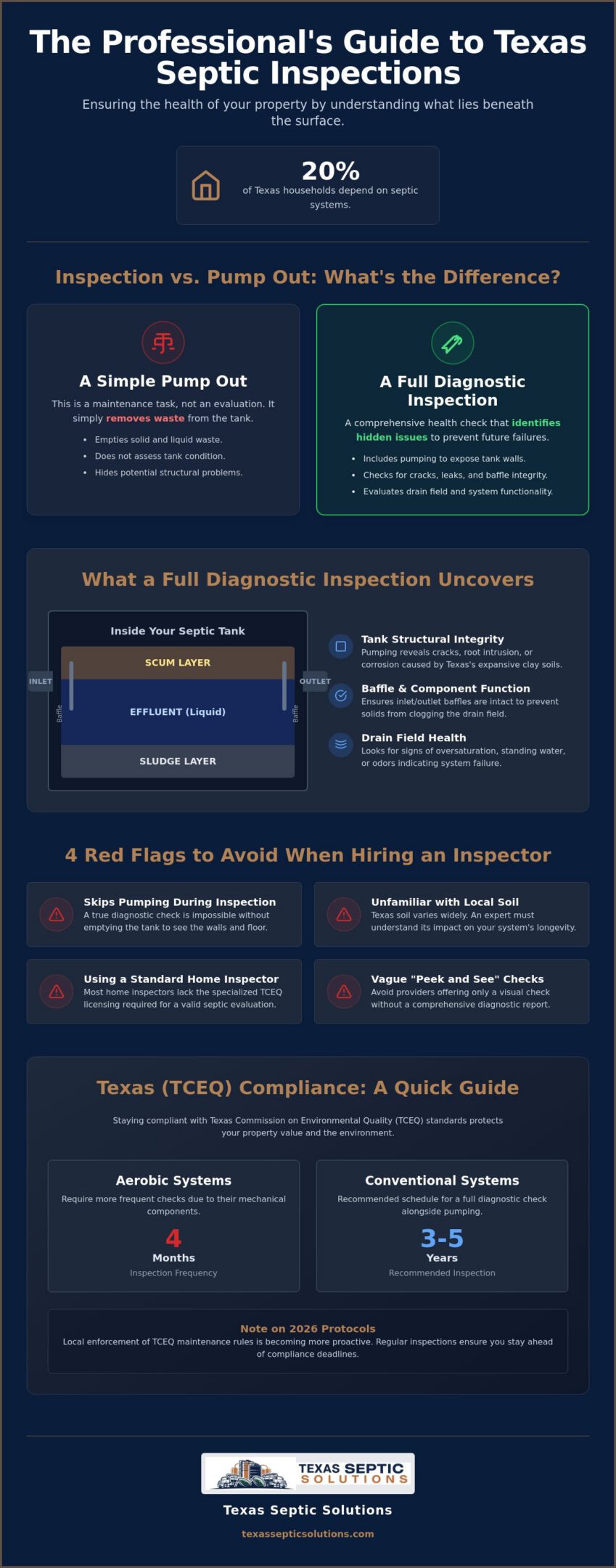
Finding a reliable septic tank inspection near me is about more than just checking a box for a real estate closing. It’s a comprehensive diagnostic evaluation of your entire onsite sewage facility. While understanding what a septic tank is helps you grasp the basics, a professional inspection goes much deeper. It involves examining the structural integrity of the tank, the functionality of the inlet and outlet baffles, and the health of the drain field. Many homeowners mistake a standard pump-out for an inspection. Pumping merely removes waste; an inspection identifies why that waste might not be processing correctly.
Texas soil conditions vary wildly, especially across the Gulf Coast. In areas like Cypress and Houston, heavy clay soil is common. This clay expands when wet and shrinks when dry, which puts immense physical pressure on a buried tank. If you’re in a sandier region like Shepherd, drainage issues look different but are just as critical. If you are searching for a septic tank inspection near me, you need a team that understands these local geological stressors. A certified report provides a paper trail that protects your property value and proves to future buyers that you’ve maintained the system responsibly.
The Cost of Neglect vs. The Price of Prevention
Waiting for a backup is a high-stakes gamble that rarely pays off. A routine inspection can catch root intrusion or a small tank crack before they lead to total system failure. When you consider the potentially high septic system replacement cost, the price of a diagnostic check is a smart investment. Our team often finds that simple baffle repairs or pump adjustments prevent the need for an entirely new installation. Common issues like baffle failure or sludge buildup are often invisible until they cause a messy, expensive disaster in your yard.
Texas Regulatory Requirements (TCEQ)
TCEQ standards are strict for a reason. For aerobic systems, Texas law requires inspections every four months by a licensed maintenance provider. In 2026, local enforcement in places like Huffman and Shepherd has become even more proactive. Whether you have a conventional or aerobic system, staying compliant with 30 TAC Chapter 285 ensures you avoid fines and environmental hazards. Most local experts recommend a full diagnostic check every three to five years for conventional systems, typically performed alongside your regular pumping schedule. This keeps your home functional and your property within state guidelines.
What Happens During a Septic Inspection? (The Levels of Service)
Understanding the different levels of service is vital when you book a septic tank inspection near me. A basic visual inspection, often called a “peek and see,” is standard for routine maintenance. During this check, a technician looks for obvious signs of trouble like standing water or odors. However, this doesn’t tell the whole story. For a real estate transaction or a system with performance issues, you need a full diagnostic inspection. This rigorous standard involves pumping the tank to view the walls and floor, ensuring there are no hidden cracks or structural failures that could lead to a total collapse.
Following septic system maintenance best practices means moving beyond surface level observations. During a professional visit, our team evaluates three critical layers inside your tank: the scum (top floating layer), the effluent (liquid middle), and the sludge (bottom settled solids). If these layers aren’t balanced, your system can’t process waste effectively. We also examine the inlet and outlet baffles to ensure they are properly directing flow and keeping solids from escaping into your drain field. If you suspect your system is struggling, reaching out to a professional team like Texas Septic Solutions can help you identify whether a simple component fix will suffice or if more extensive work is needed.
The Tank Inspection Process
The process begins by locating and uncovering the tank lids. While modern systems often have risers that sit at or just above ground level, older properties may require some digging to access the ports. Once open, we measure the sludge and scum layers. This data determines if you need immediate pumping or if your current usage is sustainable. We then look for signs of corrosion or “soft” concrete in the tank walls. We also check the structural integrity of the baffles, which are the first line of defense against system clogs.
Evaluating the Drain Field
The drain field is the most expensive component of your system, making its evaluation the most critical part of any diagnostic check. We look for surface moisture or “lush green” spots that indicate the soil is no longer absorbing effluent correctly. A reliable septic tank inspection near me should always include a hydraulic load test. During this test, we introduce a specific volume of water into the system to see how quickly the soil processes the surge. If the water levels in the tank rise and stay high, it’s a clear signal that the field is failing. Catching these signs early is the only way to avoid the massive expense of a full field replacement.
Real Estate Septic Inspections: What Buyers and Sellers Must Know
Buying a home on the Texas Gulf Coast often means managing an On-Site Sewage Facility (OSSF). While a general home inspector checks the roof and the electrical panel, they rarely have the specialized tools or licensing to evaluate a buried septic system. Searching for a septic tank inspection near me during the option period is the only way to ensure you aren’t inheriting a five-figure repair bill. A professional diagnostic goes beyond flushing toilets; it verifies that the system can actually handle the daily load of a modern household.
A “septic contingency” in your sales contract is your best defense. This clause allows you to walk away or renegotiate if a professional diagnostic reveals a failing drain field or a cracked tank. For sellers, having a clear paper trail is essential in the 2026 market. Providing a documented septic system maintenance plan shows prospective buyers that the system has been cared for according to Texas regulations for On-Site Sewage Facilities. This transparency often leads to faster closings and higher offers because it removes the “hidden cost” anxiety that often kills rural real estate deals.
The Inspection Report: Reading Between the Lines
When you receive your report, look closely at the status ratings. A “Satisfactory” rating means the system is functioning as designed at the time of the test. A “Marginal” rating is a warning sign. It suggests the system is struggling and might need professional repair or pumping soon. If a report marks the system as “Failing,” the sale usually stalls until repairs are made. Use these findings to negotiate the sales price or request that the seller completes specific repairs before the closing date. Pay close attention to comments about the absorption area, as soil saturation is a primary indicator of future failure.
Common Failures Found During Texas Home Sales
Many properties in areas like Shepherd or Cleveland have “creative” plumbing additions that don’t meet modern standards. We frequently find illegal greywater bypasses where laundry or sink water skips the tank and drains directly onto the ground. Another common issue is hydraulic overloading. This happens when a system designed for a small cottage is forced to serve a large family. If you notice a septic tank alarm going off during a walk-through, don’t ignore it. That alarm is a direct signal of a high-water event or pump failure that requires immediate attention from a specialist. Booking a septic tank inspection near me ensures these hidden surprises are caught before you sign the final papers.
Choosing a ‘Septic Tank Inspection Near Me’: 5 Red Flags to Avoid
Finding the right professional for a septic tank inspection near me shouldn’t feel like a guessing game. In a market as large as the Houston area, you’ll encounter a wide range of service quality. Some providers offer quick, surface-level checks that miss deep-seated issues, while others use fear to push unnecessary repairs. To protect your property and your wallet, watch out for these five red flags.
- The ‘Too Cheap’ Inspection: If a quote is significantly lower than the local average, it usually indicates a visual-only check. These “drive-by” inspections often skip the critical stress tests needed to verify system health.
- Lack of Proper Licensing: Every inspector in Texas must be licensed by the TCEQ. If a provider can’t produce their credentials, they aren’t qualified to sign off on a state-compliant report.
- Refusal to Pump: You cannot see cracks, root intrusion, or sludge buildup on the tank floor if the tank is full. A technician who refuses to pump during a diagnostic is essentially guessing.
- No Written or Photo Documentation: A professional report should include clear photos of the tank’s interior and a detailed breakdown of the drain field’s performance. Verbal “all clears” offer no protection in a real estate dispute.
- High-Pressure Sales Tactics: A reliable expert presents findings calmly and offers solutions. If you feel bullied into immediate, expensive repairs before the inspection is even finished, get a second opinion.
Questions to Ask Before You Book
Before you hire anyone, a quick phone interview can save you hours of frustration. A reputable company will be happy to answer these direct questions:
- Are you licensed by the State of Texas specifically for septic inspections?
- Does your diagnostic process include a hydraulic load test for the drain field?
- Will you provide a digital report with interior photos and a clear explanation of any findings?
The Value of Local Expertise in Cleveland and Houston
Local knowledge is your best defense against system failure. Soil conditions in Cleveland differ from those in Cypress or Shepherd; an inspector who doesn’t understand these nuances might misinterpret drainage patterns. We pride ourselves on being a “neighborly expert” for our community, offering the steady reliability you need during a stressful property evaluation. If your inspection reveals an urgent issue, our 24/7 availability ensures you aren’t left waiting for a resolution. If you’re ready to secure your property’s health, you can Schedule your professional inspection with Texas Septic Solutions today.
The Texas Septic Solutions Difference: Professionalism You Can Trust
When you choose Texas Septic Solutions for a septic tank inspection near me, you’re getting more than a simple checklist. Our 2026 inspection protocol is designed to exceed minimum state requirements. We believe that property owners in the Houston area deserve a higher standard of care, especially given the environmental challenges of the Gulf Coast. Our team doesn’t just look for current failures; we look for the early warning signs of future trouble. This proactive approach helps you avoid the stress of unexpected utility failures and protects your long-term property value.
We provide a one-stop service model that takes the guesswork out of system management. If our diagnostic evaluation reveals an issue, you won’t have to search for a separate contractor. We offer a seamless transition from inspection to septic system repair, ensuring that any deficiencies are corrected quickly and correctly. Every client receives a detailed digital report. This documentation includes high-resolution photos of your tank’s interior and clear, actionable recommendations. Having this record is invaluable for real estate transactions or proving TCEQ compliance to local authorities.
Beyond the Inspection: Long-Term Care
An inspection is a snapshot in time, but your system requires ongoing attention to stay healthy. We help our neighbors transition from a one-time checkup to a sustainable septic system maintenance Texas plan. These plans are customized based on your household size and the specific type of system you own. We also establish preventative pumping schedules, so you never have to worry about sludge levels reaching a critical point. If our inspection does uncover an emergency, our 24/7 service team is ready to respond immediately to protect your home and yard.
Get Started with Your Local Septic Experts
We are proud to serve the communities of Cleveland, Cypress, Huffman, Shepherd, and the greater Houston area. Our team lives where you do, and we understand the unique clay and sand conditions that affect local drainage. You can expect transparent pricing and a straightforward “neighborly expert” vibe from every member of our crew. We value long-term relationships over quick sales, and we’re built to handle everything from routine upkeep to high-pressure failures. Don’t leave your home’s functionality to chance. Contact Texas Septic Solutions for a reliable inspection quote and get the peace of mind you deserve.
Protect Your Property with a 2026 Diagnostic Health Check
A professional septic evaluation is the only way to ensure your home remains safe, compliant, and functional. We’ve seen how the right diagnostic can save homeowners from five-figure repair bills by catching small issues before they lead to total system failure. Whether you are navigating a complex real estate transaction or simply staying ahead of TCEQ’s 2026 maintenance standards, having a clear understanding of your system’s health is your best defense against the unexpected. Choosing the right septic tank inspection near me means finding a partner who understands our local Texas soil and provides the rigorous testing your property deserves.
Texas Septic Solutions is here to provide that peace of mind. As Licensed Texas Septic Professionals, we deliver detailed digital inspection reports that give you a transparent look at your system’s condition. We’re built for both routine care and the high-pressure demands of 24/7 emergency service. Don’t wait for a backup to tell you there’s a problem. Take a proactive step today to secure your home’s functionality and long-term value. Book Your Certified Septic Inspection Now and let our team handle the dirty work so you don’t have to.
Frequently Asked Questions
How much does a septic tank inspection cost in Texas?
The final price of a diagnostic check depends on the system type, the size of the tank, and whether digging is required to reach the lids. While basic visual checks are less intensive, a full diagnostic usually involves pumping the tank to verify its structural integrity. Factors like your location in the Houston area and the complexity of your drain field also influence the total investment needed for a certified report.
How often should I have my septic tank inspected near me?
Texas law requires aerobic systems to be inspected every four months by a licensed provider under a mandatory maintenance contract. If you have a conventional system and are searching for a septic tank inspection near me, experts recommend a full diagnostic every three to five years. This schedule usually aligns with your regular pumping intervals to ensure the tank and drain field are processing waste correctly.
What is the difference between a septic inspection and septic pumping?
Septic pumping is the physical removal of accumulated solids, whereas an inspection is a professional evaluation of the system’s components. Pumping prevents backups by creating space for solids to settle. An inspection verifies that the baffles, tank walls, and drain field are actually functioning. You should generally have an inspection performed at the same time as a pump out to get a complete view of system health.
Is a septic inspection required to sell a house in Texas?
Texas law does not mandate a septic inspection for every home sale, though FHA, VA, and USDA lenders typically require one. Even when not legally required, most buyers include a septic contingency in their contract to protect against hidden repair costs. Sellers who provide recent inspection records often experience a smoother closing process because it removes uncertainty regarding the property’s utility infrastructure.
How long does a professional septic tank inspection take?
A professional diagnostic evaluation typically takes between one and three hours. The duration depends on how easily the inspector can access the tank lids and whether a hydraulic load test is performed on the drain field. If the system hasn’t been serviced recently and requires pumping to view the interior walls, the process may take longer. Having your maintenance records and property maps ready can help speed up the visit.
Can I do my own septic tank inspection?
You cannot legally perform your own inspection for real estate transactions or state compliance. Texas regulations require that aerobic systems be managed by a licensed maintenance provider to ensure environmental safety. For real estate, a certified report from a licensed professional is the only documentation that lenders and title companies will accept. Attempting a DIY check also carries significant safety risks due to toxic gases and structural hazards.
What happens if my septic system fails inspection?
If your system fails, you will receive a detailed report outlining the specific deficiencies and the repairs needed to reach compliance. In a real estate transaction, a failure usually leads to a price negotiation or a requirement for the seller to complete repairs before the closing date. Our team can provide a clear estimate for any necessary repairs to help you resolve the issue and maintain TCEQ compliance.
Does a septic inspection include the drain field?
A professional diagnostic check always includes a thorough evaluation of the drain field because it is the most critical part of the wastewater treatment process. A reliable septic tank inspection near me looks for signs of hydraulic failure, such as surfacing sewage or unusually lush vegetation. Since the drain field is the most expensive component to replace, its health is a top priority for every homeowner.