
Septic Tank Certification for Real Estate Transactions: The 2026 Texas Guide
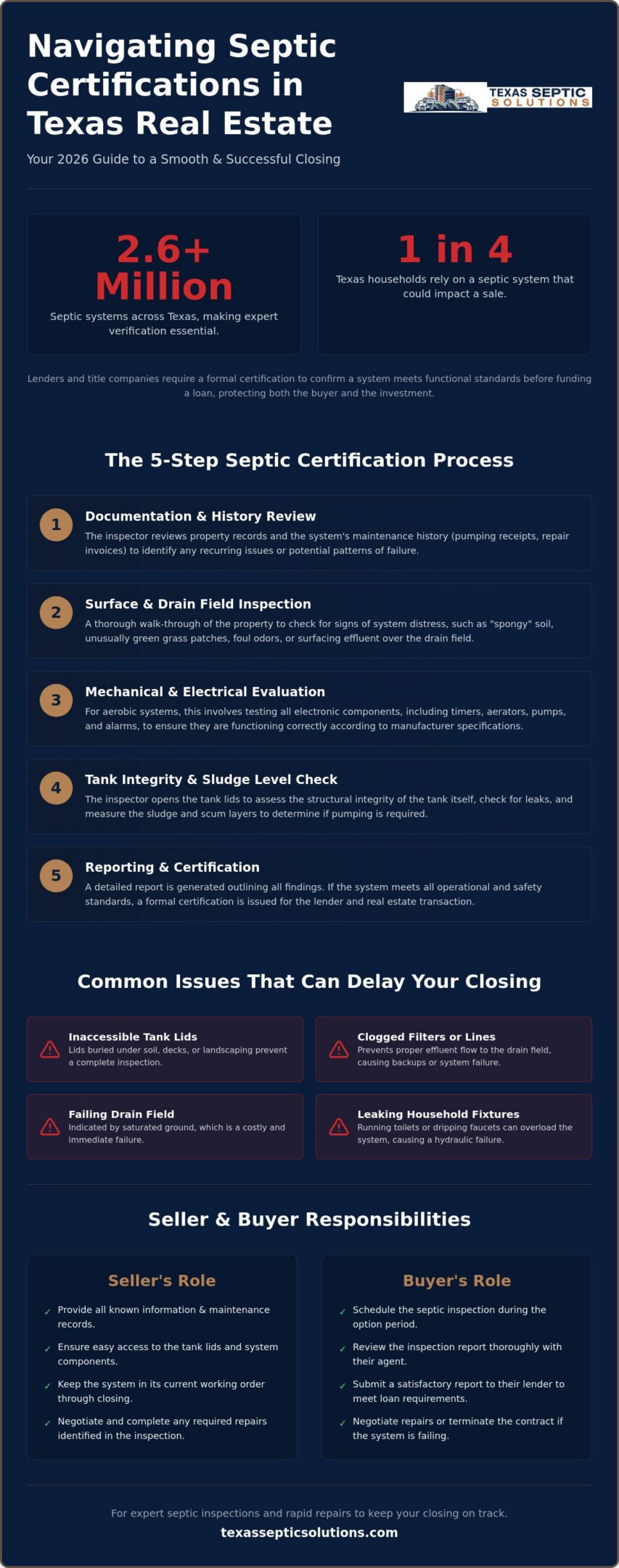
With over 2.6 million septic systems across Texas, nearly one in four households relies on an on-site sewage facility that could quietly derail a property sale just days before closing. Obtaining a septic tank certification for real estate transaction purposes often feels like a race against the clock. You’re likely dealing with the stress of tight option periods while trying to decipher whether your specific county follows standard TCEQ rules or more stringent “Authorized Agent” requirements. It’s a lot to manage when you just want to hand over the keys without any last-minute surprises.
We understand that the last thing you need is a surprise failure or a lender rejection at the finish line. That’s why we’ve put together this 2026 guide to help you navigate the process with confidence. You’ll learn exactly what inspectors look for, how to satisfy FHA or VA loan requirements, and what to do if your system needs a quick fix to pass. We’ll walk you through the essential steps to ensure your inspection report is clear, your repairs are handled, and your Texas real estate closing stays perfectly on schedule.
Key Takeaways
- Understand why Texas lenders and title companies require a formal certification to confirm your system meets functional standards before funding a loan.
- Navigate the five-step inspection process with ease by preparing maintenance records and ensuring tank lids are accessible for the inspector.
- Identify how to secure a septic tank certification for real estate transaction success by resolving common issues like leaking fixtures or clogged filters before they stall your deal.
- Clarify the specific responsibilities for both buyers and sellers to ensure all state and local county regulations are met during the critical option period.
- Learn how to leverage expert pumping and emergency repair services to quickly address inspection findings and keep your closing date on schedule.
What is a Septic Tank Certification for a Real Estate Transaction?
A septic tank certification for real estate transaction purposes is a formal document issued by a licensed professional that confirms a septic system is operating according to its original design and state health standards. While it might seem like just another box to check, this certification is the primary way to verify that the underground infrastructure is sound. It goes far beyond a simple visual check. A certified technician evaluates the tank’s integrity, the functionality of the pumps, and the health of the drain field to ensure the system won’t fail the moment a new family moves in.
Lenders and title companies in Texas frequently require this certification before they’ll fund a loan, especially for government-backed programs like FHA, VA, or USDA. They want to ensure their investment is protected from environmental hazards and structural failures. For a buyer, this document is a crucial shield against unexpected septic system replacement costs, which can reach five figures in the Texas market. While a standard home inspection covers the roof and the foundation, most general inspectors aren’t licensed to open a tank or perform a hydraulic load test. Understanding what a septic system is and how its components interact is a specialized skill that requires a dedicated expert.
Texas TCEQ and Local County Standards
The Texas Commission on Environmental Quality (TCEQ) sets the baseline for on-site sewage facilities (OSSF) across the state under Title 30 of the Texas Administrative Code. However, Texas allows many counties to act as “Authorized Agents.” Counties like Liberty, Harris, and Montgomery often have their own specific permitting requirements and stricter maintenance rules that go beyond the state minimums. A local expert is necessary because they understand how the heavy clay soils of East Texas affect drainage differently than the sandy loams found in other parts of the state.
The Role of the Real Estate Contract
In a typical Texas transaction, the “One to Four Family Residential Contract” includes an “Information About On-Site Sewer Facility” addendum. This document outlines the system type and maintenance history, but it doesn’t replace an actual inspection. The option period is your critical window. This is the time when a buyer must secure a septic tank certification for real estate transaction approval to ensure they can negotiate repairs or walk away if the system is failing. Lenders usually insist on seeing a “satisfactory inspection” report before the final closing papers are signed; without it, the deal can stall indefinitely.
How to Get a Septic Certification: The 5-Step Inspection Process
Obtaining a septic tank certification for real estate transaction approval is a multi-layered process that demands technical expertise. It moves from a broad overview of the property down to the specific mechanical components that keep the system running. This five-step approach ensures that every part of the infrastructure is vetted for the lender and the buyer, providing a clear path to the closing table.
The process isn’t just about passing or failing; it’s about transparency. By following a standardized protocol, we can identify small issues before they become deal-breakers. This methodical evaluation protects the seller from future liability and gives the buyer peace of mind that their new home’s most critical utility is in good working order.
Step 1 & 2: Documentation and Surface Inspection
We begin by reviewing the property’s history. A well-documented septic system maintenance plan provides a clear picture of how the system has been treated over the years. This history helps us spot patterns that might indicate future trouble. After the paperwork, we perform a thorough walk of the drain field. We look for “spongy” soil or patches of grass that are significantly greener than the rest of the yard. These are often signs that effluent isn’t being treated properly or is surfacing where it shouldn’t. During this phase, we also identify whether the property uses a traditional anaerobic system or a modern aerobic treatment unit, as each requires a different inspection protocol.
Step 3 & 4: Mechanical and Tank Evaluation
For properties with aerobic systems, we focus heavily on the electronics. We test the septic tank alarm and control panel to verify that the sensors and aerators are functioning correctly. Then, we move to the tank itself. We open the lids to measure sludge and scum levels, which tells us if the system is overloaded. Checking the integrity of the tank walls and baffles is also critical. We often recommend pumping the tank during the inspection. It’s a “best practice” for a reason; you simply cannot see structural cracks or root intrusions if the tank is full of liquid. Pumping provides the clearest view of the interior, allowing for a more accurate and reliable certification.
The final step is the delivery of the formal inspection report. We compile every finding, from the pump’s amp draw to the drain field’s condition, into a document that satisfies title companies and lenders. This report is your “all-clear” for the closing table. If you’re working under a tight deadline, we can provide the emergency septic service and pumping needed to keep your deal moving forward.
Common Issues That Can Delay Your Texas Real Estate Closing
Finding a problem during an inspection can feel like a major setback, but most issues are manageable if caught early. Delays often stem from simple mechanical failures or a lack of proper maintenance history. When we perform a septic tank certification for real estate transaction purposes, our goal is to identify these hurdles so they can be cleared before the closing date. Understanding these common pitfalls helps both buyers and sellers stay ahead of the clock.
One frequent culprit is hydraulic overload. This happens when leaking toilets or dripping faucets send a constant stream of water into the tank, preventing solids from settling and flooding the system. We also see many failures due to damaged baffles or clogged filters. These components are small, but they’re the primary line of defense for your drain field. If a baffle is missing or a filter is blocked, the system can’t process waste correctly, leading to an immediate failure on the inspection report. The most serious issue is a total drain field failure, which often requires a complete system overhaul. While this is rare in well-maintained homes, it’s the number one reason a lender will pull funding.
Troubleshooting Failures During the Option Period
If the inspector determines that a septic system repair is necessary, the first step is to get a professional estimate. Many transactions in the Houston area continue moving forward through the use of a “Repair Escrow.” This allows the lender to hold back a portion of the sale proceeds to cover the work, letting the closing proceed while the repairs are scheduled. A minor repair shouldn’t necessarily kill a Houston real estate deal if both parties are willing to negotiate. Sellers can often credit the buyer for the repair costs, or have the work completed and re-inspected before the final walk-through.
Aerobic System Specifics
Texas aerobic units have unique components that require special attention. We frequently find broken sprinkler heads or failed air compressors during a septic tank certification for real estate transaction. Because these systems rely on oxygen to break down waste, a dead compressor means the system isn’t treating effluent properly. Additionally, most Texas counties require a valid, signed maintenance contract to be in place before a certification can be finalized. These contracts typically include three inspections per year. We also check the “Zabel” filter or similar effluent filters; if these aren’t cleaned regularly, they can cause a backup that looks like a major failure but is actually just a simple maintenance task.
Seller and Buyer Responsibilities During the Septic Inspection
A successful closing requires clear communication between the buyer and the seller. While the ultimate goal is a passed septic tank certification for real estate transaction approval, both parties have specific duties to fulfill before the inspector arrives. Misunderstandings about who provides access or who pays for pumping can lead to friction that slows down the entire process. It’s best to settle these details early in the option period to keep the timeline moving.
Sellers are responsible for providing full access to the system. This means more than just unlocking a gate. It involves disclosing the exact location of the tank and ensuring the lids aren’t buried under feet of dirt or hidden by heavy landscaping. Buyers, on the other hand, should hire their own third-party expert to ensure an unbiased evaluation. In most Texas regions, the buyer pays the inspection fee while the seller covers the cost of pumping the tank. This arrangement is standard because the seller benefits from a freshly pumped tank even if the current deal falls through.
Once the sale is finalized, the responsibility for system health shifts. For aerobic systems, the buyer must ensure the maintenance contract is officially transitioned into their name. This isn’t just a suggestion; it’s often a requirement for the local health department to recognize the system as compliant. Failing to transfer this contract can lead to permit issues and even fines from the county shortly after move-in.
Checklist for Sellers Before the Inspector Arrives
Preparation can be the difference between a smooth visit and a costly delay. Sellers should follow these steps to ensure the site is ready:
- Clear all debris, overgrowth, or vehicles from the area around the tank and the drain field.
- Organize your septic system maintenance Texas records, including the most recent pumping dates and repair receipts.
- Verify that the power is on for the entire house; the inspector needs to test pumps, alarms, and control panels.
Due Diligence Tips for Buyers
Buying a home with a septic system requires a different mindset than buying on a city sewer line. Use these tips to protect your investment during the due diligence phase:
- Confirm your inspector is licensed by the state and understands the specific soil conditions in the Houston and Cleveland areas.
- Request a “stress test” if the home has been vacant for more than 30 days. This involves running water through the system to see how the drain field handles a typical daily load.
- Remember that a passed inspection is a snapshot in time. It doesn’t guarantee future performance if you don’t stick to a regular pumping schedule.
If you need an expert to handle your upcoming closing, reach out to our team for a professional septic tank certification and pumping service to keep your deal on track.
Fast-Track Your Closing with Texas Septic Solutions
Real estate deadlines wait for no one. When you’re in the middle of a high-stakes deal, a missing or failed septic tank certification for real estate transaction can bring everything to a grinding halt. We understand the pressure that comes with the final days of an option period. That’s why our team is built for speed and reliability, ensuring that your utility inspections are the smoothest part of your closing process. We don’t just provide a report; we provide a clear path forward.
Our full-service model is what sets us apart for realtors and homeowners alike. Most companies only offer a visual inspection, leaving you to find a separate contractor if the system needs pumping or a quick repair to pass. We handle it all in-house. If our inspection reveals a clogged filter or a failing pump, we can perform the necessary septic system repair or pumping immediately. This “one-stop” approach saves you days of coordination and keeps your closing date exactly where it belongs: on the calendar. Our 24/7 emergency service is specifically designed to handle those last-minute lender requirements that pop up at the eleventh hour.
Reliable Local Authority in East Texas
We take deep pride in serving our neighbors across Cleveland, Houston, Cypress, and the surrounding Shepherd communities. Our team understands the specific regulatory landscape of Harris, Montgomery, and Liberty counties, which means we know exactly what local health departments and title companies expect to see in a certification report. We coordinate directly with real estate agents and title officers to streamline communication and deliver transparent, professional documentation. Our “neighborly expert” approach means we treat every complex septic issue with the straightforward honesty and care you’d expect from a local partner who values long-term community relationships over a quick service call.
Book Your Real Estate Inspection Today
Securing your septic tank certification for real estate transaction success shouldn’t be a source of stress. We’ve made the scheduling process as simple as possible to accommodate the fast-paced nature of the Texas housing market. You can book your appointment through our website or call our 24/7 emergency line for immediate assistance with urgent closings. To get started, all we need is the property address, the type of system (if known), and details on how our technician can access the site. Whether you’re a seller preparing for a listing or a buyer doing your due diligence, we’re ready to help you cross the finish line with confidence.
Contact Texas Septic Solutions for your real estate certification today and let us handle the heavy lifting for your upcoming closing.
Secure Your Texas Real Estate Closing Today
Navigating a property sale with a septic system doesn’t have to be a source of anxiety. By understanding the specific TCEQ requirements and staying ahead of the option period, you can ensure that a septic tank certification for real estate transaction remains a simple milestone rather than a massive roadblock. Proactive pumping and clear communication between buyers and sellers are the keys to avoiding last-minute funding delays and unexpected repair costs. When you handle the details early, you protect your investment and your peace of mind.
Our team of licensed Texas septic professionals is ready to support your transaction with expert inspections, pumping, and repairs. We proudly serve the Houston, Cleveland, and Cypress areas with 24/7 emergency service for those urgent closings that simply can’t wait for a standard appointment. We’ve seen every possible scenario and remain dedicated to providing the reliable, neighborly expertise you need to get to the finish line without any surprises.
Schedule Your Real Estate Septic Certification with Texas Septic Solutions
You’re just one step away from a successful, risk-free closing. Let’s get your system certified and your deal finalized today.
Frequently Asked Questions
How long does a septic tank certification take to complete?
A professional on-site inspection usually takes between one and two hours to complete. During this time, the technician performs hydraulic load tests and evaluates all mechanical components. While the physical check is quick, the final written report is typically delivered within 24 to 48 hours. If you’re facing a tight closing deadline, we offer expedited reporting to keep your transaction moving forward without delay.
Who typically pays for the septic inspection in a Texas real estate deal?
In most Texas transactions, the buyer pays for the professional inspection fee as part of their due diligence. However, the seller is traditionally responsible for the cost of pumping the tank, which is necessary for a full interior evaluation. These terms are often negotiated within the sales contract. Settling these costs early in the option period prevents friction as you approach the closing table.
Does a septic tank have to be pumped to be certified?
Yes, pumping is a standard requirement for a thorough septic tank certification for real estate transaction approval. An inspector cannot visually verify the structural integrity of the tank walls or check for cracks and root intrusions if the tank is full. Pumping the system provides a clear view of the entire interior, ensuring the certification is accurate and that the lender’s requirements are fully met.
What happens if the septic system fails the real estate inspection?
A failed inspection doesn’t have to end the sale; it usually triggers a new round of negotiations. The buyer can request that the seller perform repairs, or the parties can agree on a price reduction or a repair escrow. Many issues, such as a failed pump or a broken baffle, can be repaired quickly by a licensed professional to bring the system back into compliance before the closing date.
Is a septic certification the same as a TCEQ permit?
No, these are two different documents with different purposes. A TCEQ permit is the original legal authorization to install and operate the system on the property. A septic certification is a private, third-party report that confirms the system is currently functioning as designed. Lenders require the certification to ensure the permitted system hasn’t fallen into disrepair or failed since its original installation.
Can a house be sold in Texas with a failing septic system?
It is possible to sell a house with a failing system, but it’s very difficult if the buyer is using traditional financing. Most lenders, including those for FHA and VA loans, will refuse to fund the deal until the system is functional. Cash buyers may move forward with a failing system, but they typically demand a significant price reduction to cover the future replacement costs.
How long is a septic certification valid for after the inspection?
Most lenders and title companies consider a septic tank certification for real estate transaction purposes to be valid for 30 to 90 days. Because a system’s health can change quickly based on how the occupants use it, underwriters want the most recent data possible. If your closing date gets pushed back significantly, you might need a brief re-inspection to satisfy the lender’s updated requirements.
Do I need a separate inspection for an aerobic septic system?
Aerobic systems don’t necessarily need a “separate” visit, but they do require a more complex evaluation than standard systems. The inspector must test the air compressor, control panel, and sprinkler heads to ensure everything is working. You’ll also need to provide proof of a current maintenance contract, as most Texas counties won’t allow a title transfer for an aerobic system without one in place.