
Septic Tank Alarm Keeps Going Off in Rain: Causes and Solutions
That piercing siren echoing through your yard during a downpour isn’t just a technical glitch or a wet sensor. If your septic tank alarm keeps going off in rain, it’s a diagnostic signal that your system is either taking on outside water or can no longer discharge into the saturated Texas soil. It’s an incredibly stressful sound to hear, especially when you’re stuck wondering if every flush will lead to a backup or an expensive emergency repair bill.
We know how overwhelming it feels to manage a utility crisis in the middle of a storm. You’ll discover exactly why heavy rainfall triggers your septic alarm and learn the immediate steps you must take to prevent a costly system failure. We’ll walk you through how to silence the alarm safely, how to determine if your tank is actually overflowing, and exactly when you need to call for professional help to keep your home running smoothly.
Key Takeaways
- Understand why your septic tank alarm keeps going off in rain by identifying the difference between rainwater infiltration and a saturated drain field.
- Learn why Texas “gumbo” clay soil often causes temporary drainage delays that trigger sensors without indicating a total system failure.
- Discover the “24-Hour Rule” and why waiting for the ground to dry is often the best first step before calling for emergency repairs.
- Identify the specific vulnerabilities of aerobic systems, including how rain affects spray heads and internal timer settings.
- Recognize the critical warning signs, like persistent alarms or indoor backups, that signal it’s time to call in the professionals for 24/7 support.
What Does a Septic Tank Alarm Triggered by Rain Actually Mean?
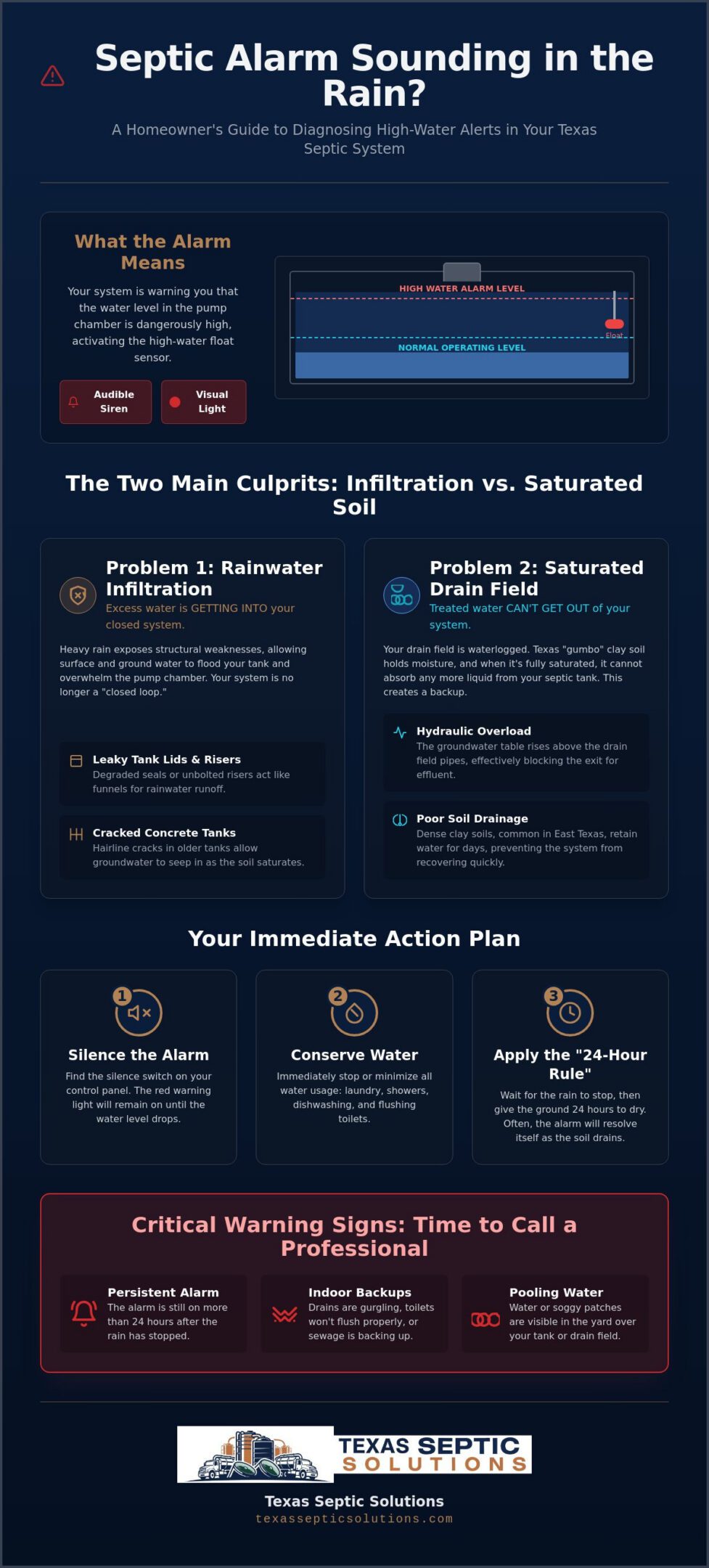
That piercing siren echoing through your yard during a downpour is designed to be impossible to ignore. If your septic tank alarm keeps going off in rain, it’s performing its primary job: warning you that the water level inside your system has risen to a point that requires attention. Think of the high-water alarm as a critical safety buffer between a full tank and a home backup. It’s your system’s way of telling you that you’ve used up your “reserve capacity” and need to slow down your water usage immediately.
Most modern systems used across East Texas utilize a control box that features both a visual and an audible component. The flashing red light provides a constant visual warning, while the buzzer or siren ensures you’re aware of the issue even from inside the house. In the context of a storm, this alarm usually signals that the water level in the pump chamber has reached the “high-water float,” which is a buoyant sensor that sits near the top of the tank. A standard septic tank setup relies on these mechanical floats to tell the pump when to work and the alarm when to scream.
High Water vs. Pump Failure: Know the Difference
It’s a common misconception that a sounding alarm means your pump has completely died. While a failed pump will certainly trigger the sensor, heavy rain often creates a “high water” condition even when your equipment is in perfect health. During a downpour, the float switch rises as the tank fills. If the rain enters the system faster than the pump can move it out, or if the soil is too saturated to accept more liquid, the alarm will stay active. This explains why the siren often persists for several hours after the rain stops; the system simply needs time to process the excess volume and lower the water level back to a safe operating range.
The Role of the Pump Chamber in Texas Septic Systems
In our region, the pump chamber acts as the final staging area for treated effluent before it’s sent to your drain field or spray heads. Because this chamber is the last stop in the process, it’s the first part of the system to “feel” the effects of a storm. Whether you have an aerobic or anaerobic system, any rainwater that leaks into your pipes or manhole covers will eventually collect here. You’ll typically find the control box for these alarms mounted on an exterior wall of your home or tucked inside the garage. Understanding that this chamber is temporarily overwhelmed can help you stay calm while you wait for the weather to clear.
The Two Main Culprits: Infiltration vs. Saturated Drain Fields
When a storm hits East Texas, your septic system faces a two-front battle. If your septic tank alarm keeps going off in rain, the issue is usually caused by either water entering the system where it shouldn’t or treated effluent being unable to leave. Think of your system as a bathtub; if the faucet is running too fast and the drain is plugged, the water level will inevitably rise until the alarm triggers. Distinguishing between these two problems is the first step toward a permanent fix.
Identifying Inflow: Where the Rain Gets In
The industry term for rainwater entering your system is Inflow and Infiltration (I&I). Your septic system is designed to be a closed loop that only processes household waste. However, heavy downpours can expose structural weaknesses. Leaky tank lids are a common offender; if the seal has degraded over time, surface water can pour directly into the tank. Similarly, unsealed risers often act like funnels for runoff, especially if they aren’t properly bolted or gasketed. In older concrete tanks, hairline cracks or loose inlet pipes can allow groundwater to seep in as the soil becomes saturated. This extra volume quickly overwhelms the pump chamber, forcing the high-water float to rise and activate the siren. If you suspect your lids or risers are the entry points, a professional septic system repair can seal those gaps and keep the rain out where it belongs.
Saturated Soil: Why Your Drain Field Can’t ‘Exhale’
In areas like Houston and Cleveland, we deal with “gumbo” clay soil that is notoriously poor at draining. Unlike sandy soil, which has large pores that allow water to pass through quickly, clay holds onto moisture for days. When a heavy storm saturates the ground, your drain field loses its ability to “exhale” or absorb the effluent coming from your tank. If the groundwater table rises above your lateral lines, the treated water has nowhere to go. This creates a “clogged pipe” effect for your entire system.
According to safety guidelines from the Florida Department of Health, which manages similar high-rainfall environments, a saturated system can lead to hydraulic overload. This means the water level in your tank rises simply because the exit path is blocked by nature. It’s a frustrating situation because the equipment might be working perfectly, but the environment won’t allow it to discharge. Understanding this soil behavior helps you realize that the alarm is often a temporary response to environmental pressure rather than a sign of a broken pump.
Aerobic Septic Systems and Heavy Rain: A Texas Perspective
Aerobic systems are the workhorses of East Texas wastewater management. Because they use oxygen to break down waste faster than traditional systems, they’re the preferred choice for the tight clay soils found in Houston and Cleveland. But this complexity comes with a trade-off during a storm. If your septic tank alarm keeps going off in rain, your aerobic unit is likely struggling with its discharge cycle. Most of these systems are programmed on a timer to spray effluent only at night. When a massive rainstorm dumps several inches of water into your tank during the day, the system can’t wait until its scheduled 2:00 AM spray time. The water level hits the high-water float, and the alarm sounds to tell you the tank is full now.
Safety is paramount during these events. Your aerobic system relies on electricity to power the air compressor and the discharge pump. Research from Penn State Extension highlights that flooded electrical components are a major risk factor during severe weather. If you see standing water over your tank or control panel, stay away. Water and electricity are a lethal combination, and it’s better to wait for the yard to drain before investigating a siren.
Sprinkler Head Issues During Storms
When your spray field is underwater, your sprinkler heads can’t do their job. If the heads are submerged, the pump has to fight against the weight of the floodwater to push effluent out. This creates significant “back-pressure” that can strain or even burn out your pump motor. You might feel tempted to “force” a manual spray cycle to lower the tank level, but this is a mistake. Forcing the system to spray into a flooded yard just recycles the water back into the ground, potentially damaging your equipment in the process. It’s often safer to let the system rest until the surface water recedes.
Aerobic Control Panel Warnings
Your control box is the brain of the system. It’s vital to distinguish between different types of alerts. A “High Water” alarm is almost always rain-related, whereas an “Air” or “Comp” alarm usually indicates that your aerator or compressor has failed. Most Texas control panels feature a toggle switch to silence the buzzer while leaving the red light active. This allows you to stop the noise while still having a visual reminder that the system needs to catch up. Always use a dry wooden stick or wear rubber-soled shoes if you need to reach for the silence switch during a damp storm to minimize electrical risks.
Immediate Steps: What to Do When the Alarm Sounds
Hearing that piercing siren in the middle of a storm is enough to make any homeowner panic. However, the most important thing you can do if your septic tank alarm keeps going off in rain is to stay calm. That alarm is a warning, not a death sentence for your system. Most septic tanks are designed with a reserve capacity, which is a buffer zone of roughly 24 to 48 hours of storage space between the time the alarm triggers and the time a backup actually occurs. You have a window of time to act before things get messy.
Your first move should be to silence the noise. Most control panels have a toggle switch on the bottom or side labeled “Silence” or “Mute.” Flipping this will stop the buzzer but keep the red warning light active. This is exactly what you want; the silence preserves your sanity while the light serves as a constant visual reminder that your system is currently in a high-water state. Once the noise is gone, you can focus on protecting your drain field from further stress.
We always recommend following the 24-Hour Rule. If the ground is still soaking wet and the rain is still falling, there isn’t much a technician can do to drain a saturated field. Wait until the rain has stopped for at least 24 hours. In many cases, once the Texas soil has had a chance to breathe, the water level will drop naturally, the float will move down, and the light will turn off on its own. If the alarm persists after this waiting period, you should reach out for emergency septic service to identify any underlying mechanical failures.
The Septic ‘Emergency Diet’
While the alarm is active, you must put your home on a strict water diet. Every gallon you send down the drain right now is a gallon that the system might not be able to handle. Stop all laundry and dishwashing immediately; these appliances use high volumes of water in short bursts that can quickly lead to a backup. Limit showers to absolute necessity and keep them under three minutes. Finally, follow the old rule of “if it’s yellow, let it mellow” and only flush for solids to minimize the hydraulic load on your tank.
Checking the Basics Before Calling for Service
Before you assume the worst, perform a quick perimeter check. Look at your breaker box to ensure the septic circuit hasn’t tripped; heavy rain can occasionally cause minor electrical shorts that flip a switch. Walk out to the tank area and check for visible pooling or if a lid has been displaced by heavy runoff. Finally, listen to your indoor drains. If you hear “gurgling” sounds when the sink drains or the toilet flushes, it’s a sign that air is being trapped by rising water, and you should stop using water entirely until a professional arrives.
When to Call Texas Septic Solutions for Professional Help
While many rain-related alerts resolve themselves as the ground dries, you shouldn’t ignore a warning light that refuses to quit. If your septic tank alarm keeps going off in rain even after the downpour has stopped for 24 hours, it’s a clear signal that your system is struggling to recover. Ignoring this diagnostic warning can lead to permanent drain field damage. When the tank stays at a high-water level for too long, the pressure can force solid waste into your lateral lines, causing a “clog” in the soil that often requires a total system replacement. Acting quickly saves you from those massive, avoidable expenses.
You should also pay close attention to what’s happening inside your home. If you notice sewage odors near your drains or if your toilets are flushing slower than usual, the system is likely backed up. These symptoms mean the “reserve capacity” we discussed earlier is gone. At this point, you need a professional septic system repair to identify exactly where the water is entering or why the pump isn’t discharging. Our team specializes in East Texas drainage challenges, and we’re ready to help you get things back to normal.
Our Professional Diagnostic Process
We don’t rely on guesswork when your home’s functionality is on the line. When we arrive for an emergency septic service call, we use specialized tools to test the health of your pump and the accuracy of your float switches. We often perform visual inspections or smoke testing to find hidden infiltration points, such as cracked lids or unsealed risers that allow rainwater to pour in. This thorough approach ensures we fix the root cause of the alarm rather than just silencing the noise for a few days.
Long-Term Prevention for Texas Storms
The best way to handle a septic alarm is to prevent it from ever sounding. Investing in proactive septic system maintenance is the most cost-effective way to ensure your lids are watertight and your components are ready for hurricane season. We also recommend installing high-quality risers that sit above the grade of your yard; this simple upgrade prevents surface runoff from pooling over your tank. Additionally, consider your landscaping. Diverting gutter downspouts and grading your yard to move water away from the drain field can significantly reduce the hydraulic load on your system during the next big Texas storm.
Protect Your Home Before the Next Big Storm
A sounding alarm doesn’t have to mean a disaster is imminent, but it’s a warning you shouldn’t ignore. We’ve seen how heavy rain can overwhelm even the best systems through infiltration or soil saturation. By following the 24-hour rule and practicing strict water conservation, you give your system the best chance to recover naturally. However, if your septic tank alarm keeps going off in rain, it’s time to stop the guesswork and ensure your system is structurally sound before the next downpour hits.
As local East Texas experts, we understand the unique challenges our soil and weather patterns present. We’re fully licensed and insured, providing the peace of mind you need when utility issues arise. Whether you need a routine checkup or a 24/7 emergency response, our team is built to support you. Don’t wait for a backup to turn a minor alert into a major expense. Schedule a Professional Septic Inspection with Texas Septic Solutions today and keep your home functioning safely, rain or shine.
Frequently Asked Questions
Is it normal for my septic alarm to go off when it rains?
It’s a common occurrence in East Texas, but it shouldn’t be considered “normal” operation. While heavy downpours often trigger high-water sensors due to soil saturation or lid leaks, a properly sealed and sized system should handle standard rainfall without alerting. Frequent alarms during every light shower suggest an underlying issue like infiltration that needs professional attention to prevent long-term damage.
How do I silence my septic tank alarm without turning off the system?
You can silence the audible buzzer by using the “Silence” or “Mute” toggle switch located on the bottom or side of your control box. This action stops the noise while keeping the red warning light active as a reminder. Never turn off the main breaker to the septic system; this disables the pump entirely and will lead to an inevitable sewage backup in your home.
Can I still flush my toilets if the septic alarm is on?
You should limit flushing to absolute necessity while the alarm is active. Your tank has a limited reserve capacity once the high-water float is triggered. Every flush adds more liquid to an already overwhelmed system. We recommend a “solids only” flushing rule and stopping all high-volume water activities like laundry or dishwashing until the alarm clears and the water level drops.
How long should I wait for the septic alarm to go off after rain?
We recommend waiting at least 24 hours after the rain has completely stopped for the alarm to clear. This “24-hour rule” allows the saturated Texas clay soil time to drain and the pump to lower the water level back to normal. If the septic tank alarm keeps going off in rain and persists beyond this window, it’s time to call for a professional diagnostic.
Will a full septic tank cause the alarm to go off during rain?
Yes, a tank that is already overdue for pumping has less room to handle the sudden influx of rainwater. If your sludge levels are high, the “reserve capacity” is significantly reduced. This makes the system much more likely to trigger a high-water alert during a storm because there isn’t enough empty space to buffer the extra volume entering through the pipes or lids.
What happens if I ignore the septic alarm during a storm?
Ignoring the alarm puts your home at risk for a raw sewage backup. The alarm is your final warning that the tank is nearly full. If you continue using water while the light is red, the excess liquid has nowhere to go but back up your drains or out onto your lawn. Over time, this hydraulic stress can also cause permanent, expensive damage to your drain field.
Does heavy rain affect aerobic septic systems differently than conventional ones?
Aerobic systems are often more sensitive because they rely on electrical components and timed spray cycles. During heavy rain, the spray field can become flooded, preventing the pump from discharging effluent. Unlike conventional gravity systems, aerobic units may also trigger alarms if the air compressor is submerged or if the timer prevents the system from spraying during daylight hours when the tank is already full.
Should I have my septic tank pumped if the alarm goes off after rain?
Pumping isn’t always the solution for a rain-triggered alarm, especially if the ground is still saturated. If you pump a tank while the surrounding soil is underwater, the external pressure can cause the tank to “float” or pop out of the ground. It’s better to wait for the yard to dry and then have a technician evaluate if high sludge levels contributed to the alert.