
Septic Tank Aerator Pump Replacement Cost: 2026 Homeowner Guide
Imagine waking up at 2 AM to a sharp, persistent buzzing sound echoing from your backyard. That alarm is the first sign your aerobic system is in trouble, and it usually means your aerator has stopped pushing vital oxygen into the tank. When this happens, your first thought is likely the septic tank aerator pump replacement cost and whether you can get it fixed before your yard becomes a health hazard. It’s a stressful situation, especially when you’re worried about potential sewage backups or failing a mandatory inspection.
We understand that you want a quiet, functional system without overpaying for parts you don’t actually need. This 2026 guide provides a clear look at what goes into a replacement, from brand comparisons to the technical differences between linear and rotary pumps. You will learn how to identify if a simple rebuild kit can save your existing unit or if a full replacement is the only way to protect your property. We’ll also cover the specific Texas regulations that dictate how these repairs must be handled to ensure your home stays compliant and your environment stays safe.
Key Takeaways
- Understand the total septic tank aerator pump replacement cost by comparing unit prices against the professional labor fees required for a warranty-backed installation.
- Learn how to perform a simple “Dollar Test” to diagnose whether you need a full replacement or just a low-cost diaphragm rebuild kit.
- Identify the correct CFM (Cubic Feet per Minute) requirements for your system to ensure your new pump provides enough oxygen for effective wastewater treatment.
- Discover why Texas environmental regulations often require licensed professionals for aerobic system repairs to keep your property compliant.
- Compare the durability of leading brands like Hiblow and Secoh to find a pump that can withstand the intense Texas climate.
How Much Does a Septic Aerator Pump Replacement Cost in 2026?
Understanding your septic tank aerator pump replacement cost starts with one critical distinction: an aerator pump moves air, not water. Many homeowners get confused when looking at online quotes because they see prices for effluent or sewage pumps. Those pumps handle liquid waste, but your aerobic system depends on an aerator to buble oxygen into the tank. This oxygen supports the bacteria that break down waste. To get a better handle on the basics, you can read about What is a Septic System? and how these components work together.
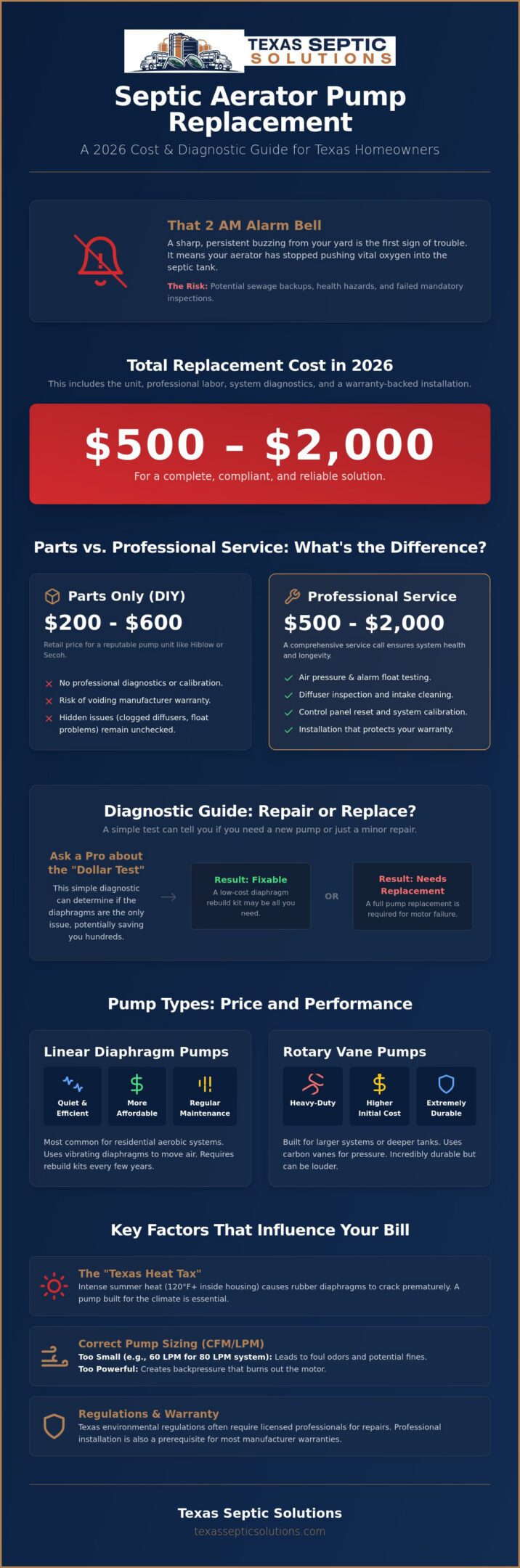
In 2026, the industry has seen a shift in pricing due to increased shipping costs for high-end imports and a tighter supply of specialized components. While you might find a budget unit online for a few hundred dollars, a professional replacement that includes a warranty, system diagnostic, and proper calibration typically ranges from $500 to $2,000 depending on the pump’s capacity and your system’s requirements. Investing in a quality unit now prevents the much higher costs of a total system failure later.
The Price Gap: Parts vs. Professional Labor
There’s a significant difference between the retail price of a pump and the total cost of a professional service call. Retail prices for reputable brands like Hiblow or Secoh generally fall between $200 and $600. However, a professional technician doesn’t just swap the box. A standard service call in East Texas involves testing the air pressure, checking the alarm floats, and ensuring the diffusers aren’t clogged. You should also account for hidden costs like new air filters, cleaning the intake, and resetting the control panel, which are vital for the new pump’s lifespan.
Linear vs. Rotary Vane: Price and Performance
The type of pump your system uses dictates a large portion of your bill. Linear diaphragm pumps are the most common in residential aerobic systems. They use magnets to vibrate a set of diaphragms, making them quiet and energy-efficient. They are generally more affordable but require regular diaphragm replacements every few years.
Rotary vane pumps are the “heavy-duty” alternative. They use carbon vanes to create pressure and are built for larger systems or deeper tanks. While they have a higher initial cost and can be louder, they are incredibly durable. Most residential systems in the Houston area are designed for one specific type; switching between them usually isn’t an option without modifying your housing or electrical setup. We can help you identify exactly which model your system needs to stay compliant and functional.
Key Factors That Influence Your Replacement Bill
The local climate plays a massive role in your septic tank aerator pump replacement cost. While national averages provide a baseline, they often fail to account for the “Texas Heat Tax.” In areas like Houston and Cleveland, the intense summer sun can push temperatures inside a plastic aerator housing well above 120 degrees. This extreme heat is a pump’s worst enemy. It causes rubber diaphragms to lose elasticity and crack prematurely. Choosing a unit with built-in cooling fins and a UV-resistant housing might cost more upfront, but it prevents the internal components from baking and cracking during a July heatwave.
Warranty coverage is another factor that homeowners often overlook until it’s too late. Most manufacturers offer a one or two-year warranty on parts, but this rarely includes the labor required to swap the unit or the cost of shipping a heavy pump back to the factory. When we handle an emergency septic service, we prioritize brands with reliable local support. Professional installation ensures the pump is set up according to manufacturer specifications, which is often a prerequisite for honoring a warranty claim. Consistent septic system maintenance is the best way to ensure these components reach their full life expectancy, saving you from repeated replacement bills.
Sizing Your Pump: CFM and Tank Volume
Airflow is measured in Liters Per Minute (LPM) or Cubic Feet per Minute (CFM). Most residential aerobic systems require either a 60 LPM or 80 LPM pump. If you install a pump that is too small, it won’t provide enough oxygen for the bacteria to treat the waste. This leads to foul odors and potential environmental fines. Conversely, a pump that is too powerful for your diffusers creates excessive backpressure, which can burn out the motor in months. A 100 LPM pump typically costs more than a 60 LPM model, but the real cost comes from matching the air output to your tank’s specific depth and volume.
Brand Comparison: Who Makes the Best Aerator?
- Hiblow: Widely considered the gold standard. These pumps are famous for their quiet operation and long-lasting diaphragms, making them a top choice for homes where the septic tank is close to the patio.
- Secoh: A strong competitor that offers high-output models. They are often more budget-friendly than Hiblow while still providing excellent durability for standard residential systems.
- Gast: These are the heavy-duty workhorses. If you have a commercial system or a very deep tank that requires high pressure, Gast rotary vane pumps are the industrial-grade solution.
Diagnostic Guide: Does Your Aerator Actually Need Replacement?
Don’t rush to pay a full septic tank aerator pump replacement cost just because your alarm is screaming. Many homeowners assume a buzzing control panel means the entire unit is dead, but that isn’t always the case. If your pump is making a loud, rhythmic humming sound but isn’t producing any air, you likely have a snapped diaphragm. In our humid East Texas environment, rubber components can become brittle and pop. This is a mechanical failure, not a motor failure, and it’s often a much cheaper fix.
You can verify your pump’s health with the “Dollar Test.” Simply disconnect the air line from the pump and hold a dollar bill or a thin piece of paper over the discharge outlet while the unit is plugged in. If the paper doesn’t flutter or blow away, the pump isn’t creating pressure. However, if the unit is silent, cold to the touch, and won’t turn on at all, you’re likely looking at an electrical failure or a seized motor. Watch out for a distinct burnt smell or a housing that feels hot enough to burn your hand. These are clear indicators that the internal components have suffered a terminal failure.
Troubleshooting Your Septic Alarm
The alarm on your aerobic system is a watchdog, but it can be triggered by simple issues. Before condemning the pump, check the air filter located under the top plastic cap. A filter clogged with dust and debris starves the motor of air, causing it to overheat and trip the pressure switch. Cleaning this filter is a five minute task that can resolve the alarm instantly. You should also inspect the air lines for kinks or blockages. If air can’t escape the pump, the resulting backpressure will cause the unit to run hot and eventually fail.
Rebuild Kit vs. New Unit: Making the Call
Deciding whether to spend $150 on a rebuild kit or $600 on a new unit usually comes down to the age of the pump. If your aerator is less than four years old and the motor is still functional, a rebuild kit is a smart, cost-effective move. However, if the pump has been running for five or six years, the internal bearings are likely worn out. Rebuilding an ancient pump often leads to a “money pit” scenario where the motor fails just months after you replaced the diaphragms. To determine if the motor is still viable, perform a coil test by using a multimeter to check for electrical continuity within the motor windings; if there is no continuity, the motor is burnt out and must be replaced. A new unit offers a fresh warranty and better energy efficiency, which provides a better long-term return on your investment.
DIY Replacement vs. Professional Service: Assessing the Risks
When you look at the septic tank aerator pump replacement cost, the DIY route might seem like a way to save a few hundred dollars. It often looks like a simple “plug and play” task; you just swap the hoses and plug the unit into the outlet. However, in the Greater Houston area, that initial savings can quickly turn into a massive liability. Texas law requires that any major repair or component replacement on an aerobic system be performed by a TCEQ-licensed professional. This isn’t just a suggestion. It’s a legal mandate to ensure wastewater is treated safely before it enters the environment. If you perform the work yourself, you risk failing your mandatory inspections and may face significant environmental fines.
A professional doesn’t just swap the pump. They diagnose the root cause of the failure. If your old pump died because of backpressure from a clogged diffuser or an electrical surge, simply plugging in a new unit won’t fix the underlying problem. You’ll likely find yourself buying another pump in six months because the original issue was never resolved. Our team at Texas Septic Solutions provides emergency septic service to catch these hidden issues before they ruin your new equipment. We ensure the entire system is balanced and calibrated for your specific tank depth and air stone requirements.
The Risks of the DIY Route
Attempting a DIY replacement often voids the manufacturer’s warranty. Most top-tier brands like Hiblow and Secoh require professional installation to honor warranty claims. There’s also the matter of personal safety. You’re dealing with high-voltage electrical components in a damp, outdoor environment near wastewater. One wrong wire or a failed ground can lead to a dangerous short circuit or damage to your expensive control panel. Furthermore, missing an underlying issue like a clogged discharge line means your new pump will run too hot, drastically shortening its lifespan.
The Value of a Professional Diagnostic
A licensed technician brings specialized tools to measure air pressure and electrical draw. This ensures the new pump is calibrated perfectly for your system’s design. This precision prevents premature wear and ensures your aerobic bacteria stay healthy and active. You also gain peace of mind with 24/7 support. If your alarm triggers again, you have a reliable partner ready to respond. For a deeper look at what to expect during a service call, check out our septic system repair guide. We take the guesswork out of the process, ensuring your home stays compliant and your yard stays clean.
Expert Aerator Services in Houston and Cleveland, TX
Choosing a local partner who understands the unique demands of East Texas is the best way to manage your septic tank aerator pump replacement cost. At Texas Septic Solutions, we don’t just sell parts. We provide a complete support system for homeowners in Cleveland, Houston, and surrounding communities like Cypress and Huffman. Our team specializes in aerobic system troubleshooting, which means we can often find a way to repair your existing unit before recommending a full replacement. We are built for both routine upkeep and the high pressure of unexpected failures.
If your alarm is buzzing right now, don’t wait for the situation to get worse. We offer 24/7 emergency septic service to ensure your aerobic system stays functional and your property remains safe. Our technicians arrive with the tools and expertise to diagnose whether your pump has truly failed or if an external factor like an electrical surge is to blame. By focusing on the root cause, we help you avoid paying the septic tank aerator pump replacement cost more than once.
Proactive Maintenance to Save on Replacement Costs
The most effective way to extend the life of your aerator is through consistent care. Routine tasks like cleaning the air filter and checking for backpressure can add years to your pump’s lifespan. Our maintenance plans are designed to catch minor issues before they lead to total motor burnout. We take into account local factors like our heavy clay soil and the intense Texas humidity, which can stress even the most durable components. A well maintained system runs quieter, uses less electricity, and stays compliant with TCEQ regulations.
Schedule Your Professional Aerator Inspection Today
Ready to get your system back in top shape? Contact Texas Septic Solutions today for a transparent assessment of your aerobic unit. We are committed to using high quality, Texas durable brands like Hiblow because we know they can stand up to our local climate. Whether you need immediate emergency assistance in Shepherd or Alvin, or you want to schedule a routine checkup in Huffman, we are your neighborly experts. Give us a call to ensure your septic system remains a reliable part of your home functionality for years to come.
Restore Your Peace of Mind and System Performance
Managing your septic tank aerator pump replacement cost effectively starts with a proper diagnosis. A buzzing alarm doesn’t always mean you need a brand new unit; sometimes a simple filter cleaning or a diaphragm rebuild kit is all it takes to get things moving again. However, if your motor has reached the end of its life, investing in a high quality, heat resistant pump is the best way to protect your property from future failures. Navigating Texas regulations and technical specifications is much easier when you have a reliable partner by your side.
Our team at Texas Septic Solutions consists of licensed and insured Texas septic experts who specialize in aerobic system repair. We understand the urgency of a failing pump, which is why we provide 24/7 emergency service for homeowners throughout the Houston and Cleveland areas. We’re here to ensure your replacement is handled correctly, keeping your warranty intact and your system in full compliance with local health standards. If you’re ready for a quiet, functional backyard again, take the first step today.
Get a Professional Aerator Replacement Quote from Texas Septic Solutions and let us handle the technical details while you get back to enjoying your home. Your septic system is a vital investment; we’re here to help you protect it with the local expertise you deserve.
Frequently Asked Questions
How long does a septic aerator pump typically last in Texas?
Most aerator pumps in the Greater Houston area last between three and five years. The intense Texas heat and high humidity act as a “heat tax” that wears down rubber diaphragms and internal bearings faster than in cooler climates. Regular maintenance and keeping the air filter clean can help you push toward the five-year mark, but you should start planning for a replacement once the unit hits its fourth year of service.
Can I run my aerobic system without the aerator pump for a few days?
You can typically run your system for 24 to 48 hours without an aerator, but you shouldn’t go any longer. Without the pump pushing oxygen into the tank, the aerobic bacteria that treat your wastewater will begin to die off. This causes the system to turn anaerobic, which leads to foul odors, cloudy discharge, and potential damage to your spray heads. If your pump fails, it’s best to call for a repair immediately to avoid a total biological collapse of the tank.
Why is my septic aerator making a loud vibrating noise?
A loud vibrating or buzzing noise usually indicates a snapped diaphragm or a failing magnetic rod. When a diaphragm pops, the internal components lose their balance and begin to strike the housing, creating a rhythmic clanging sound. If you hear this, you should turn the unit off to prevent the motor from burning out. This is often the point where homeowners begin researching the septic tank aerator pump replacement cost to decide if a repair kit or a new unit is the better investment.
Will a higher CFM pump clean my water better?
No, installing a pump with a higher Cubic Feet per Minute (CFM) rating than your system requires will not improve water quality. Aerobic systems are engineered for a specific balance of air and water. If the pump is too powerful, it creates excessive backpressure that can rupture your air lines or burn out the pump motor prematurely. Always match the Liters Per Minute (LPM) or CFM to the original manufacturer’s specifications for your specific tank size.
Does homeowner’s insurance cover septic aerator replacement cost?
Standard homeowner’s insurance policies rarely cover the septic tank aerator pump replacement cost because they view it as normal wear and tear. Most mechanical components of a septic system are considered maintenance items that the homeowner is responsible for. You might find coverage if the pump was destroyed by a specific covered peril like a lightning strike or a fire, but you’ll need to review your individual policy’s “Other Structures” or “Equipment Breakdown” endorsements to be sure.
What is the difference between a septic aerator and a sump pump?
The primary difference is what they move; an aerator moves air, while a sump pump moves liquid. A septic aerator sits above the tank or in a protected housing and pumps oxygen into the wastewater to keep bacteria alive. A sump pump, or effluent pump, is submerged in the final chamber of the tank and is responsible for pushing treated water out to your spray heads or drain field. These two components perform completely different jobs and are not interchangeable.
How often should I clean the air filter on my aerator pump?
You should clean or replace your aerator’s air filter every six months. In dusty areas or during dry East Texas summers, checking the filter every three months is even better. A clogged filter starves the motor of air, which causes the unit to run much hotter than intended. This extra heat is the leading cause of premature diaphragm failure and motor burnout, so a simple five minute cleaning can save you hundreds of dollars in repair bills.
Is it cheaper to rebuild or replace a Hiblow aerator?
Rebuilding a Hiblow with a manufacturer’s kit is cheaper in terms of initial parts cost, but it’s only a good move if the motor is still healthy. If your pump is less than four years old and the motor coils pass a continuity test, a rebuild kit can save you money. However, if the unit is older or has been running hot for a long time, the internal bearings are likely worn out. In those cases, a full replacement is more cost-effective because it includes a new factory warranty and a fresh motor.