
How to Talk With Your Family About Septic Use in Houston
A few simple household habits can help protect a septic system: spread laundry loads through the week, keep wipes, grease, and hygiene products out of drains, and keep vehicles and heavy objects off the drain field. Learning how to talk to your family about septic system usage in Houston starts with making these rules clear and explaining how everyday choices affect the system. A calm, shared conversation makes the habits easier to remember.
Setting rules for sinks, toilets, and outdoor spaces can feel awkward, especially when everyone has different routines. This guide covers water use, what should and shouldn’t go down drains, what a septic system is designed to handle, and how to protect buried components from traffic and runoff. These practical points can help your household work together to care for its septic system.
Key Takeaways
- Spread laundry loads throughout the week and avoid running several high-water-use activities at once to help limit sudden strain on the system.
- Keep wipes, grease, hygiene products, and kitchen scraps out of drains; a sink strainer can catch food waste before it enters the plumbing.
- Protect the drain field by keeping vehicles and heavy objects off it, and directing roof water and yard runoff away from septic components.
- Septic systems are designed for domestic sewage, not industrial or hazardous waste or chemicals. Explain this distinction so everyone knows what belongs in the drains.
- There’s no single household water-use figure that fits every system. Household routines, system type, and how water flows through the home all affect the risk of overloading.
Daily water-use habits that protect a septic system
In Houston, daily water routines affect how much wastewater reaches a septic system at once. A household can protect it by spreading water use across the week and recognizing habits that strain the system.
Water-Saving Household Habits
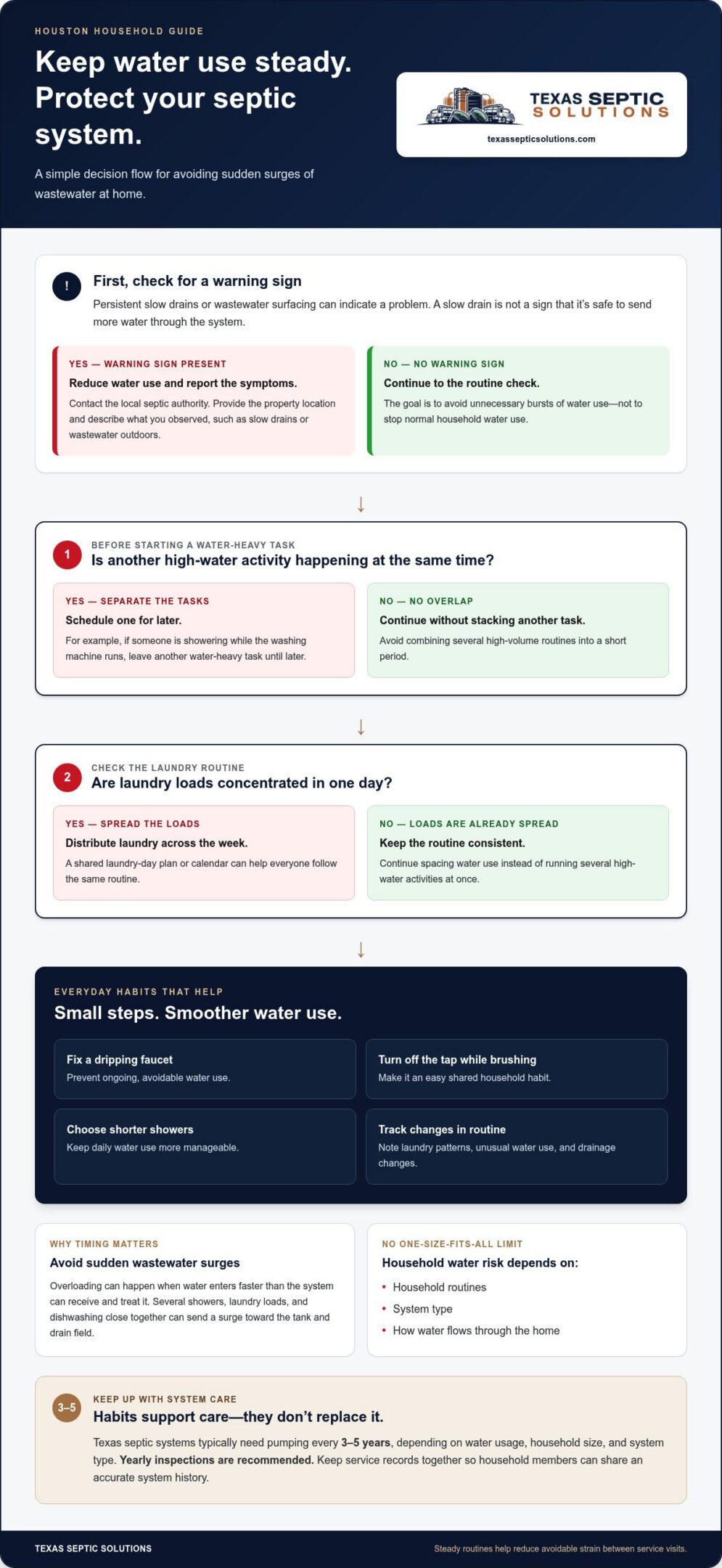
Water-saving habits limit the volume entering the septic system, giving wastewater more time to move through its treatment stages. In a suburban Houston household, spread laundry loads across the week instead of washing several loads in one day. Fix a dripping faucet, turn off the tap while brushing your teeth, and choose shorter showers. Small, repeatable steps help prevent sudden surges in wastewater.
Talk through the routine with a practical example: if one person showers while the washing machine runs, schedule another water-heavy task for later. The goal isn’t to stop normal water use, but to avoid sending a large volume down the drains at once. A shared calendar or simple laundry-day plan can help everyone follow the same approach.
Habits That Can Overload a Septic System
Overloading happens when water enters faster than the system can receive and treat it. For example, running multiple laundry loads while several household members shower can send a surge of wastewater toward the tank and drain field. Bacteria in the system help break down waste, but heavy water flow can move material through before treatment is complete.
Watch for repeated high-volume routines, such as back-to-back showers followed by laundry and dishwashing. Spread those activities across the day or week. Don’t treat a slow drain as permission to use more water elsewhere; a blockage or system problem may also affect flow. If you notice persistent drainage issues or wastewater surfacing, report the symptoms to your local septic authority.
Houston-area residents can find guidance on on-site sewage facilities through the county or local authority responsible for them. When reporting a problem, provide the property location and describe what you’ve observed, such as slow drains, odors, or water pooling outdoors.
Keep a household record of laundry patterns, unusual water use, and changes in drainage. These details can help reveal whether a problem follows a specific routine, such as several loads of laundry in one afternoon. Keep permit paperwork with the system records after a repair or installation so family members can refer to the same information.
Texas septic systems typically need pumping every 3-5 years, depending on water usage, household size, and system type. Regular habits don’t replace pumping or system care, but they can reduce avoidable strain between service visits. Explain the routine to everyone who uses the home, including guests who may not know it has a septic system.
What can and cannot be flushed or poured down drains
Toilets and sinks carry wastewater to a septic tank, but they aren’t disposal bins. A shared household rule can keep unsuitable solids and liquids from interfering with treatment or drainage.
Items to Keep Out of Septic Drains
Keep wipes, grease, and hygiene products out of toilets and drains. Even products labeled “flushable” belong in the trash because they can contribute to clogs. In the kitchen, scrape food scraps into the garbage and use a sink strainer to catch smaller pieces before washing dishes.
Medications and household chemicals shouldn’t go down a septic drain either. Follow the product label or local disposal guidance instead. A bathroom wastebasket and a container for cooled cooking grease give family members clear alternatives. When discussing septic system use with your Houston family, explain where each item goes and why drains aren’t a shortcut for disposal.
Houston-area households should keep wipes, grease, and hygiene products out of septic drains. Texas on-site sewage facilities are designed for domestic sewage, not industrial or hazardous waste or chemicals.
Preventing Backups and Drain Field Problems
A septic tank separates solids from liquid wastewater, then the drain field disperses the liquid into the surrounding soil. Unwanted items can obstruct plumbing or add solids that affect the system’s flow. Keep vehicles and heavy objects off the drain field, and leave access points easy to reach for inspections and maintenance.
Agree on one simple reminder for guests and children, such as “if it isn’t toilet paper or human waste, put it in the bin.” That gives everyone a practical rule to follow. Make bathroom and kitchen disposal choices visible, not just verbal, when talking to your family about septic system usage in Houston.
Yearly inspections are recommended to check that a septic system is working properly. Septic tanks in Texas typically should be pumped every 3-5 years, depending on water usage, household size, and system type. Keep service records together so the household can track care and share accurate history during an inspection.
Watch for foul odors after heavy rainfall, muddy lawn patches, or wastewater surfacing near the system. These signs may indicate a problem. If drains repeatedly back up or wastewater appears outdoors, reduce water use and arrange an assessment. Septic system repair can address a fault once its cause is identified.
For kitchen scraps, use a sink strainer instead of putting them down the drain or using a garbage disposal. Keep the routine clear during cleanup: catch scraps at the sink rather than sending them through the plumbing. This gives everyone a consistent alternative when clearing food from dishes and preparing the sink for washing.
Keeping vehicles, plants, and runoff away from septic components
A septic system needs clear space and manageable water flow around its buried components. In Houston, heavy rain and local soil conditions can affect how wastewater moves through the ground.
Houston’s clay soils filter water more slowly than sandy or silty soils, which can contribute to septic backups. After heavy rainfall, saturated ground can make drainage harder. In the Highland Bayou area, high rainfall and a shallow water table can leave less soil available to filter wastewater before it reaches ditches and waterways.
Keep traffic and extra water away from the tank and drain field. Mark the system area on a household property sketch, using installation records or visible access lids as guides. Share the sketch with family members, landscapers, and anyone mowing the lawn. Don’t drive or park anything heavier than a riding lawn mower over any part of the system.
This rule applies to conventional and aerobic systems alike. Vehicles and heavy objects can compact soil or damage buried parts, interfering with wastewater and solids movement. Keep the marked area clear for inspection and maintenance access. If you’re unsure where the on-site sewage facility’s components are, use property records or ask the county office responsible for septic systems how to identify the designated area.
Plants need planning, too. Keep trees and large shrubs away from buried septic components, where roots can reach pipes or interfere with access. Choose shallow-rooted lawn cover over the drain field, and avoid building raised beds, patios, or storage areas above access points. A neat-looking planting bed can still cover a lid or make routine checks harder, so make sure everyone knows where the system is.
Direct roof downspouts and yard drainage away from the tank and drain field. Don’t route a downspout toward a low spot over the system. Divert floodwater and surface runoff so extra water doesn’t collect where wastewater needs to disperse into the soil.
After high water in Houston, have the septic tank, pump, and control panel checked. Watch for foul odors after heavy rain, muddy lawn patches that appear weeks later, or wastewater surfacing near the system. These signs can point to trouble; wastewater surfacing around a tank may indicate a problem with the drain field. If warning signs appear, reduce extra water entering the system and arrange a professional assessment.
Review the property map before yard work or a storm. A simple reminder, such as “keep cars, downspouts, and new trees outside the marked area,” gives children and visitors a clear rule to follow. This shared boundary helps protect buried components during routine mowing and Houston’s wet-weather periods.
Waste that septic systems can handle
A Texas septic system is designed to treat domestic sewage from normal household activities. That means wastewater from daily living, not industrial or hazardous waste or chemicals. Explain the difference with familiar examples: using a sink produces household wastewater, while pouring a workshop chemical into a drain introduces material the system isn’t designed to handle.
Inside a typical septic tank, heavier solids settle and form sludge, while oils and grease can rise. The liquid wastewater, called effluent, then flows toward the drain field for further treatment in the soil. This separation explains why a tank isn’t a trash can or a place to dispose of leftover liquids. Items that don’t break down normally can collect, disrupt flow, or make pumping necessary sooner.
Set a clear family rule: household drains are for ordinary domestic wastewater only. Use a wastebasket for items such as wipes and hygiene products, and keep paint, solvents, pesticides, and other chemicals out of sinks and toilets. Texas OSSFs are designed for domestic sewage, not industrial or hazardous waste or chemicals. A labeled container near a utility sink can remind family members not to pour leftover products down the drain.
Kitchen routines matter, too. Scrape plates into the trash or compost instead of sending food scraps down a drain or garbage disposal. A sink strainer catches scraps before they enter the plumbing. Keep cooking grease out of the sink as well. These steps reduce unnecessary solids and grease entering the septic tank along with routine household wastewater.
Explain that everyday domestic use still adds up. A large household may send more wastewater and solids through the system than a smaller household, so the system’s care schedule depends partly on household size and water use. Septic tanks in Texas typically should be pumped every 3-5 years, depending on water usage, household size, and system type. Keep pumping records with other facility documents, so everyone knows when service last took place.
Use a quick “drain or trash?” check during family conversations. Rinse water from a dish belongs in the sink; leftover paint from a project belongs in its proper waste stream, not the septic system. If someone isn’t sure about a product, keep it out of the drain until its disposal directions are clear. This brief pause can prevent accidental disposal of chemicals or unwanted solids.
Consistent habits support treatment, but they don’t replace inspections or pumping. Record changes in household size, water use, or system performance, and share them during maintenance visits. These details help explain the load on the system and inform decisions about its ongoing care.
How much water can a Houston household use without overloading its septic system?
There isn’t one daily water limit that fits every Houston home. Safe use depends on the septic system type, household size, water-use pattern, and how quickly wastewater can move through the soil. A smaller household with steady routines puts a different load on its system than a busy home with frequent guests.
Daily totals matter, but timing matters, too. Several water-heavy activities running together can send a surge into the tank. Schedule showers and dishwashing at different times rather than stacking them into the same short window. Spreading out incoming wastewater helps avoid an abrupt peak the system must handle.
System design affects capacity. Tank size and drain-field condition shape how wastewater is received and dispersed. Houston soil matters, too: clay filters water more slowly than sandy or silty soil. After heavy rain, saturated ground may further limit drainage. Household routines should account for these conditions, not just the number of people at home.
Start with a simple household water-use log. Note unusually busy days, visiting relatives, repeated laundry loads, long showers, or frequent dishwashing. Compare these events with changes in drains or wet areas outdoors. The record helps the family spot patterns and gives a septic professional useful context about the home’s daily demand.
- Use one water-heavy appliance at a time when practical.
- Fix running toilets and dripping faucets, which add water continually.
- Space out showers, dishwashing, and laundry instead of clustering them.
- Tell guests which household routines help avoid sudden high use.
Notice how the system responds when occupancy changes. If relatives stay for several days, more showers, toilet use, and dishwashing increase wastewater entering the tank. Plan ordinary activities across the day and avoid combining every high-use task into one stretch.
Don’t rely on a universal gallon figure to judge overload. The same daily use can affect two Houston properties differently because system design, soil, and drainage conditions vary. A septic assessment can connect household routines with the system’s actual layout and condition.
Keep the household log with septic records, including pumping and inspection dates. In Texas, pumping intervals depend on water usage, household size, and system type. Sharing these details helps explain the home’s water demand and supports practical care decisions.
If you’re concerned about water use or system performance, get help assessing septic system concerns.
Texas Septic Solutions: New Septic System Installation
Texas Septic Solutions provides New Septic System Installation for properties that need a new onsite wastewater system. If your system has recurring problems, Septic System Repair can address faults, while Septic System Maintenance and Septic System Pumping support ongoing care. The right service depends on whether you need a new system, a repair, or routine upkeep.
Share what your household has noticed, such as recurring drainage trouble, wastewater surfacing, or a change in system performance. Clear details about the property and its septic history help guide the next conversation. For installation, repair, maintenance, or pumping, contact Texas Septic Solutions.
Make Septic-Smart Habits Part of Your Household Routine
Turn the conversation into a shared household routine. Choose one reminder everyone can follow, such as checking before pouring an unfamiliar product down a drain. Talking to your family about septic system usage in Houston also means making room for questions, especially when children or guests use the home. Small, consistent reminders help everyone take responsibility without making septic care a source of conflict.
If a household concern points to a larger system need, Texas Septic Solutions provides New Septic System Installation, Septic System Repair, and Septic System Maintenance. The right next step depends on whether the property needs a new system, attention to a fault, or ongoing care.
Start a conversation about your property’s needs with Contact Texas Septic Solutions. A clear household plan and the right support can help you move forward with confidence.
Frequently Asked Questions
What household practices help protect a septic system in Houston?
Make septic care part of the household routine by agreeing on simple reminders and who handles them. For example, place a small “septic system” note near the kitchen sink and tell visitors where food scraps belong. Keep a shared record of changes, such as new household members or plumbing work, so the person arranging system care has useful context. These habits apply in Houston and nearby communities, including Cleveland, Cypress, Huffman, and Shepherd.
What should family members never flush or pour into a septic system?
Keep wipes, hygiene products, cooking grease, medications, and hazardous chemicals out of toilets and drains. A bathroom wastebasket gives family members and guests an easy alternative for wipes and personal care items. For leftover medications or household chemicals, follow the product label and local disposal guidance rather than pouring them into a sink or toilet. If a child or guest accidentally sends something unusual down a drain, note what it was and when.
How should families handle medications, grease, wipes, and food waste with a septic system?
Give each item a clear destination: put wipes in a lined bathroom bin, and keep medications out of drains while following their disposal instructions. Let grease cool, then collect it in a container for disposal instead of rinsing it into the sink. Scrape plates into a food-waste bin before washing; a sink strainer can catch small scraps. A short note inside a cabinet can help children and guests follow the same routine.