
Septic System Maintenance for Properties with Pools in Cypress, TX
What if the biggest septic concern on a pool property isn’t the pool itself, but where its water goes? Septic system maintenance for properties with pools Cypress homeowners can plan around starts with keeping pool water and backwash away from the septic system. It also means protecting system access when pool construction or landscaping changes the yard.
A soggy spot near the pool may be ordinary drainage trouble or a sign of a septic issue. The location and pattern of wet areas, odors, slow drains, or backups can help point to the source, but an inspection is needed to assess the cause.
This guide explains how pool use, drainage, and property work can affect septic care, what to monitor, and which maintenance steps to schedule. You’ll also learn when pumping, inspection, or repairs may be needed, and how Texas Septic Solutions can help keep your system on track.
Key Takeaways
- A pool doesn’t automatically mean a septic problem. Septic system maintenance for properties with pools Cypress homeowners can plan for includes routine system care and thoughtful water and site management.
- Keep pool water management separate from septic care, and consider how water routing or yard work could affect the drain field and system access.
- Pool-area puddles and household plumbing symptoms can have several possible causes. Look at the overall pattern rather than diagnosing a septic issue from one sign.
- Keep septic records and access points in mind when planning property work, and use the average pumping guidance of every 2-3 years, depending on water usage.
- Texas Septic Solutions is family-owned and operated, serving the Greater Houston Metro area within a 100 mile radius around Cleveland, TX.
Septic system maintenance for Cypress homes with pools: what changes?
A pool doesn’t automatically create a septic problem. The key is to manage the pool and septic system as parts of the same property while keeping their water paths separate. For homeowners, septic system maintenance for properties with pools Cypress means continuing routine septic care and paying attention to how water, landscaping, and pool-related work affect the yard around the system.
The tank, drain field, pool, and surrounding ground all share limited space. A new patio, equipment pad, planting bed, or change to the yard’s slope can affect access to septic components or alter where rainwater flows. That doesn’t mean every pool property has a problem. It means planning maintenance with the lot layout in mind rather than treating pool and septic work as unrelated projects.
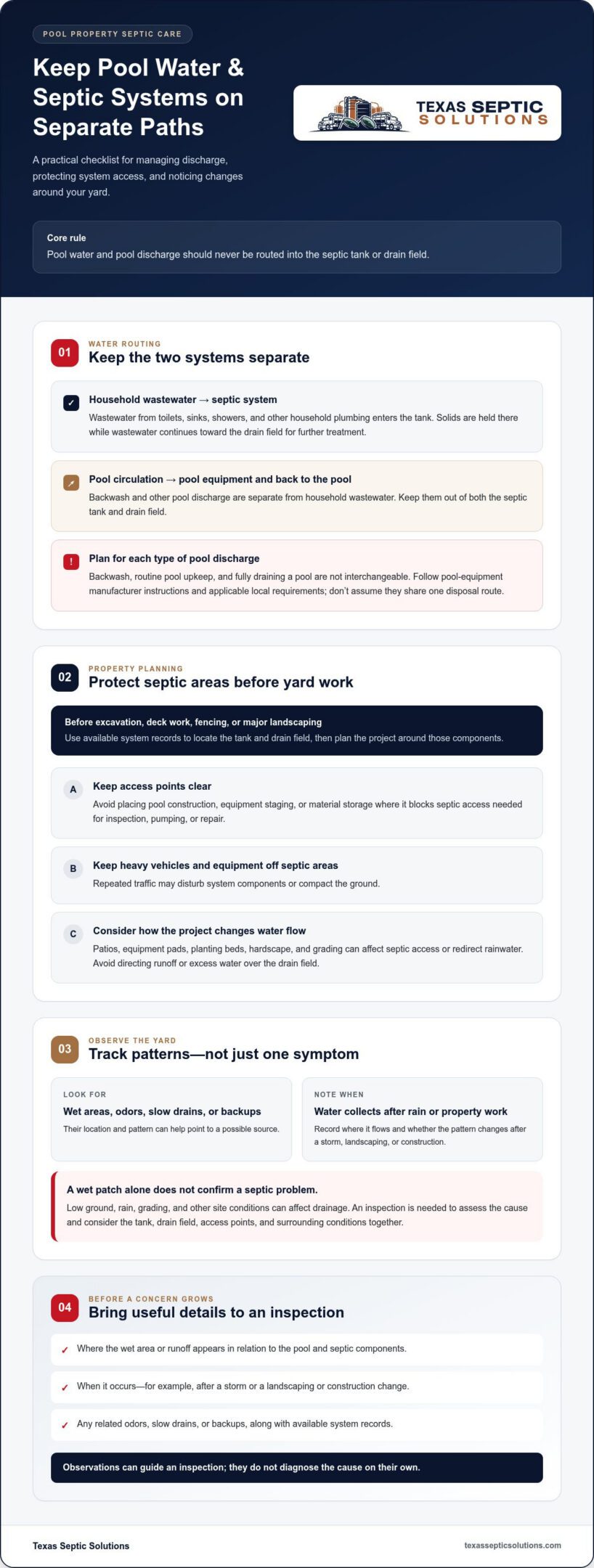
Pool water should never be routed into the septic tank or drain field.
How pool water and septic wastewater use different paths
Household wastewater from toilets, sinks, showers, and other plumbing enters the septic system. The tank separates and holds solids while wastewater continues toward the drain field for further treatment. The Understanding Septic Tanks overview explains how a septic tank functions as part of this process.
A pool’s circulation system follows a separate route: pool water moves through pool equipment and returns to the pool. Backwash and other pool discharge are separate from household wastewater too. Sending that discharge into a septic component can add water the system isn’t designed to receive and may interfere with its operation. Keep pool discharge out of the tank and drain field, and follow the pool equipment manufacturer’s guidance and applicable local requirements for discharge. Don’t assume routine backwash and a full pool drain can be handled the same way. Keep both separate from septic components.
Why Cypress property layout deserves individual attention
Drainage depends on the property, not just its city name. Heavy rain may leave water where the ground is low, while grading can direct runoff toward or away from the septic area. Soil and existing site conditions also influence how water moves. Without assessing a specific lot, it’s not useful to assume every Cypress property has the same drainage pattern or soil conditions.
Start with what’s known about your yard. Locate the tank and drain field using available system records, then consider whether pool equipment, outdoor improvements, or changes in grading are near those areas. Watch where rainwater collects or flows after a storm, and note whether the pattern changes after landscaping or construction. These observations can help guide an inspection, but they don’t confirm a septic problem on their own.
An inspection can assess the tank, drain field, access points, and surrounding conditions together. This property-level view helps distinguish routine yard drainage concerns from issues that may call for septic maintenance or repair, and supports better planning before significant pool-area work begins.
How pools, drainage, and yard work can affect septic system maintenance
Pool ownership adds practical considerations to septic care, especially when water is discharged or the yard is being changed. A drain field needs suitable conditions to receive and treat wastewater. If runoff or other excess water is directed over it, added saturation may interfere with its intended operation. A wet patch alone doesn’t prove the septic system is failing, but noticing where water flows can help identify a drainage issue before it becomes a bigger concern.
Keep septic access points and the drain field clear of pool construction and storage. This helps protect system components and keeps them accessible for inspection, pumping, or repair.
Pool backwash, draining, and runoff
These water sources aren’t interchangeable. Backwash comes from cleaning pool equipment; routine drainage may include water released during pool upkeep; and fully draining a pool can send a much larger amount of water across the property. None should be directed into the septic tank or drain field. Excess water can burden the drain field, while the system is intended to handle household wastewater, not pool discharge.
There isn’t one disposal route that fits every property. Follow the pool equipment manufacturer’s instructions and applicable local requirements when planning where discharge goes. Consider the destination, not just the outlet: water released near the drain field may flow into or saturate the septic area, even if it doesn’t enter a septic pipe directly.
Rain runoff deserves attention too. Pool decks, paved areas, and regraded parts of the yard can change where surface water travels. If runoff starts collecting near septic components after a project or storm, note the location and timing. Those details can help Texas Septic Solutions assess whether the concern involves surface drainage, the septic system, or both.
Protecting septic access during pool projects
Before excavation, deck installation, fencing, or major landscaping, locate the tank and drain field using available system records. The project can then be planned with septic components in mind instead of discovering them during digging. This matters even for projects that appear to stay outside the tank area, since equipment staging, material storage, and grading can affect other parts of the system.
Heavy vehicles and equipment over septic areas create avoidable risks. Repeated traffic may disturb components or compact the ground, and new hardscape can limit access or change how water drains. Keep clear routes to access points, and avoid using the septic area as a staging zone for materials, tools, or pool equipment.
Good planning connects pool work with routine septic care. The EPA Septic System Maintenance Guidelines cover practices such as protecting the drain field. If a project may affect system access or drainage, septic maintenance and inspection from Texas Septic Solutions can help assess the tank, drain field, and surrounding conditions before work proceeds.
Pool-area drainage or septic warning sign? How to assess what you see
Water in the yard can be unsettling, but a puddle near a pool doesn’t automatically point to a septic problem. Pool equipment, surface runoff, recent weather, and household plumbing can all contribute to wet areas. For septic system maintenance for properties with pools Cypress homeowners can use a few observations to describe what’s happening, but an assessment is needed to determine the cause.
Look at where the water appears, when it shows up, and whether household plumbing is behaving differently at the same time. Use this comparison as a starting point, not a diagnosis:
| What you notice | What to observe | Possible concern |
|---|---|---|
| Water near pool equipment or the pool edge | Whether it appears after pool use or equipment operation | Pool-related discharge, a leak, or surface drainage may be involved. |
| Slow drains or trouble with multiple household fixtures | Which fixtures are affected and whether the issue continues | A plumbing or septic concern may need assessment. |
| Unusual wetness near the tank or drain field | Whether it persists, smells unusual, or changes after rain | Drainage conditions or a septic issue could be contributing. |
Several causes can look alike, and one symptom by itself can’t confirm a septic failure. A wet area after a storm, for example, may reflect surface runoff, while wetness that continues near system components deserves closer attention.
Clues that may point to pool drainage or yard grading
If water appears near pool equipment after use, record when it happens and where it collects. Note whether the ground is wet only by the pool or whether water is also present near the septic system. Check whether household drains seem normal. These details help clarify timing and location without assuming the pool or septic system is the cause.
Don’t respond by directing excess water toward the tank or drain field. If the water’s source or route is unclear, keep track of what you observe rather than changing the yard’s drainage in a way that could affect the septic area.
Signs that call for a septic inspection
Persistent slow household drains, recurring unusual odors, or wet areas near septic components are reasons to arrange an assessment, especially if the symptoms continue or appear together. A sudden plumbing backup or wastewater surfacing calls for prompt attention. Avoid treating any one clue as a diagnosis. Texas Septic Solutions can assess the system and surrounding conditions to narrow down the cause.
Keep a simple record of when symptoms occur, what pool activity took place, recent rain, and which plumbing fixtures are affected. If the cause remains unclear, detailed inspections and diagnostics can help determine whether the concern is with pool-area drainage, household plumbing, or the septic system. For possible system issues, the septic system repair guide explains what to consider next.
A practical septic maintenance checklist for Cypress pool properties
A simple record-keeping routine can make septic care easier to coordinate with pool upkeep. Keep your system information, maintenance dates, and notes about yard changes together so you can share a clear property history during an inspection or service visit. This checklist gives septic system maintenance for properties with pools Cypress homeowners a practical starting point.
Before and after pool or landscaping work
Before excavation, deck work, fencing, or major landscaping, check available records for the tank and drain-field locations. If the locations aren’t clear, arrange an inspection before work begins. Marking the system area helps everyone plan access and avoid treating it as a convenient place for digging, equipment, or material storage.
- Keep system records handy. Save available diagrams, prior inspection notes, and service dates together.
- Plan pool drainage separately. Keep pool discharge distinct from household wastewater and septic components.
- Preserve access. Keep tank access points clear so inspection, pumping, and repair visits can be carried out.
- Review the yard afterward. Note changes to grading and where rainwater flows. If the new drainage pattern is unclear, arrange an assessment with Texas Septic Solutions.
A finished deck or a new planting bed can make a yard look complete while making septic access harder to find. Keep a record of changes that affect the area around the system, and update your property notes after the project.
Keep routine septic care on schedule
Use one calendar or maintenance log for pumping, inspections, household water use, and recurring symptoms. Record the date and any observations, such as repeated slow drains or unusual wetness. This helps you describe patterns over time instead of relying on memory when a concern arises.
Texas Septic Solutions recommends pumping every 2-3 years on average, depending on water usage. That’s a planning guideline, not a substitute for property-specific maintenance advice. Septic pumping takes 30-60 minutes. For broader routine-care steps, consult the Texas septic maintenance homeowner guide. If you want a more detailed approach to timing and organizing care, the septic system maintenance plan guide can help you think through a schedule.
Use your notes to prepare for professional maintenance, pumping, or an inspection, especially after substantial yard work or when symptoms keep returning. Septic maintenance and pumping services can help keep routine care moving forward.
Local septic maintenance and inspections for Cypress pool properties
Pool-property septic care can involve more than routine pumping. If water patterns change, household plumbing symptoms persist, or planned yard work could affect system access, an assessment can help clarify what needs attention. Texas Septic Solutions is a family-owned and operated company serving residential and commercial customers across the Greater Houston Metro area, including Cleveland, Houston, Cypress, Huffman, and Shepherd, within a 100 mile radius around Cleveland, TX.
For septic system maintenance for properties with pools Cypress homeowners can rely on property-specific care, not guesswork. Texas Septic Solutions provides septic pumping, detailed inspections and diagnostics, septic repairs, and emergency septic service. An inspection can assess system components and surrounding property conditions, helping identify whether a concern calls for routine maintenance, further diagnostics, or repair.
What professional service can address
A pool-side wet area, recurring household drainage trouble, or a change in the yard’s water flow can have different causes. A detailed inspection and diagnostic assessment can help evaluate the septic system alongside relevant site conditions. Sharing service records and noting when symptoms occur, including after pool use or landscaping work, gives the team useful context.
Texas Septic Solutions holds Installer II license OS0029925 and Maintenance provider license MP000 1859. Septic pumping takes 30-60 minutes, and homeowners don’t need to be present during service because the work is performed outside the home. That can make it easier to plan routine care around a busy household schedule.
When to schedule help for a pool property
Schedule routine maintenance when pumping is due or system records are unclear. An inspection is also a sensible next step if drainage patterns change, symptoms continue, or pool-area construction and landscaping may affect access to septic components. Share what you’ve observed, when it started, and whether household plumbing has changed. These details help focus the visit without treating one symptom as a diagnosis.
Keeping pool drainage separate from the septic system and preserving clear access are useful steps, but they don’t replace professional care when concerns persist. A maintenance visit can address routine needs, while diagnostics can help investigate issues that aren’t clear from observation alone. If a problem is identified, septic repairs can address system concerns, and emergency septic service is available for urgent situations.
Whether you need pumping, an inspection, or repair, Texas Septic Solutions can help you plan the next step for your property. Schedule septic service with Texas Septic Solutions.
Build septic care into your property plans
Give your septic system a place in the way you manage the whole property. Before the next pool upgrade, landscape refresh, or major outdoor project, add a review of your septic records to the planning checklist. Keep a current note of system locations and maintenance history where household decision-makers can find it. If property responsibilities change, pass those records along so important details don’t get lost. That small habit can make future projects easier to coordinate and help you explain changes if a concern comes up.
Think of septic system maintenance for properties with pools Cypress as ongoing property planning, not just a task to remember when something goes wrong. If your records are incomplete, symptoms have returned, or you’re preparing for work in the yard, Texas Septic Solutions can help determine a sensible next step for your system.
Texas Septic Solutions is ready to help with maintenance, pumping, inspections, and repairs. Schedule septic service with Texas Septic Solutions and move forward with a clear plan for caring for your property.
Frequently Asked Questions
Can pool backwash go into a septic system?
No. Keep pool backwash out of the septic tank and drain field. The additional water can interfere with normal wastewater treatment, and backwash may contain pool treatment chemicals. Follow your pool equipment guidance and applicable local requirements for disposal. If backwash has already reached the septic area, note when and where it happened, along with the pool equipment involved, and share those details with Texas Septic Solutions.
Can I drain my swimming pool into my septic tank?
No. A septic tank or drain field isn’t a destination for pool water. Pool discharge can add water the system wasn’t designed to handle, and the water may contain treatment chemicals. Follow the pool manufacturer’s instructions and local requirements when planning drainage. Keep discharge away from septic components. If you’re unsure how water will move across your property, Texas Septic Solutions can assess the site before you drain the pool.
Can a pool be built over a septic tank or drain field?
Don’t plan pool construction over septic components or in a way that blocks access to them. Future inspection, pumping, and repair work may require access, while excavation, equipment traffic, or grading changes could affect the system area. Before settling on a pool location, find the tank and drain field using available records and have Texas Septic Solutions assess how the proposed layout may affect septic access. Placement also depends on your property and applicable local requirements.
Does heavy rain in Cypress affect a septic system near a pool?
Heavy rain can change how water moves around a property, but its effect on a septic system depends on site conditions, including grading, soil, system location, and drainage. A pool alone doesn’t mean the system is more vulnerable. After heavy rain, note whether wet areas persist near septic components or household plumbing changes. Don’t redirect runoff toward the drain field, and arrange an inspection if concerns continue.
How often should a septic tank be pumped at a home with a pool?
Pool ownership alone doesn’t set the pumping interval. Texas Septic Solutions recommends pumping every 2-3 years on average, depending on water usage. Keep service records and share changes in household water use or recurring symptoms during maintenance. For septic system maintenance for properties with pools Cypress homeowners should keep pool drainage separate from septic wastewater, rather than treating pool use as a reason to change the pumping schedule.
Do I need to be home for septic pumping at my Cypress property?
No. Homeowners don’t need to be present for septic pumping by Texas Septic Solutions because the work is performed outside the home. Before the visit, make sure the team can reach the outdoor service area and any known septic components. Move pool supplies, furniture, or stored items that could block access. Pumping takes 30-60 minutes, which can help you plan around the service without staying home.
When should I call for a septic inspection after pool or yard work?
Arrange an inspection if excavation or landscaping may have affected septic access, or if yard drainage changes after the work. Persistent household drainage symptoms or wet areas near the tank or drain field also warrant an assessment. For example, note whether a new patio changes where rainwater collects and whether any plumbing symptoms began around the same time. Texas Septic Solutions can inspect the system and surrounding property conditions.