
Septic System Installation in Cleveland, TX: 2026 Homeowner’s Guide
In Cleveland, your backyard isn’t just dirt; it’s a dense layer of East Texas clay that can turn a standard project into a costly headache if it isn’t handled correctly. Most local homeowners feel a bit of anxiety when they think about septic system installation in Cleveland TX, and for good reason. You’re probably worried about whether a traditional system can handle the heavy soil, or if you’ll get bogged down in the Liberty County permitting process. It’s a lot to manage when you just want a functional home and a yard that stays dry and safe.
We’re here to take that weight off your shoulders with expert guidance on the latest 2026 standards. You’ll learn how to choose between aerobic and anaerobic options, understand the Spring 2026 TCEQ rule updates, and follow the Liberty County Permit and Inspection Department requirements without the stress. This guide previews everything from current permit fees to the specific setbacks required to keep your property compliant. We’ll show you how to secure a long-lasting system while avoiding the steep penalties recently established for unpermitted work.
Key Takeaways
- Learn how Cleveland’s heavy clay soil and high water tables dictate which tank depth and drainage style are necessary for a failure-proof system.
- Compare aerobic and anaerobic options to find the best fit for your property size, ensuring your septic system installation Cleveland TX meets modern 2026 standards.
- Understand the primary factors influencing your total invoice, from equipment choices to the distance of your drain field from the main structure.
- Master the 5-step installation timeline, including mandatory soil percolation testing and the complex Liberty County engineering approval process.
- Discover how professional design and proactive care protect your property from the risks and penalties of unpermitted or poorly installed systems.
Understanding Cleveland’s Soil and Environmental Installation Challenges
Cleveland’s geography presents a specific set of challenges that don’t exist in the drier parts of the state. When you’re planning a septic system installation Cleveland TX, you’re working against a landscape defined by dense clay and a high water table. These environmental factors aren’t just minor inconveniences; they dictate exactly what type of system your land can support. Most of the soil in our area is “tight” clay, which holds onto moisture instead of letting it filter through. This is why a standard gravity-fed system often isn’t an option for local properties.
The San Jacinto River basin also plays a massive role in how we design Onsite sewage facilities (OSSF) for local homes. If your land is near the river or in a low-lying part of Liberty County, the groundwater might only be a few feet below the surface. This high water table limits how deep we can bury a tank and requires specialized anchoring to prevent “tank buoyancy.” This is a situation where a rising water table literally pushes an empty or light tank out of the ground, causing massive property damage.
The Role of Soil Composition
Clay is the dominant soil type in East Texas, and its “unfriendly” texture is the primary reason traditional gravel drain fields often fail. Because clay particles are so small and packed so tightly, effluent can’t move through the soil fast enough to be treated. This leads to surface ponding and system backups. Before any work begins, we prioritize professional soil testing for septic systems. This perc test measures how quickly your land absorbs water. It’s the only way to determine if you need an aerobic treatment unit with spray heads or a modified anaerobic setup that can handle the lack of natural drainage.
Water Table and Drainage Issues
Seasonal flooding is a reality for many Cleveland homeowners, especially during the heavy East Texas rainy season. During these times, “wet spots” on your property aren’t just a nuisance; they’re a signal that your drainage field could become oversaturated. If the soil is already full of rainwater, it can’t take in any more wastewater. We use specific installation techniques to mitigate these runoff issues, such as mounding or advanced surface dispersal. These methods ensure your septic system installation Cleveland TX remains functional even when the weather turns sour. Proper site grading during the installation phase also helps move surface water away from your tank and drain field, protecting the long-term health of your investment.
Aerobic vs. Anaerobic: Choosing the Right System for Your Property
Selecting the right technology is the most important decision you’ll make during a septic system installation Cleveland TX. This choice isn’t just about your personal preference or budget; it’s about matching a biological process to your land’s specific limitations. We generally categorize systems into two camps: anaerobic and aerobic. The primary difference lies in the type of bacteria used to treat wastewater and how that water is eventually dispersed into your yard.
The Texas Commission on Environmental Quality (TCEQ) regulates these onsite facilities to protect local groundwater and public health. In many parts of Cleveland, the high clay content and high water table mentioned in the previous section make the choice for you. When soil can’t “breathe” or absorb water quickly, a standard system simply won’t pass the rigorous permitting process required in Liberty County.
The Anaerobic (Conventional) Option
Anaerobic systems are the “traditional” choice for rural properties. They use a septic tank where solids settle and bacteria break down waste in an oxygen-free environment. From there, gravity carries the liquid effluent to a drain field made of perforated pipes and gravel. These systems are simple and have no moving parts, which typically means lower mechanical failure rates and no electricity costs. However, they require a large amount of space and very specific, porous soil conditions. If the soil is too “tight,” like the clay found in East Texas, the effluent won’t filter through. This often leads to a failing drain field that can contaminate your property and require expensive remediation.
The Aerobic Advantage for Tight Soils
Aerobic systems act like a miniature municipal sewage plant in your backyard. An electric aerator pumps oxygen into the treatment tank, allowing “aerobic” bacteria to break down waste much more efficiently than their anaerobic counterparts. Because the water is treated to a much cleaner state, it can be distributed through surface sprayers or drip lines. This is a game-changer for smaller Cleveland lots or properties with heavy clay where a traditional drain field isn’t feasible.
While aerobic systems solve soil issues, they do come with more responsibility. They rely on power and mechanical parts, which is why every unit includes a septic tank alarm to notify you of any pump or aerator failures. Additionally, Texas law requires homeowners to maintain a continuous maintenance contract with a licensed provider for all aerobic systems. These inspections happen three times a year to ensure the system continues to treat waste safely. If you’re ready to see which system fits your lot size and soil type, consult with a local expert to review your options before you begin the design phase.
Calculating the Real Cost of Septic Installation in Cleveland
Pricing a septic system installation Cleveland TX involves more than just picking a tank size from a catalog. Every property in Liberty County has its own unique layout and soil profile, which directly influences the total labor and material requirements. For example, if your home is set far back from the road or the ideal drainage area, the cost of piping and trenching increases significantly. Excavation depth also plays a role. If we hit heavy rock or need to dig deeper to bypass a high water table, the machinery time on site goes up. We always look at the “big picture” of your property to ensure the system is placed in the most cost-effective and functional location.
You also need to consider the difference between a fresh build and a replacement. A septic system replacement cost often includes the labor-intensive process of decommissioning an old, failing tank according to state law. This involves pumping, crushing, and filling the old unit before the new one can be placed. In contrast, a new installation on a clear lot is often more straightforward, though it requires more extensive initial site design and engineering. Whatever your situation, we focus on a “no-surprises” approach so you aren’t hit with unexpected fees halfway through the dig.
The system type you chose in the previous section is the biggest price driver. Aerobic systems require an air compressor, control panels, and spray heads, which adds to the material invoice. While an anaerobic system is simpler, it might require much more expensive gravel and specialized fill dirt to compensate for Cleveland’s clay soil. It’s about balancing the upfront equipment costs with the long-term installation needs of your specific patch of East Texas dirt.
Beyond the Tank: Hidden Installation Costs
Don’t forget the paperwork and the “after” care. Liberty County requires a residential OSSF permit fee of approximately $275, plus a $10 state fee. You’ll also need a professional site evaluation and a formal design from a licensed engineer. These aren’t optional extras; they’re legal requirements. Once the heavy equipment leaves, your yard will need final grading to ensure rainwater doesn’t pool over your new tanks. Budgeting for these steps early prevents surprises when the final bill arrives.
Evaluating Quotes from Cleveland Contractors
When you’re comparing bids, look for transparency. A suspiciously low quote often means a contractor is skipping the mandatory Texas septic system regulations or using sub-par materials. Ensure the quote includes the dedicated electrical circuit needed for aerobic pumps and alarms. If a contractor doesn’t mention soil testing or Liberty County permits, they aren’t looking out for your long-term property value. We believe in doing it right the first time so you don’t pay twice for repairs later.
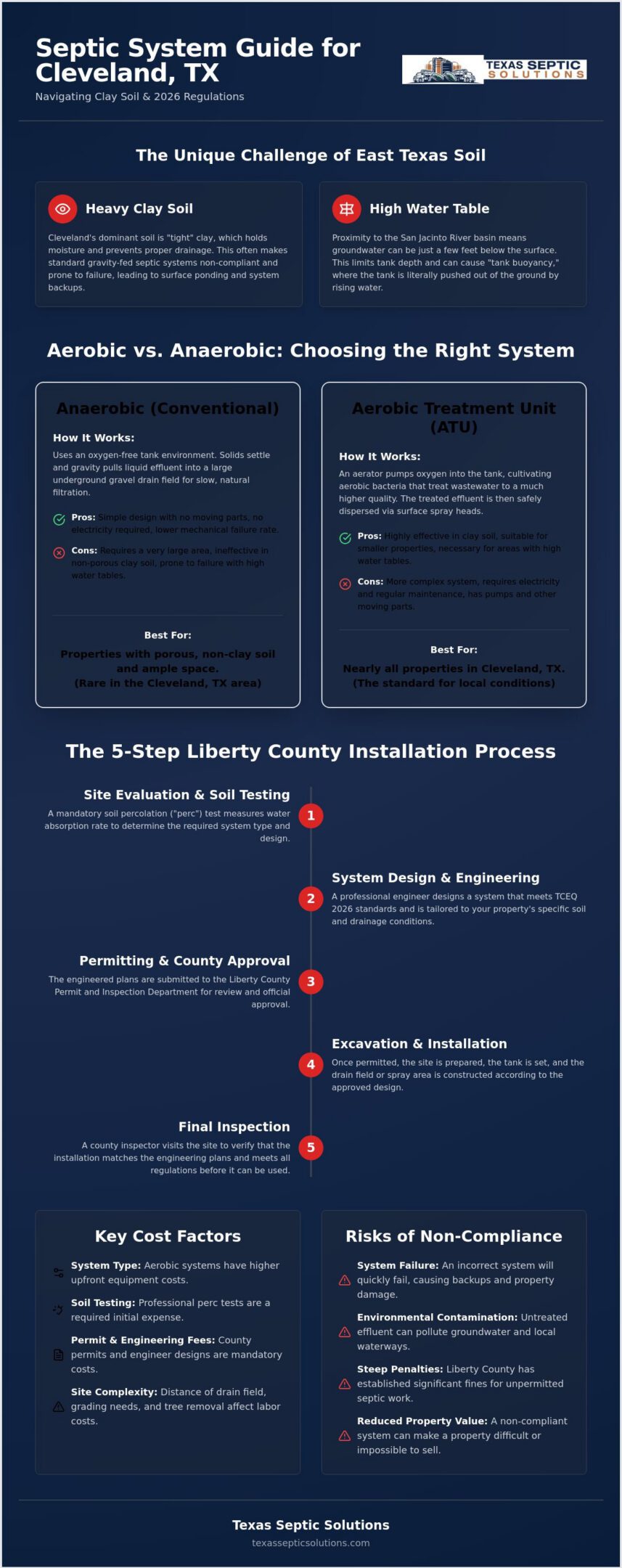
The 5-Step Septic Installation Process: What to Expect
Understanding the timeline of a septic system installation Cleveland TX helps reduce the stress of a major construction project. We don’t just show up and start digging. The process is a highly regulated sequence of events designed to protect your property and the local environment. While every lot has its own quirks, the path from your initial call to a fully functional system follows five distinct phases. Most residential projects take between two to four weeks to move through these stages, depending on how quickly local authorities process the paperwork.
- Phase 1: Site Evaluation. A licensed professional visits your property to perform mandatory soil percolation testing. We analyze the clay content and check for high groundwater levels to see what the land can handle.
- Phase 2: System Design. Based on the soil data and your home’s size, a licensed designer creates a formal plan. This engineering step ensures your system won’t fail under heavy use.
- Phase 3: Permitting. We submit the design to the Liberty County Permit and Inspection Department. You can’t start construction until the county issues an “Authorization to Construct.”
- Phase 4: Construction. This is the heavy lifting phase. We excavate the site, set the tanks, and install the drain field or spray irrigation lines.
- Phase 5: Final Inspection. Before we cover the pipes, a county inspector must verify that everything matches the approved design. Once they’re satisfied, they issue a “Notice of Approval.”
Permitting and Compliance in Liberty County
Navigating local regulations is often the most confusing part for homeowners. In Liberty County, you must secure your septic permit before the county will issue a building permit for any structure larger than 100 square feet. It’s a critical “order of operations” that prevents illegal or unsafe builds. On June 9, 2026, the Liberty County Commissioners Court approved a policy that doubles permit fees for any work started without an Authorization to Construct. We handle the complex application packet for you, which includes the soil analysis, notarized affidavits, and the mandatory two-year maintenance contract required for aerobic systems. Keeping these records in your permanent property file is essential for any future home sale.
Site Preparation and Excavation
We know your yard is an investment. Before the heavy machinery arrives, we plan a route that protects your existing trees and avoids compacting the soil in areas where you might want to build later. The actual dig usually takes three to five days. During this time, we manage the mess by stockpiling dirt and ensuring the site stays safe. After the tanks are set and the inspection is complete, we perform final site grading to prevent water from pooling. If you’re ready to get your project moving, contact Texas Septic Solutions to schedule your initial site evaluation and soil test.
Why Texas Septic Solutions is Cleveland’s Trusted Installation Partner
Choosing a partner for your septic system installation Cleveland TX is about more than just finding someone with a backhoe. It’s about trusting a team to protect your property’s health and your family’s safety for the next several decades. Since 2010, Texas Septic Solutions has been working in the trenches of Liberty County. We’ve seen every soil variation, from the dense clay near the San Jacinto River to the more porous pockets on the outskirts of town. This local history means we don’t guess; we know exactly how the earth will react when we break ground.
We operate on a “no-surprises” pricing philosophy. As we discussed in the cost section, hidden fees for permitting or specialized fill dirt can quickly derail a homeowner’s budget. We provide clear, comprehensive quotes that include the necessary engineering, permits, and electrical work from the start. Our commitment to you doesn’t end when the dirt is leveled. We provide 24/7 service and emergency septic service because we know that utility failures don’t wait for business hours. You’re getting a long-term partner, not just a one-time contractor.
A critical part of our installation process is the inclusion of a septic system maintenance plan with every new build. Especially for aerobic systems, which require three inspections per year under Texas law, having a plan in place from day one is vital. We handle the scheduling, the inspections, and the state-mandated paperwork so you can focus on enjoying your home without the administrative headache.
The TSS Difference: Local Expertise
We’re a family-owned and operated business with deep roots in Cleveland. Our team consists of licensed and insured professionals who understand that we’re working in your yard, not just a construction site. We keep digital maintenance logs for every client, providing transparent reporting that you can access whenever you need to prove compliance for a home sale or a county audit. We treat your property with the same respect we’d show our own neighbors, ensuring minimal disruption during the build.
Get Started with Your New System
Starting your project is as simple as scheduling a site evaluation. We offer a one-stop-shop model where we handle everything from the initial soil perc test to the final system commissioning. This eliminates the stress of coordinating between designers, engineers, and installers. If you’re ready for a permit-compliant, long-lasting solution, schedule your Cleveland septic installation consultation today. We’ll walk you through your options, handle the Liberty County paperwork, and ensure your home is ready for 2026 and beyond.
Secure Your Cleveland Property with a Reliable Septic Solution
Cleveland’s unique landscape requires more than just a standard approach to waste management. You’ve seen how the local clay soil and high water tables dictate the need for precise engineering and careful system selection. Whether you’re opting for an aerobic system to handle tight soils or navigating the strict Liberty County permitting process, doing it right the first time is the only way to protect your long-term investment. A proper septic system installation Cleveland TX isn’t just about compliance; it’s about peace of mind for your family and the safety of your land.
Texas Septic Solutions brings over 20 years of local Texas experience to every project. Our licensed OSSF installers understand the specific environmental demands of East Texas and are ready to guide you through every step, from the initial soil test to final commissioning. We remain your partner long after the installation is complete with 24/7 emergency support available whenever you need us. We’re built to handle the high-pressure demands of unexpected failures and the routine care your system needs to thrive.
Get a Professional Quote for Your Cleveland Septic Installation
Let’s build a system that works for your land and your lifestyle. We’re ready to help you get started on a worry-free installation today.
Frequently Asked Questions
How much does a new septic system installation cost in Cleveland, TX?
The total cost of your project depends on the system type, property size, and specific soil conditions found on your lot. While simpler anaerobic systems might have lower material costs, the heavy clay common in Cleveland often necessitates aerobic units with more complex mechanical components. Every project is unique, so we recommend a site-specific evaluation to understand the full scope of your investment.
How long does it take to install a septic system on a new property?
A typical project takes between two to four weeks from the initial soil test to the final commissioning. The actual excavation and tank placement usually only take three to five days. However, the overall timeline is often dictated by how quickly the Liberty County Permit and Inspection Department processes your application and design plans.
Do I need a permit to replace my septic tank in Liberty County?
Yes, you must secure a permit for any significant septic work, including tank replacements, in Liberty County. The county acts as an authorized agent for the state, and failing to get approval can lead to heavy penalties. In fact, work started without a permit is subject to double the standard fees under local policies approved in June 2026.
What is the difference between an aerobic and anaerobic septic system?
The primary difference is how the systems treat waste and disperse effluent. Anaerobic systems rely on bacteria that thrive without oxygen and use gravity-fed drain fields. Aerobic systems use an electric aerator to introduce oxygen, creating a more efficient treatment process that allows for surface spray or drip irrigation, which is ideal for Cleveland’s clay soil.
How often should a new septic system be inspected in Texas?
All aerobic systems in Texas must be inspected three times per year under a mandatory maintenance contract. These regular checks ensure the aerator, pumps, and spray heads are functioning correctly to prevent environmental contamination. Traditional anaerobic systems don’t have the same legal requirement but still benefit from professional inspections every few years to monitor tank levels.
Can I install my own septic system to save money in Cleveland?
No, you cannot legally install your own system because Texas law requires a licensed OSSF installer for these projects. Professional septic system installation Cleveland TX ensures the design meets TCEQ standards and Liberty County building codes. Attempting a DIY install can lead to system failure, property damage, and significant legal fines from local authorities.
Will a new septic system installation damage my yard?
While heavy machinery is required for excavation, professional installers take specific steps to minimize property disruption. We plan equipment routes to protect your trees and avoid over-compacting the soil in sensitive areas. Some lawn disruption is inevitable during the dig, but proper final grading helps your yard recover quickly once the system is in the ground.
What kind of soil testing is required for a septic permit in East Texas?
A professional site evaluation and a soil percolation (perc) test are mandatory for every septic system installation Cleveland TX. These tests measure how quickly your soil absorbs water. Because East Texas clay is so dense, this data is the only way to determine if your land can support a standard drain field or requires an aerobic treatment unit.