
Septic System Inspection Checklist for Buyers: Your 2026 Texas Guide
What if the most expensive part of your new Texas home isn’t the foundation or the roof, but the hidden tank buried in the backyard? With approximately 2.6 million households across the state relying on on-site sewage facilities, a failing system is a significant financial risk that can quickly derail your moving budget. It’s natural to feel uneasy about what you can’t see, especially when you are trying to navigate the closing process and avoid a massive repair bill the month after you move in. We believe every homebuyer deserves to feel like a confident owner, not a worried gambler.
This guide provides a comprehensive septic system inspection checklist for buyers designed to help you spot red flags before your option period expires. You will learn how to navigate the latest 2026 TCEQ regulations, understand the specific maintenance requirements for aerobic systems, and gain the leverage you need to negotiate repair costs with the seller. We’ll walk you through the essential steps to verify the health of the system, from checking the drain field to reviewing mandatory maintenance contracts, so you can protect your investment and your peace of mind.
Key Takeaways
- Understand why a standard home inspection is insufficient for underground waste systems and how a specialized evaluation prevents expensive post-closing surprises.
- Use our comprehensive septic system inspection checklist for buyers to identify critical red flags like saturated drain fields or cracked tanks during your option period.
- Learn exactly which documents to request from the seller, including pumping history and as-built maps, to verify the system’s true maintenance record.
- Navigate Texas-specific requirements for aerobic systems, including mandatory TCEQ maintenance contracts and local environmental standards.
- Master the art of negotiating repair costs by categorizing inspection findings into routine maintenance items versus major system deal-breakers.
Why a Septic Inspection is Non-Negotiable for Texas Homebuyers
Buying a home in Texas often means moving beyond city sewer lines and into the world of private utilities. A real estate septic inspection is a specialized, multi-point evaluation that goes deep into the tank, the transport lines, and the absorption area in the soil. It’s far more intensive than a standard home inspection. While a general inspector might ensure your sinks drain and your toilets flush, they rarely have the specialized equipment or licensing to assess the structural integrity of a buried tank. Before diving into the details, it helps to understand what a septic system is: a localized treatment plant for your home’s wastewater that requires constant biological balance.
In our state, the Texas Commission on Environmental Quality (TCEQ) sets the baseline for what they call On-Site Sewage Facilities (OSSF). These regulations ensure that waste is treated safely to protect our local groundwater and community health. A professional inspection ensures the property you’re eyeing meets these strict state standards. Without this verification, you’re essentially flying blind on the most critical infrastructure of your potential new home.
The “Invisible” Risk of Rural and Suburban Living
Septic systems are often the most expensive utility on a property, yet they are the easiest to ignore until they fail. They are also incredibly sensitive to changes in usage. A system can appear to function perfectly for a single seller who uses minimal water. However, that same system might experience total failure within weeks once a family of four moves in and starts running multiple loads of laundry daily. In areas like Cleveland and Huffman, our heavy clay soils make drainage difficult. If the previous owner didn’t account for these local soil conditions, you could be inheriting a system that is literally drowning in its own effluent.
The Financial Impact of a Failed Inspection
Skipping this step is a gamble with high stakes. Replacing a failed system in Texas can easily cost between $10,000 and $30,000, depending on the specific technology and soil requirements. Using a septic system inspection checklist for buyers allows you to identify these liabilities during the option period. This gives you the evidence needed to request repairs or a price reduction before you’re legally committed to the sale. It’s about protecting your mortgage investment and ensuring your new home remains a sanctuary rather than a source of stress. Don’t let the “out of sight, out of mind” mentality lead to a massive bill after you’ve already closed on the property.
The Essential Pre-Inspection Checklist: Questions for the Seller
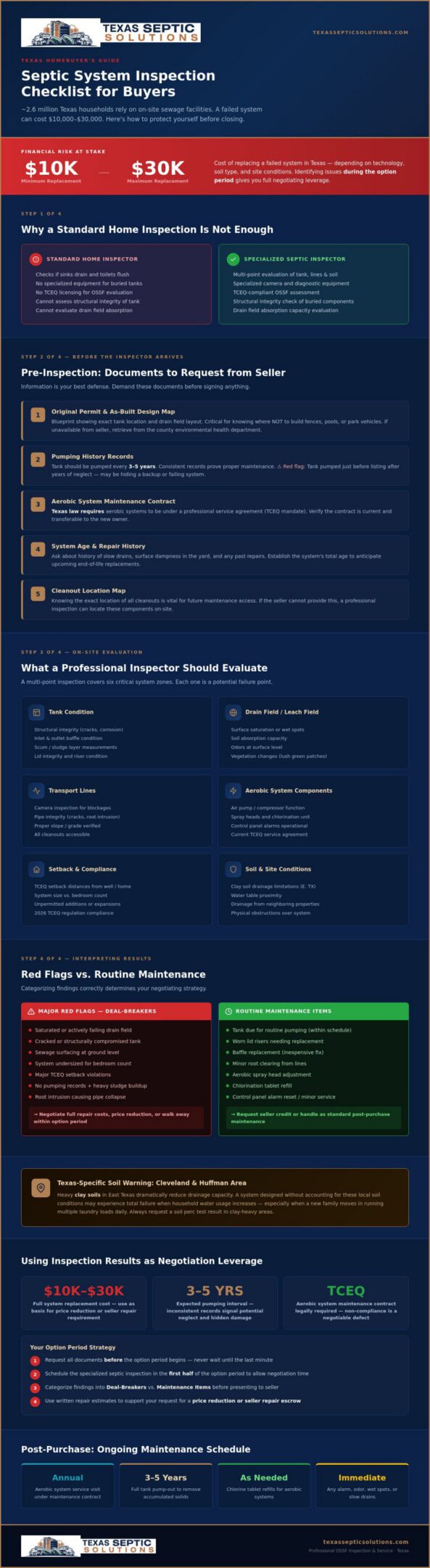
Before a professional technician sets foot on the property, your work as a buyer begins with a paper trail. Information is your best defense against future repair bills. You should start by requesting the original permit and the “as-built” design map from the seller. This document is a blueprint that shows exactly where the tank is buried and how the drain field is laid out. Without it, you are guessing where it’s safe to build a fence, install a pool, or even park a vehicle. If the seller doesn’t have these on hand, they can often be retrieved from the local county environmental health department.
A reliable septic system inspection checklist for buyers must also prioritize maintenance history. Demand to see the history of pumping records. Ideally, a tank should be pumped every three to five years to prevent solids from escaping into the drain field. If the seller just had the tank pumped yesterday after years of neglect, it might be an attempt to hide a backup or a sluggish system. Consistent records demonstrate that the owner followed standard septic system maintenance protocols, which protects the long-term health of the soil and the tank components.
Document Discovery: What to Ask For
If the property uses an aerobic system, you must ask for the current maintenance contract. Texas law requires these systems to be under a professional service agreement. You should also inquire about the age of the system and any history of slow drains or surface dampness in the yard. Knowing the location of the cleanouts is equally vital. If the seller can’t provide these details, a quick consultation with Texas Septic Solutions can help you locate the components and assess the situation before you move forward with the purchase.
Identifying the System Type
You can usually identify the system type with a quick walk around the yard. Conventional systems are mostly invisible, relying on gravity to move waste. In contrast, aerobic systems feature a control box with alarms and purple-tipped spray heads that distribute treated water onto the lawn. Knowing the type is essential because it dictates the inspection scope. Aerobic units have mechanical parts like aerators and pumps that require specific testing. For a deeper look at what can go wrong with different setups, you might review our guide on septic system repair to understand the common failure points for each technology.
On-Site Inspection Checklist: What Your Professional Should Evaluate
Once you’ve gathered the paperwork, the physical evaluation begins. This is the stage where the septic system inspection checklist for buyers moves from theory into a hands-on investigation. A professional will start by locating the tank and opening the access ports to assess the biological health of the system. They’ll also run water inside the house to ensure the main line is clear and the flow into the tank is unobstructed. This process verifies that the plumbing and the treatment system are working in harmony.
The Tank and Baffle Inspection
A thorough inspection requires pumping the tank. You simply cannot see structural cracks, leaks, or root intrusions through several hundred gallons of wastewater. Pumping allows the inspector to examine the tank walls and floor for integrity. They will also check the inlet and outlet baffles. These components are vital; they prevent solids from escaping into the drain field and causing a total system failure. If the system includes a septic filter, it should be pulled and cleaned to check for excessive debris or signs of backup.
Evaluating the Drain Field and Soil
In regions with heavy East Texas clay, the drain field is the most common point of failure. Clay doesn’t absorb water as quickly as sandy soil, which often leads to “surfacing effluent.” Your inspector will look for patches of suspiciously lush, green grass or standing water that smells of sewage. These are clear signs that the soil is saturated and can no longer process waste. They will also identify any deep-rooted trees near the lines, as roots are notorious for crushing distribution pipes. While a “dye test” can show a current backup, it’s a limited tool compared to a full visual check of the soil and lines.
Special Considerations for Aerobic Systems
Aerobic systems are more complex and require a different set of eyes. The inspector must test the air compressor or aerator to ensure it’s providing enough oxygen for the treatment process. They will also verify that the chlorine disinfection system is working and that the spray heads are distributing water evenly across the lawn. A malfunctioning alarm is a major red flag. If you encounter a septic tank alarm going off, it usually indicates a pump failure or a high-water emergency that requires immediate repair. All these checks ensure the property remains compliant with Texas septic system regulations, which are designed to protect our local groundwater and community health.
Red Flags vs. Routine Maintenance: Decoding the Results
Once the technician finishes their walk-through, you’ll receive a report that can feel overwhelming. It’s essential to separate minor maintenance from structural failure. Using a septic system inspection checklist for buyers helps you sort these findings into three buckets: deal breakers, negotiation points, and routine maintenance. A deal breaker is something that requires immediate, massive capital, like a collapsed tank or a drain field that can no longer absorb water. These aren’t just repairs; they are full-scale infrastructure projects that can cost tens of thousands of dollars.
Negotiation points are significant but fixable. This includes things like damaged baffles, a cracked distribution box, or a failing aerator in an aerobic system. While these aren’t necessarily reasons to walk away, they are expenses you shouldn’t have to bear alone as a new owner. Finally, maintenance items are the small things, like a tank that simply needs its scheduled pumping or a filter that needs cleaning. These are expected parts of homeownership and shouldn’t derail a sale, though they are helpful to know for your future maintenance schedule.
When to Walk Away from a Purchase
Sometimes, the numbers just don’t add up. If a system fails a soil percolation test, it means the ground can no longer process wastewater effectively. In Texas, a non-compliant system can lead to legal headaches and potential fines from the TCEQ. If the property requires a total overhaul, you must weigh that cost against your down payment. Replacing a system immediately after taking out a mortgage can be a heavy financial burden that many buyers aren’t prepared to handle. If the seller refuses to address a failing drain field, it’s often better to keep looking.
Using the Report for Negotiations
Don’t just take the seller’s word that they’ll “fix it” before closing. Use your inspection report to get professional repair quotes from a licensed provider. You can present these numbers to the seller to request a direct price reduction or an escrow holdback. An escrow holdback keeps a portion of the seller’s proceeds in a neutral account until the repairs are completed and verified by a professional. This ensures the work is done correctly before you take possession of the home. For a better understanding of the potential financial impact of major issues, check our guide on septic system replacement cost. If you’ve found issues during your search and need a reliable partner to handle the work, Texas Septic Solutions is ready to provide the professional repairs you need to close with confidence.
Post-Purchase Success: Protecting Your Investment
Closing on your new home is a major milestone, but it also marks the beginning of your role as a septic system manager. While your septic system inspection checklist for buyers helped you secure a healthy system, keeping it that way requires a proactive approach. We always recommend starting your homeownership with a fresh pumping service. This gives you a verified “Day Zero” for your records and ensures that the tank is completely clear of the previous owner’s waste. It’s the simplest way to prevent early backups and establish a baseline for your family’s water usage.
Educating everyone in your household on “septic-safe” habits is equally vital. Your system is a living biological environment, not a trash can. Avoid flushing “flushable” wipes, feminine products, or harsh chemicals that can kill the beneficial bacteria in the tank. In the kitchen, keep grease and coffee grounds out of the drain. These small daily choices prevent the sludge layer from building up too quickly and protect your drain field from clogs. Taking these steps early ensures that your investment remains a quiet, functional part of your home’s infrastructure.
Establishing a Maintenance Schedule
Most Texas households should stick to a three to five year pumping cycle, though this varies based on your family size and tank capacity. Neglecting this task is the leading cause of premature drain field failure. To take the guesswork out of the process, consider a septic system maintenance plan. Regular professional checkups ensure that minor issues like a leaky pipe or a worn-out pump are caught before they turn into a midnight emergency. Professional care doesn’t just prevent messes; it significantly extends the total lifespan of your infrastructure.
Your 24/7 Septic Partner in Texas
We understand that utility issues don’t always happen during business hours. That’s why Texas Septic Solutions provides 24/7 emergency service for homeowners across Greater Houston and the Cleveland area. Having a “neighborly expert” on speed dial provides the peace of mind you need when moving into a rural or suburban property. We are here to handle everything from routine pumping to complex repairs, ensuring your home remains functional and safe for years to come. Our team is built to support your long-term maintenance needs and respond quickly to unexpected failures. Schedule your pre-purchase inspection with Texas Septic Solutions today!
Secure Your New Texas Home with Confidence
You now have the tools to navigate the closing process without the fear of hidden utility failures. By following this septic system inspection checklist for buyers, you’ve moved from uncertainty to informed action. It’s clear that identifying a failing drain field or a cracked tank during the option period is the difference between a successful move and an immediate financial crisis. We understand the specific challenges of Houston-area soil conditions and offer comprehensive design, installation, and repair services to keep your infrastructure healthy.
Success as a homeowner starts with a reliable partner. We provide 24/7 emergency service for peace of mind, ensuring you’re never left dealing with a utility failure alone. Whether you’re verifying a system’s health before signing or setting up a long-term maintenance plan, our team is ready to support you. Take the final step in your home-buying journey and protect your investment from day one. Schedule a Professional Septic Inspection for Your New Home today. We look forward to welcoming you to the neighborhood.
Frequently Asked Questions
Does a standard home inspection include the septic system?
Standard home inspections usually exclude the septic system entirely. While a home inspector might check if the toilets flush or if the sinks drain, they don’t have the licensing or tools to evaluate the underground tank or the drain field’s soil absorption. A specialized evaluation is the only way to ensure the infrastructure is structurally sound and compliant with local regulations.
How much does a professional septic inspection cost in Texas?
Industry rates for inspections across Texas typically depend on the size of the system and whether the tank requires pumping at the time of service. Factors like the depth of the tank and the complexity of the drain field also influence the final cost. It’s best to request a detailed quote that includes both the visual inspection and the mechanical testing of all components.
Should the septic tank be pumped before or during the inspection?
The tank should always be pumped during the inspection rather than before it. Pumping the tank allows the technician to see the interior walls for cracks and verify that the baffles are intact. If the tank is pumped before the inspector arrives, they won’t be able to observe the system under normal operating levels or check for backflow from the drain field.
What are the signs of a failing drain field during a walkthrough?
Common signs of a failing field include patches of unusually green, lush grass or spongy, wet soil even during dry weather. You might also notice persistent sewage odors or standing water near the distribution lines. These indicators suggest the soil is saturated and can no longer process wastewater, which often leads to expensive repairs or a total system replacement.
Can I perform a septic inspection myself as a buyer?
You shouldn’t attempt a DIY inspection because it requires specialized tools and state-mandated licensing for real estate transactions. While a septic system inspection checklist for buyers is an excellent tool for spotting surface-level red flags, a professional uses cameras and sludge measuring tools to find hidden issues. Their official report is also necessary for negotiating repairs or meeting lender requirements.
How long does a typical septic inspection take?
A comprehensive inspection usually takes between one and three hours to complete. This timeframe allows the technician to locate the components, uncover the access ports, and perform a full stress test on the plumbing. If the tank needs to be pumped to inspect the structural walls, the process might take slightly longer depending on the volume of the waste being removed.
What happens if the septic system fails the inspection during escrow?
If a system fails during escrow, you have several options to protect your investment. You can negotiate with the seller to have the system repaired or replaced before closing, or request a price reduction based on professional repair quotes. Some buyers also use an escrow holdback, where funds are set aside specifically to cover the costs of bringing the system up to code after the sale.
Is an aerobic septic system better than a conventional one for a new buyer?
Neither system is inherently better; the right choice depends on your property’s soil type. Conventional systems are simpler and cheaper to maintain but require sandy, well-draining soil. Aerobic systems are necessary for the heavy clay found in many parts of Texas because they treat the water more thoroughly before it reaches the ground, though they do require a mandatory maintenance contract and regular power.