
Septic System for Tiny Home Texas: The 2026 Buying Guide
Did you know that in Texas, the size of your house doesn’t actually determine the size of your septic system? Most homeowners assume a smaller footprint automatically means a simpler setup, but when it comes to choosing a septic system for tiny home Texas projects, the engineering is driven by daily water usage and the specific soil on your lot rather than your square footage. The smallest house on the block can sometimes require the most specialized planning to meet state standards.
It’s understandable if you feel overwhelmed by the tangle of TCEQ regulations and county-specific OSSF permits. You’re looking for the freedom of simple living, not a constant worry about whether your drain field meets the latest setback requirements or if you’ll pass a surprise inspection. We’re here to clear up that confusion and help you find a reliable, legal solution that protects your investment and your peace of mind.
In this 2026 buying guide, you’ll learn exactly how to navigate the permitting process and choose between aerobic and conventional systems for small spaces. We’ll also cover the latest site evaluation standards and provide a clear roadmap for finding an installer who knows how to handle the unique challenges of Texas land.
Key Takeaways
- Understand that Texas law classifies tiny homes on permanent foundations as residences, making a permitted OSSF system a non-negotiable requirement.
- Discover why selecting the right septic system for tiny home Texas projects often means opting for aerobic units to handle small lots and heavy clay soil.
- Learn how state sizing standards typically treat tiny homes as one-bedroom dwellings, impacting your tank size and drain field requirements.
- Follow a professional roadmap from the initial soil morphology test to final permit approval to ensure your system passes every inspection.
- Find out how local expertise helps you navigate the specific environmental regulations in East Texas counties like Cleveland and Cypress.
Navigating Texas Septic Regulations for Tiny Homes
Texas law is clear: any structure used as a permanent residence must have a legal way to process waste. While “off-grid” living is a popular dream, the state requires On-site sewage facilities (OSSF) to meet specific health and environmental standards. The Texas Commission on Environmental Quality (TCEQ) oversees these rules. They make sure that wastewater doesn’t contaminate local groundwater or neighboring properties. When you’re searching for the right septic system for tiny home Texas builds, understanding these baseline rules is the first step toward a successful project.
One common mistake is thinking gray water from sinks or showers can be drained into the yard. In Texas, gray water is treated with the same strictness as “black water” from toilets. If it leaves the house, it has to go into an approved treatment system. This is a primary requirement for making your property legally habitable and protecting your land’s value for years to come.
TCEQ Standards and County Enforcement
Local authorities in counties like Liberty, Harris, and Montgomery often act as Authorized Agents for the TCEQ. This means they can set even stricter rules than the state minimums. You might hear rumors about small 200-gallon tanks for tiny homes, but these rarely pass inspection. Most Texas counties require a minimum 1,000-gallon tank to ensure proper treatment time and capacity. OSSF compliance for tiny homes in Texas requires a system that is professionally designed, permitted by the local authority, and installed according to 30 TAC Chapter 285 standards.
Permitting Requirements for Tiny House Owners
You can’t just start digging. You need an approved design from a licensed professional before any dirt is moved. If you install an unpermitted system, you risk heavy fines and red-tagging, which can stop your project entirely. This often leads to expensive removals of illegal tanks and forced restarts. When planning a septic system for tiny home Texas projects, remember that the permit is your protection. It proves your system is safe and legal. We handle the paperwork and coordination with local health departments so you don’t have to worry about the red tape. This professional oversight ensures your home stays functional and compliant from day one.
Aerobic vs. Conventional: Which System Fits Your Tiny Lot?
Deciding on a septic system for tiny home Texas projects often comes down to a battle between your budget and your lot’s physical limits. While you might prefer the simplest setup, the soil beneath your feet and the size of your property usually make the final call. The Septic and On-Site Sewage Systems in Texas guidelines from the TCEQ ensure that whatever you choose protects the local environment and your health. Understanding these two main categories helps you plan your site layout without running into expensive surprises during the permitting phase.
Conventional Gravity Systems
A conventional system is the traditional approach. It consists of a septic tank followed by a series of underground trenches called a leach field or drain field. Gravity does most of the work here, pulling effluent through the soil for natural filtration. These systems are generally more affordable to install and have fewer moving parts, which means lower long-term maintenance costs. However, they require a significant amount of space. For a tiny home on a sprawling multi-acre lot with deep, sandy soil, a conventional system is a great fit. If your lot is small or has a high water table, you’ll likely run into space constraints that make this option impossible for a legal installation.
Aerobic Systems with Spray Irrigation
In the Greater Houston area, heavy clay soil is the norm. Clay doesn’t “breathe” well, making traditional drain fields prone to failure. This is why Aerobic Treatment Units (ATUs) are the “go-to” septic system for tiny home Texas owners on smaller parcels or challenging terrain. These systems use an electric pump to inject oxygen into the tank, allowing aerobic bacteria to break down waste much faster than a standard tank. Because the treated water is cleaner, it can be dispersed through surface sprayers. This significantly reduces the footprint needed for waste processing, leaving you more room for landscaping or outdoor living areas around your tiny home.
Since these systems rely on mechanical parts like air compressors and pumps, they require a bit more attention than gravity-fed setups. You’ll need to stay aware of your control panel and keep up with regular inspections. If you ever find your septic tank alarm going off, it’s usually a sign that a pump or aerator needs immediate professional care. While maintenance is more frequent, the reliability in tough soil is unmatched. If you’re unsure which path is right for your specific lot, our team can help you evaluate your options for a new septic system installation that fits your space perfectly.
Sizing and Soil: The Reality of Tiny Home Septic Design
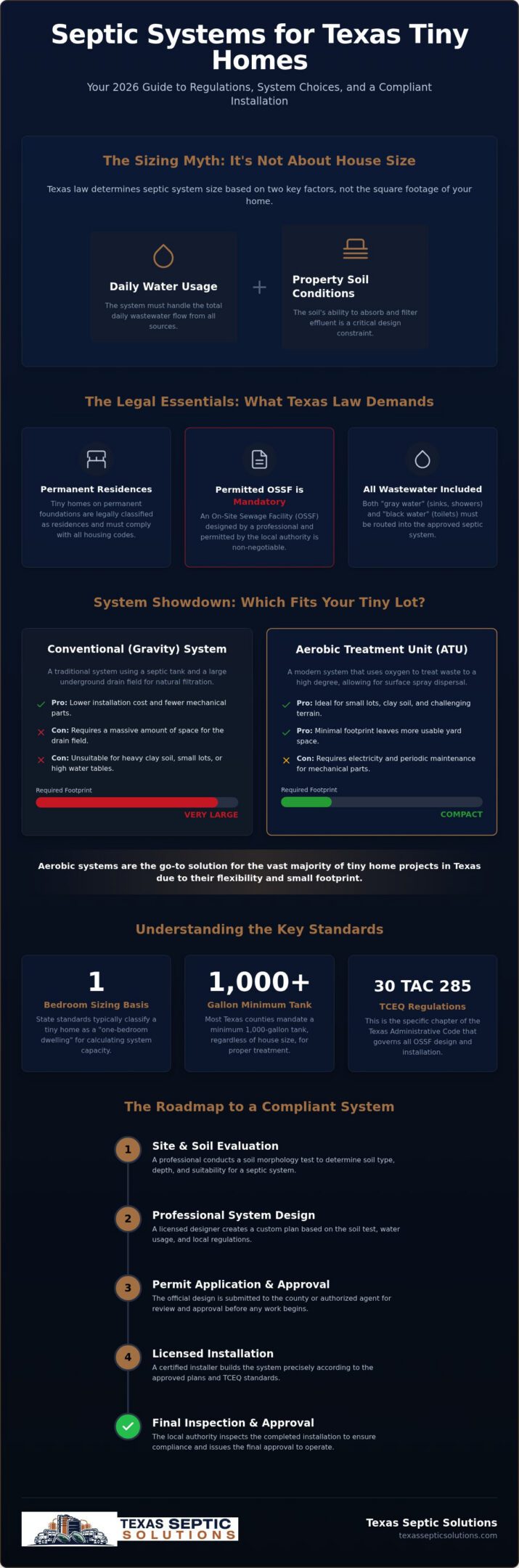
When planning a septic system for tiny home Texas builds, you can’t just guess the size based on your floor plan. Texas regulations focus on the potential impact on the land rather than the square footage of your living room. Even if your home is only 400 square feet, the state usually treats it as a one-bedroom residence. This classification sets the minimum daily flow rate your system must be able to process safely. For most single-bedroom dwellings, the TCEQ assumes a baseline flow of 180 to 225 gallons per day, which dictates the size of your tanks and the length of your drain lines.
Designing for the minimum might feel like a cost-saving measure, but it’s important to balance your initial investment with the potential septic system replacement cost down the road. If you undersize your system now, you risk overloading the soil and causing a backup that requires a total overhaul. A professional design ensures you meet 2026 state requirements while protecting your property’s long-term habitability.
Why Soil Testing is Non-Negotiable
You might have heard about “perc tests” from online forums, but Texas requires a more detailed professional soil morphology report. A licensed evaluator digs test holes to examine the soil layers, texture, and structure. This is critical because what works for your neighbor might be a disaster for your specific lot. In areas like Cypress, the high clay content acts like a literal sponge that refuses to drain, which often forces a move from conventional setups to aerobic systems. Because soil structure dictates exactly how much liquid the ground can safely absorb, it is the primary reason most unprofessionally designed systems fail within their first five years.
Minimum Tank Capacities in Texas
Don’t fall for the trap of buying a 500-gallon tank from a third-party vendor. For a permitted home in Texas, a 1,000-gallon tank is the standard 2026 minimum for most single-family residences. Undersizing your tank leads to a host of problems, including the need for frequent pumping and early system failure. This happens because the waste doesn’t have enough time to settle and separate properly before the liquid moves into the drain field. Our team specializes in new septic system installation that accounts for these sizing realities, ensuring your tiny home project stays on the right side of the law and remains functional for decades.
The Installation Roadmap: From Soil Test to Permit
Starting your septic system for tiny home Texas project requires a structured approach to satisfy both state law and local health departments. It’s not a DIY weekend job. You need a clear path from the first shovel in the ground to the final sign-off. This roadmap ensures your system is built to last and is legally permitted for use.
- Step 1: Site evaluation and professional soil analysis to determine land capability.
- Step 2: Custom system design by a licensed OSSF professional tailored to your lot.
- Step 3: Permit application and approval through the local county authority.
- Step 4: Excavation, installation, and the critical “open-hole” inspection.
- Step 5: Final backfill and system commissioning for daily use.
Preparing Your Site for Installation
Many tiny home communities have limited space, which makes site preparation a logistical puzzle. You must clear the designated drain field area of trees and brush. Roots are a leading cause of line damage, so keeping a safe distance is vital. You also need to ensure there’s enough room for heavy machinery to maneuver without damaging existing structures or compacting the soil where the system will go. We coordinate with your other utility providers, like water and electric, to make sure no lines cross in a way that creates a future maintenance nightmare.
The Inspection and Approval Process
The “open-hole” inspection is the most critical part of the legal process. An inspector from the county health department visits the site before any dirt covers the tanks or lines. They check that the installation matches the approved design exactly. They look at tank levels, pipe slopes, and the quality of the materials used. You should never cover a system before this official sign-off. Doing so often leads to an order to dig it all back up at your expense. Once the inspector is satisfied, they issue your License to Operate (LTO). This document is your proof that your septic system for tiny home Texas is fully legal and ready for use. If you’re ready to start your build, contact us today for a professional new septic system installation.
Professional Tiny Home Septic Solutions in East Texas
Choosing the right partner for your septic system for tiny home Texas project means finding someone who understands the specific dirt under your feet. In East Texas, the soil varies wildly from the sandy patches in Shepherd to the heavy, stubborn clay in Cypress and Cleveland. Texas Septic Solutions isn’t just a contractor; we’re your neighbors. We’ve spent years navigating the local environmental standards and building relationships with county health departments. This local knowledge ensures that your project doesn’t get stuck in red tape or fail due to poor site evaluation.
Our team provides a full-service model that covers every stage of your system’s life. We handle everything from the initial site design to professional septic system repair in Texas. If you run into an unexpected issue at 2:00 AM, our 24/7 emergency service means you’re never left dealing with a utility crisis alone. We take pride in being a one-stop shop for homeowners who value dependability and straightforward communication.
Why Choose Texas Septic Solutions?
We focus on transparency and accountability. In communities like Huffman and Shepherd, we’ve built a reputation for installing systems that are 100% legal and environmentally sound. We don’t cut corners with unpermitted tanks or “gray area” drainage. Instead, we take a neighborly approach to help you realize your tiny home dream without the fear of future fines or system failures. Our goal is to provide a reliable foundation for your lifestyle so you can focus on enjoying your new space.
Protecting Your Investment with Proactive Care
A tiny home system often works harder than a traditional one because there’s less room for error. Staying ahead of issues is the best way to avoid costly surprises. Enrolling in a septic system maintenance plan ensures that your filters are cleaned, your pumps are tested, and your levels are checked on a regular schedule. This proactive care is essential for aerobic systems that rely on mechanical parts to function.
Routine septic system maintenance Texas also includes regular pumping to prevent sludge buildup. In a small-scale septic system for tiny home Texas setup, even a minor backup can become a major headache. We recommend a professional site evaluation before you even finalize your home’s placement. Contact us today to schedule your consultation and ensure your tiny home is built on a reliable, professional waste management solution.
Build Your Tiny Home on a Solid Foundation
Building your dream tiny home shouldn’t be stalled by utility headaches or regulatory red tape. As we’ve explored, finding the right septic system for tiny home Texas projects requires a careful balance of soil analysis, proper sizing, and strict adherence to TCEQ guidelines. Whether your lot in Cleveland requires an advanced aerobic system or your Shepherd property is perfect for a conventional setup, the key to a legal and functional home is professional design from the start.
Our team of licensed OSSF installers is ready to help you navigate the permitting process and ensure your installation meets every local standard in Cypress and beyond. We provide expert permitting support so you can focus on the fun parts of your build while we handle the technical details. Don’t risk fines or system failures by guessing with unpermitted solutions. We’re committed to helping you realize your vision with a system that’s built to last.
Get a Professional Tiny Home Septic Consultation Today and start your project with the peace of mind that comes from local expertise. We’re here to be your neighborly experts every step of the way.
Frequently Asked Questions
Is a septic system required for a tiny house in Texas?
Yes, a permitted On-Site Sewage Facility (OSSF) is required for any tiny home on a permanent foundation in Texas. State law views these as standard residences regardless of their square footage. Even if you live in an unincorporated area, you must have an approved system to handle wastewater and protect the local environment from contamination.
Can I use a composting toilet instead of a septic system in Texas?
Composting toilets are rarely a standalone legal solution for permanent dwellings in Texas. Even if you use one, the state still requires a permitted system to manage “gray water” from your sinks, showers, and laundry. Most counties will not issue a certificate of occupancy without a fully approved septic system for tiny home Texas projects to handle all household effluent.
How much space do I need for a tiny home septic system?
The space required depends heavily on your soil type and whether you choose an aerobic or conventional system. A conventional drain field might need several thousand square feet of clear, unobstructed land. Aerobic systems with spray irrigation have a much smaller footprint, which is why they are the preferred choice for tiny home owners with limited lot sizes in the Houston area.
What is the smallest legal septic tank for a tiny home in Texas?
In 2026, the standard minimum size for a permitted septic tank in Texas is typically 1,000 gallons. While you might find smaller tanks for sale online, they often fail to meet local county requirements for permanent residences. Installing a tank that meets state minimums ensures your system has enough capacity to treat waste effectively and prevents early failure.
Do tiny home septic systems need special maintenance?
Tiny home systems require the same proactive care as larger residential setups. Aerobic systems specifically need a maintenance contract and inspections three times a year to stay compliant with Texas law. Because tiny home systems often deal with concentrated waste, regular pumping and filter cleanings are essential to keep the system running smoothly and avoid emergency repairs.
How long does it take to install a septic system for a tiny house?
The physical installation usually takes three to five days, but the entire process takes longer due to permitting. You should account for several weeks to complete soil testing, custom design, and county approval. Once the permit is in hand and the weather cooperates, our team works efficiently to get your system installed, inspected, and backfilled as quickly as possible.
Can I install my own tiny home septic system in Texas?
You generally cannot install your own septic system for tiny home Texas unless you are a licensed OSSF installer. Texas has strict licensing requirements to ensure systems are engineered correctly and installed safely. Hiring a professional is the only way to guarantee your system passes the mandatory “open-hole” inspection and receives a legal License to Operate from the county.
What happens if I install a septic system without a permit?
Installing an unpermitted system can lead to heavy fines, legal action, and a “red-tag” that stops your project. Local authorities have the power to force you to remove the illegal system and start over with a permitted design. This is an expensive mistake that can double your costs and significantly delay your move-in date.