
Septic System for a Barndominium in Texas: The 2026 Owner’s Guide
Your dream barndominium isn’t just a house, so why treat its waste management like a standard suburban project? Choosing the right septic system for a barndominium in Texas is a strategic move to protect your investment from the state’s unique soil challenges. Many owners realize too late that high-clay East Texas soil and multi-use shop layouts require a more specialized approach than a simple tank in the ground. You’re likely feeling the pressure of balancing TCEQ standards with local county rules, especially when deciding if that shop bathroom needs its own dedicated system.
It’s a lot to manage, but getting your infrastructure right the first time is the only way to ensure your property stays functional during heavy rains. We’ve put together this 2026 guide to help you choose the best setup for your specific lot and handle the permitting process without construction delays. You’ll learn the critical differences between aerobic and conventional setups, how to size your tank based on the current 120-gallon per bedroom standards, and what it takes to keep your system running for decades.
Key Takeaways
- Learn how your barndominium’s layout, including shop bathrooms and utility sinks, directly impacts your septic design and tank sizing.
- Understand why aerobic units are often the best septic system for a barndominium in Texas, particularly when dealing with the heavy clay soil found in East Texas.
- Navigate TCEQ and local county regulations with confidence by starting with a professional site evaluation and soil test.
- Discover how to align your septic installation with your metal building construction schedule to avoid costly permitting or plumbing delays.
- Protect your investment by establishing a professional maintenance plan that meets legal requirements and prevents system failure during heavy rains.
Planning Your Septic System for a Barndominium in Texas
Building a barndominium is different from a traditional home build. These structures are hybrid spaces that often combine high-end living quarters with massive workshops or garages. Because of this unique layout, your On-site sewage facilities (OSSF) cannot be an afterthought. A septic system for a barndominium in Texas must be engineered to handle the specific wastewater footprint of both your home and your hobby space. If you wait until the metal building foundation is poured to think about tank placement, you might find yourself facing expensive plumbing reroutes or permitting denials.
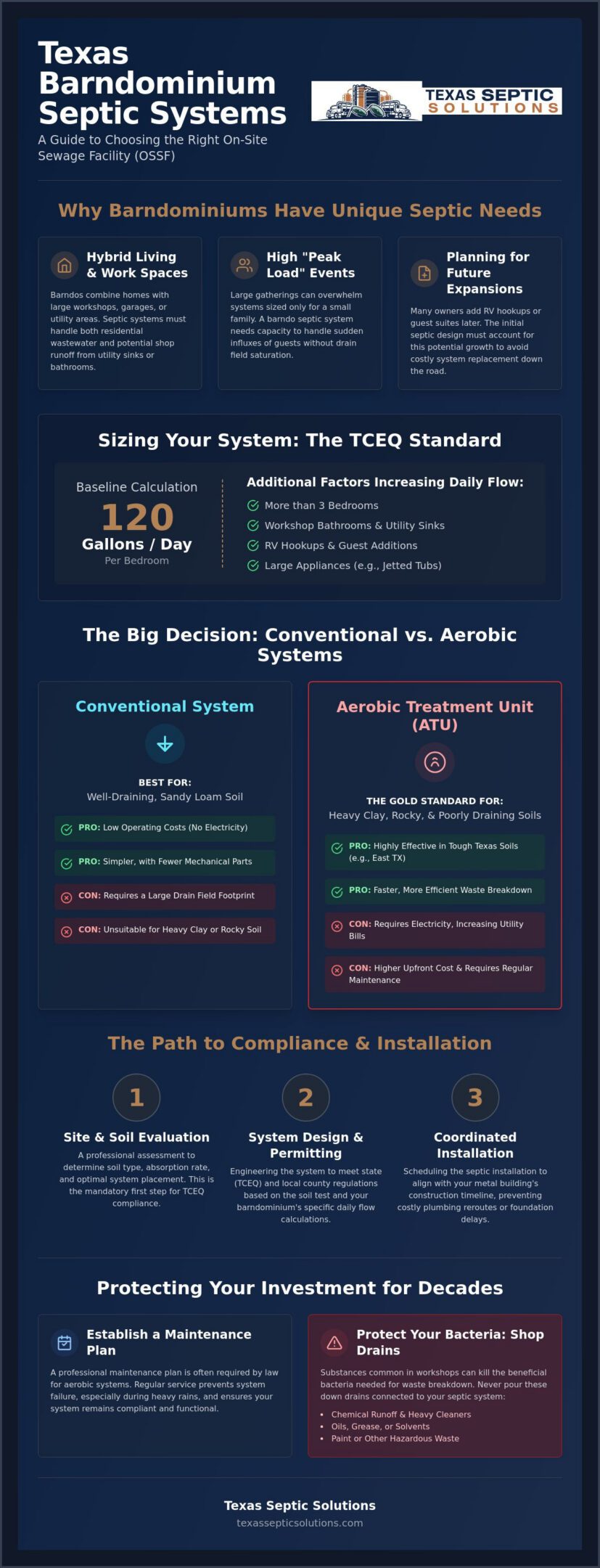
In Texas, system sizing is strictly regulated. Most designs start with a baseline of 120 gallons per day per bedroom. However, barndominiums often push these limits. If your shop includes a utility sink for washing parts or a full bathroom for convenience, those fixtures add to your “daily flow” calculations. We recommend identifying your optimal tank location early in the planning phase. This ensures your lines have the correct slope and your tank remains accessible for future pumping without being blocked by new outbuildings or driveways.
Why Barndominiums Have Unique Septic Needs
Barndominiums are built for lifestyle, which often means planning for more than just the current residents. We frequently see owners adding RV hookups or “man cave” additions after the initial build. If your septic system isn’t designed for these future expansions from day one, you’ll likely face a system failure when you try to add them later. You also need to consider “peak load” events. Large barndos are perfect for social gatherings, but a sudden influx of twenty guests can overwhelm a system designed only for a small family. Planning for these surges protects your drain field from saturation and keeps your system legal under TCEQ standards.
Integrating Shop and Residential Waste Lines
Deciding how to connect your shop and house is a critical design choice. You have two main options:
- Single Large System: One high-capacity tank handles everything. This is usually more cost-effective but requires careful planning of the slab elevation to ensure gravity-fed lines work correctly.
- Dual Systems: If your shop is detached or significantly lower than the house, you might need two separate units to avoid expensive lift pumps.
You must also be mindful of what goes down the shop drains. Unlike a standard kitchen sink, shop sinks often see chemical runoff, oils, or heavy cleaners. These substances can kill the beneficial bacteria in your septic tank, leading to clogs and foul odors. We help owners design layouts that keep hazardous shop waste separate or implement filtration steps to protect the health of their bacterial colony.
Choosing Between Aerobic and Conventional Systems
Selecting the right septic system for a barndominium in Texas often feels like a technical hurdle, but it really starts with your soil. Texas land varies wildly. You might have the deep sand of East Texas or the stubborn, heavy clay found near Houston and Cypress. Because barndominiums often sit on larger acreage, you have more flexibility with your layout, yet the Texas Commission on Environmental Quality (TCEQ) requires specific systems based on how well your ground absorbs water. Your choice between a conventional gravity system and an Aerobic Treatment Unit (ATU) will define your maintenance routine and your upfront construction costs.
Conventional Systems: The Budget-Friendly Standard
If you’re lucky enough to have well-draining, sandy loam soil, a conventional system is often the most straightforward choice. These systems rely on a standard septic tank and a gravity-fed drain field. They don’t require electricity or complex mechanical parts; this keeps your long-term operating costs low. Since there are no aerators or pumps to power, you won’t see an increase in your monthly utility bill. However, they do require a larger underground footprint for the leach field. This area must remain undisturbed by heavy shop equipment or vehicle traffic to prevent pipe damage.
Aerobic Systems: The Solution for Tough Texas Soils
Most modern barndo owners in East Texas find that an aerobic setup is the “gold standard” for their property. These systems act like a miniature municipal waste plant. They use an oxygen-rich environment to break down waste much faster than conventional tanks. This is essential if you’re building on rocky ground or heavy clay that simply won’t “take” water through a traditional drain field. If you’re unsure which setup fits your lot, checking a maintenance guide for Texas systems can help you understand the long-term commitments of each.
An aerobic septic system for a barndominium in Texas typically uses spray heads or drip irrigation to distribute treated water across your lawn. This allows for a much smaller footprint, which is a major advantage if you want to keep your land clear for future outbuildings or a large workshop. While they require a dedicated maintenance contract and a small amount of electricity, they provide the peace of mind that your system won’t fail during a wet Texas spring. The higher treatment level means the water is safe for surface application, effectively watering your lawn while managing your waste.
Texas Soil Testing and TCEQ Compliance Requirements
Before you break ground on your foundation, you must address the legal framework governing wastewater. The Texas Commission on Environmental Quality (TCEQ) sets the statewide standards for On-Site Sewage Facilities (OSSF). However, the actual permitting and enforcement often happen at the county level. Whether you’re building in Cleveland, Houston, or Cypress, your project must begin with a professional site evaluation. This isn’t just a formality; it’s the first legal requirement to ensure your septic system for a barndominium in Texas is safe and sustainable.
Soil texture and percolation rates are the two biggest factors in your system design. In many parts of East Texas, you’ll encounter heavy clay that drains poorly. In other areas, you might find sandy loam that filters water more efficiently. A licensed professional must conduct a soil test to determine how quickly your land can absorb treated effluent. This data dictates whether you can install a budget-friendly conventional system or if you’re legally required to use an aerobic treatment unit. Without this verified data, your permit application won’t even make it past the first desk at the county office.
Navigating TCEQ Regulations and Local Permits
The OSSF permit process typically takes four to eight weeks from the initial evaluation to final approval. You cannot begin any septic-related digging until your design is officially approved by your local authorized agent. If you’re building on a lot that already has an older structure, you should also factor in the septic system replacement cost in Texas. Sometimes, decommissioning an old tank is necessary before your new barndominium system can be permitted. Getting your paperwork in order early prevents your metal building contractor from being sidelined by utility delays.
The Critical Role of Professional Site Evaluations
A site evaluation goes deeper than just looking at the surface. We look for “restrictive horizons,” such as caliche layers or high groundwater levels, that could cause your system to fail during a heavy Texas rain. As your neighborly experts, we ensure your design meets all legal setbacks. This includes maintaining specific distances from water wells, property lines, and your barndo foundation. By identifying these challenges during the planning stage, we create a roadmap that keeps your build on track and compliant with all state and local laws. This proactive approach ensures your system remains a “set it and forget it” part of your home infrastructure.
The Installation Timeline: Coordinating with Your Barndo Build
Timing is the difference between a smooth build and a plumbing nightmare. When you’re building a barndominium, the pace of construction often accelerates once the metal shell is erected. This makes it vital to have your septic timeline locked in before the first truck arrives. A septic system for a barndominium in Texas requires a phased approach that aligns with your foundation pour and framing schedule. If these steps are out of sync, you risk damaging your infrastructure or failing your final inspections.
A professional installation follows four distinct phases. First, we handle the site evaluation and design during your initial planning stage. Second, we secure the necessary permits while your metal building is being fabricated. Third, the physical installation of the tanks and rough-in plumbing occurs, typically just before or after the slab is poured but before the final grade. Finally, once all interior plumbing is connected, we perform a system activation and a final inspection to ensure everything meets state standards.
Coordinating with Metal Building Contractors
Communication between your septic team and your metal building contractor is the most critical part of the process. Metal buildings require heavy machinery, including cranes and forklifts, to set the steel frame. If your drain field is installed too early without proper marking, these heavy vehicles can crush your pipes or compact the soil, ruining your system’s ability to process waste. You must also clearly define where the main waste line exits the slab. We need to ensure the tank is placed at the correct depth and distance to maintain a proper gravity slope from the building. Don’t make the mistake of paving your driveway or walkways before the tanks are in the ground. Digging up fresh asphalt to lay a pipe is an expensive error that’s easily avoided with a New Septic System Installation plan that prioritizes site flow.
What to Expect During the Dig and Install
Once the permits are approved, the physical installation of a septic system for a barndominium in Texas usually takes between two and five days. This timeframe depends on weather conditions and the complexity of the design. You should expect some significant site mess during this phase. Large excavators will be on-site to dig the tank pits and trench the lines. We take great care during the backfilling process to prevent future soil settling, which can cause pipes to shift or bellies to form in the lines.
The process ends with a final walkthrough. If you’ve installed an aerobic system, we’ll show you how to read the control panel and what the various alarms mean. This is also when we verify that all spray heads or drip lines are positioned correctly according to your landscape plan. We ensure the site is roughly graded so that rainwater flows away from the tanks, protecting your new investment from the start. This transition from a construction site to a functional home is the most rewarding part of the build.
Professional Installation and Long-Term Maintenance Solutions
Professional installation is the only way to ensure your new build stays on the right side of the law. While DIY culture is strong in the barndo community, a septic system for a barndominium in Texas must be installed by a TCEQ-licensed professional to be legal. This isn’t just about paperwork; it’s about protecting your long-term investment. Most tank manufacturers and pump suppliers will void your warranty coverage if the system isn’t commissioned by a certified expert. Beyond the legalities, a professional setup ensures that your multi-use shop plumbing and residential lines work in perfect harmony from day one, preventing back-ups that could damage your finished interior.
Once your system is live, the focus shifts to longevity. We recommend a proactive septic system maintenance Texas plan to catch small issues before they become yard-flooding disasters. During a routine visit, technicians clean the effluent filters, check the air compressor or pump performance, and measure sludge levels in the primary tank. For aerobic systems, we also verify the chlorine levels and spray head patterns to ensure they aren’t saturating your foundation. If an alarm ever goes off at 2 AM during a heavy East Texas storm, having a partner with 24/7 emergency service provides the immediate resolution you need.
Why Texas Septic Solutions is the Barndo Expert
Our team understands the specific pressures a barndominium puts on a utility system. We’ve designed and installed countless setups across Cleveland, Houston, and Cypress, specializing in the hybrid residential-commercial needs of these unique buildings. We act as your neighborly expert, guiding you through the stress of the build and remaining available for septic system repair in Texas if the unexpected happens. We offer an all-encompassing service model that covers everything from the first dig to decades of upkeep, ensuring you never have to juggle multiple contractors for your utilities.
Protecting Your Investment with Maintenance Plans
The idea that a septic system is “set it and forget it” is a dangerous myth that leads to expensive failures. Modern systems, especially the aerobic units required for many Texas lots, have mechanical parts that wear out over time. Pumping your tank at regular intervals is far more affordable than replacing a failed leach field or a burnt-out aerator. By signing up for a septic system maintenance plan, you ensure your septic system for a barndominium in Texas stays functional for decades. This proactive care keeps your system running efficiently, maintains your property value, and ensures your barndominium remains the reliable retreat you envisioned.
Secure Your Barndominium Foundation with Expert Septic Planning
Building a dream home requires a solid foundation; in Texas, that includes a wastewater plan that won’t let you down. You now have a clear roadmap for navigating TCEQ regulations, choosing between aerobic and conventional designs, and timing your installation with your metal building contractor. Remember that your specific soil type and the inclusion of shop plumbing are the two biggest factors in determining the right septic system for a barndominium in Texas. Getting these details right during the planning phase prevents costly delays and ensures your property remains functional for decades.
As licensed and insured Texas septic experts, we’re here to take the stress out of your utility installation. We serve Cleveland, Houston, Cypress, and Huffman with professional care and offer 24/7 emergency service to keep your home running smoothly. Don’t leave your infrastructure to chance. Get a Professional Septic Installation Quote for Your Barndo and take the next step in your construction journey today. We look forward to helping you build a home that’s as reliable as it is beautiful.
Frequently Asked Questions
Do I need a separate septic tank for my barndominium’s shop?
Usually, a single high-capacity system handles both the living quarters and the shop fixtures. You only need a second tank if the shop is located far from the main structure or if the elevation makes gravity-fed lines impossible. Designing a single septic system for a barndominium in Texas is generally more cost-effective, provided the tank is sized to handle the combined daily flow of all bathrooms and utility sinks.
How much space does a septic system require on my Texas lot?
Conventional systems typically require 1/4 to 1/2 acre for the drain field, while aerobic systems have a much smaller physical footprint. The total space depends largely on required setbacks, such as staying 50 to 100 feet away from water wells and maintaining distance from property lines. Your soil’s absorption rate will ultimately dictate the exact dimensions of the disposal area during the design phase.
Can I drive my tractor or truck over the septic drain field?
No, you must never drive heavy vehicles or machinery over any part of your septic system. The weight of a tractor or truck can crush lateral lines, damage spray heads, or compact the soil so tightly that it can no longer absorb effluent. We recommend fencing off or landscaping the drain field area to ensure it remains a “no-traffic” zone for both residents and construction contractors.
How often does a barndominium septic tank need to be pumped?
Most barndominium owners should schedule professional pumping every 3 to 5 years. This frequency depends on your tank’s capacity and the number of people using the facilities. If your barndo frequently hosts large social gatherings or has a high-occupancy living space, you should check sludge levels more often to prevent solids from flowing into and clogging your disposal field.
What is the average lifespan of an aerobic septic system in Texas?
A well-maintained aerobic system typically lasts between 20 and 30 years. While the concrete or fiberglass tanks are built for the long haul, the mechanical parts like the air compressor and water pump usually require replacement every 5 to 10 years. Consistent maintenance is the single most important factor in ensuring your septic system for a barndominium in Texas reaches its maximum lifespan without major failures.
What should I do if my septic tank alarm goes off in my new barndo?
Immediately silence the alarm and stop using all water, including laundry and dishwashers, until a technician arrives. An alarm typically signals a high water level or a mechanical failure in the aerator or pump. Because barndominiums often have combined lines, a failure can lead to backups in both the living area and the shop, so prompt professional service is essential to avoid a mess.
Does Texas law require a maintenance contract for aerobic systems?
Yes, Texas law requires all aerobic system owners to maintain a valid service contract with a TCEQ-licensed provider. These systems are complex and require inspections every four months to ensure they are treating wastewater to legal standards. Your maintenance provider is responsible for testing the water quality and submitting the required reports to your local county or regulatory authority to keep your permit valid.