
Septic System Evaluation for Home Buyers: The Ultimate 2026 Texas Checklist
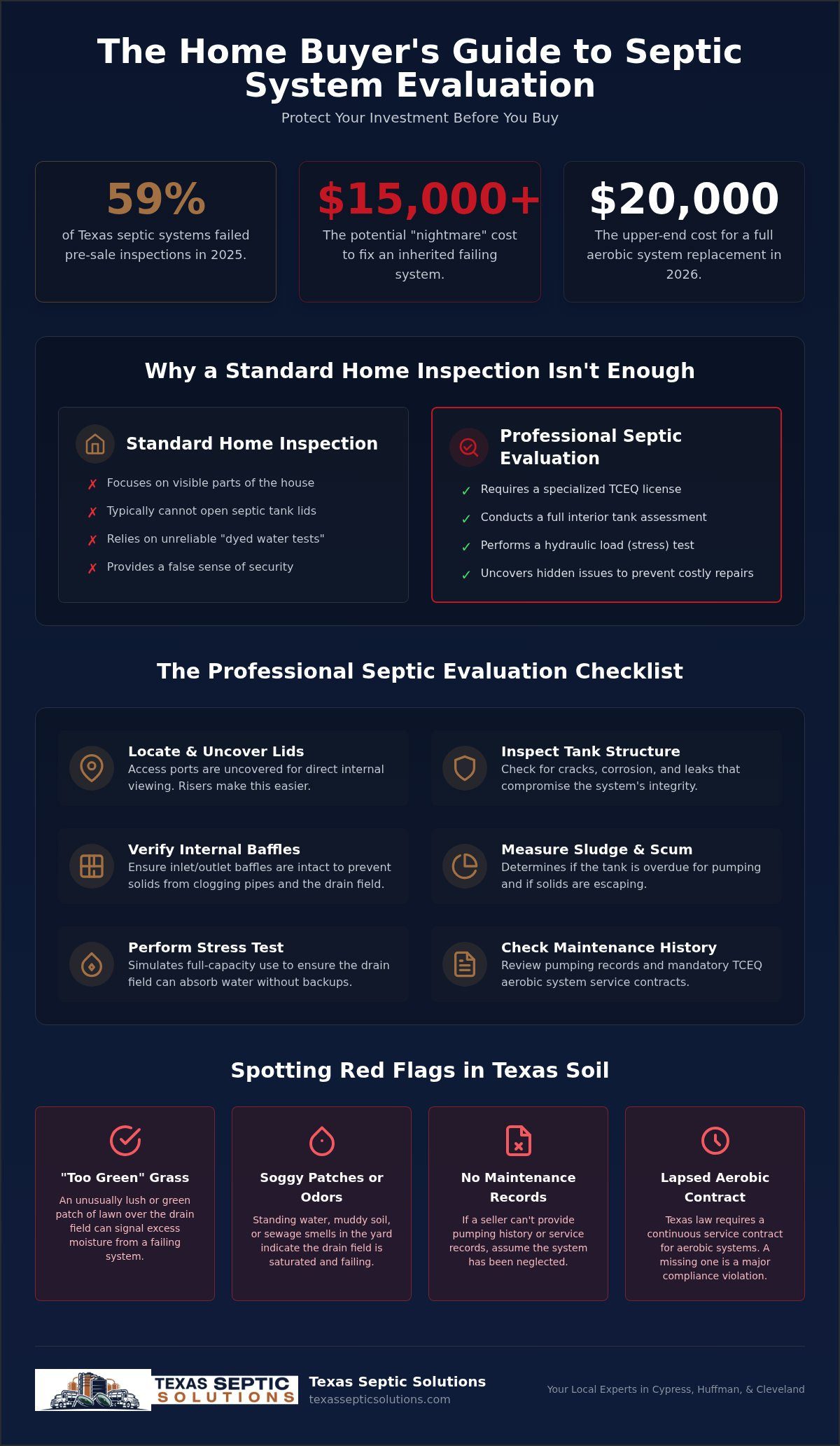
Did you know that in 2025, approximately 59% of septic systems across Texas failed their pre-sale inspections? When you’re eyeing a beautiful property in Cypress or Huffman, it’s easy to focus on the kitchen counters and forget about the infrastructure buried underground. Falling in love with a home only to inherit a failing system can turn your investment into a $15,000 nightmare overnight. That’s why a professional septic system evaluation for home buyers isn’t just a suggestion; it’s a financial necessity in our local market.
We understand the stress of navigating Texas-specific aerobic system requirements and the uncertainty of who should cover the cost of inspection or pumping. You deserve to move in with total confidence, knowing exactly how much life is left in that tank. This guide provides a comprehensive 2026 checklist to help you spot hidden red flags and stay ahead of the latest TCEQ regulations. We’ll walk you through what your inspector must check, how to handle the results, and how to use that information to negotiate a fair deal before you close.
Key Takeaways
- Understand why a standard home inspection doesn’t cover the tank’s interior and why a specialized assessment is a non-negotiable step.
- Follow our detailed checklist for a septic system evaluation for home buyers to verify the integrity of the tank, lids, and internal baffles.
- Learn to spot local red flags like “too green” grass or soggy patches that signal a failing drain field in heavy Texas clay.
- Stay ahead of 2026 TCEQ regulations regarding permit transfers and the mandatory maintenance contracts required for aerobic systems.
- Get the facts you need to negotiate repair costs or system upgrades with the seller before you finalize your home purchase.
Why a Standard Home Inspection Isn’t Enough for Septic Systems
When you buy a home in Texas, you expect the standard inspection to cover everything from the shingles to the slab. Most buyers assume the septic system is part of that package. It isn’t. A general home inspector focuses on the visible parts of the house. They’ll flush the toilets and check for leaks under the sink, but they rarely have the licensing or tools to perform a true septic system evaluation for home buyers. To understand why this matters, you first need to know what a septic system is: a complex onsite treatment facility that relies on biology and soil science to keep your home safe.
In Texas, most general inspectors are actually prohibited from opening septic tank lids. This requires a specific license from the Texas Commission on Environmental Quality (TCEQ). Without opening the tank, you’re essentially buying a car without ever looking under the hood. While a professional evaluation is an upfront cost, it’s a small price to pay when you consider that a full system replacement in 2026 can range from $10,000 to $20,000 for aerobic models. As your neighborly experts in areas like Cypress and Cleveland, we know that a failing system doesn’t just hurt your wallet; it can impact the property value of the entire community.
The ‘Visual-Only’ Trap in Real Estate Transactions
Don’t be fooled by a “functional” report from a standard inspector. Flushing a toilet three times doesn’t prove the drain field is working; it only proves the pipes are clear. Many buyers rely on “dyed water tests” where an inspector drops a tablet in the toilet to see if color surfaces in the yard. These tests are notoriously unreliable and often give a false sense of security because they don’t put the system under actual stress. A hydraulic load test is the industry standard for buyers because it simulates full-capacity usage to check if the drain field can actually process water without backing up. Without this level of detail, you could move in on Monday and have a sewage backup by Friday once the whole family starts showering and running the dishwasher.
Inheriting a Maintenance Legacy: Pumping History
A septic system is a living infrastructure. Its health depends entirely on how the previous owners treated it. If a seller can’t produce maintenance records, you’re flying blind. A lack of regular care often leads to “sludge judge” failures where solids have escaped the tank and begun clogging the soil. You should always ask the seller for the last date of professional pumping and the name of their service provider. For more on what to look for in these records, check out our guide on Septic System Maintenance Texas. If the system is aerobic, ask for the TCEQ-mandated maintenance contract. If they don’t have one, it’s a major red flag that the system has been neglected, potentially shortening its lifespan by years.
The Professional Septic System Evaluation Checklist for Home Buyers
A thorough septic system evaluation for home buyers follows a strict sequence to ensure no component is overlooked. It starts with locating and uncovering the tank lids. If the property doesn’t have risers (pipes that extend to the surface), the inspector may need to dig to access the ports. Accessing these lids is the only way to get a clear view of the system’s internal health.
Once the tank is open, the inspector checks the structure for cracks, leaks, or corrosion. They’ll pay close attention to the inlet and outlet baffles. These components are vital because they prevent solids from clogging your home’s pipes or flowing into the drain field. Next, the inspector measures the sludge and scum layers. This data tells you if the tank is overdue for pumping or if the system is struggling to handle the household’s waste volume. We also perform a stress test by introducing a controlled amount of water to evaluate the drain field’s absorption capacity, ensuring the soil can still process effluent without backing up.
Aerobic vs. Anaerobic: What Texas Buyers Must Know
Home buyers in Houston, Cypress, and Cleveland will likely encounter Aerobic Treatment Units (ATUs). Because our local clay soil doesn’t always absorb water well, these systems use oxygen to break down waste faster than traditional setups. You should know that there are many different types of septic systems, but ATUs are the most common in new Texas developments. Under Texas law, owners of these systems must maintain a continuous service contract with a licensed provider. During an evaluation, we check the “trash tank” for excess solids and ensure the aeration chamber is properly oxygenating the effluent to keep the system running efficiently.
Mechanical Components and Alarms
Unlike traditional gravity-fed systems, aerobic units rely on mechanical parts and electricity. The inspector must test the air compressor, the water pump, and the spray heads that distribute treated water across the lawn. The most vital safety feature is the alarm system. If you ever hear a septic tank alarm going off, it’s an immediate signal of a mechanical failure or a high-water event. Verifying that these sensors and lights work correctly is the only way to prevent a messy backup on your first day in the new house. If the system fails any part of this checklist, you may need a professional septic system repair to bring it up to code before you finalize the purchase.
Spotting Red Flags: Common Septic Failures in Texas Soil
When walking a potential property, keep your eyes on the ground. One of the most deceptive signs of failure is a patch of vibrant, lush green grass over the drain field. While it looks like a healthy lawn, it often indicates that the soil is no longer absorbing effluent correctly. Instead, the waste is rising to the surface and acting as a fertilizer. During a septic system evaluation for home buyers, we look for these “too good to be true” spots. Other visual cues include standing water or soggy patches in the yard, even if it hasn’t rained in days. Inside the home, listen for gurgling pipes or slow-draining sinks, as these often signal a backup is already in progress. Finally, don’t ignore your nose; sewage odors near the tank or the spray field are clear indicators of a venting or treatment issue.
The ‘Black Gumbo’ Challenge: Clay Soil and Drainage
In areas like Cleveland and Huffman, homeowners deal with “Black Gumbo,” a heavy clay soil that presents unique challenges for drainage. This soil expands when wet and shrinks when dry, which can put immense pressure on underground components. Over time, a layer of “biomat”, a slimy bacterial growth, can build up in the drain field. While some biomat is normal, too much of it creates a waterproof seal that prevents the soil from absorbing liquid. A soil perc test from a decade ago won’t tell you the current state of this absorption. A modern evaluation is the only way to verify if the soil can still handle the daily hydraulic load of a modern family without failing.
Structural Integrity: Roots and Cracks
The extreme Texas weather cycles of intense drought followed by heavy rain can wreak havoc on concrete tanks. As the clay soil shifts, it can cause the tank to crack or the inlet pipes to pull away from the structure. We also frequently see root intrusion from nearby oaks and pines. These thirsty roots seek out the moisture inside the pipes, eventually causing massive blockages or structural collapses. If we identify these issues during an inspection, it doesn’t always mean the deal is dead. Understanding the scope of a Septic System Repair in Texas allows you to negotiate fairly with the seller to ensure the system is brought back to full functionality before you move in. Identifying these structural flaws early prevents you from inheriting a system that is literally cracking under the pressure of the local environment.
Navigating the Evaluation Process: Costs, Permits, and Negotiations
In a typical Texas real estate transaction, the buyer usually pays for the professional septic system evaluation for home buyers. This is your due diligence to protect your investment. However, it’s common practice to ask the seller to pay for the tank pumping. An inspector cannot see the internal structure or the bottom of the tank if it’s full of waste. By having the seller pump the tank right before the inspection, you ensure the professional can verify the integrity of every component you’re about to own. If the seller refuses to pump, treat it as a significant red flag regarding the system’s history.
Once the report is in your hands, it becomes your most powerful negotiation tool. You shouldn’t just look for a “pass” or “fail” grade. Look for immediate needs versus long-term maintenance. If the report shows the tank is overdue for pumping or has a minor baffle issue, these are easy fixes to request before closing. If the evaluation reveals a struggling drain field, you have the leverage to ask for a price reduction or an escrow holdback to cover future repairs. This ensures you aren’t left with a dry bank account and a wet yard the month after you move in.
Texas Regulatory Compliance and TCEQ Chapter 285
Texas septic systems are governed by TCEQ Chapter 285, which sets strict standards for design and permitting. One of the most common “unpermitted nightmares” we encounter involves homes that have been expanded. If a house in Shepherd or Huffman was originally permitted for two bedrooms but now has four, the existing septic system is likely undersized and out of code. This can lead to premature failure and legal headaches during the permit transfer process. Local regulations also dictate specific setbacks from wells and property lines. We verify these distances during our evaluation to ensure you aren’t inheriting a non-compliant system that the county could eventually order you to replace.
Negotiating Repairs: Repair vs. Replacement
Not every failed inspection means you should walk away from the deal. Many issues, like a broken aerator or a cracked lid, are straightforward repairs. However, if the soil is totally saturated or the tank has collapsed, you need to know the Septic System Replacement Cost before proceeding. For drain field issues that aren’t quite “dead” but show signs of stress, we often recommend an escrow holdback. This allows the seller to set aside funds that you can use for repairs if the system fails within the first six months of your residency. If the system is unpermitted or requires a total replacement that the seller won’t credit, that’s often the point where walking away is the smartest financial move. If you’re ready to schedule an expert look at a property, book your professional septic evaluation with our team today.
Choosing a Local Expert for Your Pre-Purchase Septic Inspection
When you’re ready to move forward with a septic system evaluation for home buyers, you need more than just a name from a search engine. You need a licensed Texas On-Site Sewage Facility (OSSF) professional. Unlike general contractors, an OSSF licensee is specifically trained by the state to understand the biological and mechanical complexities of wastewater treatment. In our region, local expertise is the difference between a thorough check and a costly oversight. We understand the specific challenges of the Cypress and Houston water tables, where high saturation levels can mimic system failure or hide underlying drainage issues. Choosing a local authority ensures your report is grounded in the reality of our Texas environment.
At Texas Septic Solutions, we provide a “neighborly expert” approach that goes beyond a simple pass or fail. We don’t just identify problems; we offer a path to resolution. Because we specialize in new system design, installation, and 24/7 emergency repairs, we can accurately estimate the cost of any red flags found during the evaluation. This gives you the data you need to negotiate with the seller or plan for future upgrades. Our goal is to ensure that your dream home in Cleveland or Huffman doesn’t come with an unexpected utility crisis on move-in day.
What to Look for in a Licensed Inspector
Before you hire anyone, verify their TCEQ licensing and insurance. A qualified professional should be happy to provide these credentials. You should also check for local reviews specifically from clients in Shepherd, Cleveland, and Huffman to see how they handle the unique soil conditions in those areas. A professional evaluation must result in a written, photo-documented report. This document is your primary evidence during real estate negotiations. It should clearly show the condition of the tank interior, the functionality of the alarms, and the results of the hydraulic load test we discussed in previous sections. If an inspector only offers a verbal summary, they aren’t providing the protection you need for a major investment.
Beyond the Inspection: Your Long-Term Septic Partner
A successful home purchase is just the beginning of your journey as a septic owner. To protect your new home, you’ll need a reliable partner for routine care. Professional pumping every 3 to 5 years is the best way to prevent solids from reaching your drain field and causing a total system collapse. We recommend setting up a Septic System Maintenance Plan as soon as you close. This proactive approach extends the lifespan of your system and ensures you’re always in compliance with local regulations. Our team is committed to the long-term health of our community’s infrastructure, offering 24/7 emergency response so you’re never left stranded by a utility failure. Schedule your evaluation today to ensure you have the facts before your option period ends.
Secure Your Investment Before You Close
Buying a home is one of the biggest financial steps you’ll ever take. While the house itself might look perfect, the infrastructure buried beneath the yard determines your long-term comfort and budget. A standard home inspection simply cannot provide the depth needed to verify a system’s health. By prioritizing a professional septic system evaluation for home buyers, you gain the clarity needed to negotiate repairs, understand your maintenance obligations under TCEQ rules, and avoid the surprise of a post-closing failure.
Texas Septic Solutions is here to be your “neighborly expert” throughout this process. Our licensed OSSF professionals understand the unique challenges of Houston and Cleveland soil, providing the detailed reports required for a smooth transaction. From our 24/7 emergency service to our comprehensive installation expertise, we’re built to support you long after move-in day. Don’t leave your investment to chance; get the facts from a team that knows Texas septic systems inside and out. We’re proud to serve the Houston and Cleveland areas with dependable, expert care.
Schedule Your Professional Septic Evaluation Today and move into your new home with total confidence.
Frequently Asked Questions
Is a septic inspection required by law when buying a home in Texas?
Texas state law doesn’t mandate a septic inspection for every private real estate transaction, but most lenders do. If you’re using an FHA, VA, or USDA loan, a professional evaluation is a non-negotiable requirement for funding. Additionally, specific counties acting as “Authorized Agents” for the TCEQ may have stricter local rules. Even when not legally required, skipped inspections often lead to inheriting the 59% failure rate seen in 2025 industry statistics.
How much does a septic evaluation typically cost for a home buyer?
While we don’t provide specific pricing for our services here, industry data for 2026 shows that a professional septic system evaluation for home buyers generally varies based on the system’s size and location. Basic visual inspections are often available at a lower price point but rarely satisfy lender requirements. A full OSSF-certified evaluation, which includes uncovering lids and testing mechanical components, is a more significant investment that provides the documentation necessary for most Texas closings.
Does the seller have to pump the septic tank before the inspection?
There is no law requiring a seller to pump the tank, but it’s a standard request in most Texas sales contracts. An inspector cannot verify the structural integrity of the tank’s bottom or check for hidden cracks if it’s full of wastewater. We typically recommend that the buyer requests the seller to have the tank pumped immediately before the evaluation. This allows our team to perform a complete visual check of the interior walls and baffles.
Can I perform a septic evaluation myself to save money?
You cannot perform a DIY evaluation for a real estate transaction. Lenders and title companies require a report from a licensed Texas On-Site Sewage Facility (OSSF) professional. Beyond the legal and financial requirements, septic tanks contain hazardous gases and biological waste that require specialized safety equipment and training. Attempting to open or inspect a system yourself is dangerous and won’t provide the legal documentation you need to finalize your purchase or negotiate repairs.
What happens if the septic system fails the buyer’s inspection?
If a system fails, the buyer typically has three options: request the seller to pay for repairs, ask for a price reduction, or walk away from the deal. In Texas, you can also negotiate an escrow holdback where funds are set aside at closing to cover future repairs. Since a high percentage of systems failed inspections in 2025, these negotiations are a common part of the buying process in areas like Cypress and Cleveland.
How long does a professional septic system evaluation take?
A thorough evaluation usually takes between two and four hours to complete. This timeframe depends on whether the tank lids are already uncovered or if the inspector needs to dig to locate them. If the property has an aerobic system with multiple tanks and mechanical components, the process may take longer. We recommend that buyers attend the final portion of the inspection so we can walk them through the system’s layout and any immediate concerns.
Will the septic inspector check the aerobic spray heads?
Yes, a comprehensive evaluation for an aerobic system includes testing the spray heads and the pump that feeds them. The inspector will check for proper distribution, ensuring the treated water is spraying in the designated area and not onto neighboring properties or over the tanks themselves. They also verify that the pump, floats, and timers are functioning correctly. This is a critical step because faulty spray heads can lead to system backups or puddling in the yard.
What is a ‘hydraulic load test’ and do I need one?
A hydraulic load test involves introducing a specific volume of water into the system to simulate a full day of household usage. This is the only way to verify if the drain field can actually absorb effluent without backing up. While some basic inspections skip this step, we consider it essential during a septic system evaluation for home buyers. It reveals failures that a simple visual check might miss, especially in the heavy clay soil common throughout East Texas.