
Septic System Cleaning Cost in Cypress: 2026 Homeowner’s Price Guide
Would you rather invest in a routine maintenance visit today or face an unexpected $15,000 bill to replace your entire drain field next month? It’s a question many of our neighbors in Cypress ask when they start noticing slow drains or unusual odors in the yard. Most homeowners understand that regular upkeep is vital, yet the fear of hidden fees for digging or long hose runs often leads to procrastination. It is stressful to feel like you are being overcharged during a utility emergency, especially when you just want your home to function properly.
We want to help you take the guesswork out of your home maintenance by detailing the septic system cleaning cost Cypress residents are seeing in 2026. This guide provides a clear look at the real-world factors driving service rates, from tank size to the specific soil conditions in Harris County. You will learn the critical difference between a basic pump-out and a professional deep cleaning, ensuring you know exactly what you are paying for. We also highlight common “gotchas” that can inflate your bill and provide a roadmap for budgeting so you can avoid catastrophic system failures before they start.
Key Takeaways
- Understand the 2026 baseline septic system cleaning cost Cypress homeowners should expect and how to budget for routine maintenance.
- Identify how tank capacity and lid depth can lead to unexpected labor fees if your system is not easily accessible.
- Learn the specific maintenance differences between aerobic and anaerobic systems to stay compliant with Harris County regulations.
- Spot hidden expenses like disposal fees and permit costs before you sign a service contract.
- Discover how regular cleaning acts as a localized insurance policy to prevent a $15,000 drain field replacement.
What is the Average Septic System Cleaning Cost in Cypress?
When you start looking into the septic system cleaning cost Cypress homeowners are facing this year, it’s important to understand what a professional cleaning actually entails. Many people use the terms “pumping” and “cleaning” interchangeably, but they represent different levels of care for your home’s infrastructure. A true cleaning involves the total removal of all liquids and solids from your tank. This means clearing out the “scum layer” at the top and the heavy “sludge layer” that settles at the bottom over several years. To get a better sense of why this process is so detailed, you can read about how a septic system works to see how these layers form and why they eventually need professional intervention.
Establishing a baseline for your budget depends on several local variables. In 2026, the market rate in Cypress is influenced by the size of your tank, the depth at which it is buried, and how long it has been since your last service. If you find yourself in a situation where sewage is backing up into your home on a Saturday night, you’ll likely pay a premium for emergency service. We always recommend scheduled maintenance to avoid these high-pressure situations. Routine visits allow us to plan routes efficiently, which keeps costs predictable for you and ensures your system stays in top shape without the stress of a midnight crisis.
Pumping vs. Cleaning: Understanding the Price Gap
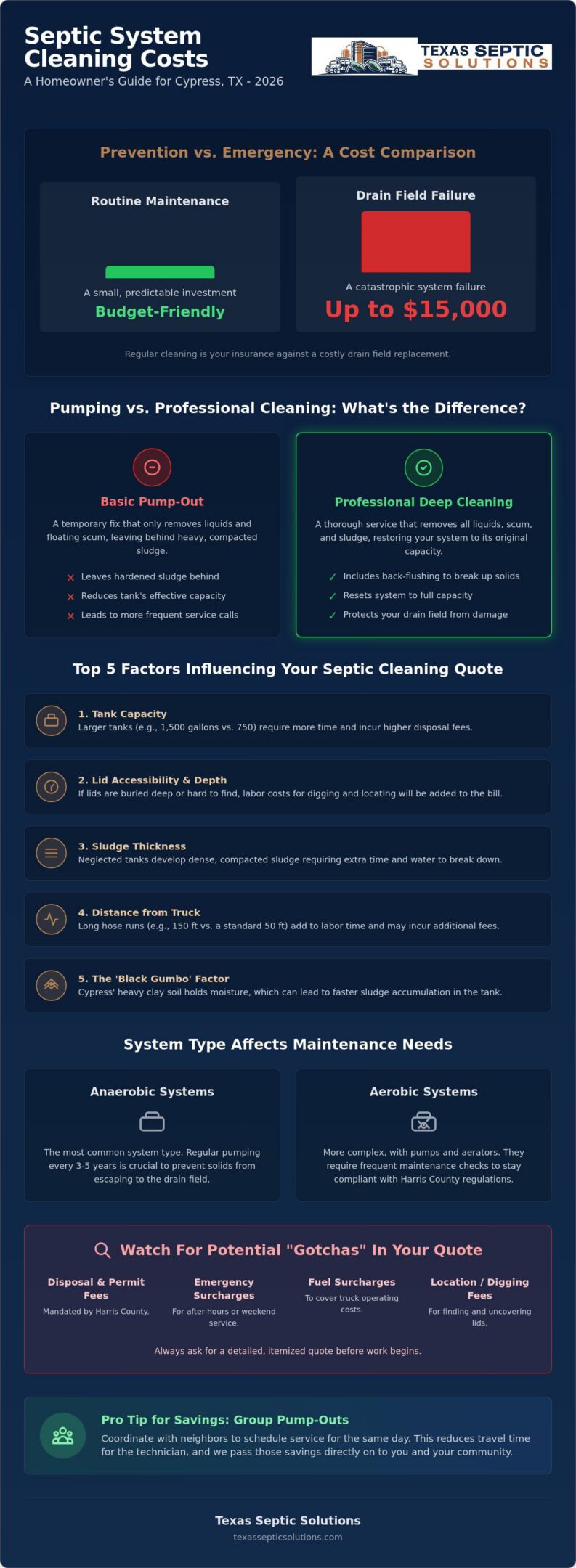
A simple pump-out might seem like a bargain, but it often leaves behind hardened sludge that a standard vacuum hose can’t reach. If that sludge remains, it continues to take up valuable space in your tank, leading to more frequent service calls. A professional cleaning includes back-flushing, a process where we use high-pressure water to break up solid waste and scrub the tank walls. This thorough approach is a core part of any reliable septic system maintenance plan. It ensures your system is truly reset to its original capacity, which protects your drain field from receiving solid particles that cause permanent damage.
Cypress Market Trends in 2026
Local factors play a huge role in what you’ll pay for service today. Harris County treatment plants have specific disposal fees that all providers must account for, and rising fuel costs for heavy-duty pump trucks are a constant factor. Additionally, as Cypress continues to grow, the demand for qualified technicians has increased. This means scheduling your cleaning a few weeks in advance is smarter than waiting for a backup. One way we see local families saving money is through “group pump-outs.” If you and a few neighbors on the same street book your cleanings for the same day, it reduces our travel time and allows us to pass those savings directly to you. It’s a neighborly way to keep the whole community’s utility systems running smoothly.
Top Factors Influencing Your Septic Cleaning Quote
Every property in Cypress is unique, which means your neighbor’s quote might look quite different from yours. The most direct variable is your tank’s capacity. A 1,500-gallon tank holds twice the volume of a standard 750-gallon unit, requiring more time to empty and higher disposal fees at the treatment plant. Beyond volume, the thickness of the sludge plays a major role. If a system has been neglected for several years, the waste becomes dense and compacted. This requires more water for back-flushing and additional labor to liquefy the solids, which naturally impacts the total septic system cleaning cost Cypress residents pay for professional service.
Logistics also dictate the final price. We often encounter tanks buried deep underground without a visible lid. If our technicians have to spend an hour “prodding” the yard and digging through heavy soil to locate the access point, that labor is reflected in the bill. Distance from the street is another factor. Our vacuum trucks are heavy, and we cannot always drive across a manicured lawn or soft soil. If we need to run 150 feet of hose to reach your tank, it adds physical strain and equipment wear that a standard 50-foot run does not. Following septic system maintenance best practices by keeping your tank accessible and cleaning it every few years is the best way to keep these variable costs low.
The ‘Black Gumbo’ Factor: Cypress Soil and Your Tank
Cypress is known for its “Black Gumbo” clay, a heavy soil that holds onto moisture and expands when wet. Unlike sandy regions where water drains quickly, our local clay can become waterlogged, putting immense pressure on your tank and drain field. This lack of drainage often leads to faster sludge accumulation because the system can’t process liquids as efficiently as it should. High soil saturation levels common in East Texas can lead to hydraulic overloading, requiring more frequent pumping to prevent system back-ups. Because of this, we often recommend that Cypress homeowners schedule cleanings slightly more often than the national average to avoid environmental contamination.
Accessibility and Riser Installations
One of the smartest ways to lower your long-term costs is to invest in a septic tank riser. This simple modification brings your tank lid to the surface, or just below it, which completely eliminates future digging fees. It also makes it easier for you to inspect your system for early warning signs of trouble. Landscaping choices, like heavy bushes or fences, can also complicate access for our equipment. If you aren’t sure where your tank is located or how to make it more accessible, the team at Texas Septic Solutions can help you identify the best location for a riser and mark your tank for future service visits.
Aerobic vs. Anaerobic: How System Type Changes the Bill
The mechanical design of your property’s setup is one of the most significant factors in your long-term budget. In Cypress, we see a mix of older traditional systems and modern aerobic units, each with a different set of requirements. While we discussed how tank volume affects the septic system cleaning cost Cypress residents pay, the complexity of the technology inside that tank is just as important. Aerobic systems act like miniature wastewater treatment plants, using an aerator to inject oxygen into the waste. This complexity requires a specialized technician who can handle electrical components and disinfection units, which typically results in a higher service fee than a standard gravity-fed system.
Maintenance for aerobic units also involves consumables that traditional systems simply don’t have. You might find that your service quote includes the replacement of UV bulbs or the addition of chlorine tablets to ensure the effluent is safe for surface dispersal. Because these systems use spray heads to distribute treated water across your lawn, the cleaning process is more labor-intensive. Technicians must ensure the sprayers are clear and the pump is functioning correctly, rather than just emptying a single concrete box. Understanding the homeowner’s responsibility for maintenance is the first step in avoiding the expensive mechanical failures that occur when these components are ignored.
Anaerobic (Traditional) System Costs
Traditional anaerobic systems are common in older, more established Cypress neighborhoods. These systems are generally simpler and require less frequent attention, usually following a three to five-year cleaning cycle. During a professional cleaning, it’s vital to have the technician check the “baffle,” which is a pipe that prevents solids from flowing out into your drain field. If you notice persistent wet spots in the yard or a “sewer gas” smell near the tank, your traditional system may be reaching its capacity. Cleaning these systems is straightforward, but the volume of waste is often higher because of the longer intervals between service calls.
Aerobic System Maintenance Costs
Aerobic systems are designed to handle the challenging clay soil we mentioned earlier, but they come with stricter oversight. A critical part of the aerobic cleaning process is emptying the “trash tank,” which is the first compartment where heavy solids settle. If this tank isn’t pumped regularly, it can overflow into the aerobic chamber, potentially burning out the aerator motor. Staying compliant with local regulations is also a factor. Following a structured plan for septic system maintenance Texas homeowners can trust ensures that your three-times-per-year inspections go smoothly. Regular cleaning prevents the buildup of sludge that can clog spray heads and lead to costly emergency repairs.
Hidden Costs: What to Look for in a Septic Quote
Transparency is the foundation of a good service relationship. While many companies provide a “base rate” for pumping, the final septic system cleaning cost Cypress homeowners actually pay can include several line items that aren’t always obvious at first. For instance, a quote based on a “per gallon” rate might seem low until you realize it doesn’t account for the total volume of your tank or the disposal fees charged by the treatment facility. Being aware of these potential add-ons helps you compare quotes fairly and ensures you aren’t surprised when the technician hands you the final invoice.
Compliance and documentation also come with their own set of costs. In Harris County, specific filing fees and permit requirements for septic inspections must be met to stay in line with TCEQ standards. Additionally, small preventive measures like cleaning or replacing your effluent filter are often priced as separate tasks. While this might add a small amount to your bill today, it is a minor investment compared to the thousands of dollars required to fix a clogged drain field later. If you find yourself needing help outside of normal business hours, remember that emergency surcharges for 2 AM calls are standard in the industry due to the specialized staffing required for rapid response.
Environmental and Disposal Surcharges
Once waste is removed from your property, it must be transported to a licensed Harris County treatment plant. These facilities charge “tipping fees” to process the waste, and these costs are passed along to the homeowner. As environmental regulations become stricter in 2026, the cost of processing and documenting this waste continues to evolve. A manifest fee is a mandatory charge for the documentation required by law to track and verify the legal transport of septic waste from your property to an authorized disposal site. These fees ensure that every gallon of waste is handled responsibly and stays out of our local waterways.
Diagnostic and Minor Repair Add-ons
A professional cleaning is the best time to perform a visual inspection of your system’s interior. Sometimes, what starts as a routine visit reveals that a septic system repair is necessary to keep things running. A common discovery is a broken T-baffle, which is the pipe that prevents solids from exiting the tank. Replacing a baffle during a pump-out is much cheaper than scheduling a separate repair visit later. We believe every cleaning should include a basic diagnostic check to catch these small issues before they escalate. For an honest assessment of your system’s current health, you can reach out to Texas Septic Solutions to schedule a comprehensive evaluation.
Texas Septic Solutions: Your Cypress Cleaning Experts
We’ve spent years serving our neighbors in Cypress, and we understand that your septic system is a critical part of your home’s functionality. Our “neighborly expert” approach is built on the belief that clear communication and professional care save you money over the life of your property. While we’ve discussed the various factors that influence the septic system cleaning cost Cypress homeowners face, our goal is to provide a service that prevents those costs from escalating into major repairs. We use advanced electronic locating equipment to find buried tanks, which means we don’t have to guess or dig unnecessary holes in your landscaping.
Beyond routine maintenance, we recognize that utility issues don’t always happen during business hours. That is why we maintain a 24/7 emergency response team ready to handle critical backups at any time. Whether it’s a holiday weekend or the middle of the night, we have the specialized equipment and local knowledge to resolve the issue quickly. By choosing a partner who understands the specific environmental challenges of Harris County, you are investing in the long-term health of your system and the safety of your property. Our comprehensive maintenance plans are designed to give local families peace of mind, knowing that their home’s infrastructure is being monitored by seasoned professionals.
The TSS Difference in Harris County
We take pride in our “clean-site” pumping philosophy. This means our technicians are trained to treat your property with respect, ensuring we leave your yard exactly as we found it. We also stand by a policy of transparent pricing. You won’t find “hidden” Cypress surcharges on your bill because we believe in straightforward, honest service. If you find yourself in a high-pressure situation where your emergency septic repair needs are immediate, our team is the first call for homeowners who value reliability and promptness.
Schedule Your Cypress Septic Cleaning Today
Starting your maintenance journey shouldn’t be a hassle. For first-time customers in Cypress, we walk you through every step of the process, from locating the tank to explaining the results of our diagnostic check. Getting an accurate estimate is simple; just give us a call with your tank size and location details, and we can provide a fast quote over the phone. We are here to be your long-term partner in home functionality, helping you manage the septic system cleaning cost Cypress properties require without the stress of unexpected failures. Get a Quote for Cypress Septic Cleaning today and let our experts take care of the rest.
Protect Your Property with Proactive Septic Care
Managing your home’s infrastructure shouldn’t be a source of constant stress. By understanding the septic system cleaning cost Cypress residents encounter, you can budget effectively and avoid the environmental risks associated with system neglect. Remember that your specific system type, whether it’s a traditional anaerobic setup or a modern aerobic unit, dictates your maintenance schedule and long-term costs. Regular cleaning is more than just a chore; it’s a vital safeguard against the heavy clay soils of Harris County that can lead to catastrophic drain field failures. Taking action now ensures your system remains reliable for years to come.
Texas Septic Solutions is here to provide the local expertise you need to keep your utilities running smoothly. We serve families across Cypress, Houston, and Cleveland with a commitment to transparent pricing and professional care. With our 24/7 emergency service and deep knowledge of both aerobic and anaerobic systems, we’re ready to handle everything from routine pumping to unexpected backups. Don’t wait for a slow drain to become a major crisis in the middle of the night.
Request a Professional Septic Cleaning Quote in Cypress today and enjoy the peace of mind that comes with a healthy, well-maintained system. We look forward to being your trusted partner in home functionality.
Frequently Asked Questions
How often should I have my septic system cleaned in Cypress, TX?
Most conventional systems in our area require a professional cleaning every three to five years. However, the heavy “Black Gumbo” clay soil found in Cypress can sometimes slow down drainage, which might mean you need service more frequently if you have a large household. Aerobic systems typically need their trash tanks pumped on a similar schedule, though they require more frequent mechanical inspections throughout the year to stay compliant with Texas regulations.
What happens if I don’t pump my septic tank every 3-5 years?
If you skip regular pumping, solid waste will eventually fill the tank and flow into your drain field. Once those solids enter the soil treatment area, they cause clogs that are often impossible to clear without replacing the entire system. This neglect can turn a routine maintenance visit into a massive $15,000 replacement project that ruins your landscaping and disrupts your home’s functionality.
Does the city of Cypress require a permit for septic cleaning?
Since Cypress is located in unincorporated Harris County, you don’t typically need a personal permit just to have your tank cleaned. However, your service provider must follow strict Harris County and TCEQ guidelines for waste disposal and transport. This includes paying manifest fees and ensuring the waste reaches a licensed treatment facility. For aerobic systems, state law requires you to maintain an active maintenance contract, which involves regular reporting to the county.
Can I clean my own septic tank to save on costs?
You cannot legally or safely clean your own septic tank. The process requires high-powered vacuum equipment and a legal place to dispose of thousands of gallons of biological waste. Beyond the legal hurdles, septic tanks produce toxic gases like methane and hydrogen sulfide that can be fatal in enclosed spaces. It is always safer and more cost-effective to hire a professional who has the right safety gear and disposal permits.
Why does my aerobic system smell worse in the Cypress summer heat?
High temperatures in the Texas summer accelerate the breakdown of organic matter, which can release stronger odors if your system isn’t balanced. This is often a sign that your aerator isn’t providing enough oxygen or your disinfection system is low on chlorine. If the smell persists, it might be time to check the septic system cleaning cost Cypress providers offer to see if a full tank reset is needed to remove accumulated sludge.
Will a septic cleaning fix a backup in my house?
Cleaning will solve the problem if the backup is caused by a tank that has simply reached its capacity. If the backup is due to a clog in the main line or a saturated drain field that can no longer accept water, pumping the tank is only a temporary fix. Our technicians perform a visual check during every cleaning to help determine if the backup is a simple capacity issue or a sign of a deeper mechanical failure.
How much extra does it cost for emergency septic pumping in Cypress?
Emergency pumping usually carries a surcharge because it requires immediate dispatch and after-hours staffing. While the base rate for the work remains similar, the “call-out” fee covers the logistics of getting a heavy vacuum truck to your property at 2 AM or on a holiday. We always encourage homeowners to schedule their cleanings in advance to avoid these additional high-pressure service fees.
What is the difference between a septic inspection and a cleaning?
An inspection is a diagnostic check of the system’s mechanical parts, like pumps, alarms, and baffles, to ensure everything is working correctly. A cleaning is the physical removal of all liquids and solids from the tank. While they are different tasks, a professional cleaning is actually the best time for an inspection because the technician can see the condition of the tank walls and internal components once the waste is gone.