
Septic Service Checklist: Prepare for Your Technician
What if the most expensive part of your septic service isn’t the pumping itself, but the time your technician spends hunting for a buried lid? Many homeowners feel a knot in their stomach when the service truck pulls up, fearing hidden labor costs or a yard full of holes. Knowing exactly what to do before the septic technician arrives can turn a potentially stressful afternoon into a quick, routine maintenance stop. It’s about more than just clearing a path; it’s about setting the stage for a thorough diagnostic check that keeps your home running smoothly.
We understand that your time and your property are valuable. You want a service visit that’s fast, efficient, and doesn’t come with surprise fees for manual labor. Our expert checklist will help you prepare your property for a seamless visit, allowing our team to focus on system health rather than digging through sod. We’ll walk you through locating your tank, clearing access points, and gathering the right records. By the time you finish this guide, you’ll have everything ready for a clean bill of health and total peace of mind.
Key Takeaways
- Exposing your septic lids beforehand prevents extra labor fees and allows the technician to focus on a thorough system health check.
- Learning what to do before the septic technician arrives includes using property maps or looking for uneven grass growth to pinpoint your tank’s location.
- Clear a wide path and check gate dimensions to ensure the vacuum truck can park within 50 feet of your septic components.
- Implement a “water fast” by pausing laundry and dishwashers several hours before your appointment to ensure accurate tank level diagnostics.
- A well-prepared site enables our team to perform a detailed inspection of tank integrity and baffles rather than just a basic pump-out.
Why Preparing for Your Septic Service Saves Time and Money
Think of your septic service appointment like a doctor’s visit. You wouldn’t show up without your medical history and expect a full diagnosis in five minutes. When you understand what to do before the septic technician arrives, you shift the focus from manual labor to professional analysis. Preparation directly impacts your wallet. Most service providers, including our team at Texas Septic Solutions, value efficiency. If a technician spends forty minutes probing the yard to find a buried lid, that is time taken away from inspecting the actual health of your system.
A clear site also ensures higher diagnostic accuracy. To truly understand what a septic system is and how it’s performing, a technician needs to observe the surrounding soil and the drain field for subtle signs of stress. Overgrowth or debris can hide “soft spots” or odors that signal an early-stage failure. By clearing the way, you allow for a faster turnaround, often shaving 30 to 60 minutes off a standard pumping or inspection visit. This also protects your property; a clear path ensures our vacuum trucks and heavy equipment don’t accidentally damage your landscaping or underground utilities.
The Difference Between Pumping and Repair Preparation
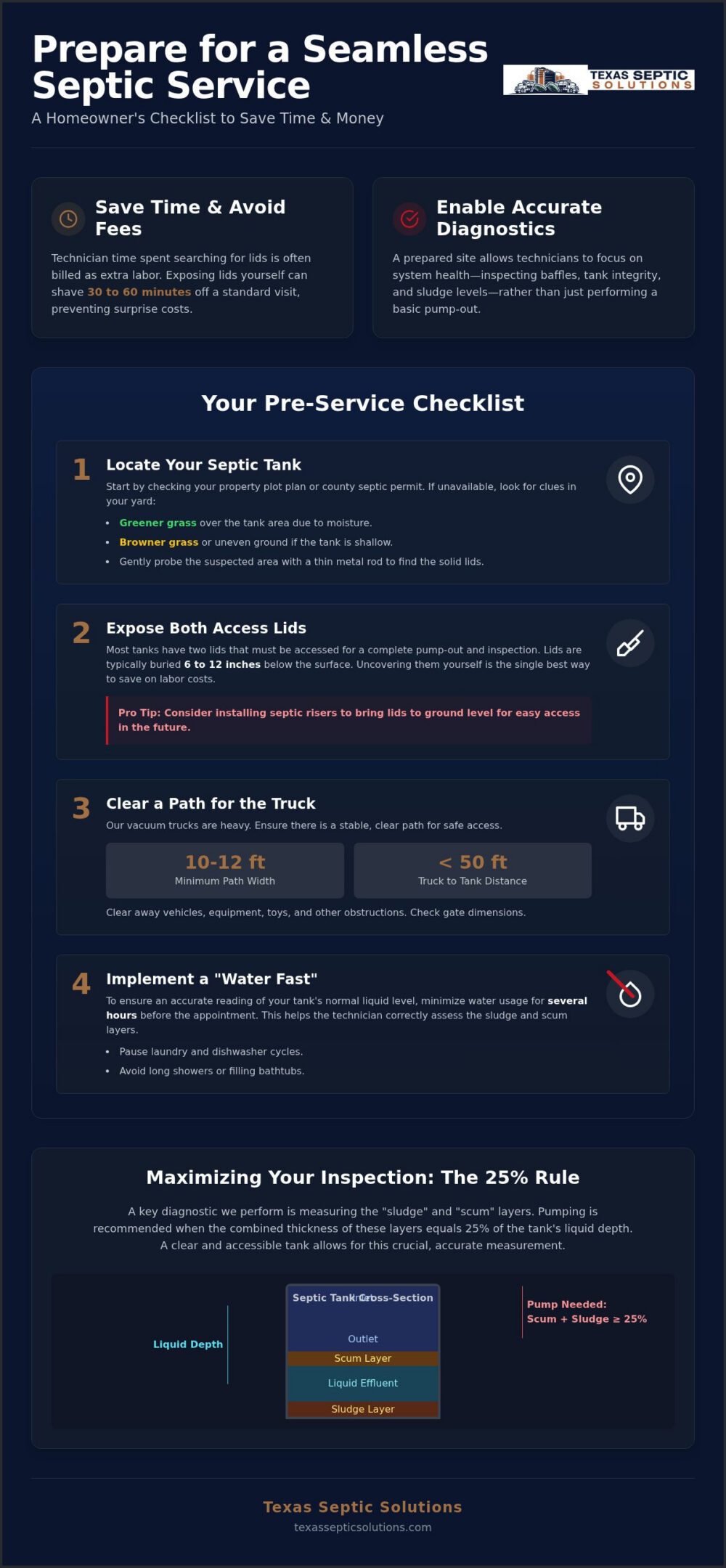
Preparation varies depending on the specific reason for our visit, but the basics of what to do before the septic technician arrives remain the same: focus on visibility and access. For a routine pumping service, focus on the path for the vacuum truck and the access lids. Our trucks are heavy and need a stable, 10 to 12 foot wide path to get within 50 feet of the tank. If we’re coming out for a repair, we might need to access the distribution box or the drain field itself, which requires clearing a larger perimeter of brush or outdoor furniture. In urgent situations where your septic tank alarm is going off, the priority is immediate access to the control panel and the tank so we can diagnose the pump or float failure without delay.
Maximizing the Value of Your Inspection
A prepared site allows our experts to perform a detailed “sludge and scum” layer analysis. This isn’t just about emptying the tank; it’s about seeing how your household uses water. We need a clear view of the T-shaped outlet to check for clogs or structural wear that could lead to a backup. Technicians follow the “25 percent rule,” which dictates that a septic tank requires pumping when the combined thickness of the floating scum and bottom sludge layers reaches 25 percent of the tank’s total liquid depth. When the lids are already uncovered, we can take these measurements accurately and give you a clear, honest report on your system’s longevity.
Locating and Accessing Your Septic Tank Components
Finding your tank is the primary step in knowing what to do before the septic technician arrives. If you aren’t the original owner of your home, this can feel like a guessing game. Start by checking your property’s original plot plan or the septic permit issued by your county. These documents typically provide a scaled map showing exactly where the tank sits in relation to the house foundation. If those records aren’t handy, look for physical clues in your yard. In dry Texas summers, the grass over the tank might appear greener because of trapped moisture, or significantly browner if the soil layer above the tank is shallow.
Once you have a general area identified, you can use a thin metal rod to probe the soil gently. You are looking for the solid “thump” of a concrete or plastic lid, which is usually buried between 6 and 12 inches deep. Most residential tanks have two lids that need to be accessed for a complete pump-out. Digging these up yourself is one of the most helpful things you can do. It prevents loose dirt from falling into the system during the opening and ensures our team can focus on the inspection immediately. Proper Caring for your septic system begins with maintaining clear access to these vital entry points.
Understanding Septic Risers and Lids
Risers are essentially vertical extensions that bring your tank lids up to ground level. If you’re tired of digging up your lawn every few years, a septic tank riser installation is a smart long-term investment. These components make future maintenance visits much faster and cleaner. When your lids are at the surface, it’s vital to ensure they remain sealed and bolted. A tight seal prevents surface water, insects, and debris from entering the tank, which protects the bacterial balance inside.
Marking the Spot for the Technician
After you’ve located the lids, make them clearly visible from a distance. Use a small flag, a brick, or a lawn ornament to mark the center of each access point. You should also clear away any mulch, heavy potted plants, or decorative rocks that might obstruct the area. Additionally, marking the “cleanout” pipe near your house foundation is helpful for verifying the flow from your home to the tank. Taking these simple steps is a major part of what to do before the septic technician arrives to ensure a smooth, efficient visit. If you’re having trouble finding your components, our team can assist with professional septic system maintenance to map out your entire system.
Site Preparation: Clearing the Way for the Vacuum Truck
A septic vacuum truck is a massive piece of machinery. To ensure a successful visit, you need to provide a clear path that is at least 10 to 12 feet wide. Most technicians need to park within 50 feet of the tank to maintain strong suction through the hoses. If your tank is in the backyard, double-check your gate widths. A standard residential gate often won’t accommodate a commercial truck. Part of knowing what to do before the septic technician arrives is clearing this access route so the driver doesn’t have to navigate tight corners or risk driving over your lawn’s irrigation heads.
Don’t forget to look up. These trucks are tall, usually requiring at least 14 feet of vertical clearance. Trim back any low-hanging oak or pine branches along the driveway or access path. You should also move personal vehicles to the street. Giving the truck plenty of room to maneuver prevents accidental scrapes and keeps your driveway clear for the heavy equipment. Consulting the EPA’s guide to septic systems can help you understand the layout of your property better before the truck pulls in. By providing a clear runway, you ensure the service starts the moment we arrive.
Managing Pets and Livestock
Secure your animals before the truck arrives. Even the friendliest dog can become a trip hazard or get spooked by the loud vacuum pump. For our neighbors in Cleveland or Shepherd with larger acreage, move livestock to a separate pasture away from the service area. It’s also a courtesy to clear any pet waste from the immediate vicinity of the tank lids. This ensures a sanitary workspace for the technician and prevents waste from being tracked across your yard or into the truck cab.
Landscaping and Soil Considerations
East Texas weather presents unique challenges for heavy machinery. If we’ve had heavy Houston rain, the soil becomes a thick, saturated clay. Warn your technician about any particularly soft spots in the yard to prevent the truck from getting stuck or creating deep ruts. Move fragile items like birdbaths, solar lights, or lawn furniture at least 15 feet away from the work zone. This is also a good time to remember what to do before the septic technician arrives regarding your long-term landscaping. Never plant trees or large shrubs near the drain field, as invasive roots can cause significant damage to the pipes. Keep the area around your tank clear of everything except grass to ensure easy access for years to come.
Household Logistics: Water Usage and Documentation
Preparing the interior of your home is just as vital as clearing the yard. One of the most critical steps in what to do before the septic technician arrives is initiating a “water fast.” We recommend that you stop running high-volume appliances like dishwashers and washing machines at least 2 to 4 hours before your scheduled appointment. This ensures the water level inside the tank is at its normal operating height. If you’ve just finished four loads of laundry, the tank will be artificially high, which makes it difficult for our technicians to see the condition of the inlet and outlet baffles or identify potential structural issues.
Gathering your “Septic Diary” is another essential task. Having your records ready saves time and provides a historical context for your system’s performance. If you are already enrolled in one of our septic system maintenance plans, we likely have your history on file, but it’s still helpful to note any recent changes. Make a quick list of any slow drains, gurgling sounds, or persistent outdoor odors. This information acts as a roadmap for the technician, helping them pinpoint issues that might not be visible from the surface.
The Pre-Visit Water Audit
Take a walk through your house and listen for running toilets or dripping faucets. Even a small leak can contribute to excessive hydraulic loading, which is defined as the total volume of water entering the system compared to its design capacity. When the system is overloaded with water, it stirs up solids that should be settled at the bottom, making the pumping process less efficient. If you suspect a leak, let us know immediately so we can factor that into our assessment and help you prevent future system stress.
Record Keeping for Long-Term Health
Your system’s permit and design specifications are the blueprint for its care. If you don’t have these, you can often find them through your county’s environmental health department. We encourage homeowners to use our Septic System Maintenance Texas guide to keep a running log of every pump-out and repair. Knowing the specific brand and model of your aerobic system’s aerator or pump is also helpful, as it ensures our team is prepared for your specific hardware. For reliable care that respects your property, consider scheduling your next septic system pumping with Texas Septic Solutions.
What to Expect: The Texas Septic Solutions Professional Visit
Once you’ve checked off every item on the list of what to do before the septic technician arrives, it’s our turn to get to work. Our local experts in Huffman, Cypress, and Cleveland understand that your time is valuable. We pride ourselves on prompt arrival and efficient service. Unlike generic providers who might just “pump and run,” we perform a comprehensive system health check. We inspect the structural integrity of your tank walls and ensure the inlet and outlet baffles are functioning correctly. This level of detail helps us catch small issues before they turn into costly failures.
Transparent communication is a pillar of our service model. If we identify a problem, we’ll walk you through the specifics and offer clear solutions. Whether it’s a minor component replacement or a more complex septic system repair, we provide the facts. No jargon included. Our goal is to ensure you feel confident in the health of your system. Once the work is complete, we handle the post-service cleanup. We ensure all lids are securely bolted and your yard is left in the same condition we found it.
Our Neighborhood Expert Approach
We aren’t just a service provider; we’re your neighbors. This local connection means we have deep expertise in East Texas soil conditions and regional environmental regulations. We know how the local clay behaves and how it affects your system’s drainage. Our 24/7 emergency service provides constant peace of mind. It ensures that even if a failure happens at 2:00 AM, a reliable authority is just a phone call away. We treat every property with the same care and accountability we would our own homes.
Next Steps After the Visit
The end of your service visit is the beginning of your system’s next healthy cycle. Based on the “sludge and scum” levels we find, we’ll recommend a specific timeframe for your next routine pump. This isn’t a guess. It’s a recommendation based on your household’s actual usage patterns. We’ll also discuss long-term maintenance plans that can prevent the stress and high cost of emergency backups. Taking proactive steps now is the best way to protect your property value and your wallet. Ready for your service? Contact Texas Septic Solutions today to schedule your visit!
Take Control of Your Septic Health Today
Your septic system is the most critical utility on your property. Taking the time to locate your lids, clear a path for the vacuum truck, and manage your household water usage makes a world of difference. When you know exactly what to do before the septic technician arrives, you eliminate the stress of hidden labor costs and ensure our experts can focus on a detailed system analysis.
Texas Septic Solutions is proud to serve homeowners across Cleveland, Houston, Cypress, Huffman, and Shepherd. Our expert technicians are specialized in pumping, repair, and new system installation. We also provide 24/7 emergency service for those unexpected failures that just can’t wait. A little preparation today prevents a major headache tomorrow. We look forward to being your long-term partner in maintaining a healthy, functional home.
Schedule Your Professional Septic Service with Texas Septic Solutions
Frequently Asked Questions
Do I need to be home when the septic technician arrives?
You don’t necessarily need to be home as long as our technicians have clear access to the tank and any necessary control panels. However, we recommend being present if you have specific concerns or want a real-time explanation of your system’s health. Being available allows us to discuss any maintenance needs or potential repairs immediately, ensuring you have total peace of mind before we leave the site in Cleveland or Houston.
How much dirt do I need to dig up to expose the septic lids?
You should dig enough dirt to fully expose the edges of the access lids, which are typically buried six to twelve inches deep. Clearing an area slightly wider than the lid itself prevents loose soil from falling into the tank when it’s opened. If you are unsure of what to do before the septic technician arrives regarding digging, focus on making the lids easy to lift without obstruction from heavy sod or clay.
Can the septic truck drive on my lawn or driveway safely?
Most concrete driveways can support the weight of a vacuum truck, but we generally avoid driving on lawns to prevent deep ruts or damage to underground pipes. This is especially true in areas like Huffman or Cypress where heavy clay soil holds moisture. We prefer to park on a stable surface within 50 feet of the tank to ensure our hoses reach without crossing fragile landscaping or soft soil.
What happens if I cannot find my septic tank lids?
If you can’t locate your lids, don’t worry. Our team uses specialized electronic locating equipment and soil probes to find buried components quickly. While finding them yourself saves time, our local experts have mapped thousands of systems across the Houston area. We can pinpoint the tank and, if necessary, install risers to ensure you never have to hunt for your access points again during future service visits.
Is it okay to use my sinks and toilets while the tank is being pumped?
It’s best to avoid using your plumbing while the pumping process is underway. Running water into the tank while we are trying to empty it can interfere with the vacuum suction and make it harder to perform a clean inspection of the baffles. We suggest waiting until the technician has finished and the lids are secured before resuming use of your sinks, showers, or toilets to ensure the most efficient service.
What should I do if my septic tank is buried under a deck or patio?
Accessing a tank under a permanent structure like a deck or patio is challenging but necessary for proper maintenance. You may need to remove a few deck boards or create an access hatch to allow our technicians to reach the lids. If the tank is completely inaccessible, we can discuss relocating the access point or installing a remote riser system to ensure your system meets Texas regulatory standards for routine inspections.
How long does a typical septic pumping service take?
A standard residential pumping service typically takes between 30 and 60 minutes to complete. This timeframe can vary based on the size of your tank and how well the site is prepared. If the lids are already uncovered and the truck has clear access, the process moves much faster. Extra time may be required if we are performing a comprehensive inspection or troubleshooting specific repair issues you’ve identified in Shepherd.
Will the technician need access to the inside of my house?
In most cases, our technicians do not need to enter your home. We perform the majority of our work, including pumping and component inspections, entirely from the exterior. However, if you are experiencing a backup or slow drains, we might ask you to flush a toilet or run a faucet to verify the flow from the house to the tank. This helps us ensure that the line between your home and the septic system is clear.