
Septic Pumping for Cypress Food Truck Parks: 2026 Guide
Could your pumping schedule keep pace with a busy Saturday instead of following a one-size-fits-all calendar? Visitor counts, vendor activity, and the wastewater system serving the site all affect planning. If you’re searching for “septic tank pumping for food truck parks Cypress,” you likely want to prevent backups without disrupting park operations.
That concern makes sense. A food truck park may have several vendors and different wastewater streams, so septic tank pumping and grease management shouldn’t be treated as the same job. Start by identifying how the site is used and which wastewater systems serve it.
This guide explains how to plan septic pumping around park activity, recognize when a change in use may affect service needs, and prepare useful details before arranging a visit. It also clarifies the difference between septic tanks and grease-management equipment. Texas Septic Solutions provides professional septic pumping and maintenance for commercial clients in Cypress, along with 24/7 service for urgent septic needs. The same practical planning steps apply to commercial properties in Cleveland, Houston, Cypress, Huffman, and Shepherd.
Key Takeaways
- Build your septic tank pumping for food truck parks Cypress plan around system design, tank condition, and actual site use rather than relying on a generic calendar.
- Understand what pumping addresses: accumulated septic tank contents. Pipe, component, or drainfield concerns may need a different kind of attention.
- Compare service plans by system type, usage patterns, maintenance records, site access, and operating schedule before setting a routine.
- Reduce avoidable disruption by gathering system records, arranging access, identifying a site contact, and coordinating timing with park operations.
- Texas Septic Solutions provides commercial septic pumping and maintenance in Cypress. Share your site location, system details, usage context, and access needs when arranging service.
What food truck parks in Cypress need from a septic pumping plan
A food truck park may serve vendors and visitors across long operating hours, so planning septic service takes more than picking a date on the calendar. The number of vendors, shared restroom use, and peak service periods help describe how the property uses water. For septic tank pumping for food truck parks Cypress, that operating picture matters alongside the system’s design and condition.
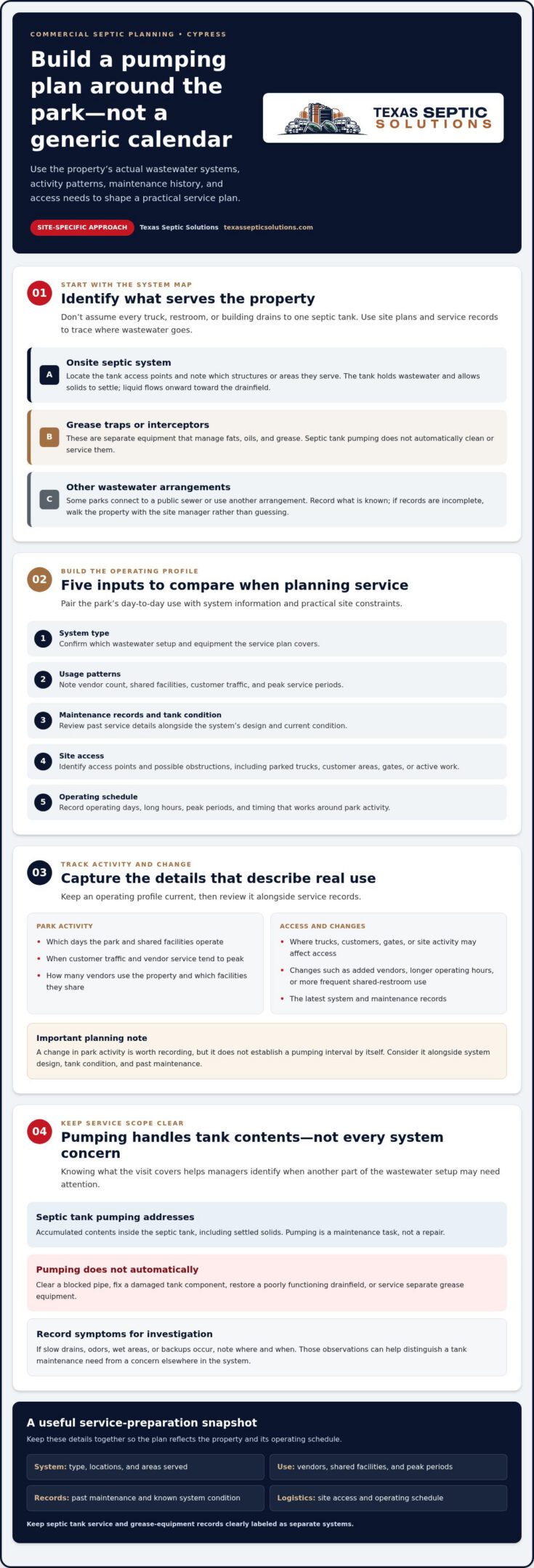
Start by identifying what wastewater setup serves the site. Some parks use an onsite septic system; others may connect to a public sewer or rely on another wastewater arrangement. Don’t assume every truck or building drains to one septic tank. A useful pumping plan reflects the property’s actual system, wastewater use, and operating schedule.
Identify the wastewater systems serving the park
A septic tank holds wastewater and allows solids to settle, while liquid leaving the tank flows toward the drainfield. A grease-management unit has a different purpose, and other wastewater equipment may also be part of a property’s setup. Pumping a septic tank doesn’t automatically service those separate systems. For background on tank components, see What is a Septic Tank?
Use site plans and maintenance records to trace where wastewater from restrooms, sinks, and other facilities goes. Look for labeled tank access points and note which structures or areas they serve. If records are incomplete, walk the property with the site manager and record what is known rather than guessing. Clear system information helps keep the pumping plan focused on the correct equipment.
Map Cypress park activity to pumping priorities
Next, build a simple operating profile. A park near Cypress or along the US-290 corridor should be assessed by its own schedule and layout, not by assumptions about nearby businesses. Track:
- Which days the park and its shared facilities operate.
- When customer traffic and vendor service tend to peak.
- How many vendors use the property and which facilities they share.
- Where service access may be affected by parked trucks, customer areas, gates, or site activity.
These details give the service team useful context for planning access and timing. They also help identify changes in wastewater demand, such as adding vendors, extending operating hours, or opening shared restrooms more often. Those changes don’t establish a pumping interval on their own, but they’re worth recording alongside tank condition, system design, and past maintenance.
Keep the profile current as the park’s operations change. Pair operating notes with the latest service records, then review whether the existing plan still fits the property. A site-specific approach makes septic pumping part of dependable commercial system care while keeping grease-management equipment distinct from the septic system.
What septic tank pumping removes, and what it does not
Septic tank pumping removes accumulated contents from a septic tank. It’s a maintenance task, not a repair, and it doesn’t service every part of a food truck park’s wastewater setup. For septic tank pumping for food truck parks Cypress, understanding that distinction helps managers arrange the right work and avoid expecting one service to solve unrelated issues.
A pumping visit addresses material collected inside the tank, including settled solids. It doesn’t automatically clear a blocked pipe, fix a damaged tank component, or restore a drainfield that isn’t working properly. If sinks or toilets drain slowly, the cause may need investigation rather than an assumption that pumping alone will resolve it. Pumping supports system care, but it can’t prevent every backup or failure.
How a septic tank supports onsite wastewater treatment
In an onsite system, wastewater enters the septic tank, where heavier solids settle and lighter material can collect at the surface. The liquid leaving the tank then moves to another treatment stage, often a drainfield. That field is a separate system component, not part of the tank pumping itself. The EPA’s EPA Guidelines for Septic System Care offer broader maintenance guidance, including care beyond pumping.
These parts work together, but they have different functions. Pumping removes accumulated tank contents; it doesn’t inspect or repair every pipe, component, or drainfield condition. If the property has recurring slow drains, odors, wet areas, or backups, record where and when they occur. Those observations can help distinguish a tank maintenance need from a concern elsewhere in the system.
When a food truck park has grease equipment too
Some properties also have grease traps or interceptors. These are separate from a septic tank and manage fats, oils, and grease; septic pumping doesn’t automatically include cleaning or servicing them. Keep records for each system clearly labeled so a tank service isn’t mistaken for grease-equipment service.
Handling and disposal requirements can depend on the equipment, wastewater, and property jurisdiction. Don’t assume that requirements for one system apply to another. Before setting procedures for grease equipment or other wastewater, verify the rules that apply with TCEQ or the relevant local authority for the site. Keep that information alongside system plans and service records.
Texas Septic Solutions provides commercial septic pumping and maintenance in Cypress, focused on the septic system itself. For commercial septic pumping, share what you know about the tank and any separate wastewater equipment so the service request clearly describes the work needed.
How to compare pumping plans for a Cypress food truck park
Compare plans by how well they fit the property, not by a standard interval taken out of context. A pumping schedule that suits one park may not suit another, even if both have food vendors and shared restrooms. For septic tank pumping for food truck parks Cypress, use system details, service records, operating patterns, and access needs to guide planning. An assessment should account for the actual system and its condition before setting a routine.
| Planning factor | What to compare | Why it matters |
|---|---|---|
| System type | Onsite septic tank and drainfield, or another wastewater setup | Service planning must match the system that actually serves the property. |
| Usage patterns | Vendor activity, operating days, peak periods, and shared restroom use | Changes in use can change wastewater demand and are useful context for reviewing a plan. |
| Records | Previous pumping dates, service notes, and available tank information | A history helps show what work has been done and what details still need to be established. |
| Access | Tank access points, gates, parked vehicles, and clear routes to the work area | Access constraints affect practical service planning. |
| Operating schedule | Busy periods and quieter windows for planned work | Coordination can limit avoidable disruption to vendors and customers. |
Use site records and operating patterns to guide planning
Gather records in one place and note meaningful operational changes since the last service. For example, adding vendors or opening shared restrooms on more days can change the site’s use profile. Those facts don’t determine an interval by themselves. They give a septic professional better context to assess the system and its condition. For broader upkeep considerations, the Texas septic system maintenance guide can help put pumping within an overall maintenance picture.
Compare routine pumping with maintenance planning
Routine pumping can be planned around a quieter operating period when the site schedule allows. Keep it distinct from inspections, repairs, and maintenance for separate wastewater equipment. A recurring calendar reminder can prompt a review, but it shouldn’t be treated as proof that the tank needs pumping on a fixed date. A septic system maintenance plan guide offers additional planning context.
Urgent service is a separate decision from routine scheduling. If the park notices a backup, slow drainage, or another wastewater warning sign, record what’s happening and where, then arrange appropriate septic attention rather than waiting for the next planned date. Texas Septic Solutions provides commercial septic pumping, maintenance, and emergency septic service in Cypress. Keeping routine records and urgent observations separate makes it easier to explain the need and plan the next step.
Prepare a food truck park for septic pumping with less disruption
A little preparation can make a commercial pumping visit easier to coordinate. For septic tank pumping for food truck parks Cypress, share useful site information ahead of time, keep access clear, and let vendors know which areas may be affected. These steps help the service team understand the property and help you plan around daily operations. Site access and conditions can affect the work, so avoid promising vendors or customers a specific service duration.
Gather useful details before arranging service
Bring together the information that describes the property and its septic system. Prior service records and notes about recent changes can help explain the site’s history. A designated contact can answer practical questions, coordinate with vendors, and help manage activity during the visit. When arranging commercial septic pumping, sharing these details gives the team a clearer starting point.
- Property location: Provide the site address and any directions needed to find the service area.
- System records: Gather available system plans, tank information, prior pumping dates, and service notes.
- Access instructions: Explain gate access, tank location, site routes, and any obstructions or restrictions.
- Site contact: Identify someone who can coordinate with the service team and communicate with vendors.
- Current conditions: Note symptoms, changes in site use, or an active alarm. If an alarm is sounding, follow the septic tank alarm troubleshooting guide while arranging appropriate service.
Specific observations are more helpful than general descriptions. For example, record which restroom or area is affected, when a symptom began, and whether it changes during busy periods. Don’t assume every issue means the tank needs pumping. Clear notes help communicate what’s happening without guessing at the cause.
Coordinate access and protect daily operations
Choose a service window with the park’s operating schedule in mind, and share preferred timing and access limits in advance. If vendors need to move trucks through a particular lane, explain that before the visit. A site contact can notify vendors about the work area and help direct customer movement away from it. Keep tank access clear, and don’t open tanks or attempt pumping yourself. Leave the work to trained professionals.
Plan for conditions to vary. The location of access points, site layout, and what’s found during service may affect how the visit proceeds. Keep customers and vendors informed if plans change, but don’t promise a fixed end time. Good communication and a clear work area can reduce avoidable interference with service and park activity.
Ready to arrange service? Gather your records, access notes, and operating details, then schedule commercial septic pumping with Texas Septic Solutions for your Cypress food truck park.
Arrange commercial septic tank pumping in Cypress with Texas Septic Solutions
Commercial septic pumping works best when the service request reflects the property’s actual setup. Texas Septic Solutions provides septic pumping and maintenance for commercial clients in Cypress, including food truck parks. Sharing a clear picture of the site helps keep the request focused on the septic system and gives the team useful context for planning the visit.
What to share when scheduling a pumping visit
Start with the park’s location and the system details you have on hand. You don’t need to know every technical specification. Existing records, a clear description of the tank location, and practical access instructions can help establish what the site needs.
- Site location: Provide the property address and directions to the relevant service area.
- Known system details: Share available plans or records, tank information, and the location of access points.
- Service history: Include prior pumping dates and any maintenance notes you can find.
- Park operations: Describe vendor activity, shared restroom use, operating hours, and preferred service windows.
- Current concerns: Explain symptoms, alarms, or recent changes in site use, including where and when an issue occurs.
Keep the request centered on septic tank pumping. If the property also has grease traps, interceptors, or other wastewater equipment, identify those as separate systems rather than assuming they’re included in septic service. This distinction helps define the work. If your records or observations point to a repair rather than routine pumping, the septic system repair reference guide provides related context.
When the issue feels urgent
An active sewage backup, wastewater surfacing, or an alarm needs prompt attention. Keep customers, vendors, and staff away from affected areas, and avoid contact with wastewater. Note the location and what you’ve observed, then share those details when arranging service. Don’t open a tank or try to pump it yourself.
Texas Septic Solutions offers 24/7 emergency septic service for urgent septic needs. Share the issue directly, along with the site details that help explain the situation. For routine planning, those same records and operating notes make it easier to discuss a practical pumping and maintenance approach for your food truck park.
Ready to arrange septic tank pumping for food truck parks Cypress? Contact Texas Septic Solutions for septic service and share your location, system information, usage context, and access needs.
Make wastewater planning part of park operations
A food truck park changes over time. Vendors join or leave, operating hours shift, and shared facilities may see different levels of use. Treat your septic plan as a working part of site management: update records when operations change, keep access information current, and note new concerns while they’re easy to describe. That gives future service planning a reliable foundation instead of relying on memory.
With septic tank pumping for food truck parks Cypress, turn what you know about the property into a clear service request. Texas Septic Solutions provides professional commercial septic pumping in Cypress and 24/7 emergency septic service for urgent needs. Share the location, system details, site activity, and access considerations to help plan practical maintenance for your park.
Arrange septic service with Texas Septic Solutions and take the next step toward steadier site operations. A clear plan helps you focus on serving vendors and guests with greater confidence.
Frequently Asked Questions
How often should a food truck park have its septic tank pumped?
There isn’t one reliable pumping interval for every food truck park. For septic tank pumping for food truck parks Cypress, base scheduling on the specific tank and system, wastewater use, and service history. Compare past service notes with changes in vendor activity or restroom use, then review the tank’s condition. A site-specific assessment is more useful than applying a residential rule of thumb to a commercial property.
Can a food truck park use one septic tank for all its vendors?
It depends on the property’s wastewater layout and permitted system design. A shared tank may serve some facilities, while other buildings or vendor areas may connect differently or use another wastewater arrangement. Before changing how vendors use sinks or restrooms, trace connections using site plans and existing service records. Don’t infer that all waste streams share one tank simply because the facilities are on the same property.
Does septic tank pumping include grease trap cleaning?
No, septic pumping and grease trap cleaning are separate services for different equipment. Pumping removes accumulated material from a septic tank; it doesn’t automatically clean a grease trap or interceptor. Keep separate records for each unit, including its location and past maintenance. If you’re unsure which equipment a service record describes, check its label or property documentation before arranging work so the request addresses the right system.
What information should I provide when scheduling commercial septic pumping in Cypress?
Share the property address, the system details you know, prior service dates, and directions to the tank access point. Mention gates, locked areas, or routes that may be blocked by parked trucks. Also explain the operating schedule and any changes in vendor count or restroom use. If there are symptoms, describe their location and timing. Never open a tank to gather information; use records and observations from safe areas.
Can septic pumping be scheduled around food truck park operating hours?
Yes, share the park’s operating days, busy periods, vendor schedule, and site access limits when arranging service. A quieter window may make it easier to manage movement around the work area, though conditions at the property can affect timing. Let vendors know which area to keep clear and direct customers away from active work. A site contact can help communicate any temporary changes during the visit.
What should I do if a food truck park has a septic backup?
Treat a sewage backup or wastewater surfacing as urgent. Keep people away from the affected area, avoid touching the wastewater, and don’t open the tank or attempt a repair. Note where the problem is, when it began, and whether an alarm is active, then share those details when requesting help. Texas Septic Solutions provides 24/7 emergency septic service for urgent septic needs in its local service area.
Does every food truck park in Cypress use a septic system?
No, wastewater setups differ by property, and a park may not use an onsite septic tank. Check property records, site plans, or previous service documents to identify the system before arranging pumping. Don’t assume restrooms, vendor facilities, and grease equipment all connect to the same setup. Identifying each component helps direct maintenance to the correct system and keeps service records organized.