
Septic Pump Replacement Cost in Houston: 2026 Homeowner Guide
You wake up to a soggy, foul-smelling patch in your yard and a high-water alarm that won’t stop buzzing. It’s a stressful moment that leaves many Harris County homeowners wondering if they’re looking at a minor fix or a major financial hit. When you start searching for the septic pump replacement cost Houston contractors charge, you often find a confusing mix of technical jargon and vague estimates that do little to ease your anxiety.
We understand the frustration of feeling like you’re at the mercy of a contractor’s quote, especially when you’re worried about sewage backups. It’s easy to confuse routine maintenance with a mechanical failure, and nobody wants to pay for a new pump if the old one still has life in it. This guide clears the air by explaining the real-world factors driving replacement costs in our local market for 2026.
You’ll discover a clear breakdown of current market price ranges and a diagnostic checklist to help you verify if your pump is actually dead. We’ll also walk you through local permitting requirements and how to find a reliable Houston professional who values your home’s functionality as much as you do.
Key Takeaways for Houston Homeowners
- Distinguish between routine septic pumping and mechanical pump replacement to ensure you’re paying for the service you actually need.
- Use our homeowner diagnostic checklist to troubleshoot power issues and control panels before assuming your pump has failed.
- Understand the specific hardware and labor factors that influence the septic pump replacement cost Houston contractors quote in 2026.
- Learn how local environmental challenges like high humidity and “gumbo” clay soil impact the lifespan of your system’s electrical components.
- Discover why professional diagnostic testing and repair can save you money by identifying simple fixes before recommending a full replacement.
Septic Pump Replacement vs. Pumping: Understanding the Difference
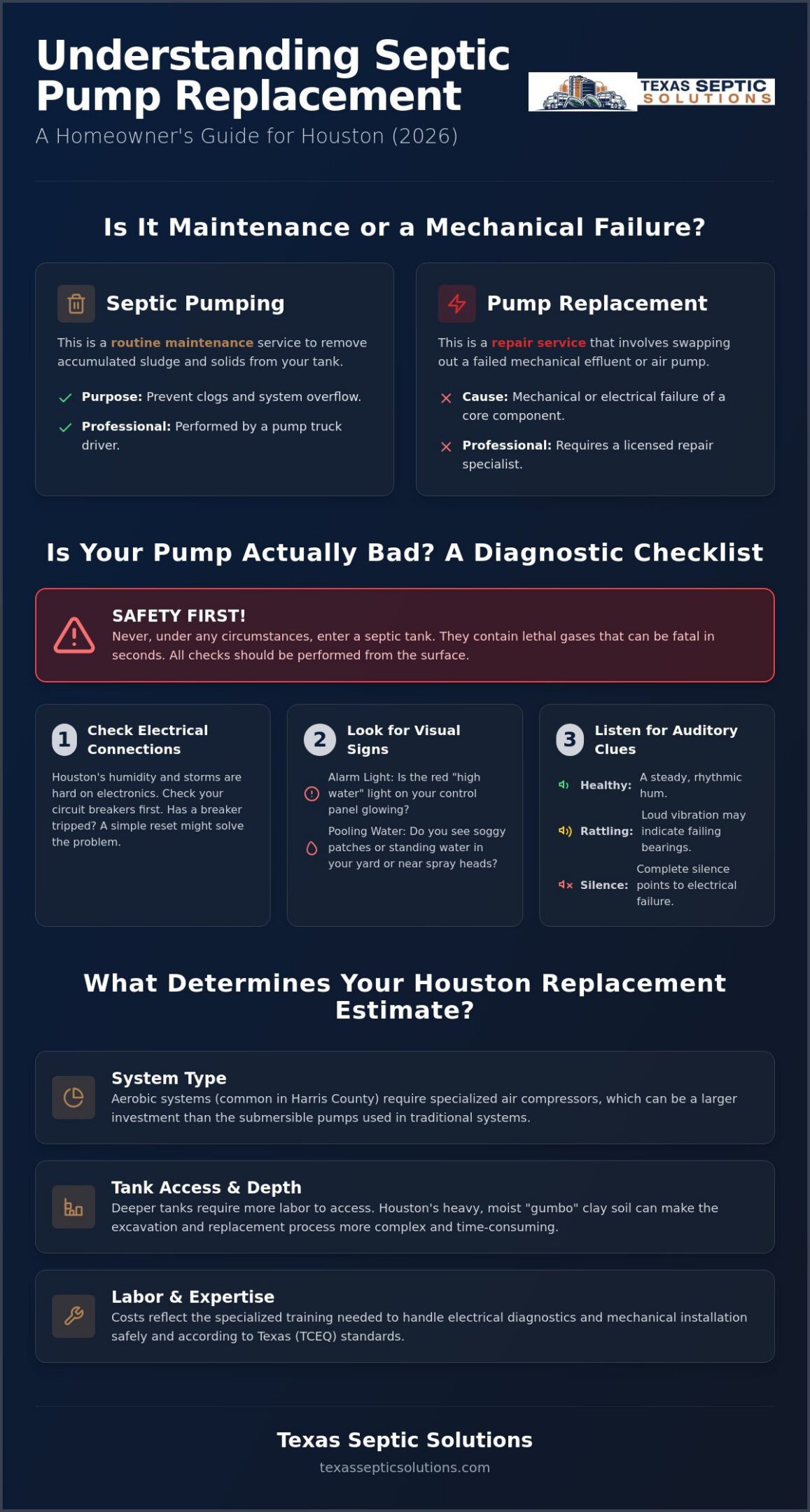
Many homeowners call us saying their tank is full and needs pumping, but they’re often surprised to find the real issue is mechanical. While both services involve your septic system, they serve entirely different purposes. Septic pumping is the routine maintenance process of removing accumulated sludge and solids from the tank to prevent clogs and overflow. In contrast, septic pump replacement is a repair service that involves swapping out a failed mechanical effluent pump or air compressor.
Confusion happens because the symptoms of a failed pump often mimic the signs of a tank that simply needs to be emptied. When a pump fails, wastewater stops moving out of the tank, causing the water level to rise and trigger alarms or yard backups. You might think you just need a pump-out, but if the mechanical heart of the system isn’t beating, the tank will be full again in just a few days. While a standard pump truck driver can empty your tank, a licensed repair specialist is required to handle the electrical diagnostics and mechanical installation of a new pump.
When is it a Mechanical Issue?
In a healthy system, the effluent pump is responsible for pushing treated liquid into the drain field. If you have an aerobic system, which is very common across Harris County, you also have an air pump, or aerator, that provides oxygen to the bacteria cleaning your water. When these components stop working, the water level rises because it has nowhere to go. A full tank is often just a symptom; the dead pump is the underlying cause that requires professional attention. Identifying a mechanical failure early can prevent sewage from backing up into your yard or, worse, your home.
Why Houston Costs Vary
Several factors influence the septic pump replacement cost Houston residents see on their estimates. Our local “gumbo” clay soil is incredibly heavy and holds moisture, which can make accessing deep tanks more labor-intensive. If your tank is buried deep, the “pull and replace” process takes longer and requires more precision to ensure electrical connections remain watertight. Additionally, the type of system you own dictates the hardware needed. Aerobic systems require specialized air compressors or linear pumps, which are often more of an investment than the submersible pumps used in traditional gravity systems. Local labor rates also reflect the specialized training needed to handle these mechanical repairs safely and according to TCEQ standards.
Is Your Pump Actually Bad? A Diagnostic Checklist for Homeowners
Before you start worrying about the septic pump replacement cost Houston contractors might quote, take a deep breath. A buzzing alarm or a soggy yard doesn’t always mean you need to buy a brand-new mechanical unit. Sometimes, the fix is as simple as a flipped switch or a stuck float. However, safety must come first. Never, under any circumstances, enter a septic tank. These environments contain lethal concentrations of methane and hydrogen sulfide gas that can overcome a person in seconds. Stick to visual inspections from the surface and leave the deep work to the pros.
Distinguishing between a simple clog and a total motor failure can save you hundreds of dollars. According to the EPA, consistent septic system maintenance is the best way to avoid these failures, but even well-kept systems hit snags. If your toilets are flushing slowly but your yard is dry, you might just have a clog in the main line. If the yard is a swamp and the alarm is screaming, the pump is likely the culprit.
Visual and Auditory Warning Signs
Your control panel is your system’s primary way of talking to you. A glowing red light usually indicates a “high water” condition, meaning the pump isn’t moving liquid out fast enough. Listen closely to your aerator housing if you have an aerobic system. A healthy pump has a steady, rhythmic hum. Complete silence often points to an electrical failure, while a loud, vibrating rattle might mean the internal bearings or diaphragms are shot. Also, keep an eye on your spray heads or drain field. If you see pooling water when the system should be resting, the pump may be failing to distribute effluent properly.
Electrical Troubleshooting
Houston’s intense humidity and frequent thunderstorms often wreak havoc on outdoor electrical components. Check your main breaker panel and any GFCI outlets near the septic system. A simple power surge can trip these safety features, cutting power to your pump. Another common issue is a “stuck” float switch. These mechanical balls float on the water’s surface to tell the pump when to turn on. Sometimes they get tangled in debris or hang up on the side of the tank. If you’ve verified that the breakers are on and the floats are moving freely but nothing is happening, it’s time to stop the DIY efforts. Continuing to cycle a failing motor can lead to a total electrical short.
If your troubleshooting leads to a dead end, it’s best to consult a septic system repair expert who can run a full diagnostic. We often find that a small component repair can get you back up and running without a full replacement. You can always reach out to our team for a professional assessment of your system’s health.
Breaking Down the Cost: What Determines Your Houston Estimate?
When you receive a quote for service, you aren’t just paying for a piece of plastic and metal. A professional estimate reflects a combination of high-grade hardware, specialized labor, and the specific mechanical requirements of your property. Understanding the factors that influence the septic pump replacement cost Houston homeowners receive is the first step in making an informed decision for your home’s infrastructure. Every system is unique, and the depth of your tank or the complexity of your control panel can shift the final investment.
Hardware makes up a significant portion of your estimate. There’s a major difference between a submersible effluent pump, which sits underwater to move liquid, and a high-end air compressor used in aerobic systems. Beyond the pump itself, we often need to replace secondary components like float switches, waterproof electrical connectors, and internal wiring. These parts are constantly exposed to moisture and corrosive gases, so using high-quality materials is essential for long-term reliability. Regular inspections, as suggested in the EPA septic system guidelines, help identify these failing components before they lead to a total system shutdown.
Urgency also plays a role in your final bill. If your system is backing up on a Saturday night, emergency after-hours service in the Greater Houston area typically carries a premium. This covers the cost of keeping specialized crews and fully stocked service trucks ready to roll at a moment’s notice. While it’s an added expense, it’s often a small price to pay to prevent significant property damage from a sewage overflow.
Pump Type and Specifications
Most residential systems in our area require pumps ranging from 0.5 to 1.5 horsepower (HP) to move effluent effectively. The specific HP you need depends on the distance and elevation change between your tank and the drain field. We strongly advise against “big box” store pumps. These generic models often lack the thermal protection needed to survive the intense Texas heat. Professional-grade brands like Gast or HiBlow are designed for continuous operation and offer much better brand reliability, impacting the final septic pump replacement cost Houston residents pay for professional service.
Labor and Installation Complexity
A standard “pull and replace” job usually takes a professional crew between two and four hours. However, complexity increases if your pump is buried deep without a riser. If we have to dig through heavy clay soil to reach the access lid, the labor time increases. In these cases, we often recommend installing a tank riser to make future maintenance easier and cheaper. Finally, your estimate will include disposal fees. Old pumps are contaminated with raw sewage and must be handled and disposed of according to local environmental safety regulations.
Houston-Specific Factors Affecting Pump Lifespan and Replacement
Houston’s climate is a relentless adversary for mechanical equipment. Between the oppressive humidity and the triple-digit summer heat, electrical components face a “corrosion tax” that homeowners in drier regions don’t have to manage. This environmental pressure is a primary driver of the septic pump replacement cost Houston families plan for in their home maintenance budgets. Moist air frequently seeps into control boxes, causing wiring to oxidize and connections to fail long before the motor itself gives out.
Our local “gumbo” clay soil adds another layer of difficulty for your system’s hardware. This dense, heavy earth holds water like a sponge and expands when wet. When the soil is saturated after a typical Gulf Coast downpour, the pump has to exert significantly more force to push effluent into the drain field. This constant backpressure puts immense strain on the motor’s internal bearings and seals, often leading to a shorter lifespan than manufacturers predict in ideal conditions.
Weather and Environmental Strain
Living in the Greater Houston area means preparing for extreme weather events. Flood risks are a constant reality; a submerged electrical box or a flooded aerator housing usually results in a total system short. Lightning strikes from our frequent thunderstorms are another common culprit, as they can fry a septic control panel in an instant. Furthermore, heavy seasonal rains often force a struggling pump to run for hours without a break to keep up with the rising water levels in the tank, which quickly leads to mechanical burnout.
Regulatory Compliance
If you own an aerobic system, you aren’t just managing hardware; you’re managing compliance. The Texas Commission on Environmental Quality (TCEQ) sets strict standards for these units because they discharge treated water onto the surface. In Harris and Liberty counties, homeowners are required by law to maintain a service contract with a licensed provider. These contracts ensure you receive the required inspections, typically three times per year, to verify the system meets environmental safety codes. Failing to keep these records can lead to heavy fines and may even prevent the sale of your home. Using a licensed installer is critical to maintaining your equipment warranty and ensuring your system stays within legal limits. For more information on full system upgrades, see our Septic System Replacement Cost in Texas guide.
If your system is struggling with the local heat or heavy soil conditions, contact Texas Septic Solutions to schedule a professional diagnostic check and ensure your system remains in peak condition.
Investing in Your System: Professional Replacement with Texas Septic Solutions
Choosing a professional for your mechanical repairs ensures your investment is protected by a solid warranty and expert oversight. While the septic pump replacement cost Houston homeowners encounter can vary, the real value lies in the longevity of a professional installation. We don’t just swap parts. Our team performs a comprehensive diagnostic check to verify the pump is actually the problem before we ever pull it from the tank. This approach prevents you from spending money on a new motor when a simple float adjustment or electrical repair would solve the issue. If a replacement is necessary, we handle the heavy lifting, precise electrical wiring, and system calibration to keep your home functional for years to come.
When your system triggers a high-water alarm in the middle of the night, you need a partner who responds immediately. We provide 24/7 service and emergency septic service because we know that a failing pump doesn’t wait for business hours. Our goal is to alleviate the stress of yard backups and home utility failures with prompt, reliable action. Every service call starts with a clear explanation of what’s happening in your tank, giving you the confidence that your system is in good hands.
The Texas Septic Solutions Difference
We take pride in being a “neighborly expert” for our communities. Our technicians have deep local expertise in Cleveland, Houston, and Cypress septic needs, meaning we understand how local soil and weather patterns impact your specific hardware. We practice transparent communication, walking you through the “why” behind every recommendation. To ensure your system survives the brutal Texas heat, we only use industry-proven pumps and air compressors built for continuous, high-performance operation. You won’t find generic, “big box” hardware in our trucks; we only install components that we trust to protect your property.
Next Steps for Homeowners
Don’t wait for a total system backup to address a buzzing alarm or a soft spot in your yard. Scheduling a diagnostic visit today can save you from the higher costs of an emergency failure. The best way to prevent the sudden shock of a mechanical breakdown is to stay ahead of the curve. Investing in a septic system maintenance plan provides the regular inspections needed to catch failing float switches or worn-out bearings before they stop your system entirely. If you suspect your pump is struggling, contact Texas Septic Solutions for an expert pump evaluation and let our team restore your peace of mind.
Secure Your Home’s Functionality Today
Dealing with a failing septic pump is stressful, but you now have the tools to handle it with confidence. By distinguishing between routine pumping and mechanical repairs, you’ve already saved yourself from potential confusion and overcharging. We’ve looked at how local environmental factors and TCEQ regulations shape the septic pump replacement cost Houston homeowners should expect. A professional diagnostic remains the most reliable way to ensure you’re investing in the right fix for your specific system type.
Texas Septic Solutions has served the Houston, Cleveland, and Cypress communities for over a decade. Our licensed professionals provide the calm reliability you need during a utility crisis. With 24/7 emergency service and a commitment to using hardware built for Texas conditions, we’re built to protect your home’s functionality. Get a Professional Septic Pump Diagnostic in Houston today and let our team provide the straightforward, expert care you deserve. We’re ready to help you keep your system healthy for the long haul.
Frequently Asked Questions
How much does it cost to replace a septic pump in Houston?
The total septic pump replacement cost Houston residents pay depends on the type of system you own and the difficulty of the installation. Submersible effluent pumps for gravity systems differ in price from the specialized air compressors used in aerobic units. Labor factors, such as digging through heavy clay soil or installing risers for deep tanks, also influence the final estimate you receive from a professional.
How long should a septic pump last in the Texas climate?
Most professional-grade pumps last between 5 and 10 years. However, Houston’s intense heat and high humidity often put extra strain on electrical components, potentially shortening that window. Regular maintenance and ensuring your control panel is protected from the elements can help you get the maximum life out of your hardware despite our local environmental challenges.
Can I replace my own septic pump?
We don’t recommend DIY replacement because of the significant safety and regulatory risks involved. Septic tanks contain lethal gases, and improper electrical wiring in a wet environment is extremely dangerous. Additionally, aerobic systems in Harris County must meet specific TCEQ standards, and a licensed professional ensures your installation stays in compliance while protecting your equipment warranty.
What happens if my septic pump fails?
When the pump stops working, wastewater can’t leave the tank, which causes the water level to rise rapidly. This usually triggers your high-water alarm to alert you of the problem. If you don’t address the failure quickly, the tank will overflow, leading to sewage backups in your home’s drains or soggy, foul-smelling puddles in your yard.
Does a septic pump alarm always mean I need a replacement?
No, an alarm simply means the water level is too high or the air pressure is too low. While a dead motor is one cause, the issue could be a tripped breaker, a blown fuse, or a float switch that’s stuck on debris. A professional diagnostic check can identify these smaller issues, often saving you from the cost of a full pump replacement.
Is there a difference between an aerobic and anaerobic septic pump?
Yes, these systems use very different mechanical components. Anaerobic systems typically use a submersible effluent pump to move liquid to the drain field. Aerobic systems rely on an air pump, also called an aerator, to keep bacteria alive, and they may also have a separate discharge pump. These parts perform different functions and require specialized knowledge for repair.
How do I know if my septic pump float is bad?
A failing float switch often causes the pump to run continuously or not turn on at all. You might notice your pump running even when the tank is empty, which can burn out the motor. If the float is physically tangled or doesn’t click when tilted, it’s likely bad and needs to be replaced to prevent further system damage.
Will insurance cover the cost of a septic pump replacement?
Standard homeowners insurance usually doesn’t cover mechanical failures caused by normal wear and tear or aging. Coverage is typically reserved for sudden, accidental damage from specific events like a lightning strike or a fire. You should check your policy for a mechanical breakdown endorsement, as this is the most common way to get help with these specific repair costs.