
Septic Line Cleanout Installation Guide: Protecting Your Texas Home in 2026
What if the only thing standing between your family’s health and a catastrophic sewage backup is a single, strategically placed pipe? For many folks in Cleveland and Cypress, the thought of raw waste flooding their home is a recurring nightmare. You likely already feel that waiting for a clog to happen is a recipe for expensive emergency repairs and endless stress. A professional septic line cleanout installation is the most effective way to gain control over your system before a crisis hits. It provides a dedicated access point that makes clearing blockages and performing routine inspections much simpler for everyone involved.
We understand that trying to figure out pipe types and local Texas permits can feel overwhelming. You deserve a system that works reliably without the constant fear of what might happen underground. This guide will show you how a properly installed cleanout protects your property and ensures you stay compliant with the latest TCEQ standards. We’ll cover the differences between one-way and two-way systems, the importance of professional licensing, and how this one upgrade creates a truly clog-free future for your Texas home.
Key Takeaways
- Identify the essential role of a septic cleanout in providing direct access to your main line for effortless clog removal.
- Compare one-way and two-way cleanout designs to determine which solution offers the best protection for your specific property layout.
- Master the professional septic line cleanout installation process, from initial site assessment to final permit compliance.
- Recognize the hidden risks and long-term costs associated with DIY attempts versus hiring a licensed Texas expert.
- Gain peace of mind by learning how this simple upgrade prevents catastrophic backups and simplifies routine system maintenance.
Understanding Septic Line Cleanouts: Why Your Texas System Needs One
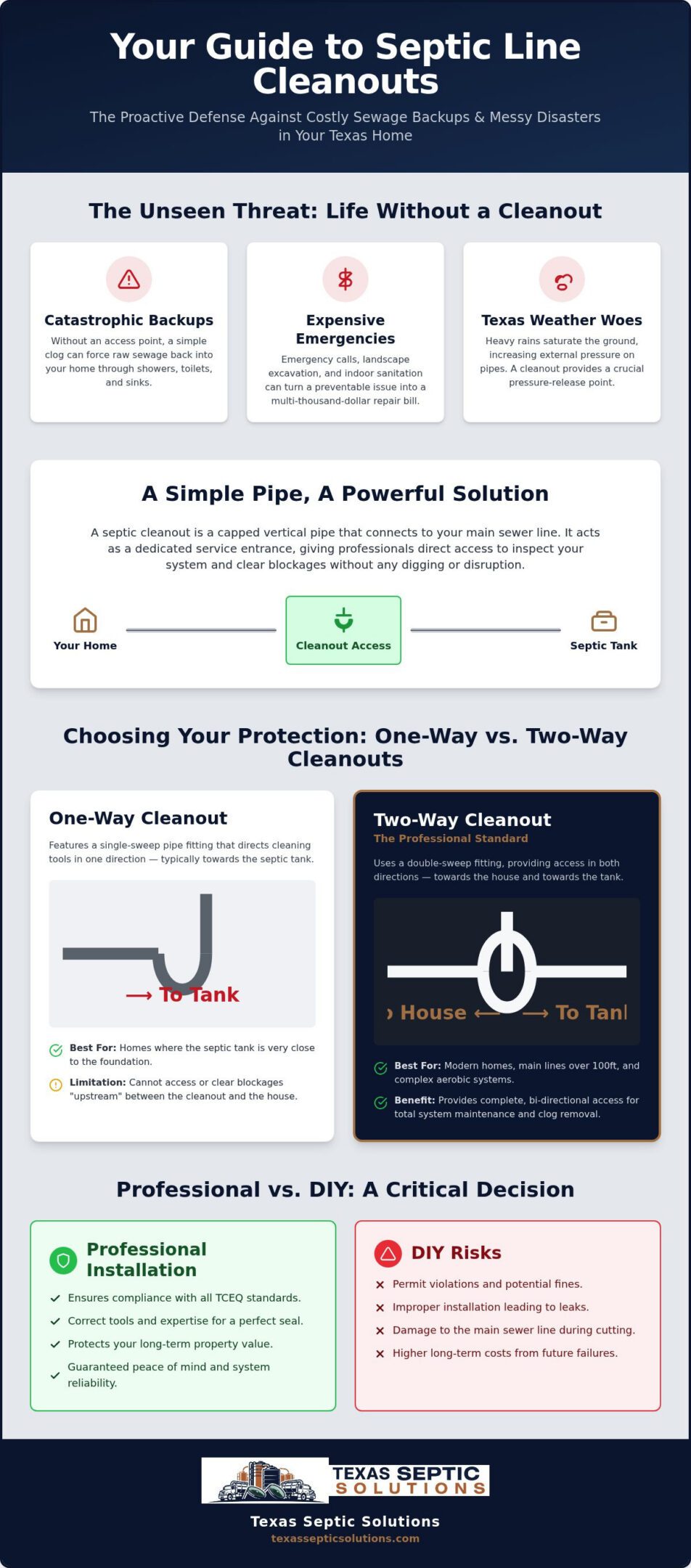
A septic cleanout is a vertical pipe that connects directly to your main sewer line and extends to the surface of your yard, usually capped with a sturdy lid. Think of it as a dedicated service entrance for your home’s plumbing. Its primary job is to give professionals a clear path to reach and clear blockages without the need to dig up your landscaping or pull up indoor toilets. When you invest in a professional septic line cleanout installation, you’re essentially installing an insurance policy against the messiest home disasters imaginable.
Texas homeowners face unique challenges, especially during the heavy rain and flood seasons common in Houston and Cleveland. When the ground becomes saturated, the external pressure on your septic system increases significantly. If a clog forms during these periods, the lack of an exit point can force high-pressure backups into your home’s lowest drains. A cleanout provides a controlled point where that pressure can be managed, keeping raw sewage out of your living spaces. It is helpful to understand what a septic tank is and how it relies on these clear pathways to process waste safely and efficiently.
The Role of a Cleanout in System Longevity
Installing a cleanout does more than just stop backups; it protects the structural integrity of your entire system. By providing an easy access point, we can clear obstructions before they put unnecessary stress on the main line’s joints and seals. This proactive approach makes septic system maintenance Texas much less invasive. In some configurations, the cleanout also serves as a vital vent point, allowing harmful sewer gases to escape safely rather than building up within your pipes and causing premature corrosion.
Identifying if Your Current System Lacks a Cleanout
You can usually find your cleanout by looking for a three or four-inch PVC pipe with a threaded cap near the foundation where the main sewer line exits the house. If you don’t see one, your home might be at risk. Many older Texas septic systems were installed before these modern safety features were standard practice. Pay attention to early warning signs such as gurgling sounds in your toilets or drains that seem to stay slow no matter what you do. These symptoms often indicate a growing blockage that requires a professional septic line cleanout installation to resolve properly. Without this access point, even a simple clog can quickly turn into a multi-thousand-dollar emergency repair.
One-Way vs. Two-Way Cleanouts: Choosing the Right Solution
Choosing the right hardware is the first step in a successful septic line cleanout installation. One-way and two-way cleanouts use different pipe fittings, often called tees, to direct a plumber’s snake or hydro-jetter. To understand why these mechanical differences matter, it helps to review how your septic system works as a whole. In Houston and Cleveland, where soil conditions often require aerobic systems, the choice of cleanout can significantly impact how easily we can maintain those complex treatment components.
The distance between your home and the septic tank is a major deciding factor. If your main line runs more than 100 feet, we might suggest multiple access points to ensure no part of the pipe remains out of reach. For aerobic systems, which are increasingly common in East Texas due to high clay content, having bi-directional access is vital for protecting expensive aerator and pump components from sewage backups. If you’re unsure which type fits your property, schedule a professional consultation to ensure your system is built for long-term stability.
The One-Way Cleanout: Simple and Effective
One-way cleanouts feature a single curved pipe, known as a sweep, that points in one direction. Usually, this sweep points away from the house and toward the septic tank. These are simple and effective for short distances. If your tank sits very close to your foundation, a one-way setup might be all you need to keep things moving. However, they have limitations. If a clog happens “upstream” toward your kitchen or bathroom, a one-way cleanout doesn’t provide the angle needed to reach and clear it.
The Two-Way Cleanout: The Professional Choice
The two-way cleanout is the gold standard for modern Texas homes. It uses a double-sweep tee or two separate pipes to provide access both toward the house and toward the tank. We frequently recommend this during a septic system repair when a homeowner is dealing with recurring clogs. This design enables bi-directional hydro-jetting, which ensures the entire line is scrubbed clean. Many local codes in Harris and Liberty counties now require two-way access for new builds because it offers superior protection against home-destroying backups.
The Real Cost of Septic Cleanout Installation: Pro vs. DIY
While some online guides suggest a septic line cleanout installation is a simple weekend task, the reality is far more complex. You aren’t just paying for a few feet of PVC and a threaded cap. You’re investing in the specialized equipment and local expertise required to excavate without severing existing utilities or damaging the main line. Professional installation ensures your system remains compliant with U.S. Environmental Protection Agency guidelines for long-term safety and environmental protection.
A DIY mistake can be incredibly costly. If you misalign the pipe or use the wrong adhesive, you risk a leak that can contaminate your soil and lead to hefty environmental fines. Even worse, improper excavation can lead to structural damage to the tank itself. A certified installation also adds tangible value to your property. During a resale appraisal, having a documented, professionally installed cleanout shows the buyer that the system has been cared for properly and follows modern Texas standards.
Labor and Equipment Factors
Most homeowners don’t have access to the heavy-duty trenching tools needed for deeper septic lines. Our crews use precision machinery to reach the exact depth of your main line without putting unnecessary stress on the surrounding soil. If you dig by hand or use improper tools, you run the risk of pipe crushing due to uneven backfilling. What takes a pro crew a few hours can turn into a multi-day struggle for a DIYer. This often ends in a call for emergency help that costs more than the original installation would have.
Insurance and Warranty Protection
Many septic system manufacturers require professional service to keep warranties valid. Hiring “septic cowboys” who lack proper licensing might save a few dollars today, but it leaves you vulnerable if things go wrong. Choosing a licensed team like Texas Septic Solutions ensures the job is done to code. This certification is especially important if you experience a septic tank alarm going off in the future. Having a pro-installed cleanout makes it much easier to diagnose the problem quickly, saving you from expensive and unnecessary repairs later on.
Step-by-Step: The Professional Cleanout Installation Process
Every professional septic line cleanout installation begins before a single shovel hits the dirt. We always start with a comprehensive site assessment and contact 811 to mark underground utility lines. Striking a gas or electric line isn’t just a delay; it’s a major safety hazard for the neighborhood. Once the area is cleared, we use precision excavation techniques to expose the main septic line. We don’t just dig a hole. We carefully remove the soil to ensure the existing pipe isn’t nicked or crushed by heavy machinery, which could lead to much larger repairs later on.
After exposing the line, we cut a specific section to accommodate the new fitting. Whether we’re installing a sanitary tee or a two-way fitting, the alignment must be perfect. A slight tilt can cause solids to snag, leading to the very clogs you’re trying to prevent. Once the fitting is secured with industrial-grade solvent cement, we focus on backfilling. We use a methodical approach to soil compaction, layering the dirt and tamping it down to prevent the pipe from shifting or settling over time. This ensures the line maintains its proper slope for consistent waste flow.
Soil Considerations in East Texas
East Texas is famous for its “gumbo” clay, which expands and contracts significantly with the changing weather. This movement can easily snap rigid PVC pipes if they aren’t protected. We use proper bedding materials like sand or pea gravel to create a cushion around the pipe, allowing for minor soil shifts without causing a break. Additionally, Houston-area humidity is a major factor. High moisture levels in the air can slow down PVC solvent cement curing times. Our team knows exactly how long to wait before testing the line to ensure a permanent, leak-proof bond even in our swampy climate.
Testing and Final Grading
Before we finish, we perform a pressure test on the new joint to verify a watertight seal. We then install the riser cap so it sits at or slightly above the final grade. This keeps the access point easy to find while preventing lawnmowers from hitting it. Finally, we grade the surrounding soil to ensure water drains away from the cleanout. Pooling water can seep into the riser and overwhelm your system during heavy storms. If you’re ready to secure your home’s infrastructure, contact our team for a professional installation today.
Expert Cleanout Solutions: Why Texas Septic Solutions is the Right Choice
Choosing the right partner for your septic line cleanout installation involves more than just hiring someone with a shovel. You need a team that understands the specific environmental demands of East Texas, from the shifting clay soils to the strict local regulations. At Texas Septic Solutions, we’ve spent decades serving homeowners in Cleveland, Cypress, and across the greater Houston area. We don’t just perform a service; we act as a guardian of your home’s functionality, ensuring your system is built to last for decades.
Our “Neighborly Expert” approach means we take the time to explain the “why” behind every recommendation. We believe that an informed homeowner is a confident one. Whether we’re installing a two-way cleanout to simplify future pumping or performing a high-pressure line clearing, we walk you through the process so you know exactly how your investment is protecting your property. We’re ready for anything, providing 24/7 emergency support because we know that septic failures don’t follow a nine-to-five schedule. If a clog hits at midnight, we’re the team you can trust to respond quickly and professionally.
Comprehensive Care from Cleveland to Shepherd
Our local knowledge is our greatest asset. We understand the specific county-specific septic codes and permit requirements for Harris, Liberty, and Montgomery counties. This expertise ensures your installation is fully compliant from day one. We operate a fleet of specialized equipment designed specifically for Texas residential lots. This allows us to work efficiently in tight spaces without causing unnecessary damage to your yard. We live where we work, and our commitment to the community drives us to deliver the highest level of service on every single job.
The Texas Septic Solutions Guarantee
We provide honest, upfront assessments without the “big city” corporate jargon. Our goal is to ensure your system is ready for the next 20 years of service, not just a quick fix for today. We often integrate these installs with our septic system maintenance plan. This comprehensive approach ensures that your new cleanout is used effectively during routine inspections to catch small issues before they become expensive disasters. We stand behind our work with a focus on long-term reliability and customer peace of mind. Schedule your professional cleanout installation today!
Secure Your Home Against Septic Emergencies
A septic line cleanout installation is more than just a plumbing upgrade; it’s a vital safeguard for your property’s future. By providing easy access to your main line, you eliminate the need for invasive digging and ensure that routine maintenance remains straightforward and effective. This dedicated access point acts as an insurance policy, preventing high-pressure backups from ever reaching your indoor drains during heavy Texas rains.
As a local family-owned business, we understand the unique challenges of East Texas soil and the importance of meeting all TCEQ standards. You don’t have to face the stress of potential sewage failures alone. Our licensed Texas septic experts are ready to provide the stability and peace of mind your home deserves. Between our specialized equipment and our 24/7 emergency response, we’re always here to support our neighbors in Houston and Cleveland.
Get a Professional Septic Cleanout Quote in Houston & Cleveland and take the first step toward a worry-free septic system today. We look forward to helping you protect your home for years to come.
Frequently Asked Questions
Do I really need a septic cleanout if my system is working fine?
Yes, you should install one now because it’s much cheaper than an emergency repair. A septic line cleanout installation allows us to clear future clogs without pulling up your indoor toilets or tearing up your lawn. Even if your system is currently flowing, a cleanout acts as an essential access point for routine inspections. It ensures that when a problem does eventually happen, it’s a quick fix rather than a multi-day excavation project.
Where is the best place to install a septic line cleanout?
We typically install the primary cleanout within three to five feet of your home’s foundation where the main sewer line exits. If your septic tank is located more than 100 feet from the house, we often recommend a second cleanout near the tank entrance. This placement ensures that every foot of your main line is reachable for snaking or hydro-jetting, providing comprehensive protection for your entire drainage system.
How much time does a professional cleanout installation take?
A professional installation usually takes between two and four hours to complete. The exact timeframe depends on the depth of your main line and the specific soil conditions on your property. In areas with heavy clay, excavation and proper soil compaction might take a bit longer to ensure the pipe remains stable. Our team works efficiently to minimize any disruption to your daily routine while ensuring a watertight seal.
Can a cleanout be used to pump my septic tank?
No, a cleanout is designed specifically for clearing pipe blockages and cannot be used for pumping. Septic pumping requires access through the large primary lids on the tank itself to remove all accumulated solids and sludge. While the cleanout is a vital tool for line maintenance, it doesn’t provide the wide opening necessary for high-volume pumping equipment to thoroughly clean the tank chambers as required by Texas environmental standards.
Will installing a cleanout damage my yard or landscaping?
We use specialized, small-footprint equipment to keep yard damage to an absolute minimum. Our team focuses on precision excavation, only removing the soil necessary to reach the main line safely. After the septic line cleanout installation is finished, we backfill the area with proper bedding and perform final grading. This process helps your grass recover quickly and prevents water from pooling around the new riser, leaving your landscape looking professional.
What happens if I don’t have a cleanout and my line clogs?
Without a cleanout, clearing a main line clog becomes significantly more invasive and expensive. Plumbers may have to remove your toilets to gain access or dig random holes in your yard to find the blockage. This delay often results in raw sewage backing up into your showers and sinks, causing extensive water damage and health risks. Having a dedicated access point eliminates these high-pressure risks and ensures a faster, cleaner resolution to any drainage issue.
Are cleanouts required by law in Texas for older septic systems?
While the Texas Commission on Environmental Quality (TCEQ) mandates cleanouts for all new installations and major replacements, many older systems are grandfathered in without them. However, local authorities in Harris and Liberty counties strongly encourage retrofitting older systems during routine maintenance. Even if it isn’t legally required for your specific age of home, installing one is the best way to ensure your property remains compliant with modern environmental safety standards.
How do I maintain my cleanout after it is installed?
Maintenance is simple and mostly involves protecting the physical riser and cap. Ensure the area around the cap stays clear of heavy mulch, dirt, or overgrown grass so it’s easy to find during an emergency. Avoid running over the cap with heavy riding mowers or vehicles, as this can crack the PVC. Once a year, check that the threaded cap is tight and the seal remains watertight to prevent odors or rainwater intrusion into your system.