
Septic Inspection Report Explained: A Homeowner’s Guide to Decoding the Data
You’re staring at a multi-page document filled with terms like “effluent,” “lateral lines,” and “sludge levels,” wondering if your bank account is about to take a massive hit. It’s completely normal to feel overwhelmed when you first see these results. Most homeowners treat these documents as a simple pass-fail grade, but a report is actually a detailed roadmap of your property’s long-term health and value. Understanding these details is the difference between a minor maintenance task and an unexpected system failure.
We’ve created this guide to provide your septic inspection report explained in plain English. You’ll learn exactly how to identify red flags before they become five-figure repairs and what those technical findings mean for your home’s market price. We’ll break down the jargon, help you prioritize necessary fixes, and ensure you stay compliant with Texas real estate regulations. Whether you’re buying a new home or maintaining an aerobic system, you’ll walk away with the confidence to make informed decisions about your property’s most critical utility.
Key Takeaways
- Discover how to translate complex technical jargon into a clear picture of your property’s health and overall market value.
- Learn the critical “25-33% rule” for sludge levels so you know exactly when it’s time to schedule a pumping service.
- Get your septic inspection report explained with a focus on drainfield health, which is the most expensive component to replace if it fails.
- Navigate Texas-specific TCEQ standards and local real estate requirements to ensure a smooth property transfer in areas like Houston and Cypress.
- Create a prioritized action plan that separates routine maintenance from urgent repairs that require immediate professional attention.
The Anatomy of a Septic Inspection Report
Think of your inspection results as a technical health chart for your home. It isn’t just a receipt for a service; it’s a legal and technical snapshot that documents how well your wastewater system is performing at a specific moment in time. When you have your septic inspection report explained correctly, you can see past the jargon to understand your system’s actual lifespan. Whether you are buying a property in East Texas or just keeping up with your annual requirements, this document is your primary defense against unexpected utility failures.
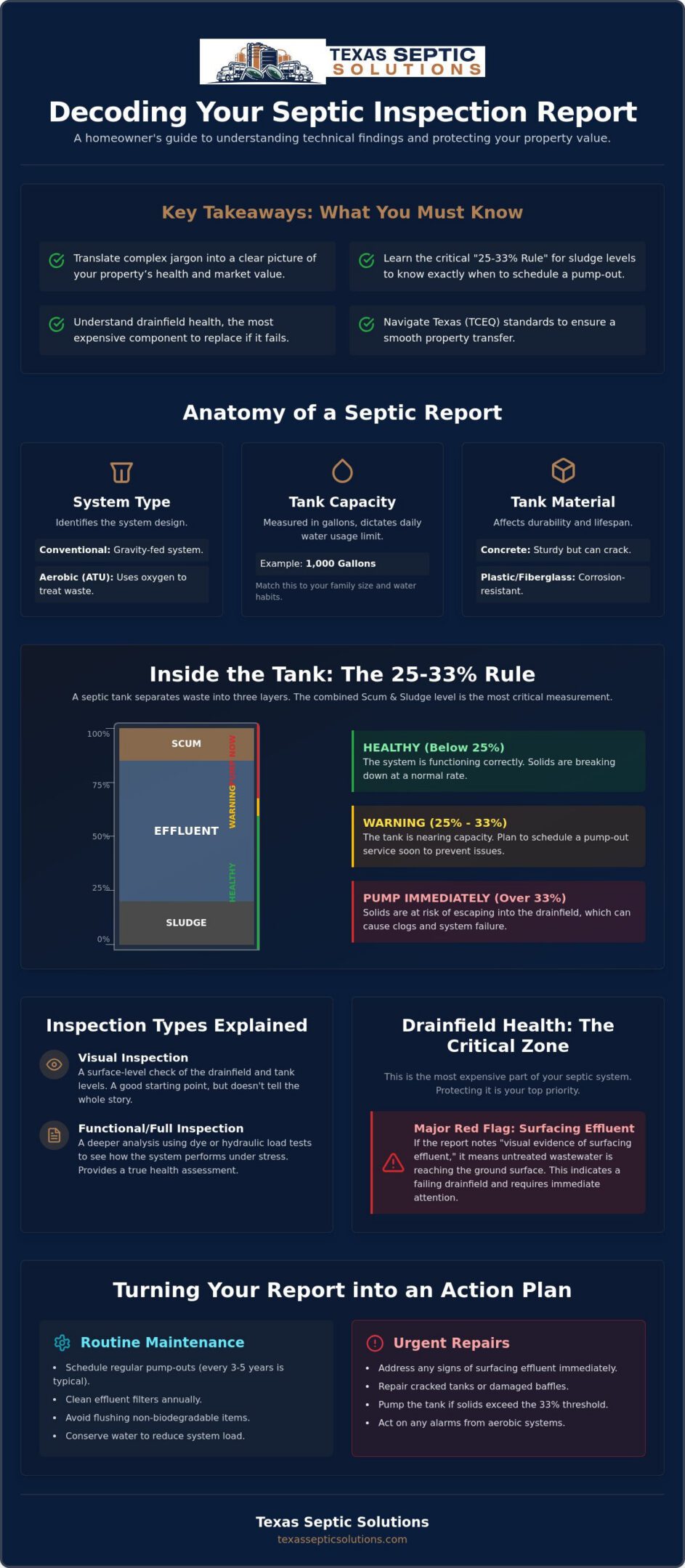
A standard report identifies two main things right away: the system type and the tank capacity. In our region, you’ll typically see either a conventional gravity system or an aerobic treatment unit. Your Septic tank capacity, usually measured in gallons, dictates how much water your household can safely use daily. If the report shows a 1,000-gallon tank but you have a large family with high water usage, the data might reveal that your system is constantly working at its limit.
Identifying System Specifications and Design
The first few lines of your report detail the “bones” of your system. You’ll find the tank material listed as concrete, plastic, or fiberglass. Concrete is sturdy but can crack over decades, while plastic and fiberglass are corrosion-resistant but sensitive to heavy weight on the surface. Pay close attention to the “Daily Flow” rating. This number represents the maximum amount of water the system was designed to process each day. Comparing this to your actual usage helps determine if you need a more robust septic system maintenance plan to prevent backups.
The Purpose of Visual and Functional Analysis
There is a massive difference between a visual check and a full functional inspection. A visual inspection involves looking at the surface of the drainfield and checking the tank levels. It’s a great starting point, but it doesn’t tell the whole story. A functional report goes deeper, often using dye tests or hydraulic load tests to see how the system handles a sudden influx of water. If the report mentions “visual evidence of surfacing effluent,” it means sewage is reaching the ground’s surface, which is a major red flag. Remember that a “Satisfactory” mark on a report doesn’t mean the system is perfect; it just means it met the minimum operating standards on the day of the test.
The “General Comments” section is where our experts often hide the most valuable advice. While the checkboxes provide the data, the comments provide the context. This is where an inspector might note that while the system is currently working, the proximity of large trees or recent heavy rains in the Houston area might cause issues in the near future. Don’t skip the fine print, it often contains the “why” behind the numbers.
Decoding Sludge, Scum, and Tank Integrity
Once the inspector opens the lids, the focus shifts to what’s happening inside the tank. This is where most homeowners get confused by the numbers. Having your septic inspection report explained means understanding that your tank is a living ecosystem designed to separate waste into three distinct layers. The top layer, known as “scum,” consists of floating fats, oils, and grease. If this layer is unusually thick, it often points to kitchen habits that might be putting extra stress on your system’s bacterial balance.
The bottom layer is “sludge,” which contains the heavy solids that haven’t been broken down yet. According to industry standards often cited in a Septic System Inspection Field Guide, the combined thickness of the scum and sludge should never exceed 25 to 33 percent of the tank’s total liquid capacity. If your report shows levels hitting that 33 percent mark, it’s a clear signal that the system is due for a pump-out to prevent solids from escaping into your drainfield.
Measuring Solids: What the Numbers Really Mean
Inspectors measure these layers in inches, but those numbers only matter when compared to the total liquid depth. For example, six inches of sludge in a shallow tank is much more concerning than the same amount in a deep, high-capacity tank. If your report indicates that solids are accumulating faster than expected, it could be a sign that your bacterial colony is struggling. Ignoring high solid levels is a leading cause of septic system repair needs, as those solids eventually clog the pipes and soil in your yard. High scum levels also suggest you should check your effluent filters more frequently to avoid blockages.
Evaluating Tank Structure and Baffles
A tank can be empty but still failing if its structure is compromised. Your report should mention the condition of the inlet and outlet baffles. These are the “T” shaped pipes that keep the floating scum layer where it belongs. If a baffle is corroded or has fallen off, solids will flow directly into the drainfield, causing a catastrophic failure. Inspectors also check for groundwater infiltration, which happens when cracks in the tank allow outside water to leak in. This extra water overloads the system and can lead to premature backups. If you notice “corrosion” or “cracks” listed in your report, it’s time to have a professional look at the structural integrity of your system before a minor leak becomes a major emergency.
The Drainfield and Soil Absorption Analysis
While the tank handles the heavy lifting of separation, the drainfield is the final treatment stage and the most expensive component of your system. When you get your septic inspection report explained, the section on soil absorption is often the most critical for your property value. If this part fails, you aren’t just looking at a simple fix. You are looking at a major site renovation. Inspectors look for “Biomat” buildup, which is a naturally occurring layer of bacteria. In a healthy system, this layer is thin. However, if it becomes too dense, it acts like a waterproof seal, preventing water from sinking into the ground.
Invasive roots also pose a major threat. If your report mentions “root intrusion” or “vegetative interference,” it means nearby trees have found the nutrient-rich water in your lines. These roots can crack pipes and cause blockages that are nearly impossible to clear without digging up the entire field. Identifying these issues early allows you to remove the offending vegetation before the damage becomes permanent.
Signs of Saturation and Hydraulic Stress
Standing water in the trenches is a clear indicator of hydraulic stress. This means the soil can no longer keep up with the amount of water being pushed into it. In East Texas, our soil types vary significantly. If you have heavy clay soil, your report might show slower absorption rates compared to the sandy soil found in other parts of the state. Clay holds moisture longer, making these systems more prone to saturation during rainy seasons. If your report shows consistent saturation, you should prepare for a potential septic system replacement cost increase, as these failures often require a completely new field design.
Distribution Box (D-Box) and Flow Evaluation
The Distribution Box, or D-Box, ensures that wastewater is spread evenly across all your drain lines. If the report notes the D-Box is “unlevel,” one specific line is likely receiving too much water. This causes “short-circuiting,” where one part of the field fails prematurely while the rest remains dry. An inspector also evaluates the flow rate. Water that exits the tank too quickly doesn’t get enough treatment time, while water that moves too slowly suggests a blockage somewhere in the line. Getting your septic inspection report explained with a focus on these flow dynamics helps you catch distribution issues before they destroy your drainfield’s longevity.
Texas-Specific Standards and Real Estate Requirements
Texas has some of the most specific wastewater regulations in the country, primarily governed by the Texas Commission on Environmental Quality (TCEQ). When you have your septic inspection report explained by a local professional, you’ll notice that the requirements change significantly based on your specific system type. Aerobic systems, which are increasingly common in East Texas due to soil conditions, are subject to much stricter oversight than traditional gravity systems. State law, specifically 30 TAC Section 285.7, requires owners of aerobic systems to maintain a continuous service contract with a TCEQ-licensed maintenance provider. This means your report isn’t just a one-time document; it’s part of a mandatory cycle of three inspections per year to ensure the system is treating effluent to the high standards required by the state.
TCEQ Regulations and Local County Compliance
While state rules provide the foundation, local authorities in areas like Cleveland, Houston, and Cypress often add their own layers of compliance. In Huffman and Shepherd, the heavy clay content in the soil means that inspectors look for very specific signs of hydraulic failure that might not be as critical in sandier regions. These local agents have the authority to enforce more stringent rules than the TCEQ minimums if the environment demands it. In Texas, septic inspections are a mandatory component of title transfers to ensure environmental safety and system compliance. Failing to meet these local standards can result in hefty fines or the denial of necessary permits for property upgrades, making your report a critical legal document.
Inspection Reports in Texas Home Sales
If you’re buying or selling a home, the “Septic Addendum” is a vital part of your real estate contract. This document outlines the buyer’s right to have the system inspected and the seller’s responsibility to disclose any known defects. While it is customary for the seller to pay for the initial inspection in many East Texas transactions, this is a point of negotiation rather than a legal requirement. A failing report can immediately halt mortgage approvals; FHA and VA loans are particularly strict about requiring a functional system before they will fund a loan. You can use the data in your report as a powerful negotiation tool. If the findings suggest the system is nearing the end of its life, you can request credits for septic system maintenance Texas or even a full replacement before closing. If you need a reliable assessment to move your sale forward, schedule an inspection with our experts to get the clarity you need.
Turning Your Report Findings into an Action Plan
Now that you have your septic inspection report explained, it’s time to move from understanding the data to protecting your investment. A report shouldn’t just sit in a drawer; it should serve as the foundation for your septic system maintenance plan. By categorizing the findings into immediate needs and long-term monitoring, you can prevent small issues from spiraling into total system failure. Even if your report comes back with a “Satisfactory” rating, look closely at the sludge levels. If you are approaching the 25-33% threshold mentioned earlier, you should schedule a pump-out now rather than waiting for a backup to occur.
Some findings require instant intervention. If you see signs of surfacing effluent or a broken outlet baffle, these are “Critical Failures” that demand an emergency septic service call. These problems won’t fix themselves and will only get more expensive the longer they are ignored. Advisory findings like an aging pump or minor root intrusion give you the luxury of time to plan and budget for future repairs.
Prioritizing Repairs vs. Routine Maintenance
Distinguishing between a repair and routine upkeep is vital for your budget. Critical failures like crushed pipes or backed-up lines are non-negotiable and need immediate professional attention to keep your home functional. Advisory findings are different. They might include a recommendation to clean a filter or clear minor vegetation. Routine pumping is the bridge between these two categories. By keeping solids low, you ensure your “Satisfactory” report stays that way for years to come. Don’t let a minor advisory note turn into a major failure because you skipped a simple maintenance step.
When to Schedule a Professional Consultation
If your report recommends a full drainfield replacement, get a second opinion. These are high-stakes recommendations that significantly impact your property value. As your “Neighborly Expert,” we take pride in helping East Texas homeowners interpret complex data without the stress. We’ve seen every soil condition from Huffman to Shepherd and can provide a straightforward review of your findings. Your next step is simple: book a follow-up consultation with us to review your report and build a proactive plan that keeps your system running smoothly and your property value secure.
Secure Your Property’s Future with Clear Data
You now have the tools to view your inspection results as a strategic asset rather than a source of confusion. By understanding the balance of tank solids and the critical health of your drainfield, you can protect your home’s value and avoid the high costs of total system failure. Having your septic inspection report explained ensures you stay ahead of TCEQ requirements and local regulations in communities like Cleveland, Houston, and Cypress. This knowledge allows you to move from passive ownership to proactive management of your home’s most vital utility.
Don’t let technical jargon stand in the way of a functional home or a successful property sale. Whether you need a TCEQ-compliant maintenance plan or immediate 24/7 emergency septic support, our team is ready to help you navigate the next steps. We are proud to serve as the trusted local authority across East Texas, ensuring your utilities remain reliable and compliant. Confused by your report? Let the experts at Texas Septic Solutions provide a professional review and action plan. Taking control of your system’s health today means peace of mind and a more secure investment for your family’s future.
Frequently Asked Questions
Does a “Satisfactory” septic report mean I don’t need to pump my tank?
Not necessarily. A “Satisfactory” rating simply means the system was functioning as designed at the time of the test. It doesn’t mean the tank is empty. You must look at the specific measurements for sludge and scum; if those solids occupy more than 25% to 33% of the tank’s capacity, you still need to schedule a pumping service to prevent future drainfield damage.
How long is a septic inspection report valid for a home sale in Texas?
In most Texas real estate transactions, a septic report is considered valid for 30 to 90 days. This timeframe can vary depending on the requirements of the lender, especially for FHA or VA loans. If a house sits vacant for several months after an inspection, buyers often request a new one to ensure the system performs correctly under active household usage.
What is the most common reason for a septic system to fail an inspection?
Hydraulic failure in the drainfield is the most frequent cause of an unsatisfactory report. This happens when the soil becomes too saturated to absorb wastewater, often leading to standing water or surfacing effluent. Other common issues include missing or corroded baffles and structural cracks in the tank that allow groundwater to leak in and overload the system.
Can a septic system fail an inspection if the septic tank alarm is going off?
Yes, an active alarm is a critical red flag that will almost certainly result in a failed inspection. The alarm indicates a high-water condition or a mechanical failure in the pump. If your septic tank alarm is going off, the inspector cannot verify that the system is operating safely, and immediate repairs are usually required before the report can be cleared.
How much sludge is considered “too much” on a professional report?
Sludge is considered “too much” when the combined thickness of the solids and scum layers exceeds one-third of the tank’s total liquid depth. At this point, the risk of solids flowing into the drainfield increases significantly. Having your septic inspection report explained by a licensed technician helps you understand if your specific inch measurements indicate an urgent need for pumping.
What happens if my report shows “Hydraulic Overload” in the drainfield?
A finding of “Hydraulic Overload” means your drainfield is receiving more liquid than the soil can process. This is often caused by internal plumbing leaks, high water volume from the house, or a failing absorption field. If your report shows this, you’ll need a professional evaluation to determine if the field is permanently damaged or if the load can be managed through water conservation.
Do I need a separate inspection for an aerobic system in Texas?
Yes, aerobic systems require a much more technical inspection than conventional gravity systems. These units have mechanical aerators, pumps, and disinfection systems that must be checked for proper function. In Texas, aerobic systems are also subject to mandatory maintenance contracts that require three separate inspections every year to remain in compliance with TCEQ standards.
Can I perform my own septic inspection for a real estate transaction?
No, a self-inspection is not accepted by lenders, title companies, or regulatory agencies in Texas. Real estate transactions require a formal report from a licensed professional to ensure the system meets environmental and safety standards. Having a professional septic inspection report explained provides the unbiased, legal documentation necessary to finalize a home sale or secure mortgage approval.