
Septic Inspection Cost Cypress TX: 2026 Homeowner’s Buying Guide
Would you sign a mortgage if you knew a massive five-figure repair bill was hiding just three feet beneath your back lawn? In Cypress, our heavy clay soil and unique water table can turn a minor septic oversight into a significant financial headache for new homeowners. When you’re researching the septic inspection cost Cypress TX companies offer, you’re doing more than just comparing prices. You’re looking for a technical audit that protects your family’s investment from the ground up.
We know how stressful the home-buying process feels, especially when you’re worried about hidden failures or confusing TCEQ regulations. It’s common to feel overwhelmed by Harris County’s specific requirements or the fear of being overcharged for a quick “visual only” check that doesn’t tell the whole story. This guide will show you exactly what to expect for professional inspection pricing in 2026 and how to choose a service that provides a certified report for your lender. You’ll gain a clear understanding of your drain field’s health and learn how to spot potential repair costs before they become your problem.
Key Takeaways
- Get clear on current 2026 market rates for standard residential systems to ensure your quote aligns with local Harris County averages.
- See how specific environmental factors, like our local heavy clay soil and tank burial depth, directly impact the septic inspection cost Cypress TX providers charge.
- Navigate the unique inspection requirements for VA, FHA, and conventional loans to keep your property closing on schedule.
- Budget for necessary “hidden” services like tank pumping and lid excavation to ensure your inspector provides a comprehensive, lender-approved report.
- Learn how to verify TCEQ credentials and select a local authority who knows the Cypress water table well enough to spot future failures.
Average Septic Inspection Cost in Cypress, TX (2026 Market Data)
Understanding the septic inspection cost Cypress TX homeowners face requires a look at our local geography. While neighbors in central Houston might rely on municipal sewer lines, Cypress properties often utilize complex onsite systems. Because our region sits on heavy Harris County clay, these systems work harder to process waste. A professional audit isn’t just a box to check; it’s a deep dive into how your specific tank interacts with the local water table. To understand the basics, it helps to know what a septic system is and how its components rely on soil health to function.
Your system type is the biggest factor in determining your final bill. In 2026, market data shows that aerobic systems, which use oxygen to break down waste, generally require more frequent and detailed oversight than older anaerobic (conventional) systems. TCEQ regulations actually mandate that aerobic systems be inspected three times a year. This means your annual costs are often bundled into a maintenance contract, whereas conventional system owners typically pay a one-time fee for an as-needed inspection.
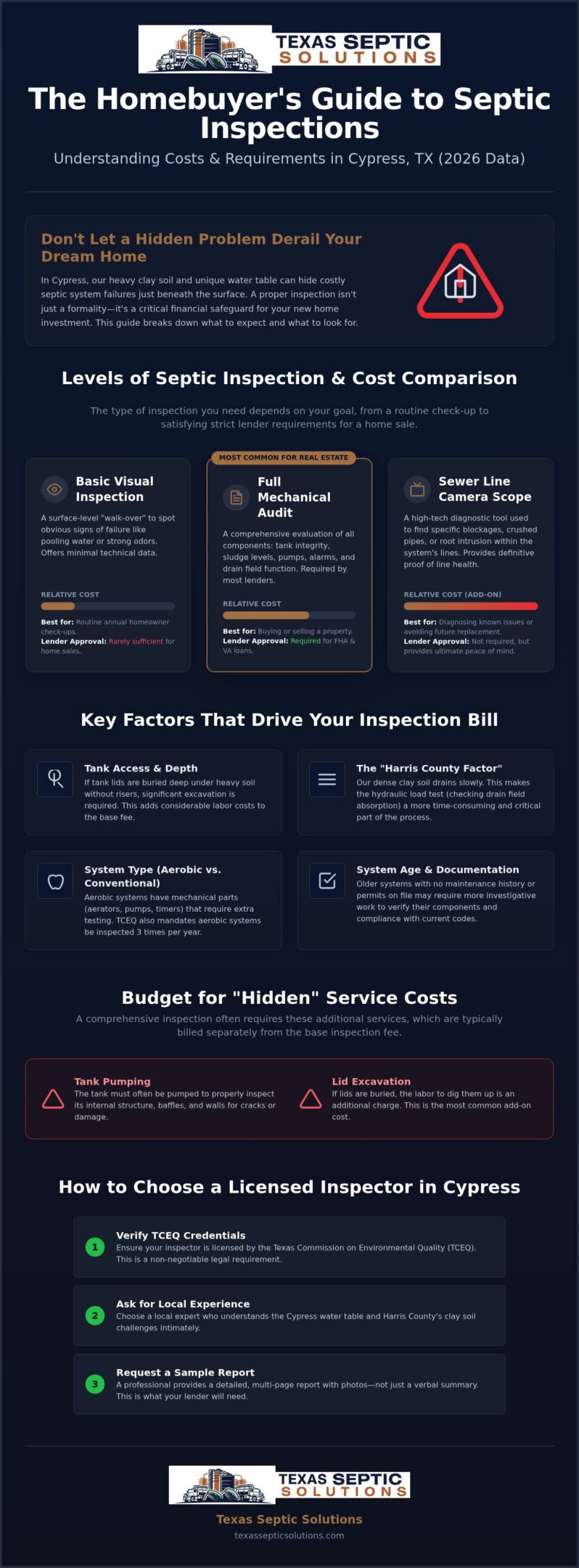
Basic Visual Inspection vs. Full Mechanical Audit
A “walk-over” or visual inspection is the most basic service available. During this process, an inspector looks for obvious signs of trouble like surface pooling, odors, or lush green grass over the drain field. Market data for 2026 suggests that a standard visual inspection remains the most affordable entry point for homeowners, though it offers the least amount of technical data. It’s often enough for a routine annual checkup, but it rarely satisfies a lender.
If you’re buying or selling a home, expect to pay for a full mechanical audit. Lenders for FHA and VA loans require a comprehensive report that proves the system can handle daily stress. This involves testing the alarms, checking the sludge levels, and ensuring the pump is cycling correctly. It requires more labor and specialized tools, which naturally increases the service fee.
The Price of Specialized Camera Inspections
Sometimes, looking into the tank isn’t enough. If an inspector suspects a blockage or a collapsed pipe, they may recommend a sewer line camera inspection. This high-tech diagnostic tool involves threading a waterproof camera through the distribution lines to find exactly where a problem sits. While this adds to your immediate septic inspection cost Cypress TX quote, it’s a proactive move that can save you thousands. By identifying a specific pipe failure early, you might avoid a total septic system replacement later on. High-definition footage provides the “proof of health” that gives both buyers and sellers absolute peace of mind during a transaction.
Key Factors That Drive Your Septic Inspection Bill
Several variables influence your final quote beyond a flat service fee. When calculating the septic inspection cost Cypress TX technicians provide, the physical labor of accessing the system often accounts for a large portion of the bill. If your tank is buried deep beneath our heavy local soil without surface-level risers, the technician must spend significant time digging. This isn’t just about moving dirt; it’s about carefully uncovering components without damaging the concrete or fiberglass structure. Accessing a tank buried three feet deep requires much more effort than one with easy-access lids at the surface.
The “Harris County Factor” is another major driver of price. Our region is famous for dense clay that doesn’t drain as quickly as sandy loam. This makes a hydraulic load test, which checks if the drain field can process a specific volume of water, much more time-consuming. Because clay is less forgiving, we have to monitor the absorption rates more closely to give you an accurate picture of the system’s longevity. For those new to rural living, understanding septic system maintenance is the best way to prevent these inspection findings from turning into expensive surprises.
Aerobic systems add another layer of complexity to the bill. Unlike a basic gravity system, an aerobic setup includes mechanical parts like aerator pumps, electrical timers, and spray heads. Testing each of these components to ensure they meet TCEQ standards takes extra time and specialized equipment. Additionally, if your property is located in the more rural, outlying areas of Cypress, travel fees may apply to cover the logistics of bringing heavy diagnostic tools to your site.
System Age and Documentation History
Systems installed decades ago often lack clear blueprints or “as-built” drawings. We call these “mystery systems.” If we have to spend an hour electronically locating the tank or probing the yard to find the drain lines, those billable hours will increase. On the other hand, having your previous maintenance records ready can streamline the process significantly. If your system is missing risers, we might suggest installing them during the visit to avoid future digging fees. It’s a smart investment that lowers your long-term costs. If you aren’t sure where your components are located, reaching out to Texas Septic Solutions can help you get a clear map of your property’s infrastructure.
The Impact of Recent Weather and Water Tables
Cypress weather plays a massive role in how we conduct our audits. During a heavy rainy season, the local water table rises, and the clay soil becomes fully saturated. This can complicate a hydraulic load test because the ground simply can’t take on more water, even if the system is technically healthy. We have to adjust our testing methods to account for these environmental stressors. Safety is also a priority; we don’t open tanks during active flooding or severe thunderstorms to protect both the technician and your system’s integrity. Timing your inspection during a dry spell often provides the most accurate data on your drain field’s performance.
Real Estate Septic Inspections: What Buyers and Sellers Must Know
Buying a home in Cypress is a major investment, and the last thing you want is a buried liability. While a general home inspector is great for checking roofs and electrical panels, they aren’t qualified to perform a technical septic audit. A general inspector might flush the toilets and check for surface puddles, but they don’t have the TCEQ licensing required to open the tanks and inspect the internal baffles or pumps. When you’re factoring in the septic inspection cost Cypress TX lenders require, remember that this fee is a protective measure. Paying a few hundred dollars for a professional audit can save you from inheriting a $15,000 drain field failure just months after closing.
Lender requirements often dictate the depth of the inspection. VA and FHA loans are particularly strict, frequently demanding a “passing” certificate from a licensed professional before they’ll fund the loan. Conventional loans may be more flexible, but most savvy buyers in Harris County still insist on a full mechanical check. In a typical Cypress property sale, the buyer usually pays for the inspection during their option period. This ensures the inspector is working directly for the buyer’s interests, providing an unbiased look at the system’s true condition. If major issues are found, the inspection report becomes a powerful tool for price negotiations or repair requests.
Satisfying TCEQ and Harris County Compliance
Every onsite sewage facility in our area must comply with Texas septic system regulations to ensure the property is legally habitable. Title companies and lenders will look for specific documentation proving the system is permitted and functioning. We recommend scheduling your inspection as soon as you’re under contract. Don’t wait for the final days of your option period. If a report comes back with a “Failed” status, you’ll need time to get repair quotes or negotiate a credit. Waiting until the last minute can jeopardize your closing date and leave you with very little leverage.
The Importance of a Pumping History Audit
A system that hasn’t been pumped in five years is a red flag, regardless of how well it seems to be working today. During our audit, we verify the pumping history to see if the previous owners followed a consistent septic system maintenance plan. High sludge levels found during an inspection often indicate that the tank has been neglected, which puts undue stress on the drain field. If the maintenance log is missing or shows irregular service, we increase our scrutiny of the secondary treatment components. A clear history of professional pumping is the best evidence that a system has been cared for properly.
Hidden Costs: Repairs and Pumping During Inspection
When you receive a quote for a septic inspection, it’s vital to ask what that price actually covers. Many homeowners are surprised to find that the base septic inspection cost Cypress TX providers list often excludes the labor required to actually see the system’s interior. A truly comprehensive audit requires the tank to be pumped. Without removing the liquid and sludge, an inspector can’t check for cracks in the tank floor, verify the integrity of the mid-seam, or ensure the baffles are structurally sound. Think of it as trying to inspect a car’s engine without opening the hood; you might see the outside, but you won’t know if it’s actually going to run.
Locating and uncovering buried lids is another common “hidden” expense. If your system doesn’t have surface-level risers, the technician must use electronic locating equipment to find the tank and then manually excavate the soil to reach the access ports. These digging fees vary based on the depth of the tank and the hardness of the ground. Beyond the physical labor, you might encounter small on-the-spot repair needs. It’s common for inspectors to find clogged effluent filters or damaged sanitary tees during an audit. Addressing these minor issues immediately prevents them from escalating into a full system backup.
Bundling Pumping and Inspection Services
One of the smartest ways to manage your budget is to coordinate your pumping and inspection for the same day. Logistically, this allows the inspector to view the tank both before and after it’s emptied. This “Pump and Certify” approach is often more efficient than scheduling two separate visits. When the same team handles both tasks, they can ensure the tank walls and floor are thoroughly cleaned for a clear visual check. Many local companies offer a discount for these combined packages because it reduces travel time and streamlines the reporting process. If you’re ready to clear your maintenance checklist, schedule your combined pumping and inspection with our team today.
Emergency vs. Scheduled Inspection Pricing
Timing is everything when it comes to service fees. If you’re in the middle of a real estate transaction and need a rush inspection within 24 hours, expect to pay a premium for that priority scheduling. These “emergency” audits require the company to shift their existing routes to accommodate your deadline. By contrast, staying ahead of your septic system maintenance Texas requirements allows you to book during standard windows, which is always more cost-effective. For aerobic system owners, planning for your three mandated annual inspections well in advance ensures you stay compliant without paying for last-minute service calls.
How to Choose a Licensed Septic Inspector in Cypress
Choosing an inspector isn’t just about finding the lowest septic inspection cost Cypress TX companies advertise. You’re hiring a professional to identify potential liabilities that could cost you thousands later. Start by verifying their credentials through the Texas Commission on Environmental Quality (TCEQ). You can do this by visiting the TCEQ licensing database online and searching for the individual’s name or company. Ensure they hold a current On-Site Sewage Facility (OSSF) license. If their certification isn’t current for 2026, their report won’t be accepted by title companies or lenders.
Once you’ve confirmed their license, ask about their specific experience with Harris County clay. You want to hear them explain how they adjust their hydraulic load testing to account for the slow absorption rates in our area. A “neighborly expert” will know which Cypress neighborhoods have higher water tables and how that affects your system’s long-term health. Local reviews from your neighbors are often more valuable than national ratings because they reflect how the company handles the unique environmental stressors found in our specific corner of Texas.
A legally binding “Pass/Fail” report must be comprehensive to protect you. It should include the structural condition of the tank, the integrity of the baffles, and the performance of the distribution box. Don’t accept a one-page summary. A professional report should provide a detailed snapshot of the sludge levels and the current saturation of the drain field. This level of detail is what gives you the peace of mind to move forward with a property purchase or a maintenance plan.
Red Flags to Watch Out For
Be wary of any inspector who claims they can perform a full audit without opening the tank lids. These “visual only” checks are often a waste of money because they can’t see the internal components where most failures begin. Other red flags include:
- Vague reports that omit specific data on the drain field or pump performance.
- Extremely low quotes that suggest a “drive-by” inspection rather than a technical audit.
- Inspectors who refuse to explain their findings or provide a written TCEQ-compliant report.
If the price seems too good to be true, the technician likely isn’t performing the mechanical checks required for a valid certification. You don’t want to find out your system is failing a month after you’ve already paid for a sub-par inspection.
The Texas Septic Solutions Advantage
We’ve built our reputation on being a reliable local authority for Cypress homeowners. Our roots in the community mean we’ve seen every possible scenario, from aging anaerobic systems to the newest aerobic technology. We provide comprehensive reporting that satisfies all major Texas lenders, ensuring your real estate transaction moves forward without a hitch. If our audit reveals an issue, we can guide you through the process of an emergency septic repair with transparency and speed. Contact us today for a straightforward quote on your Cypress septic audit and let us help you protect your home’s functionality.
Protect Your Investment with a Professional Cypress Audit
Investing in a thorough audit today is the only way to avoid inheriting expensive underground failures tomorrow. We’ve explored how system type, tank depth, and our local heavy clay influence the septic inspection cost Cypress TX homeowners should expect in 2026. Whether you’re navigating a high-stakes real estate closing or staying compliant with aerobic maintenance schedules, having a certified report provides the technical proof you need for absolute peace of mind.
Our team of TCEQ licensed professionals understands the specific challenges of the Cypress water table and Harris County soil conditions. We’ve served the Houston area for years, providing reliable data and 24/7 emergency support when you need it most. Don’t leave your home’s functionality to chance or settle for a surface-level check that misses the bigger picture. A professional audit is a small price to pay for protecting your family’s health and your property’s long-term value.
Ready to move forward with confidence? Schedule Your Cypress Septic Inspection Today and get the clear answers you deserve. We’re here to ensure your system stays healthy and your property remains a safe, functional place to call home.
Frequently Asked Questions
Is a septic inspection required to sell a house in Cypress, TX?
Texas law doesn’t mandate a septic inspection for every property sale. However, most lenders for FHA and VA loans require a passing report before they’ll fund the mortgage. In Cypress, it’s standard practice for buyers to request one during the option period to avoid inheriting a failing system. Skipping this step can lead to massive repair bills shortly after you move into your new home.
How long does a professional septic inspection take?
A thorough inspection typically takes between two and three hours on-site. The total duration depends on how easily the technician can access the tank lids and the complexity of the system. Aerobic systems often take longer because we have to test electrical components and sprayers. If we have to spend time electronically locating a mystery tank or digging through heavy clay, the process will naturally take more time.
Can a general home inspector perform my septic audit?
No, a general home inspector isn’t licensed by the TCEQ to perform a technical septic audit. While they might check if toilets flush, they aren’t authorized to open the tanks or evaluate internal mechanical parts. You need a licensed OSSF professional who understands local soil conditions. Hiring a specialist ensures your report is legally binding and satisfies the strict requirements of your lender or title company.
Does the septic tank need to be pumped before an inspection?
We recommend pumping the tank during the inspection process to allow for a full visual of the interior. If the tank is full, the inspector can’t check the floor or walls for structural cracks or leaks. Bundling these services can help manage the septic inspection cost Cypress TX homeowners pay. Seeing the tank empty is the only way to confirm the system is truly sound from the bottom up.
What happens if my septic system fails the inspection?
If a system fails, the inspection report serves as a roadmap for necessary repairs. In a real estate deal, this usually triggers a negotiation where the seller might pay for repairs, provide a closing credit, or lower the sale price. We provide a detailed breakdown of the failure so you can get accurate quotes for the fix. Our goal is to help you find a solution that keeps the property functional.
How often do aerobic systems in Harris County need to be inspected?
In Harris County, aerobic systems must be inspected every four months as mandated by TCEQ regulations. This adds up to three professional checks per year. These inspections are usually covered under a mandatory maintenance contract. Regular oversight is vital for aerobic setups because they rely on mechanical aerators and timers that work harder than traditional gravity systems to process waste in our local clay soil.
What is the difference between a visual and a functional septic inspection?
A visual inspection only looks for surface-level problems like pooling water or odors. A functional inspection is much more rigorous. It involves a hydraulic load test to see if the drain field can process water and a mechanical check of all pumps and alarms. Most lenders won’t accept a visual check alone. They want the technical data provided by a functional audit to ensure the system’s long-term health.
Will a septic inspection report include the cost of needed repairs?
A standard inspection report identifies problems but doesn’t always include a formal repair quote. However, we provide a clear explanation of what failed and why. If issues are found, we can provide a separate, detailed estimate for the necessary repairs. This helps you understand the potential financial impact during real estate negotiations. Having a professional quote in hand allows you to make informed decisions about your property investment.