
Septic Effluent Pump Replacement Cost: 2026 Homeowner’s Buying Guide
The most expensive part of a septic pump failure isn’t actually the hardware; it’s the damage caused by waiting until the alarm screams at 2 AM. When your system stops moving wastewater, the clock starts ticking on potential backups and unpleasant odors. It’s natural to feel a sense of dread about the unexpected septic effluent pump replacement cost, especially when you’re worried about being overcharged during a high-pressure emergency.
We believe every Texas homeowner deserves a functioning system and a fair price for professional work. This 2026 guide provides a transparent breakdown of parts, labor, and the specific variables that affect your budget. You’ll gain the clarity needed to make an informed decision that prioritizes both your wallet and your home’s long-term health. We will walk through the differences between aerobic and standard components, the value of professional calibration, and how to ensure your new pump comes with a warranty that actually protects you.
Key Takeaways
- Understand why your effluent pump is the heart of your Texas aerobic system and how to spot the early warning signs of failure.
- Get a clear breakdown of the septic effluent pump replacement cost in 2026, including hardware differences between 1/3 HP and 1/2 HP models.
- Learn how technical variables like voltage and head pressure influence your professional quote and ensure system longevity.
- Identify the serious health and electrical risks of DIY repairs compared to the security of professional, licensed installation.
- Discover how to handle emergency alarms with rapid response services in Houston, Cleveland, and surrounding areas to prevent messy backups.
What Is a Septic Effluent Pump and Why Does It Fail?
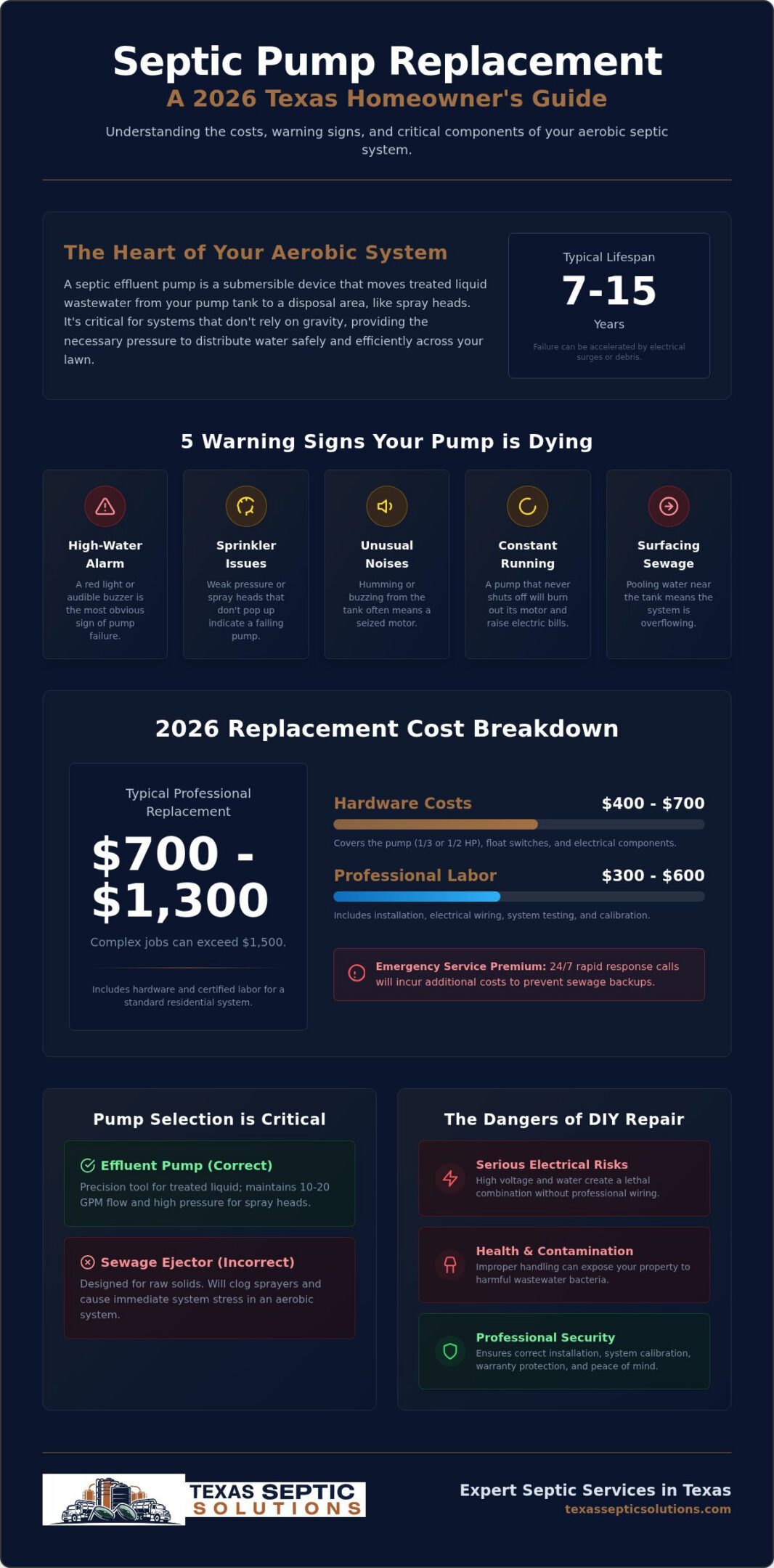
A septic effluent pump is a submersible device designed to move treated liquid from your pump tank to the final disposal area. Unlike gravity systems, a septic tank effluent pumping (STEP) system uses mechanical force to push wastewater through spray heads or into a drain field. In the Houston metro area, these pumps are critical for aerobic systems that rely on consistent pressure to distribute water safely across your lawn. Understanding this hardware is the first step in managing your septic effluent pump replacement cost effectively.
Most pumps reach retirement after 7 to 15 years of service. Motor fatigue is common, but external factors often accelerate the process. Electrical surges from Texas thunderstorms can fry internal components instantly. Float switches, which act as the “on/off” trigger, frequently burn out or become tethered by debris. When these components fail, you’ll likely hear your septic tank alarm going off, signaling that water levels are rising too high because the pump isn’t discharging.
Effluent Pump vs. Sewage Ejector Pump
Effluent pumps are precision tools built for clear liquid only. They cannot process solids. Using a sewage ejector pump where an effluent pump belongs is a recipe for disaster. It leads to clogged sprayers and immediate system stress because the internal impellers aren’t designed for the high-head pressure required by aerobic spray fields. Residential Texas homes typically require a pump that maintains a flow rate of 10 to 20 Gallons Per Minute to meet the design specifications of aerobic spray fields.
5 Warning Signs Your Pump Is Dying
Catching a failure early can prevent a messy backup into your home. Watch for these indicators that your system is struggling:
- The High-Water Alarm: A red light or audible buzzer on your control panel is the most obvious sign of a pump failure.
- Sprinkler Issues: If your spray heads aren’t popping up or the water pressure looks weak, the pump is likely failing to reach the necessary PSI.
- Noises from the Tank: Unusual humming or buzzing sounds often indicate a seized motor or a failing capacitor.
- Constant Running: A pump that never turns off will quickly burn out its motor and spike your electric bill.
- Surfacing Sewage: If you see pooling water near the pump tank, the system is overflowing because the pump can’t keep up.
Professional septic system troubleshooting can often identify if a pump is truly dead or if a simple float adjustment can save you from a full septic effluent pump replacement cost.
Septic Effluent Pump Replacement Cost Breakdown in 2026
Understanding the septic effluent pump replacement cost requires looking beyond the sticker price of the pump itself. While the hardware is a significant portion of the expense, professional labor and supporting components play a major role in the final invoice. In 2026, market prices are influenced by rising material costs and the high demand for skilled technicians in the Greater Houston area. We see that a typical project involves more than just swapping a motor; it’s a comprehensive check of your system’s discharge health.
Hardware costs generally scale with the horsepower and build quality of the unit. Most residential systems in Texas utilize either a 1/3 HP or 1/2 HP submersible pump. Beyond the motor, “hidden” costs often include replacing float switches, resealing the electrical junction box, or installing a new high-water alarm sensor. If your pump tank has accumulated sludge over the years, a professional tank cleaning might be necessary before the new unit is lowered into place. This ensures debris doesn’t immediately clog the intake of your brand-new investment.
Estimated Price Ranges for 2026
For a standard replacement, homeowners typically see hardware costs between $400 and $700, with professional labor and electrical work ranging from $300 to $600. More complex installations involving high-head pumps or deep tank configurations can easily reach $1,500 or more. Supply chain fluctuations in 2026 have also impacted lead times for specialized brands like Franklin Electric or FlowKore. If you need an immediate fix, emergency 24/7 service calls carry a premium compared to a scheduled maintenance visit, reflecting the cost of rapid dispatch to prevent a sewage backup.
Why ‘Cheap’ Pumps Often Cost More
It’s tempting to save money with a budget pump from a big-box store, but these units often fail prematurely. Thermoplastic pumps are prone to cracking under the heat and pressure of frequent cycles, whereas professional-grade pumps with stainless steel motor housings are built for long-term durability. Additionally, many manufacturers void their warranties if a licensed professional doesn’t perform the installation. Following proper septic system maintenance is the best way to protect your new pump from unnecessary stress. Investing in a septic system maintenance plan can help catch electrical wear or float issues before they turn into an expensive midnight emergency. If your system is already showing signs of trouble, reaching out for professional septic repair can save you from a much larger headache down the road.
Key Factors That Influence Your Replacement Quote
Every property in the Houston metro is unique. A quote for a flat lot in Cleveland won’t look the same as one for a sloped property in Huffman. Several technical variables determine your final septic effluent pump replacement cost. It’s not just about the pump; it’s about how that hardware integrates with your existing infrastructure. We look at the entire discharge path to ensure the new unit won’t fail under the same conditions that killed the old one.
Voltage is the first major consideration. You must match the pump to your existing control panel, which typically runs on either 115V or 230V. Installing the wrong voltage will destroy the motor instantly. We also inspect the condition of your discharge plumbing and check valves. If a check valve is stuck open, effluent flows back into the tank every time the pump stops. This causes the pump to “short cycle,” which is the leading cause of premature motor burnout.
Tank depth and accessibility also play a massive role in labor time. In areas like Cypress or Huffman, we often encounter buried lids or extremely deep pump chambers. Accessing these units requires extra excavation and specialized safety equipment. This adds to the labor portion of your septic effluent pump replacement cost because it often requires a two person crew to safely navigate a deep tank entry and pull the heavy discharge assembly.
Sizing the Pump for Your Texas Property
A 1/2 HP pump is the standard for most East Texas aerobic systems. It provides the necessary muscle to push water through long runs of PVC. However, we must calculate the Total Dynamic Head (TDH). This is the sum of the vertical lift and the friction loss from the pipes. If your spray field is uphill from the tank, you need a high-head pump. We also verify the Gallons Per Minute (GPM) ratings. If the GPM is too low, your sprinkler heads won’t pop up fully, leading to “dead zones” and poor water distribution in your yard.
Electrical and Float Configuration
The float system acts as the brain of your pump. While many basic setups use a single float, a dual-float configuration offers significantly better longevity. It separates the “on” and “off” signals, which reduces the frequency of motor cycles. Your control panel serves as a shield, protecting the pump from burning out during a sudden voltage spike. We always recommend weather-rated junction boxes for all replacements. Texas humidity and heavy rains can easily corrode standard wiring, causing a short circuit that kills the pump long before its time.
Professional Installation vs. DIY: Is it Worth the Risk?
Saving money is a top priority for most homeowners, especially when faced with an unexpected septic effluent pump replacement cost. However, the DIY route for septic work involves risks that go beyond a simple plumbing leak. You are dealing with raw effluent and concentrated methane gas. These gases are both flammable and toxic in enclosed tank environments. Professional technicians use specialized safety gear and gas detection tools to stay safe while working over an open pump chamber.
Electricity and water don’t mix. Most effluent pumps run on 115V or 230V circuits submerged in liquid. One small mistake in wire stripping or junction box sealing leads to a catastrophic short circuit. This failure won’t just kill your new pump; it can fry your entire control panel or even cause an electrical fire. Beyond safety, Texas health department standards require specific discharge pressures to maintain environmental compliance. A professional ensures your system isn’t just running, but operating within legal safety limits to protect your property and local groundwater.
The Risks of DIY Pump Swaps
Attempting a swap without the right training often leads to recurring issues. Improper sealing is the number one cause of post-installation failure, as moisture entering the junction box will eventually trip the breaker or destroy the panel. Float height settings are also deceptively complex. If you set the floats too close together, the pump will “short cycle,” turning on and off too frequently. This motor fatigue can burn out a new unit in months. There is also the risk of groundwater contamination if the discharge line isn’t seated correctly. Untreated leaks can seep into the soil where they don’t belong.
What a Professional Replacement Includes
A professional service call is a comprehensive system check, not just a part swap. When we arrive on-site, we perform a full diagnostic to ensure the pump is the actual root cause. Sometimes, a panel issue or a broken wire is the real culprit. We also take the time to clean the pump chamber, removing sludge that would otherwise clog your new intake immediately. Finally, we test every float and the high-water alarm to ensure 100% functionality. This thoroughness is why a professional warranty on parts and labor is so valuable. It gives you the peace of mind that your septic effluent pump replacement cost was a one-time investment.
If your alarm is buzzing and you want the job done right the first time, contact Texas Septic Solutions for emergency septic service today.
Emergency Pump Replacement in Houston and Cleveland, TX
When your septic alarm triggers, the clock starts ticking. A failed effluent pump means your system can no longer discharge treated water, leading to an immediate rise in tank levels. If you ignore the warning, you risk a messy sewage backup into your home or foul-smelling water surfacing in your yard. These situations aren’t just inconvenient; they’re environmental health hazards that require a fast, professional resolution. Texas Septic Solutions specializes in rapid response for emergency pump failures across Cypress, Huffman, Shepherd, and the entire Houston metro area.
We understand that an unexpected utility failure is stressful. That’s why we handle the septic system replacement cost in Texas with transparent, upfront pricing. You won’t have to guess about the final bill or worry about hidden fees during an emergency. Our technicians arrive ready to solve the problem, not just patch it. We exclusively use high-quality, reliable brands like Franklin Electric or FlowKore, which are specifically engineered to withstand the unique demands of Texas soil and climate conditions. This commitment to quality ensures your septic effluent pump replacement cost provides long-term value rather than a temporary fix.
Our 24/7 Service Area and Readiness
Our fleet is designed for immediate action. We keep our trucks fully stocked with a variety of 1/2 HP and 1/3 HP pumps to ensure we can complete most installs on the first visit. Whether you are in Cleveland, Houston, or the surrounding East Texas communities, we have the parts and the expertise to get your system moving again. We pride ourselves on being the neighborly expert you can call when things go wrong, providing the same level of care we would for our own families. Our readiness means we don’t just show up to look at the problem; we show up with the solution already in the back of the truck.
Next Steps: Get Your System Back Online
If your alarm is currently sounding, the first step is to silence the buzzer and minimize your water usage. Don’t run the dishwasher or laundry until a technician has inspected the system. When you call to schedule a diagnostic visit, try to have a few details ready for our team. Knowing whether you have an aerobic or anaerobic system and the approximate age of your equipment helps us prepare for the specific needs of your property.
Contact Texas Septic Solutions for an expert replacement quote today and let our licensed team handle your septic effluent pump replacement cost with the professionalism and speed your home deserves. We are built to handle the high-pressure demands of unexpected failures so you can get back to your normal routine without the worry of system downtime.
Protect Your Home with a Professional Pump Solution
Managing your septic effluent pump replacement cost doesn’t have to be a stressful ordeal. By focusing on high-quality hardware and professional calibration, you ensure your aerobic system remains reliable for years to come. Remember that a correctly sized pump and properly set floats are the best defenses against premature motor failure and messy yard backups. Professional installation doesn’t just give you a working system; it protects your manufacturer warranty and provides the electrical safety your family deserves.
If your system alarm is sounding or you’ve noticed poor sprinkler pressure, don’t wait for a total backup. Our Licensed Texas Septic Experts are ready to help with 24/7 Emergency Response throughout Houston, Cleveland, Cypress, and Shepherd. We bring the tools and the expertise to get your wastewater moving safely again. Request a Professional Pump Replacement Quote from Texas Septic Solutions today. We are here to provide the dependable, straightforward service you need to keep your home running smoothly.
Frequently Asked Questions
How long does a septic effluent pump usually last?
Most septic effluent pumps last between 7 and 15 years. This lifespan depends on your household’s water usage and how often the system is serviced. High-head pumps in aerobic systems might wear out faster if they short-cycle frequently. Regular inspections help you catch motor fatigue before it leads to a total failure, ensuring you aren’t surprised by an emergency septic effluent pump replacement cost at the worst possible time.
Can I use a regular sump pump instead of an effluent pump?
You shouldn’t use a standard sump pump in a septic system. Sump pumps are designed for clear groundwater and lack the durable motor housing needed to handle treated effluent. Additionally, they often lack the “head pressure” capability to push water through sprinkler heads or long drain field runs. Installing the wrong equipment leads to immediate motor burnout and can cause your high-water alarm to trigger within days.
What should I do if my septic alarm is going off right now?
Stop all indoor water usage immediately. Don’t run the dishwasher, laundry, or take long showers, as the tank cannot discharge liquid while the pump is down. Silence the alarm on your control panel to stop the buzzing, then check your circuit breakers. If the breaker hasn’t tripped, you likely have a mechanical failure. Contact a licensed technician right away to prevent wastewater from backing up into your home.
Does insurance cover the cost of a septic pump replacement?
Standard homeowners insurance policies rarely cover the septic effluent pump replacement cost. Most insurers view pump failure as a maintenance issue or normal wear and tear rather than a sudden covered peril. However, you might have coverage if you’ve added a specific water backup or service line rider to your policy. It’s best to check your individual policy documents or speak with your agent to confirm your specific coverage details.
How do I know if it’s the pump or just the float switch?
A technician uses a multimeter to test for electrical continuity at the control panel. If the pump runs when the float is manually bypassed, the issue is likely a stuck or failed float switch. If the pump receives power but doesn’t engage or just hums, the motor is seized. Since these components sit in a hazardous environment, this diagnostic should always be performed by a professional to avoid electrical shocks or gas exposure.
Do I need to pump my tank before replacing the effluent pump?
You don’t always need a full pump-out, but it’s often recommended. If the pump tank has high levels of sludge or debris, that material will immediately clog the intake of your new pump. Clearing the tank provides a clean environment for the new hardware and allows the technician to inspect the bottom of the chamber for cracks. It’s a proactive step that protects your investment and ensures the system operates efficiently.
What is the warranty on a new effluent pump in 2026?
Most professional-grade effluent pumps in 2026 come with a manufacturer warranty ranging from one to three years. This typically covers defects in the motor or housing. However, these warranties often require installation by a licensed professional to remain valid. When you work with a reputable local authority, you also benefit from a labor warranty, which protects you if the installation requires adjustments or if a component fails prematurely.
How much does a service call for a septic pump cost in Houston?
Service call rates in the Houston metro vary based on the time of day and the urgency of the situation. Emergency calls at night or on weekends typically carry a higher dispatch fee than a scheduled diagnostic visit during business hours. This fee covers the technician’s travel and the initial system evaluation. You’ll receive a detailed quote for any necessary repairs or parts after the technician identifies the root cause of the failure.