
Septic Drain Field Repair in Houston: 2026 Cost & Service Guide
Is your lush Houston lawn actually hiding a failing system, or is the city’s infamous gumbo clay simply playing tricks on your drainage? Many homeowners assume a wet patch in the yard means a total replacement is the only path forward. We understand the stress of facing a potential septic drain field repair Houston project, especially when you’re dealing with heavy soil that refuses to drain. You need clear, honest answers that cut through the confusion of conflicting contractor quotes and the fear of a looming utility failure.
This guide provides the clarity you need by detailing the most effective repair methods and transparent 2026 costs for the unique Houston environment. We promise to show you the diagnostic steps that can save you money and explain how to stay compliant with Harris County Office of the County Engineer regulations. We will preview the latest Texas Commission on Environmental Quality standards and the specific techniques required to keep your yard functional and odor-free, even in the toughest Southeast Texas soil conditions.
Key Takeaways
- Learn how a professional “Diagnostic First” assessment can determine if you need a simple restoration or a full replacement, potentially saving you thousands.
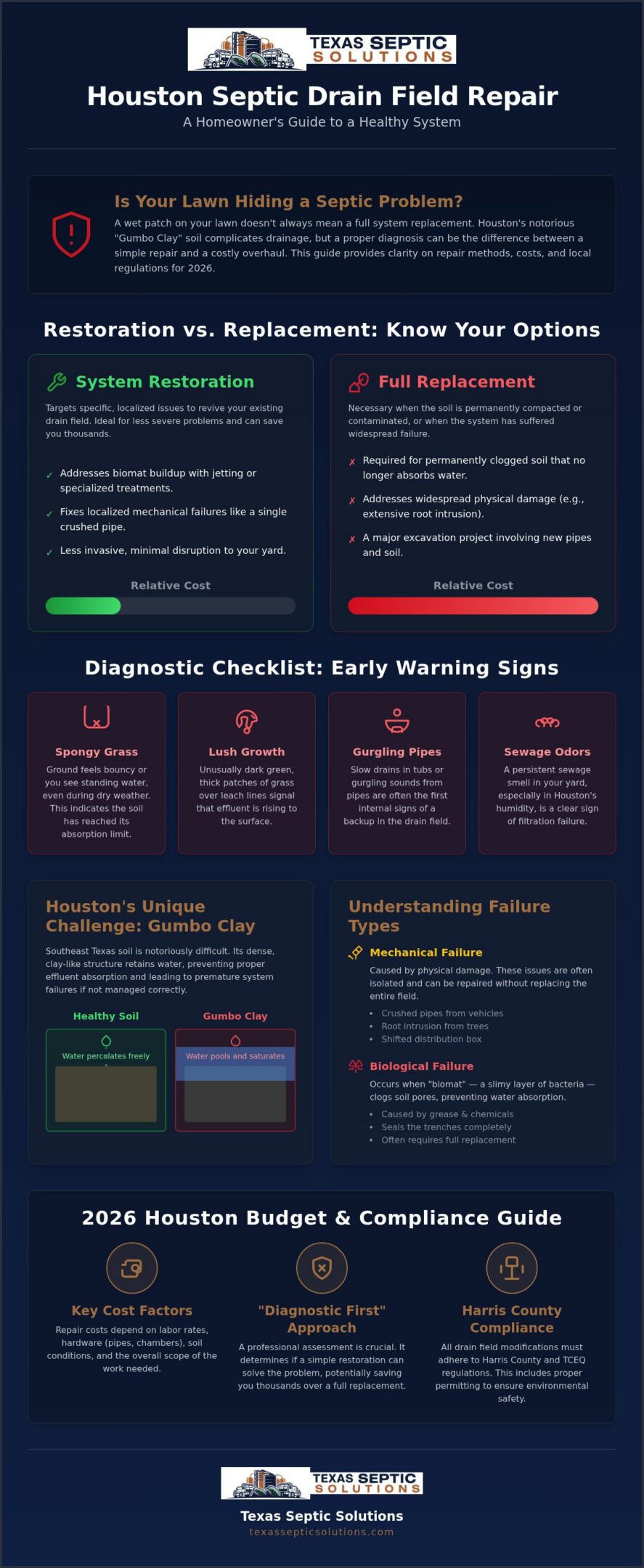
- Identify the critical early warning signs of failure, such as spongy grass or gurgling pipes, to prevent a total system collapse.
- Navigate the 2026 budget landscape with a clear guide to labor rates and hardware costs for septic drain field repair Houston.
- Understand how Houston’s challenging “Gumbo” clay and high water tables dictate the specific repair methods needed for long-term success.
- Ensure your property remains compliant with Harris County environmental codes and learn the permitting steps required for drain field modifications.
Understanding Septic Drain Field Repair: Restoration vs. Replacement
Many homeowners feel a sense of dread when they see water pooling in the yard. It’s easy to assume the worst, but a soggy lawn doesn’t always signal the end of your system. Septic drain fields, also known as leach fields, represent the final stage of the wastewater treatment process. While the tank handles the heavy lifting of separating solids, the drain field is responsible for filtering liquid effluent through the soil. When this process stalls, you’re faced with a choice: restore the current setup or invest in a total replacement.
A common misconception we see is the belief that a full septic tank means the drain field has failed. In reality, every septic tank stays “full” to its operating level. If your drains are slow, the issue might simply be a clog in the main line or a tank that’s overdue for a pump-out. However, if the tank is backed up because the soil can no longer accept water, you’re likely looking at a septic drain field repair Houston professionals need to evaluate. Distinguishing between a routine maintenance issue and a structural field failure is the first step in saving your budget.
The Role of the Leach Field in Texas Systems
In Southeast Texas, the soil doesn’t always play fair. Our heavy “gumbo” clay acts like a sponge that refuses to let go of moisture. Traditional gravel trenches were the standard for decades, but many modern Houston properties now use chamber systems that provide more surface area for evaporation and absorption. Regardless of the hardware, the goal remains the same: allowing effluent to interact with aerobic bacteria in the soil. Consistent septic system maintenance Texas residents can rely on is the only way to ensure these soil pores stay open and functional over the long term.
Mechanical vs. Biological Failure
We categorize drain field issues into two distinct buckets. Mechanical failures are often the result of physical trauma. This includes crushed pipes from driving a vehicle over the yard, root intrusion from nearby trees, or a shifted distribution box. These are localized problems that we can often fix by replacing specific sections of pipe.
Biological failure is more complex and usually involves the “biomat” problem. Biomat is a dense, slimy layer of anaerobic bacteria that eventually clogs the soil’s ability to absorb water. While some biomat is necessary for treatment, excessive growth caused by grease or chemical overuse will seal the trenches completely. For biological issues, specialized cleaning or jetting can sometimes “shock” the field back to life, but a total replacement becomes necessary if the soil is permanently compacted or contaminated.
Diagnostic Checklist: Signs Your Houston Drain Field Needs Help
Identifying a failing system before it becomes a catastrophe is the best way to protect your property and your wallet. If you suspect your home requires a septic drain field repair Houston experts can provide a definitive answer, but you can perform a preliminary check yourself. Catching these issues early often means the difference between a simple restoration and a massive excavation project. Start by walking the area where your lines are buried and looking for these four indicators.
- Identify “spongy” grass: If the ground feels bouncy or you see standing water over the trenches during a dry spell, the soil has reached its absorption limit.
- Spot lush growth: Unusually dark, thick patches of grass directly over your leach lines suggest that the effluent is rising to the surface rather than filtering down.
- Listen for gurgling: Slow-draining tubs or gurgling pipes inside the home are often the first signs of a downstream backup in the field.
- Scent the air: Houston’s high humidity often traps odors near the ground. If you notice a persistent sewage smell in your yard, it’s a clear indicator of a filtration failure.
Troubleshooting Common Houston Issues
You should distinguish between a mechanical tank issue and a field failure. For instance, a septic tank alarm going off usually indicates a pump malfunction or a high-water level in the tank itself. However, in our region, heavy rainfall often causes temporary saturation. If your yard remains swampy days after the clouds clear, the soil pores are likely clogged with biomat. Following official guidelines for septic system maintenance can help you understand how to manage your water usage during these wet periods to avoid overtaxing the soil.
When to Call a Professional
Ignoring these early warnings can lead to a “sewage breakout,” which creates an environmental hazard in your neighborhood. Delaying action also tends to cause a spike in your eventual septic system replacement cost. We utilize specialized camera inspections and soil probing to determine if a simple cleaning or a more involved septic drain field repair Houston is the right path. If you aren’t sure what you’re looking at, our team at Texas Septic Solutions can perform a professional site evaluation to give you peace of mind before the problem escalates.
2026 Cost Guide for Drain Field Repair in Houston
Financial planning for a septic drain field repair Houston project requires a clear look at current market rates and administrative requirements. In 2026, labor rates for specialized septic technicians in the Houston metro area generally range from $62 to $72 per hour. These rates reflect the technical expertise needed to handle our region’s complex soil conditions and specialized diagnostic equipment. Beyond labor, you must factor in administrative costs. Harris County permit fees for drain field modifications currently sit between $250 and $300; an additional $150 is typically required for official inspections. The review process for these permits usually takes about 30 days, so early planning is essential.
Hardware costs also play a significant role in your total investment. The price of PVC pipes, distribution boxes, and modern chamber systems fluctuates based on material availability, but these components are necessary for a long-term fix. If you require 24/7 rapid response for a failing field, expect a premium for after-hours mobilization and emergency diagnostics. The TCEQ septic system basics provide a helpful overview of why these components and inspections are legally mandated to protect the local groundwater and environment.
Repair vs. Replacement Cost Comparison
Restoring a field is almost always more budget-friendly than building a new one from scratch. Hydro-jetting and biomat remediation focus on clearing clogs within your existing lines. This approach avoids the massive excavation costs associated with a full reconstruction. Partial lateral line replacement serves as a middle-ground solution; we replace only the damaged or crushed sections of pipe rather than the entire grid. However, if the soil is completely saturated or the system was never designed for your home’s current water load, a full reconstruction becomes the most sustainable path forward to avoid recurring issues.
Factors That Drive Up Your Bill
Several local variables can shift your final estimate. Accessibility is a major factor. If our crews have to work around decks, fences, or intricate landscaping, the labor hours will climb. Soil disposal is another specific Houston challenge. Hauling away heavy, saturated “gumbo” clay requires specialized equipment and specific disposal fees that aren’t present in sandier regions. Finally, if your current anaerobic system is failing due to poor drainage, we might recommend adding aerobic components. While this increases the initial cost, it often prevents future failures in low-lying areas with high water tables, such as Huffman or Cypress.
Local Houston Factors: Gumbo Clay and High Water Tables
Houston’s geography presents a unique set of challenges that national septic guides simply don’t address. If you’re managing a septic drain field repair Houston project, you’re likely battling the infamous “Houston Gumbo” clay. This heavy, expansive soil is characterized by its high montmorillonite content, which means it swells significantly when wet and shrinks during our frequent droughts. This constant movement can shift distribution boxes and snap lateral lines. Because clay lacks the natural pores found in sand or loam, it has an incredibly slow percolation rate, often leading to premature field saturation regardless of how well you maintain the rest of your system.
Beyond the soil chemistry, the region’s high water table creates a physical barrier for drainage. In low-lying areas like Huffman and Cypress, the ground is often already saturated from below. When you add the Gulf Coast’s intense humidity and salt-heavy air, metal and electrical components face accelerated corrosion. Even our beautiful landscape poses a threat. Live Oaks and Pines are staples of the Southeast Texas yard, but their aggressive root systems are expert water-seekers. They can easily penetrate perforated pipes, creating blockages that require professional intervention to clear without destroying the entire grid.
Environmental Strain in Southeast Texas
Flash flooding is a fact of life in our area. When several inches of rain fall in a single afternoon, a drain field can become “drowned” from the top down. This temporary saturation stops the treatment process and can cause effluent to back up into the home. We also see significant soil compaction in newer suburban developments where heavy construction machinery has pressed the clay into a concrete-like state. To combat these forces, we utilize “Texas-tough” materials and modern chamber systems designed to withstand the immense pressure of shifting, waterlogged soil.
Regulatory Compliance in Harris County
Compliance with the 2026 Texas Commission on Environmental Quality (TCEQ) standards is a legal necessity for every property owner. While minor maintenance doesn’t always require paperwork, a substantial septic system repair involving the drain field typically requires a new permit from the Harris County Office of the County Engineer. Attempting DIY fixes on a failing field isn’t just risky; it can lead to heavy fines and “red tags” from local health departments that prevent you from selling your home. If you’re seeing signs of trouble in your yard, contact Texas Septic Solutions today for a professional evaluation that ensures your system stays within local environmental codes.
Professional Drain Field Solutions with Texas Septic Solutions
Facing a utility failure is stressful, but you don’t have to tackle it alone. At Texas Septic Solutions, we operate with a “Diagnostic First” philosophy. This means we don’t just show up with a backhoe and start digging at the first sign of a wet spot. Instead, we use advanced camera technology and soil probing to identify the exact root cause of the backup. Whether it’s a simple distribution box adjustment or a complex septic drain field repair Houston homeowners need, we ensure our plan of action is based on hard data rather than guesswork. This approach often saves our customers thousands by avoiding unnecessary full-field replacements.
We’ve spent over a decade refining our advanced remediation techniques to help extend the life of existing fields. We understand that a total reconstruction is a significant investment, so we prioritize methods like high-pressure jetting and biological shocks when they’re viable options. Our team is committed to transparency, providing upfront pricing that eliminates hidden “Texas-sized” surprises. We serve the entire region, providing 24/7 emergency support for residents in Houston, Cleveland, and Cypress who can’t afford to wait for a solution.
Why Local Expertise Matters
Our team has spent years studying the specific behaviors of Southeast Texas soil and weather patterns. We know how the “Gumbo” clay responds to flash flooding and how the local water table affects your system’s performance. This local knowledge allows us to design repairs that aren’t just temporary fixes but long-term solutions. We also take our role as community guardians seriously. By providing reliable emergency septic service, we help keep Houston’s groundwater clean and protect the health of our local neighborhoods.
Your Path to a Functional System
Restoring your property starts with a comprehensive evaluation. When you schedule an inspection, our technicians arrive ready to perform a full site assessment. We’ll walk you through the diagnostic findings and explain every available option, from minor pipe repairs to modern chamber installations. You’ll receive a clear timeline and a detailed estimate before any work begins. We handle the heavy lifting, including the Harris County permitting process, so you can focus on getting your home back to normal. If your yard is showing signs of failure, don’t wait for the problem to escalate. Contact Texas Septic Solutions for a Drain Field Inspection today to secure a functional, odor-free yard for years to come.
Take Control of Your Home’s Septic Health Today
Managing your property in Southeast Texas requires an understanding of how our unique environment affects your utilities. We’ve explored how a “Diagnostic First” strategy can prevent unnecessary expenses and why Houston’s heavy gumbo clay necessitates specialized repair techniques. Staying ahead of potential failures means recognizing early warning signs like spongy grass or slow drains before they lead to a total system collapse. By understanding the 2026 cost landscape and local permitting requirements, you can make informed decisions that protect your home and the local environment.
Don’t let the fear of a failing system disrupt your peace of mind. As specialists in septic drain field repair Houston residents trust, we bring over a decade of local expertise to every job. Our licensed and insured Texas technicians are available for 24/7 emergency repair, ensuring you’re never left stranded by a utility crisis. We’re built to handle the toughest gumbo clay challenges with precision and accountability.
Ready to restore your yard’s functionality? Get a Professional Drain Field Diagnostic in Houston and let our team provide the clear, honest answers you deserve. We’re here to be your long-term partner in home maintenance and functionality.
Frequently Asked Questions
How much does septic drain field repair cost in Houston in 2026?
Industry averages for 2026 suggest that professional repairs typically range between $1,000 and $5,000, while full system reconstructions can reach $15,000. These figures fluctuate based on the specific damage and the complexity of your property’s soil. Since every yard in the Houston metro area has different drainage challenges, a professional site evaluation is necessary to provide an accurate estimate. We focus on finding the most sustainable path to restore your system’s functionality without unnecessary expenses.
Can I use chemical additives to fix a clogged drain field?
Chemical additives are generally not a permanent or recommended solution for a clogged field. While some products claim to dissolve clogs, they often disrupt the natural bacterial balance in your tank or further compact the surrounding clay. In many cases, these chemicals can actually push solids deeper into the drain lines, making the problem much worse. Physical remediation or high-pressure jetting is a significantly more reliable way to clear biological blockages and restore soil absorption.
How long does a typical septic drain field last in Texas soil?
A well-maintained drain field in Texas typically lasts between 20 and 30 years. However, Houston’s heavy gumbo clay and high water tables can shorten this lifespan if the system is neglected or overtaxed. Regular pumping and mindful water usage are the best ways to maximize the years you get out of your system. If your field is approaching the two-decade mark, it’s wise to schedule periodic inspections to monitor its health and catch minor issues before they escalate.
Will my homeowners insurance cover drain field repair in Houston?
Most standard homeowners insurance policies do not cover drain field repair or replacement due to normal wear and tear or lack of maintenance. Coverage is usually limited to sudden, accidental damage caused by a specific covered peril, such as a falling tree or a vehicle strike. It’s best to review your specific policy or speak with your agent to see if you have any additional riders for service line or septic coverage that might apply to your situation.
What is the difference between a leach field and a drain field?
There is no functional difference between a leach field and a drain field. Both terms refer to the same part of your septic system: the network of perforated pipes or chambers buried in your yard that filters effluent into the soil. “Drain field” is the more common term used by professionals in the Houston area, but you might see “leach field” used in national guides or technical documents. Regardless of the name, the maintenance requirements remain the same.
Can I drive my lawnmower over the septic drain field?
You can typically use a standard push mower or a light zero-turn mower over your drain field without issue. However, you should avoid driving heavy tractors, trucks, or large riding mowers over the area. The weight of heavy machinery can compact the soil or even crush the buried lateral lines. This leads to a costly septic drain field repair Houston homeowners want to avoid. Keeping the soil loose and uncompacted is vital for proper effluent filtration.
How do I know if my drain field is saturated from rain or failing mechanically?
Saturated soil from heavy rainfall should clear up within a few days after the weather dries out. If the ground remains soggy or you see standing water even during a dry spell, the issue is likely a mechanical failure or biological clog. We use soil probing and camera inspections to distinguish between temporary weather-related saturation and a permanent blockage. This diagnostic approach ensures we only recommend repairs when they are truly necessary to restore your system’s capacity.
What happens if I ignore a failing drain field?
Ignoring a failing field leads to sewage backups in your home and hazardous pooling in your yard. This creates significant health risks for your family and can result in heavy fines from Harris County health departments. Over time, the cost of repair will skyrocket as the damage spreads to the rest of the system. Addressing the problem early is the only way to avoid a total system collapse and the high price of an unexpected emergency replacement.