
Preventing Septic Tank Corrosion: A 2026 Guide to Extending System Life
Your septic tank could be literally dissolving from the inside out, and you might not realize it until the ground starts to sink. It’s a silent process where natural gases turn into structural-eating acid, putting your entire property at risk. We know that the fear of a sudden tank collapse or the stench of foul sulfur odors is enough to keep any homeowner awake at night. You’ve worked hard for your home, and the last thing you want is a massive, unexpected bill for a total system replacement.
The good news is that preventing septic tank corrosion is entirely manageable with the right strategy. In this 2026 guide, you’ll learn exactly how biological processes create “concrete rot” and what steps you can take to stop it. We’ll provide a clear list of safe versus unsafe household chemicals and show you how a professional maintenance plan protects your investment. By the end of this article, you’ll have a proactive roadmap to keep your system sturdy, scent-free, and functional for decades to come.
Key Takeaways
- Understand how hydrogen sulfide gas naturally converts into sulfuric acid, which can eat through concrete tank walls from the inside out.
- Compare the structural pros and cons of traditional concrete versus corrosion-proof materials like polyethylene and fiberglass.
- Master the simple habits for preventing septic tank corrosion by identifying common household cleaners that disrupt your system’s pH balance.
- Discover professional solutions like aeration and protective epoxy coatings that can stop active decay before it leads to structural failure.
- Learn why proactive monitoring and routine maintenance are the most effective tools for avoiding the high cost of a total system replacement.
Understanding the Chemistry: Why Septic Tanks Corrode
Septic tanks are active biological reactors, not just static concrete boxes buried in the yard. Most property owners believe their concrete tank is essentially indestructible. However, concrete is actually quite vulnerable to specific chemical attacks. This process, known as septic tank corrosion, happens when the environment inside the tank turns hostile to the structure itself. Preventing septic tank corrosion begins with recognizing that your system is a living environment where chemistry and biology intersect every day.
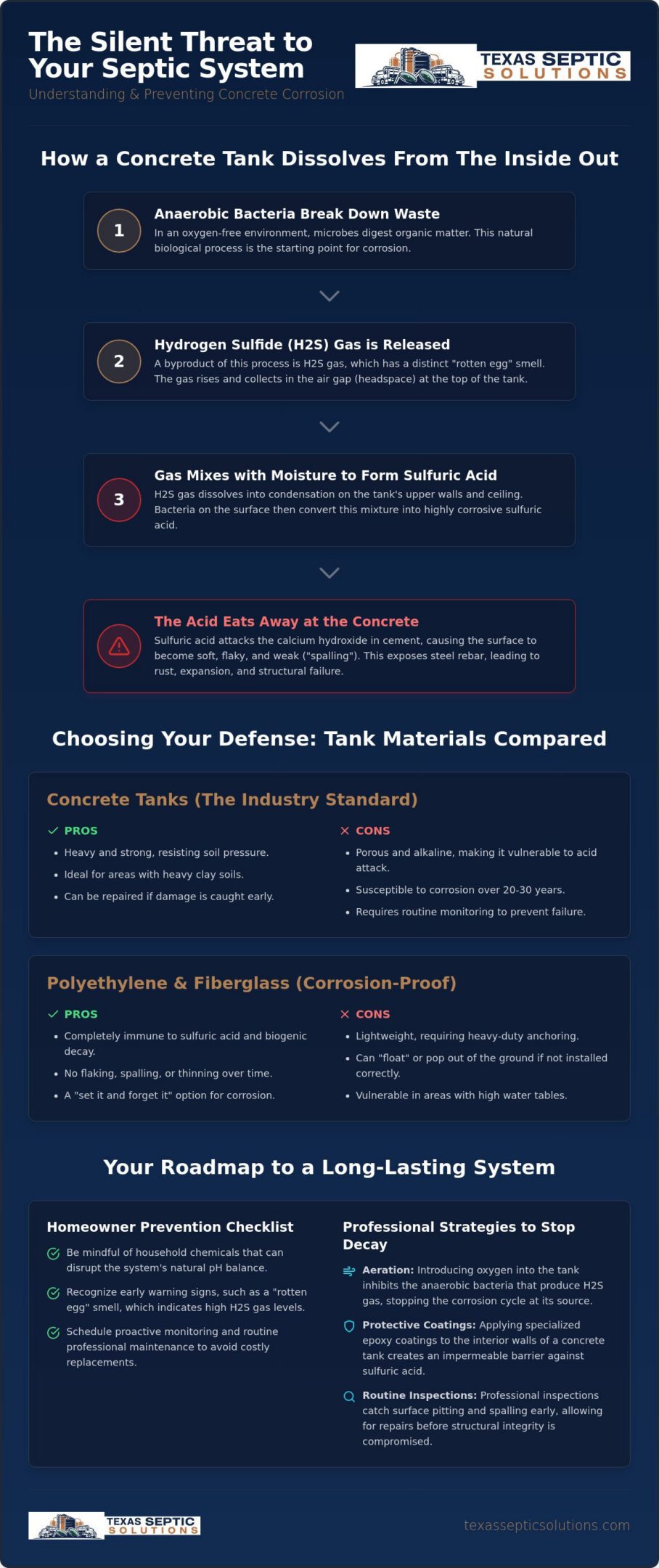
Inside the tank, anaerobic bacteria thrive in an oxygen-free environment. As these microbes break down organic matter, they release hydrogen sulfide gas as a natural byproduct. In areas like Houston and Cleveland, the “Texas Heat Factor” significantly accelerates this cycle. Warmer ground temperatures lead to higher microbial activity. This means your system produces a higher volume of corrosive gases during the long summer months compared to systems in cooler climates.
The Role of Hydrogen Sulfide (H2S) Gas
H2S gas naturally rises and collects in the “headspace,” which is the air gap between the liquid waste and the tank lid. You’ll often recognize this gas by its distinct rotten egg odor. This smell is your first warning that gas levels are becoming excessive. If the gas can’t escape through proper venting, it lingers against the concrete surfaces. H2S gas specifically targets the alkaline nature of concrete by neutralizing the calcium hydroxide that keeps the material solid and strong.
Sulfuric Acid: The Concrete Killer
The most destructive phase occurs when gas meets moisture. Condensation constantly builds up on the tank ceiling and the upper walls. When H2S dissolves into these water droplets, it undergoes biogenic sulfide corrosion. During this process, specific bacteria on the walls convert the gas into sulfuric acid. This acid is incredibly aggressive and eats through the cement paste that holds the concrete together.
You might notice a phenomenon called “spalling,” where the concrete surface becomes soft, mushy, or starts flaking off in chunks. This eventually exposes the internal steel rebar to the elements. Once the metal rusts, it expands and forces the concrete to crack from the inside out. Since the acid and gas concentrate at the top of the system, the outlet baffles and the tank lid are usually the first components to fail. A thinning, “soft” lid is a hidden structural danger that can lead to a sudden collapse. Preventing septic tank corrosion requires stopping this acid production before it compromises the safety of your property.
Comparing Tank Materials: Concrete vs. Plastic and Fiberglass
Material selection is your first line of defense when installing a new system. It dictates how well your investment stands up to the biological environment described earlier. While concrete remains the industry standard, homeowners now have synthetic options that handle chemical stress differently. Choosing the right material for your specific property is the foundation of preventing septic tank corrosion for the long term.
Pros and Cons of Concrete Septic Tanks
In areas like Cypress and Huffman, concrete is favored for its sheer weight and strength. It resists the immense pressure of heavy Texas clay soils without buckling or collapsing. However, standard concrete is naturally alkaline and porous. Over 20 to 30 years, it’s highly susceptible to microbial-induced corrosion (MIC). This is because the sulfuric acid produced by bacteria specifically targets the calcium in the cement.
To combat this, modern high-quality concrete mixes often include fly ash or silica fume. These additives reduce the permeability of the walls and make the concrete much denser. This density makes it harder for acid to penetrate the surface. If we catch minor surface pitting early during a routine inspection, we can often perform repairs before the structural integrity is lost. Regular septic system maintenance is the best way to ensure your concrete walls remain thick and secure.
The Rise of Synthetic Tank Materials
Polyethylene (plastic) and fiberglass tanks have gained popularity because they’re completely immune to sulfuric acid attacks. They don’t provide the alkaline “food” source that bacteria need to cause biogenic decay. This makes them an excellent “set it and forget it” option for preventing septic tank corrosion. You won’t see the flaking, spalling, or thinning that eventually plagues older masonry systems.
However, these tanks are lightweight, which presents a different set of challenges. In places like Shepherd where water tables are high, synthetic tanks require heavy-duty anchoring. Without proper installation, a plastic tank can actually float or “pop” out of the saturated ground during heavy rains. Maintenance is generally simpler since you don’t have to worry about wall thinning, but you must still Properly Dispose of Waste to protect the bacteria that keep the system running. While the tank itself won’t corrode, the internal components and plumbing still need protection from harsh chemicals.
Homeowner Checklist: Preventing Chemical Corrosion
Protecting your system isn’t just about what the tank is made of; it’s about the chemistry you introduce to the environment every day. While the local heat factors we discussed earlier fuel gas production, your household cleaners can either stabilize or sabotage that delicate balance. Preventing septic tank corrosion requires a disciplined approach to what goes down your drains. Think of your septic tank as a living organism that needs the right conditions to stay healthy and structurally sound.
Concrete tanks rely on a specific pH balance to remain solid. Because concrete is naturally alkaline, introducing highly acidic waste causes immediate surface etching and weakens the material over time. When you dump excessive amounts of bleach or “antibacterial” cleaners, you kill the beneficial bacteria that regulate the tank environment. Without these microbes, waste doesn’t break down properly. This leads to thicker sludge layers and a higher concentration of the corrosive gases that eventually eat your tank walls.
Garbage disposals also play a significant role in gas production. These units send finely ground food particles into the tank, which increases the organic load significantly. This extra “fuel” for anaerobic bacteria means more gas is released into the headspace of your tank. If you use a disposal frequently, you’re essentially accelerating the “Hydrogen Sulfide Cycle” we covered in the first section. Keeping your kitchen and laundry habits in check is a simple way to extend your system’s life without spending a dime on repairs.
Chemicals to Avoid at All Costs
You should be wary of anything labeled “antibacterial” for your sinks or showers. These products are designed to kill microbes, but they don’t distinguish between bad germs and the good bacteria your septic system needs to function. Lye-based drain cleaners are even more catastrophic for concrete tank integrity because their extreme caustic nature can cause immediate chemical burns on the concrete surface. Excessive salt discharge from water softeners can also disrupt the natural settling process and interfere with the delicate chemical balance required to keep concrete walls intact.
Promoting a Healthy Microbial Environment
Switching to enzyme-based cleaners is a great first step for any homeowner. These products use natural proteins to break down stains and grease without harming the bacterial colony in your tank. Regular septic tank pumping is also vital because it reduces the volume of gas-producing solids that sit at the bottom of the system. When sludge gets too deep, it leaves less room for liquid, which forces gases higher up against the tank lid. Finally, never flush “flushable” wipes. These materials don’t break down and instead form thick sludge mats on the surface of the liquid. These mats trap corrosive gases against the concrete ceiling, creating a localized “acid zone” that causes rapid structural decay.
Professional Strategies for Stopping Active Corrosion
Homeowner habits are your first line of defense, but professional intervention is necessary when active decay is already present. If an inspection reveals surface pitting or thinning walls, simply changing your laundry detergent won’t be enough to save the structure. We use several advanced strategies for preventing septic tank corrosion that can actually halt the chemical process and reinforce the tank. These methods focus on changing the environment inside the tank or creating a physical barrier that acid cannot penetrate.
Structural components like baffles are often the first to fail because they sit right at the liquid line where gas concentration is highest. Traditional concrete baffles can crumble away, allowing solids to enter your drain field and causing a total system failure. Replacing these with heavy-duty plastic baffles is a standard professional upgrade. Plastic doesn’t react with sulfuric acid, so it remains intact even if the surrounding gas levels remain high. We also prioritize the installation of high-quality risers. These aren’t just for easy access; they provide better ventilation, allowing trapped corrosive gases to escape into the atmosphere rather than lingering against the concrete ceiling.
Aeration and Oxygenation
Oxygen is the enemy of the specific bacteria that produce hydrogen sulfide gas. By introducing a mechanical aeration system, we can convert a standard anaerobic tank into an aerobic environment. This process completely disrupts the “Hydrogen Sulfide Cycle” we discussed earlier. Without the anaerobic conditions, the bacteria can’t produce the H2S gas that eventually turns into sulfuric acid. Active mechanical aeration is much more effective than passive venting alone. It’s often the best choice for property owners who want to extend the life of an older tank that is starting to show signs of chemical stress.
Protective Liners and Coatings
For existing concrete tanks that are still structurally sound but showing surface wear, protective coatings offer a second lease on life. We use high-grade epoxy or bitumastic resins to create an impermeable barrier between the concrete and the corrosive headspace. These coatings are acid-resistant and stop the “concrete rot” in its tracks. The process requires a professional touch. We must thoroughly clean and “prep” the tank walls to ensure the liner bonds correctly to the masonry. This type of reinforcement is a core part of modern septic system repair. It allows us to save a tank that would otherwise need a full replacement in just a few years. If you’re worried about the integrity of your current system, schedule a professional inspection to see if a protective coating is right for you.
Protect Your Texas Septic System with Expert Care
Proactive monitoring is the most effective way to protect your property and your wallet. Most homeowners don’t think about their tank until a backup occurs or a foul odor takes over the yard. By then, the structural damage from sulfuric acid is often advanced. Preventing septic tank corrosion is much cheaper than dealing with a collapsed lid or a failed outlet baffle in the middle of the night. Catching “concrete rot” in its early stages allows us to use the reinforcement strategies we’ve discussed, such as epoxy coatings or aeration, before the damage becomes irreversible.
Our team at Texas Septic Solutions identifies early-stage corrosion by performing detailed visual inspections of the tank’s “headspace” and structural components. We look for the subtle signs of softening masonry and flaking concrete that indicate active acid damage. We understand that your septic system is one of the most expensive utility components on your property. Our goal is to provide the steady, reliable maintenance you need to ensure that your system reaches its full 30 to 40 year life expectancy without a premature failure.
Why Local Texas Expertise Matters
East Texas presents unique challenges for wastewater systems. High humidity levels in areas like Houston and Cleveland can actually impact how well your vent pipes perform. If moisture remains trapped in the vents, corrosive gases can’t escape as easily, leading to higher H2S concentrations inside the tank. We’ve spent years serving the Cleveland, Houston, and Shepherd communities, so we know exactly how our local climate and heavy clay soils affect different tank materials. Our septic system maintenance plans are specifically designed to include these critical corrosion checks, ensuring your system remains safe and functional year-round.
Schedule Your Corrosion Inspection Today
During a professional Texas Septic Solutions diagnostic visit, we do more than just check the liquid levels. We evaluate the integrity of your tank walls, the condition of your baffles, and the effectiveness of your system’s ventilation. This level of detail helps our neighbors avoid the high septic system replacement cost that comes with a total structural collapse. If your system is more than ten years old, or if you’ve noticed a persistent rotten egg smell near your tank, it’s time for a professional audit. We’re built for both routine upkeep and high-pressure repairs, and we’re ready to help you protect your investment. Request a Septic Health Audit today to ensure your tank remains sturdy for the long haul.
Secure Your Septic System’s Future
Your septic system is one of the most significant investments in your property. By managing your household chemicals and understanding the biological processes inside your tank, you can stop “concrete rot” before it starts. Preventing septic tank corrosion is a team effort between your daily habits and our professional oversight. We’ve seen how East Texas humidity and heavy clay soils can stress these systems, and we have the local expertise to keep yours running smoothly. Our team is dedicated to providing the calm reliability you need for long term property care.
Our comprehensive maintenance plans are designed to catch structural issues early, saving you from the stress of a sudden collapse. We also remain ready with 24/7 emergency response if you face an unexpected failure. Don’t wait for a foul odor or a sinking yard to take action. Protect your home from septic failure; Schedule a 2026 Corrosion Checkup with Texas Septic Solutions. We’re here to be your dependable neighborly expert, ensuring your home remains functional and your family stays safe.
Frequently Asked Questions
Can a corroded septic tank be repaired, or must it be replaced?
Repair is often possible if the structural damage is caught before the walls or lid become dangerously thin. We can use professional epoxy liners or bitumastic coatings to seal the concrete and stop the decay process. However, if the concrete has softened to the point where rebar is exposed or the structure is crumbling, a full replacement is usually necessary to prevent a dangerous collapse.
How often should I inspect my concrete septic tank for signs of corrosion?
You should schedule a professional inspection at least every three years for a conventional system. This timeline aligns with standard EPA recommendations for general maintenance. During these checks, we specifically examine the headspace and outlet baffles for early signs of acid etching. Consistent monitoring is the most effective strategy for preventing septic tank corrosion before it requires expensive structural repairs.
Do plastic septic tanks ever corrode or degrade over time?
Plastic tanks are immune to the sulfuric acid that causes “concrete rot,” but they aren’t entirely indestructible. While they don’t corrode, they can warp, crack, or “pop” out of the ground if the surrounding soil shifts or if the water table rises too high. They offer a corrosion-proof alternative to masonry, but they still require proper anchoring and professional installation to handle the pressure of Texas clay.
What does it mean when a septic inspector says my “baffles are gone”?
This means the internal pipes or walls that direct the flow of wastewater have dissolved or fallen off. Baffles sit at the liquid line where corrosive gas concentrations are highest, making them the first parts to fail in a concrete system. When baffles disappear, solids can flow directly into your drain field. This causes rapid clogging and can lead to a total system failure if not fixed immediately.
Will adding baking soda to my septic tank help prevent acid corrosion?
Baking soda can help neutralize small amounts of acid, but it isn’t a reliable long term solution for a large tank. While it may temporarily shift the pH balance, it won’t stop the biological gas production that causes the problem in the first place. You’ll find much better results by focusing on proper ventilation and limiting the use of harsh, antibacterial household cleaners that kill beneficial bacteria.
Is the “rotten egg” smell always a sign of corrosion?
The smell itself is hydrogen sulfide gas, which is the primary ingredient for acid damage. While the odor doesn’t always mean the concrete has already dissolved, it’s a clear warning that the gas is trapped and building up. If you notice this scent consistently near your tank, it indicates a ventilation problem. This stagnant gas eventually turns into sulfuric acid, which then begins eating your tank walls.
How does a septic riser help prevent gas buildup in the tank?
A riser brings the tank access to the surface and provides a more effective point for gas to escape. By improving the seal and allowing for easier access to vent components, the riser helps move corrosive gases out of the headspace. This prevents them from lingering against the concrete ceiling. Installing a riser is a proactive step in preventing septic tank corrosion while making routine maintenance much simpler for the homeowner.
Can I apply a protective coating to my septic tank myself?
We strongly advise against DIY tank coatings because the interior of a septic tank is a lethal environment. Entering a tank requires specialized training, oxygen monitoring equipment, and confined space safety gear to prevent gas poisoning. Additionally, the concrete surface must be perfectly cleaned and dried using professional tools for the coating to bond. If the application isn’t perfect, the acid will just continue to eat the concrete underneath the liner.