
Preventing Septic Backups in Heavy Rain: A Texas Homeowner’s Guide
Imagine the sky opens up over your Texas property, and while you’re thankful for the relief from the heat, your toilets suddenly stop flushing and a foul odor begins to drift from the bathroom. You might think the storm is the direct cause of the disaster, but the truth is that intense rain is often just a stress test exposing hidden vulnerabilities in your system. It’s incredibly stressful to watch raw sewage threaten your home, especially when you’ve been diligent about maintenance. You shouldn’t have to dread every dark cloud on the horizon or worry about sudden repair costs just because the ground is saturated.
We’re here to help you master preventing septic backups in heavy rain by protecting your system from hydraulic overload and stopping a messy disaster before it starts. You’ll learn exactly how to handle an active backup right now and why even a “working” system can fail when the soil gets too wet. We will also walk through the long-term yard drainage fixes that keep your septic system functional through the most intense Texas rainstorms.
Key Takeaways
- Learn how hydraulic overload happens when rain saturates the soil and how to spot early warning signs like gurgling drains.
- Master the “Emergency Water Rationing” protocol for preventing septic backups in heavy rain when storms hit.
- Understand why scheduling professional pumping and a maintenance plan before the rainy season is your best defensive move.
- Get practical tips for optimizing yard drainage, including the “Mound” technique to divert runoff away from your tank lid.
- Identify the critical signs that indicate it is time to call for professional emergency septic service to protect your home.
Understanding Why Heavy Rain Causes Septic System Backups
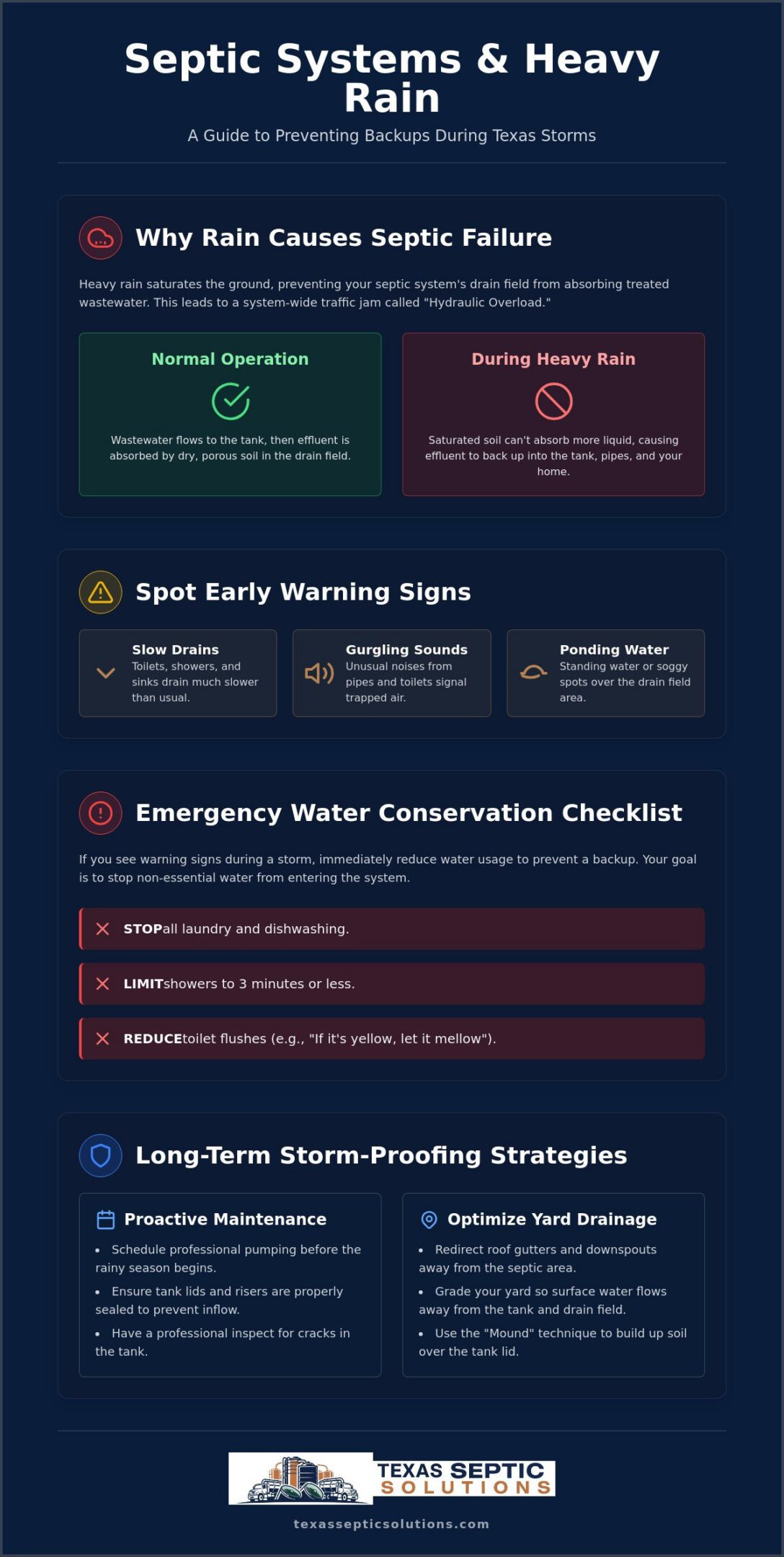
Texas storms are famous for their intensity, often dropping several inches of rain in a single afternoon. While your yard might handle the downpour, your septic system is a delicate ecosystem that relies on specific balance. To understand the best methods for preventing septic backups in heavy rain, you first have to understand how septic systems work under normal conditions. Usually, wastewater flows from your home into the tank, where solids settle, and the liquid effluent moves to the drain field to be filtered by the soil. When it rains, this process is put under immense pressure.
Think of your drain field as the “lungs” of your system. For the system to “breathe,” the soil must be able to accept the effluent. If the ground is already soaked from a week of Texas drizzle or a sudden Gulf Coast deluge, those lungs essentially drown. There is no room for the wastewater to go, so it stays in the pipes or, worse, pushes back into your home. Hydraulic overload is the primary cause of storm-related septic failure, occurring when water enters the tank faster than the surrounding soil can absorb it.
The Science of Saturated Soil
Soil is made up of tiny pores that hold air and water. In many parts of Texas, particularly around Houston and Cypress, we deal with “Black Gumbo” clay. This soil is notorious for its high density and slow drainage. During a heavy storm, these soil pores fill completely with rainwater. Since water is incompressible, there is no physical space left for the effluent from your septic tank to enter the ground. When the drain field is saturated, the pressure within the system equalizes, and gravity can no longer pull wastewater away from your house. This creates a bottleneck that leads to slow drains and eventual backups.
Surface Water Intrusion Points
Groundwater saturation isn’t the only culprit. Often, the problem starts at the surface. If your septic tank lids are loose or your risers aren’t properly sealed, thousands of gallons of runoff can pour directly into your tank. This is known as inflow. Cracks in an aging concrete tank can also allow surface water to bypass the natural treatment process, filling your tank to capacity in minutes. You should also look at your landscaping; roof gutters that discharge near the tank or a yard that slopes toward the system can funnel an overwhelming amount of water into the area. Identifying these entry points is a critical step in preventing septic backups in heavy rain before the next storm cloud appears.
Immediate Steps to Take When Heavy Rain Threatens Your Septic System
When a storm hits, your septic system is under immediate stress. You can take control by observing how your house responds to the rising water levels outside. If you notice your toilets are flushing slower than usual or hear a distinct gurgling sound in your drains, these are red flags. Your system is telling you it’s struggling to move effluent into the saturated soil. At this stage, preventing septic backups in heavy rain requires an immediate reduction in the amount of water you send down the pipes.
Take a quick look at your yard if it’s safe to do so. Look for “ponding” or standing water specifically over the area where your tank and drain field are buried. If the water is pooling there but not in other parts of the yard, the soil is likely fully saturated. Keep your distance from these puddles. Standing water near a struggling septic system can contain raw sewage, posing a significant health risk to your family and pets. For more detailed safety protocols, resources like Protecting Your Septic System from Flooding offer excellent guidance on managing these risks during active weather events.
The Emergency Water Conservation Checklist
Your goal is to stop all non-essential water from entering the tank until the rain stops and the ground has time to drain. This isn’t just about saving water; it’s about physical space inside your tank. Follow this prioritized protocol:
- Stop all laundry and dishwashing: These appliances use high volumes of water in short bursts, which can easily trigger a backup when the system is already at capacity.
- Limit showers: Keep them under three minutes, or skip them entirely until the weather clears and the yard begins to dry.
- The toilet rule: Practice “if it’s yellow, let it mellow” to reduce the frequency of flushes during the peak of the storm.
- Check your peripherals: Ensure your sump pump or water softener isn’t discharging into the septic system. If they are, try to divert that drainage elsewhere.
Monitoring Your Septic Tank Alarm
If your septic tank alarm is going off during a heavy downpour, it usually means the water level in the pump chamber has risen past the safety float. The pump might be running, but it simply cannot push water into a drain field that is already underwater. You can silence the audible buzzer to keep your sanity, but do not ignore the glowing red light. This is a clear signal that your system is at its physical limit. If that light stays on long after the rain stops, you may need to call for emergency septic service to prevent a total home backup. Our team is always ready to help you navigate these high-pressure situations with reliable emergency septic care.
Long-Term Maintenance Strategies to Prevent Future Rain-Related Failures
Reacting to a storm is necessary, but the real work of preventing septic backups in heavy rain happens when the sun is shining. A proactive septic system maintenance plan ensures your infrastructure is physically prepared for the next flood event. By staying ahead of sludge buildup and checking for structural weaknesses during dry months, you give your system the best chance of survival when the Texas sky opens up.
Many homeowners wait for a backup before they think about pumping their tanks. However, scheduling a pump-out before the rainy season is a critical defensive move that creates physical space in your system. A well-maintained tank has more surge capacity for rain events, allowing it to act as a temporary buffer when the drain field is struggling to process effluent. This extra volume can be the difference between a slow drain and a catastrophic backup into your master bath.
The Pumping and Inspection Schedule
General industry guidelines often suggest pumping every three to five years, but this timeline might be too long for larger families in communities like Shepherd or Huffman. High-occupancy homes generate more wastewater, which fills the tank faster and reduces the available “buffer” space for storm runoff. During a pre-storm inspection, a professional looks for thinning tank walls or loose seals that could allow groundwater to seep in. Routine pumping prevents sludge from being forced into the drain field during high-flow events, which can cause permanent damage to your soil’s absorption capacity.
Installing and cleaning a septic filter is another high-impact strategy. These filters catch small particles that could otherwise clog a saturated drain field when the water levels rise. Experts at Penn State Extension provide excellent context on Protecting Your Septic System from Flooding, highlighting how clear components allow for faster recovery after the rain stops.
Installing a Backflow Preventer
For homeowners on low-lying Texas properties, a backflow preventer is the ultimate insurance policy. This device uses a one-way check valve that allows wastewater to exit your home but physically blocks sewage from flowing back in if the tank becomes overwhelmed by hydraulic pressure. It is a mechanical barrier that protects your interior from the health hazards of raw sewage. Professional installation is required to ensure the valve is positioned correctly and remains accessible for periodic cleaning to ensure it doesn’t become stuck.
Optimizing Yard Drainage and Soil Health for Texas Storms
Your yard is the first line of defense for your septic system. While the tank handles the waste, the surrounding landscape dictates how much external pressure the system feels during a storm. Effective yard management is a cornerstone of preventing septic backups in heavy rain, as it controls the volume of water your soil must process. If your yard isn’t graded correctly, your drain field can become a collection point for every drop of rain that falls on your roof and driveway.
Start by looking at your gutters. A single heavy Texas downpour, like the intense events seen during the July 2025 floods, can send hundreds of gallons of water off your roof in minutes. If your downspouts discharge near your tank or drain field, you are essentially “pre-soaking” the system. You should extend all gutter downspouts to discharge at least 10 feet away from any septic component. This simple fix ensures that roof runoff doesn’t contribute to hydraulic overload before your household wastewater even hits the tank.
Another practical technique is the “Mound” method. By slightly grading the soil over your septic tank lid and risers so it forms a gentle slope, you can encourage water to shed away from the system rather than pooling on top of it. This prevents surface water from finding its way through small gaps in the lid seals. Additionally, you must strictly avoid soil compaction. Never park vehicles or heavy equipment over your drain field. When the ground is wet, even a small tractor can compress the soil pores, permanently destroying the earth’s ability to absorb effluent and making a backup almost inevitable during the next storm.
Diverting Surface Runoff
If your property has natural slopes that lean toward your septic area, you may need to install swales or French drains. A swale is a shallow, grass-lined channel designed to guide water around your septic system and toward a safer discharge point. You should also identify “low spots” in your yard that tend to pond after a light drizzle. These areas act as reservoirs that slowly leak water into the drain field long after the rain stops. Be careful with hardscapes; concrete patios or large driveways shed 100% of the water they receive, often dumping it directly onto the soft soil of your drain field.
Texas Soil Management
Managing soil in Texas requires an understanding of our unique geology. In areas with “Black Gumbo” clay, the soil expands when wet and contracts when dry, making it particularly difficult for water to move through. You can improve absorption by maintaining a healthy layer of grass over your drain field. The roots help keep the soil porous, and the grass itself removes moisture from the ground through a process called transpiration. However, you should never add extra layers of heavy soil or fill over a drain field without professional guidance. Adding too much “cover” can actually smother the system and prevent the oxygen exchange necessary for treatment. If you are concerned about your yard’s grading, a professional septic system maintenance inspection can help you identify these drainage risks before the next big storm arrives.
Professional Inspections and Emergency Support from Texas Septic Solutions
While the strategies mentioned in previous sections are vital for preventing septic backups in heavy rain, there comes a point where professional intervention is the only way to save your home from damage. If you’ve followed water rationing protocols and the rain has stopped, but your drains remain sluggish or the alarm light stays red, you’ve likely reached the point of no return. At this stage, your system isn’t just “wet”; it’s physically overwhelmed or damaged. We provide rapid septic system repair to address storm-damaged components and restore your home’s functionality quickly.
Waiting for the ground to dry out on its own can be a gamble. If sewage has already entered your home, the health risks increase with every passing hour. Our team understands the local geography and the specific ways Texas storms impact different system types. We offer a steady hand and a clear plan of action when you’re facing the stress of a utility failure during extreme weather.
Post-Storm System Audits
Once the floodwaters recede, your system needs a thorough checkup. Heavy runoff can cause “scouring,” where soil is washed away from the tank or drain field, leaving pipes exposed or unsupported. We also test the pump and electrical components, as even a small amount of water intrusion can short out a control panel or damage a float switch. After the audit, we’ll help you update your septic system maintenance Texas records. This documentation is essential for insurance claims and ensures you have a baseline for the system’s health before the next major weather event hits.
Emergency Pumping vs. Long-Term Repair
Many homeowners assume that pumping the tank is the instant fix for a rain-related backup. However, pumping a tank while the surrounding soil is still fully saturated can be dangerous. The external water pressure in the ground can actually cause an empty tank to “float” or even collapse. This is a catastrophic failure that turns a minor repair into a full system replacement. Our experts have the experience to decide exactly when it’s safe to pump and when it’s better to wait for soil pressure to equalize. If you’re in Cleveland, Houston, or the surrounding areas and need a reliable emergency septic service, don’t take the risk of a DIY solution. We are available 24/7 to provide the professional support you need to protect your property and your family’s health.
Secure Your Home Against the Next Texas Storm
Texas weather is unpredictable, but your septic system’s performance doesn’t have to be. By mastering the immediate water rationing protocols and optimizing your yard’s drainage, you take the pressure off your system during heavy downpours. Remember that preventing septic backups in heavy rain is a year-round commitment that starts with proactive maintenance and ends with knowing when to call for professional assistance. Protecting your drain field and ensuring your tank has the capacity to handle sudden surges will save you from the stress of unexpected repairs.
Whether you need a pre-storm inspection or you’re facing an active emergency, we are here to support our neighbors in Cleveland, Houston, and throughout East Texas. Our team provides 24/7 emergency response and expert pumping to keep your household running smoothly through any weather. Get 24/7 Emergency Septic Help or Schedule Your Maintenance Today to ensure your system is ready for whatever the Gulf Coast sends our way. You don’t have to face the next storm alone; with the right plan in place, you can protect your property and enjoy the rain without worry.
Frequently Asked Questions
Can heavy rain cause my septic tank to back up?
Yes, heavy rain is a primary trigger for septic backups because it saturates the soil in your drain field. When the ground cannot absorb any more liquid, the wastewater from your home has no exit point and travels back up your plumbing. This physical blockage is the most common hurdle when preventing septic backups in heavy rain during intense Texas storms.
How long does it take for a septic drain field to dry out after rain?
It typically takes two to three days for the soil to dry enough to resume normal function, though dense Texas clay can take longer. You should continue your water conservation efforts until you no longer see standing water over the drain field area. If the ground remains soggy for more than a week after the rain stops, it is time for a professional inspection.
Should I have my septic tank pumped after a flood?
You should wait until the floodwaters have fully receded and the ground is no longer saturated before scheduling a pump-out. Pumping a tank in a flooded yard can cause the tank to “float” or collapse due to the intense external pressure of the wet soil. Once the yard is dry, a professional can safely pump the tank to remove any silt or debris that entered during the storm.
What are the first signs of a septic backup during a storm?
The earliest signs include gurgling sounds in your pipes and toilets that flush slowly or incompletely. You might also notice water pooling around floor drains or a sudden foul odor in the lowest level of your home. These signals mean the system is struggling with hydraulic overload and you must stop all non-essential water use immediately to avoid a total failure.
Is it safe to use my toilets if the yard is flooded over the septic tank?
It is not safe to use your toilets normally if the yard is flooded because the system cannot process the waste. Every flush adds volume to an already full tank, which can force sewage to back up into your tubs or sinks. Limit your use to absolute emergencies until the surface water disappears and the soil has had at least 24 hours to begin draining.
Why does my septic tank smell like rotten eggs when it rains?
The smell is usually caused by atmospheric pressure changes or saturated soil blocking the normal venting of sewer gases. When the drain field is underwater, these gases are forced back through the house vents or trapped near the surface. While this is common during storms, a persistent smell can indicate a leak in the tank lid or risers that needs professional attention.
Can I use additives to help my septic system process water faster during rain?
No, additives cannot help your system process water faster because the issue is soil saturation, not bacterial activity. Chemical “quick fixes” won’t create more space in soaked clay or force water through saturated pores. Focusing on physical drainage and water conservation is the only reliable method for preventing septic backups in heavy rain without risking damage to your tank’s ecosystem.
What is the best way to divert rainwater away from my septic system?
The most effective method is extending your gutter downspouts to discharge at least 10 feet away from the drain field area. You can also use landscaped swales or French drains to redirect surface runoff around the system. These physical barriers ensure that only household wastewater reaches your soil, keeping the ground from becoming prematurely saturated during a heavy downpour.