
New Septic System Installation in Cleveland, TX: The 2026 Buyer’s Guide
Starting your new septic system installation Cleveland TX without the correct Liberty County permits will result in an automatic double-fee penalty as of June 2026. It’s a stressful way to begin a project, but it highlights why getting the details right from day one is so critical for local property owners. You likely feel the pressure of choosing between aerobic and conventional systems while wondering if your specific soil will even pass a percolation test. It’s normal to worry about choosing a contractor who might cut corners on regulations or leave you stranded with a failed inspection.
We believe your focus should be on building your home or business, not worrying about wastewater codes. This 2026 buyer’s guide promises to simplify the entire process, ensuring you meet every Liberty County requirement without the headache. We’ll walk you through the current permit requirements, the mandatory two-year maintenance contracts for aerobic systems, and the exact timeline you should expect. By the end of this article, you’ll have a clear plan to secure a reliable, code-compliant system that works perfectly with East Texas soil.
Key Takeaways
- Understand how Cleveland’s unique soil profile, ranging from heavy clay to sandy loam, dictates the specific engineering and design of your wastewater system.
- Learn the essential steps for a new septic system installation Cleveland TX, from submitting the OSSF permit application to passing the final regulatory inspection.
- Compare the benefits of conventional systems against modern aerobic treatment units to determine which model fits your property size and local environmental standards.
- Identify how specific factors like home bedroom count and mandatory soil testing results impact the total complexity and sizing of your drain field.
- Gain a clear understanding of the 2026 regulatory landscape in Liberty County, including the mandatory two-year maintenance contracts for all new aerobic installations.
Planning Your New Septic System Installation in Cleveland, TX
Planning a successful new septic system installation Cleveland TX starts with a deep understanding of East Texas geography. Cleveland sits in a unique transition zone where the sandy soils of the Piney Woods meet the dense, heavy clays common in Liberty County. Because of this variety, a “one size fits all” approach doesn’t work here. Before you begin construction, it helps to understand what a septic system is and why its design must be tailored to your specific property lines and subterranean environment.
There’s a significant difference between a first-time installation for new construction and a system replacement. For new builds, we have the advantage of choosing the optimal location before other utilities or structures are in place. Replacements, however, often require us to work around existing landscaping, driveways, and established utility easements. At Texas Septic Solutions, our initial site consultation focuses on long-term reliability. We look past the immediate installation to ensure the system remains accessible for maintenance and pumping for decades to come.
Evaluating Your Cleveland Property Site
We begin by identifying critical setbacks required by Liberty County and TCEQ regulations. Your system must maintain specific distances from property lines, water wells, and your home’s foundation to prevent contamination and structural issues. Topography also plays a major role; we assess the natural slope of your land to determine if a standard gravity-fed system is possible or if your property requires a pump-assisted design. Properties located near the Trinity River basin face even stricter scrutiny, as high water tables in these areas often necessitate specialized aerobic treatment units to protect the local watershed.
The Role of Local Soil Conditions
Soil is the most important factor in your system’s design. Cleveland is known for “Type IV” soils, which are high-plasticity clays that don’t absorb water easily. If you have heavy clay, a traditional leach field will likely fail because the water has nowhere to go. This is why a site-specific soil analysis is the mandatory first step for any project we undertake. Soil texture determines the size of your drain field because it dictates how quickly or slowly treated effluent can absorb into the ground. By identifying your soil type early, we can recommend either a conventional system for sandy patches or an aerobic system for clay-heavy areas, ensuring your new septic system installation Cleveland TX meets all local codes and functional needs.
Choosing the Right System: Aerobic vs. Conventional Septic Systems
Selecting the right equipment for your new septic system installation Cleveland TX depends heavily on the soil data gathered during your site evaluation. While you might have a preference for one over the other, state and county regulations often dictate the final design based on how well your land can process wastewater. According to resources from the Texas A&M AgriLife Extension, understanding the mechanics of these systems helps homeowners make informed decisions about long term property value and environmental safety. Your choice will impact everything from your initial footprint to your monthly utility costs.
Conventional Gravity Systems
Conventional systems are the traditional choice for properties with deep, well drained sandy soil. These systems rely on a simple gravity fed design where effluent flows from the tank into a network of perforated pipes in a stone filled trench. They are prized for their simplicity and low maintenance requirements because they don’t require electricity or aerators. You can choose between concrete tanks, which offer extreme durability, or plastic tanks that are easier to maneuver during installation. These are becoming less common in new Cleveland developments because many lots don’t have the required acreage or the specific soil type needed to meet modern drainage standards.
Aerobic Treatment Units (ATUs)
Aerobic Treatment Units, or ATUs, are essentially small scale wastewater treatment plants. They use an electric aerator to inject oxygen into the tank, which allows aerobic bacteria to break down waste much more efficiently than the anaerobic bacteria found in conventional tanks. This process treats wastewater to a significantly higher standard, making it the primary choice for Cleveland properties sitting on heavy clay. Because clay doesn’t absorb water quickly, ATUs often use spray heads or drip emitters to distribute the treated water across the surface or just below the topsoil. If you aren’t sure which system your lot requires, you can schedule a professional site assessment to get a definitive answer.
Your household size is the final piece of the puzzle. TCEQ guidelines use the number of bedrooms in your home to determine the daily gallon capacity your system must handle. A three bedroom home requires a different tank size and drain field area than a five bedroom home. Over the next decade, your maintenance needs will vary by system type. Conventional systems typically only need pumping every three to five years. Aerobic systems require a dedicated maintenance plan and regular inspections to remain in compliance with Liberty County law, but they provide a reliable solution for lots where a conventional system would simply fail.
Factors Influencing New Septic System Cost in Cleveland
Calculating the investment for a new septic system installation Cleveland TX involves more than just the price of a tank. Every property in Liberty County presents a unique set of challenges, from the density of the timber to the specific absorption rate of the soil. Your home’s bedroom count is the primary metric used by regulators to size the system. A four bedroom house generates more wastewater than a two bedroom cottage, requiring a larger daily gallon capacity and a more extensive drain field to safely process effluent. This sizing requirement is a non negotiable safety standard designed to protect your property and the surrounding environment.
Soil test results are the next major factor. If your site evaluation reveals heavy clay with poor drainage, the complexity of your drain field will increase. These conditions often require specialized materials or additional layers of sandy loam to facilitate proper filtration. Following EPA guidelines on septic systems ensures that your installation protects local groundwater and complies with federal safety benchmarks. Investing in a professional design from the start is the best way to prevent expensive septic system repair costs five or ten years down the road.
Design and Engineering Costs
Complex lots with steep slopes or proximity to the Trinity River basin require a level of precision that only a professional engineered plan can provide. These plans aren’t optional for many; Liberty County often requires professional engineering for aerobic systems to ensure they function correctly in our local soil. A well executed design also simplifies your long term septic system maintenance by ensuring all components are easily accessible and correctly sized for your actual usage.
Site Preparation and Accessibility
The physical state of your lot significantly impacts the final bill. Clearing dense East Texas timber or leveling a significant slope adds hours of heavy machinery work to the project scope. Replacing an existing system can also be more labor intensive than a new build because we must carefully remove or bypass old equipment without damaging your property. Fortunately, our local Cleveland proximity helps keep these costs manageable by reducing hauling fees and machinery transport times. We focus on getting the site ready efficiently so the actual new septic system installation Cleveland TX can proceed without delays.
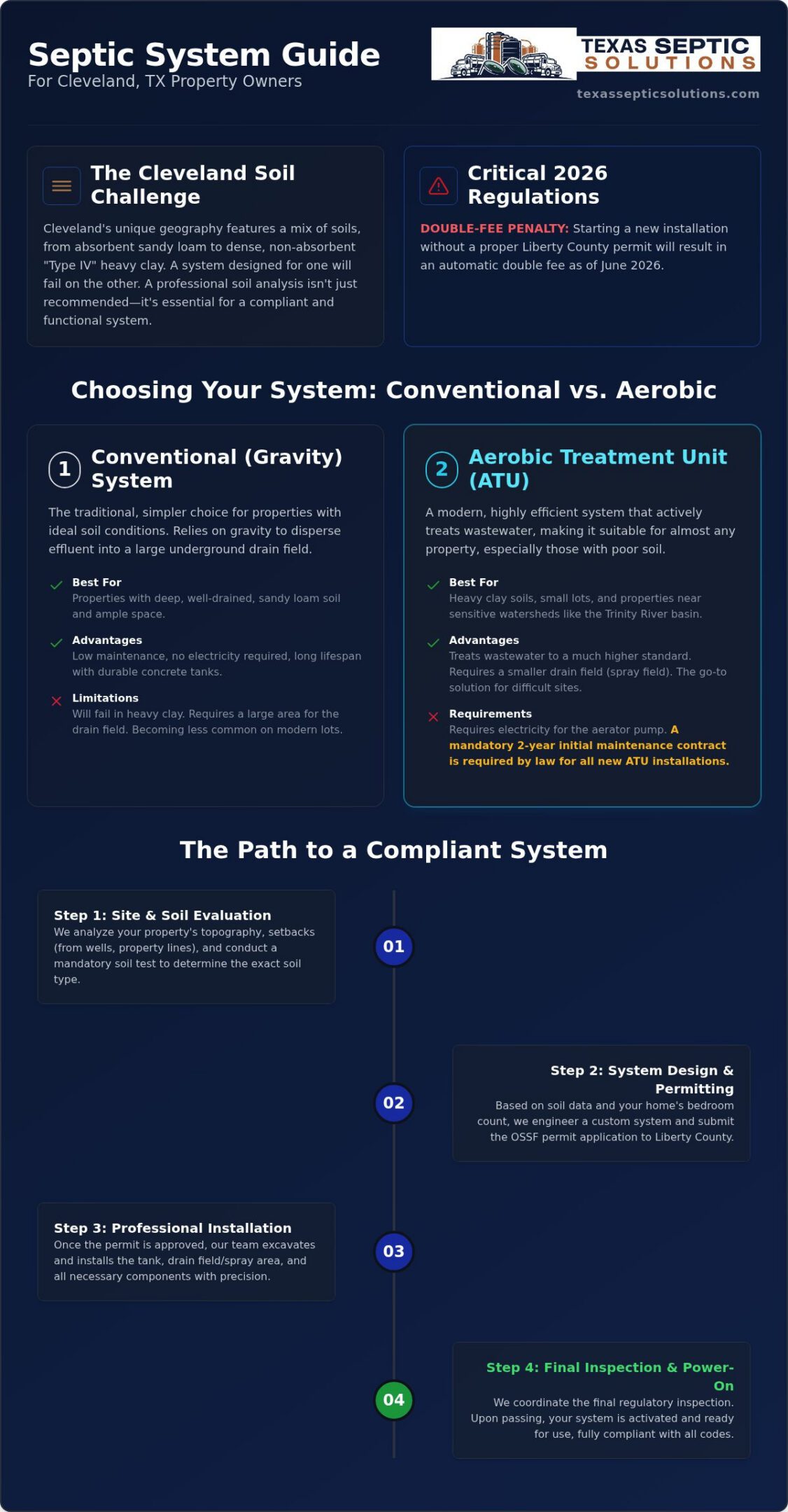
Navigating the Installation Process: From Permits to Power-On
The process of a new septic system installation Cleveland TX is a multi-stage journey that requires careful coordination with local authorities. It isn’t just about digging a hole and dropping a tank; it’s about meeting specific environmental standards set by the Liberty County Permit & Inspection Department. Our team manages every detail of this timeline so you don’t have to worry about missing a deadline or filing the wrong paperwork. We ensure the system is designed to handle your specific household needs while protecting the local groundwater.
The first step is the On-Site Sewage Facility (OSSF) permit application. This packet is comprehensive and must include a recorded Affidavit to the Public, a two-year maintenance contract for aerobic systems, and proof of ownership. We also include the site evaluation and soil analysis results conducted on your property. Once the county reviews your septic design drawing and confirms your 911 address, they issue the permit to construct. This authorization is what allows us to move heavy machinery onto your site and begin the physical work.
The Permitting and Inspection Timeline
In Liberty County and San Jacinto County, the timeline from initial application to final power-on typically spans 4 to 10 weeks. This duration depends on the complexity of your site and the current backlog at the health department. A critical milestone is the “open trench” inspection. This is when a county official visits the site to verify that the tank and lines are installed exactly as designed before we cover them with soil. We handle all these regulatory appointments and paperwork, ensuring your project stays on track without administrative delays.
What to Expect During Construction
Construction is a high-activity phase that involves heavy machinery. You’ll see excavators and trucks moving across your property to place the tank and install the drain field. While this temporarily impacts your yard, we work efficiently to minimize the footprint. The physical installation usually takes about 3 to 5 days once the permit is in hand. After the final health department inspection, we perform the final grading. We ensure the area is ready for seeding, leaving your property functional and compliant. If you’re ready to get started, you can request a professional installation timeline today to see how quickly we can complete your project.
Why Texas Septic Solutions is Cleveland’s Trusted Installation Partner
Choosing a partner for your new septic system installation Cleveland TX is a decision that affects your property’s value and functionality for decades. At Texas Septic Solutions, we don’t view ourselves as a temporary contractor. We’re your neighbors in Cleveland and Shepherd, and we’ve built our reputation on being a reliable local authority. Our goal is to build a system that remains invisible and worry-free. We prioritize environmental safety and structural reliability because we understand the high stakes of East Texas utility management. Every installation we perform is backed by our 24/7 support availability, giving you a direct line to experts whenever you need assistance.
A reliable installation is only the first step in a long-term partnership. To ensure your investment lasts its full lifespan, we integrate your new setup with a septic system maintenance plan. This proactive approach takes the guesswork out of ownership. We handle the mandatory inspections and the pumping schedules so you don’t have to track them yourself. Our one-stop service model means you never have to juggle multiple vendors for design, permitting, installation, and future care. We’re here to manage the high-pressure demands of your system so you can focus on your home.
Local Expertise You Can Count On
Our team brings a “can-do” attitude to every project, even when dealing with the most challenging clay-heavy lots or tight setbacks near the Trinity River basin. We’ve navigated the specific regulatory standards of Liberty County for years. This deep local knowledge allows us to anticipate hurdles before they cause construction delays or permit rejections. We aren’t just installers; we provide a comprehensive solution that carries you from the first soil test to your first pumping years later. We provide the stability and promptness you expect from a local leader that values community relationships over quick transactions.
Get Started with Your Cleveland Septic Project
Ready to move forward? Scheduling your initial site consultation is a straightforward process designed to save you time. Before we meet, it’s helpful to have your lot size and home plans ready. These details allow us to provide a more accurate assessment during our initial walkthrough. We’ll evaluate your topography, discuss your household needs, and map out a clear path to a successful, code-compliant installation. Contact Texas Septic Solutions for a new installation quote today and let’s get your project off the ground with a team you can trust.
Secure Your Property’s Future with a Reliable Septic System
Building or upgrading in East Texas requires more than just a standard tank. You’ve learned how Cleveland’s specific soil types and Liberty County’s strict permitting rules dictate every step of the process. From choosing between aerobic and conventional designs to managing the mandatory maintenance contracts, success lies in the details. By focusing on a site-specific design now, you protect your investment from premature failures and ensure compliance with current regulations. This proactive approach saves you from the headache of unexpected utility issues down the road.
Investing in a new septic system installation Cleveland TX shouldn’t be a source of stress. Our team provides the expert local knowledge and comprehensive design services needed to handle everything from the initial soil test to the final health department inspection. We’re committed to being your long-term partner with 24/7 emergency support and a neighborly expert approach that keeps your home running smoothly. Don’t leave your property’s functionality to chance when you can have a system engineered for East Texas conditions.
Get Your Professional Septic Installation Quote Today and take the first step toward a worry-free wastewater solution. We look forward to helping you build a system that lasts for decades.
Frequently Asked Questions
How long does a new septic system installation take in Cleveland, TX?
The entire process for a new septic system installation Cleveland TX typically takes between 4 and 10 weeks from the initial permit application to the final power-on. While the physical excavation and tank placement only require 3 to 5 days of on-site work, the majority of the timeline involves waiting for site evaluations, professional designs, and Liberty County regulatory approvals. Starting the process early in your construction phase is the best way to avoid move-in delays.
Do I need an aerobic or a conventional septic system for my lot?
Your property’s soil composition and total acreage will determine which system type is required by state and local codes. Conventional systems are generally reserved for larger lots with deep, sandy soil that facilitates natural drainage. Because much of the land in Cleveland consists of heavy clay, aerobic treatment units are often the standard requirement because they use oxygen to break down waste more effectively before it’s distributed.
What permits are required for a new septic system in Liberty County?
You must secure an On-Site Sewage Facility (OSSF) permit from the Liberty County Permit & Inspection Department before any construction begins. As of June 2026, the residential permit fee is $275, and the commercial fee is $450. It’s critical to have your permit in hand first; starting work without one results in an automatic double-fee penalty per the regulations approved in June 2026.
Can I install my own septic system in Texas to save money?
No, Texas law specifically requires that all new septic systems be designed and installed by TCEQ-licensed professionals. Homeowners are not legally permitted to install their own systems for new construction projects. This rule ensures that every installation meets environmental safety standards and protects the local groundwater from contamination, which could lead to severe legal and environmental consequences for the property owner.
How much space do I need for a new septic tank and drain field?
Most systems require several thousand square feet of clear, unobstructed land, though the exact footprint depends on your home’s bedroom count and soil absorption rates. You must also adhere to mandatory setbacks, such as staying at least 5 feet from property lines and 50 feet from water wells. Aerobic systems often allow for more flexibility on smaller Cleveland lots because they use spray or drip irrigation rather than long conventional trenches.
What happens if my soil test fails for a conventional system?
If a soil analysis reveals high clay content or poor drainage, your designer will simply pivot the plan to an aerobic treatment system. This isn’t a failure of your property but a change in the required technology. Aerobic systems are engineered specifically for these conditions, using an aerator to treat wastewater to a higher standard so it can be safely dispersed even in soil that doesn’t absorb water quickly.
Does a new septic system installation include the electrical work?
A professional new septic system installation Cleveland TX includes all the necessary wiring for the system’s control panel, aerator, and alarms. Aerobic systems require a constant power supply to maintain the bacterial treatment process and operate the spray pumps. Our team handles these connections to ensure the entire setup is code-compliant and passes the final “open trench” inspection conducted by the county health department.
How often will my new system need to be pumped after installation?
Most residential systems require pumping every 3 to 5 years to remove accumulated solids and protect the drain field. If you install an aerobic system, Liberty County also requires a two-year initial maintenance contract with a licensed provider. These regular service visits include sludge level checks, which help you determine the exact timing for your first pumping based on your actual household water usage.